For Canberra’s food businesses — restaurants, cafes, bakeries, and commercial kitchens — fly control isn’t optional. It’s a legal requirement under ACT food safety legislation and a critical factor in protecting your business reputation. A single fly landing on a customer’s plate can generate a negative review that reaches thousands. This guide covers everything Canberra business owners need to know about professional fly management.
Legal Requirements for Fly Control in the ACT
Under the ACT Food Act 2001 and Standard 3.2.2 of the Australia New Zealand Food Standards Code, food businesses must take all practicable measures to prevent contamination by pests, including flies. This means:
Compliance Requirements
- Premises must be maintained in a condition that prevents pest entry
- Active pest management measures must be in place
- Records of pest control treatments must be kept on file
- Fly screens or air curtains must be fitted to openings
- Waste must be stored in covered, pest-proof containers
ACT Health inspectors check for evidence of pest activity during routine inspections. A fly infestation can result in an improvement notice, a prohibition order (forced closure), or fines. The reputational damage from a public health notice can be even more costly than the fine itself.
Integrated Fly Management for Businesses
Effective commercial fly control requires a multi-layered approach. No single method works in isolation. The best results come from combining physical barriers, monitoring, treatment, and sanitation.
UV Insect Light Traps
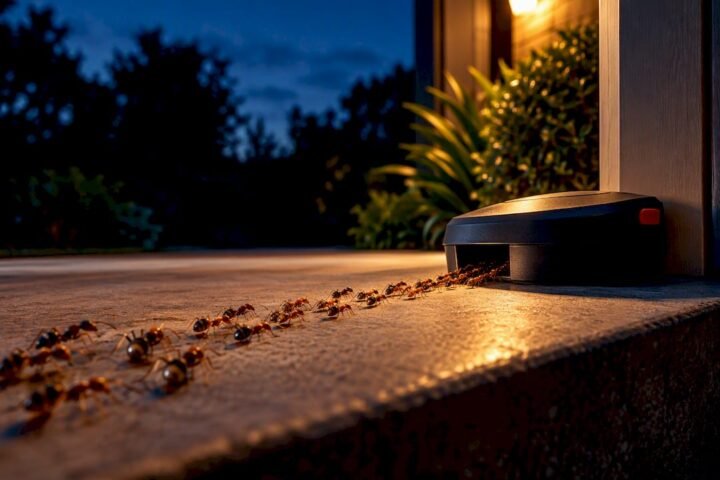
Strategically placed UV fly traps attract and capture flies on glue boards without chemicals. Ideal for dining areas, kitchens, and food preparation zones. Units should be positioned away from external doors to avoid drawing flies inward, and glue boards must be changed monthly.
External Residual Treatments
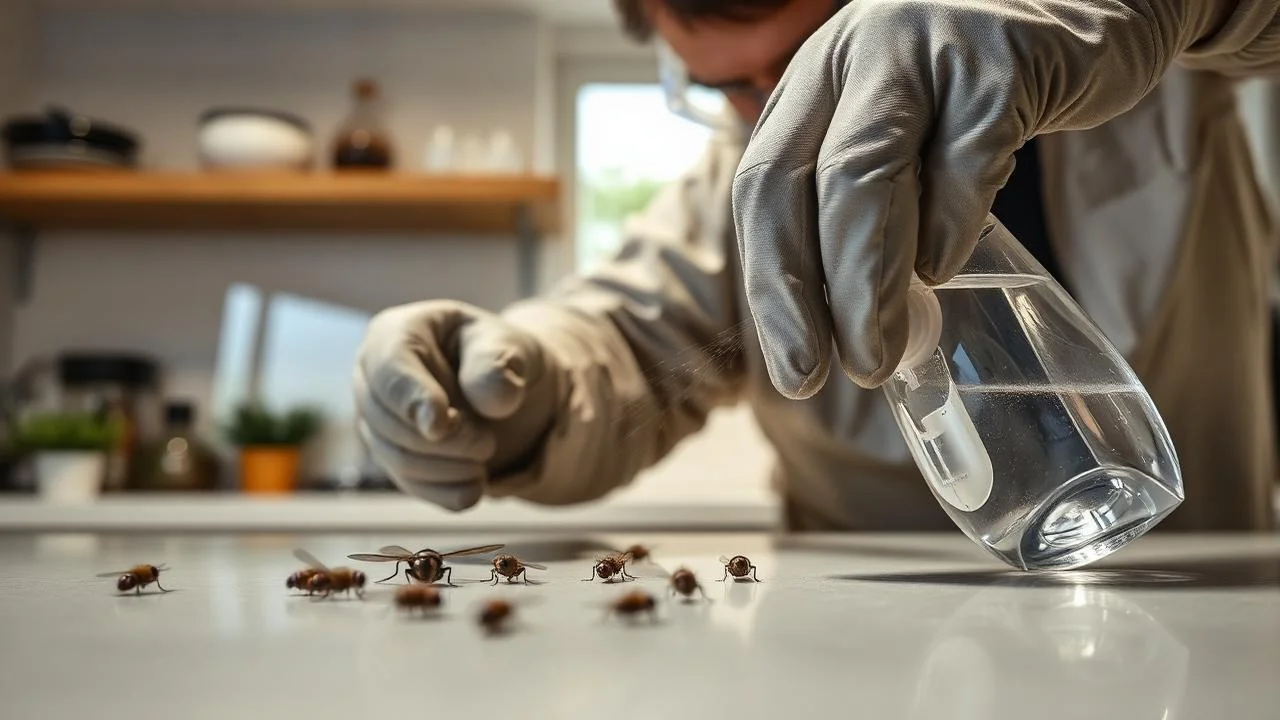
Professional-grade residual insecticides applied to exterior walls, around loading docks, near bin areas, and at entry points. These treatments kill flies on contact and provide weeks of ongoing protection. Only food-safe products are used near food handling areas.
Air Curtains and Screening
Air curtains above high-traffic doorways create an invisible barrier that prevents flying insects from entering. Combined with mesh screening on windows, vents, and any other openings, this physical exclusion forms the first line of defence.
Sanitation and Breeding Site Management
The most effective long-term fly control targets breeding sites. Regular cleaning of drains, grease traps, and waste areas eliminates the organic matter flies need to reproduce. Waste management protocols, bin cleaning schedules, and staff training are all essential.
Industry-Specific Fly Control Considerations
| Business Type | Primary Risks | Recommended Service |
|---|---|---|
| Restaurants & Cafes | Customer complaints, food contamination, health inspection failures | Monthly service + UV traps + air curtains |
| Bakeries & Patisseries | Fruit flies attracted to fermenting dough, sugar sources | Bi-weekly in summer + targeted fruit fly treatment |
| Butchers & Delis | Blowfly attraction to raw meat, strict hygiene requirements | Weekly monitoring + external barrier treatment |
| Takeaway & Fast Food | High door traffic, waste volume, grease buildup | Monthly treatment + drain maintenance program |
| Offices & Retail | Staff comfort, professional environment, kitchen areas | Quarterly treatment + UV traps in break rooms |
| Warehouses & Storage | Loading dock exposure, stored food products | Monthly perimeter treatment + dock area focus |
Choosing a Commercial Pest Control Provider
Not all pest control companies understand the specific requirements of commercial food businesses. When selecting a provider for your Canberra business, look for:
- ACT licensing — all technicians must hold current pest management licences
- Food industry experience — understanding of HACCP, food safety codes, and ACT Health requirements
- Documentation — detailed service reports suitable for health inspector review
- Flexible scheduling — ability to treat outside business hours to avoid disruption
- Integrated approach — not just spraying, but a comprehensive pest management program
Cost of Inaction
The cost of professional fly control is minimal compared to the potential consequences of failing to manage flies in a commercial setting. A single ACT Health improvement notice can cost your business thousands in compliance costs and lost revenue during any forced closure period. Negative online reviews mentioning flies or hygiene issues can reduce patronage for months. And a food poisoning incident linked to fly contamination can result in legal liability and permanent reputational damage.
Protect Your Canberra Business
Bugs Patrol provides tailored commercial fly control programs for Canberra restaurants, cafes, and food businesses. Licensed technicians, detailed documentation, and flexible scheduling to suit your operations.
Still have questions?
The best pest control company will solve your issue for a long time. Bugs Patrol is Canberra’s trusted choice for professional commercial fly control with lasting results.
Frequently Asked Questions
Yes. Under the ACT Food Act 2001 and the Australia New Zealand Food Standards Code, food businesses must take all practicable measures to prevent pest contamination. This includes flies. Regular professional pest control is considered best practice, and fly-related hygiene failures can result in improvement notices, fines, or closure orders from ACT Health.
Commercial fly control in Canberra typically costs $250-$800 per visit depending on premises size, treatment type, and service frequency. Most food businesses opt for monthly or bi-monthly service contracts which reduce the per-visit cost and ensure ongoing compliance. UV fly trap installation is an additional one-time cost of $200-$500 per unit.
Food-safe fly control includes UV insect light traps (ILTs) with glue boards, external residual treatments on walls and loading areas, air curtains over doorways, insect screening on windows and vents, and sanitation-focused breeding site elimination. All chemical treatments used near food must be food-safe and applied by licensed technicians.
Most Canberra restaurants benefit from monthly fly control during summer (October-March) and bi-monthly during cooler months. High-risk businesses like butchers, bakeries, and takeaway shops may need fortnightly service during peak fly season. Your pest controller should create a schedule based on your specific risk assessment.