Ants surge into homes after rain because flooding and pressure changes in the soil drive workers out of flooded nests toward dry, food-rich shelter, and your house qualifies on both counts. Most of these invasions fade within about a week once ants find no food and no way in. Wipe down trails with soapy water, pick up crumbs and spills, and set out bait. If the ants persist beyond a week or two or appear in large numbers, it’s time to inspect further or call in a professional.
TL;DR:
- Most post-rain ant activity is temporary, driven by displaced colonies seeking dry shelter and food, typically fading within a week if food sources are removed.
- Ants use pheromone trails for navigation, so wiping these away with soapy water disrupts their coordination more effectively than trying to kill visible workers.
- Seal entry points like cracks, gaps around pipes, and weatherstripping, and remove wet mulch or soil near the house to prevent future invasions after storms.
- Larger, aggressive, and unusual ants such as fire ants or yellow crazy ants require professional inspection and reporting instead of DIY treatment, especially if activity persists beyond two weeks.
- Regularly inspect and isolate new soil, mulch, or turf delivered after storms on hard surfaces for 48 hours to catch hitchhiking colonies before they establish inside the yard.
Table of Contents
- What Happens to Ant Colonies During and After Heavy Rain
- Where Ants Enter Homes After Rain
- Common Ant Species and Behaviors Homeowners See After Rain
- Short-Term Steps to Stop Ants Indoors Right Now
- Prevention Steps to Reduce Repeat Post-Rain Invasions
- Temporary Influx or Established Infestation? Here’s How to Tell
- What BugsPatrol Sees on the Ground After Storms
- Booking Post-Rain Ant Control With BugsPatrol
- Where to Learn More or Report an Invasive Species
- Sources
- FAQ
What Happens to Ant Colonies During and After Heavy Rain
A colony underground is essentially living in a sponge once a storm rolls through. Rising water floods tunnels and chambers, and ants respond the way any smart survivor would: they move. Fire ants are famous for linking legs and bodies to form a raft that floats on rising water until it reaches something solid, a survival trick documented by New South Wales biosecurity officials after storm events pushed colonies into new territory. Most backyard species don’t raft quite so dramatically, but the underlying behavior is the same: abandon the flooded nest, relocate fast, and look for the nearest dry, defensible spot.
That’s usually your house.
Rain also scrambles the food supply outdoors. Insects drown, plants get waterlogged, and the usual foraging routes disappear underwater. Worker ants that would normally never bother with your kitchen start showing up at the back door because the buffet moved.
A few mechanics worth understanding:
- Flooding displaces colonies temporarily; most ants aren’t trying to invade your home, they’re just fleeing water.
- Moisture changes outdoor food availability, which redirects foraging trails toward your kitchen, pantry, and trash.
- Storms move ants in ways you don’t control. Delivered soil, mulch, or hay can carry an active colony straight onto your property.
Here’s the detail most homeowners miss: this isn’t random. Reports on post-cyclone fire ant spread show that human-assisted movement through soil and landscaping materials is one of the fastest ways ants establish in places they’ve never been before.
Where Ants Enter Homes After Rain
Water finds every gap in a house, and ants follow the same paths. After a storm, walk your foundation and check the usual suspects: cracks in the slab, gaps around plumbing pipes, loose weatherstripping on doors, warped window frames, and AC line penetrations. Eaves and rooflines matter too, especially if gutters overflowed and soaked the fascia boards.
Outdoors, look at what’s touching your foundation. Ants love:
- Soggy mulch beds pushed right up against the house
- Stacked firewood or lumber sitting on wet ground
- Potted plants with saturated soil sitting on porches or patios
- Any spot where soil stays wet for days after rain stops
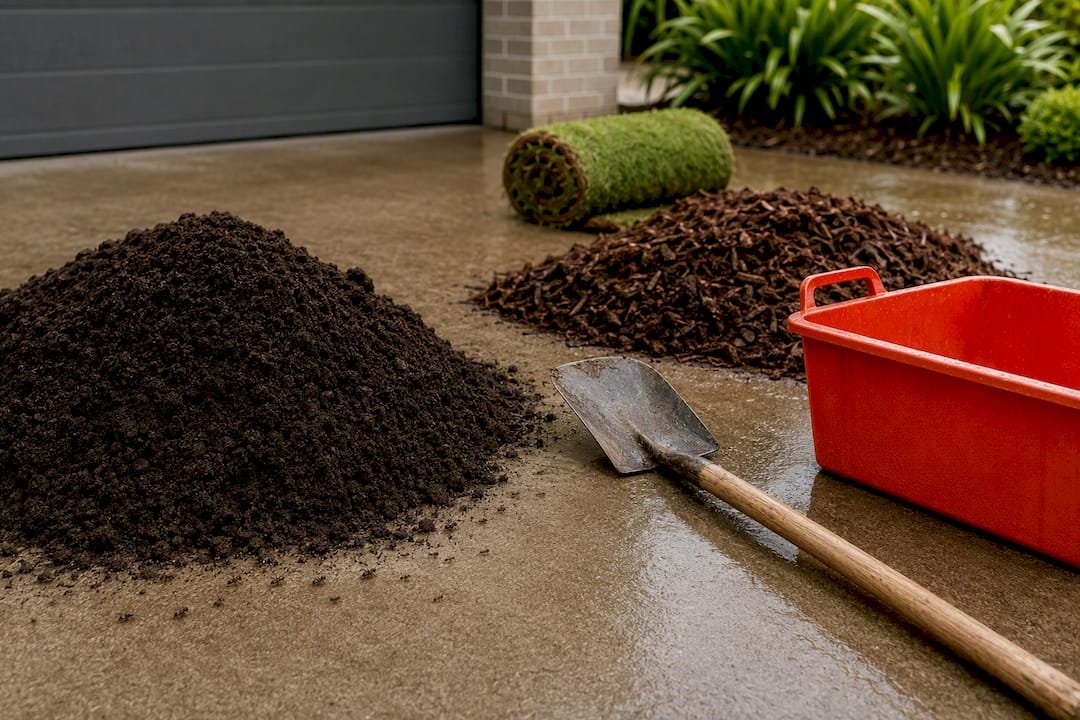
Delivered landscaping materials deserve a second look, too. Bagged soil, mulch, or hay that’s been sitting outside during a storm can carry ants (or worse) straight onto your property.
Pro Tip: Isolate any newly delivered soil, mulch, or turf on a hard surface like a driveway for 48 hours before spreading it in garden beds. If ants are hitching a ride, you’ll see activity before it spreads into your yard.
Common Ant Species and Behaviors Homeowners See After Rain
Not every ant marching across your kitchen counter is the same kind of problem. Most of what you’ll see after rain falls into the “nuisance” category: small, moisture-loving species that follow scent trails to sugar, grease, or standing water. They’re annoying, they multiply fast, but they’re manageable with cleaning and baiting.
The species that actually matter are the ones flagged for biosecurity concern. Fire ants and yellow crazy ants fall into this group, and they behave differently: larger mounds, aggressive swarming, unusual raft-like clustering in flooded areas, or dense trails that don’t respond to normal cleaning. Authorities are explicit on this point, advising against DIY treatment or moving suspected invasive ant nests and asking homeowners to report sightings instead.
What to watch for:
- Large, aggressive swarms rather than thin foraging lines
- Mounds that appear suddenly in lawns after flooding
- Ants that sting rather than just bite
- Unusual coloring or size compared to the ants you normally see
If any of that matches what’s in your yard, don’t spray it, don’t disturb the mound, and don’t try to treat it yourself.
Short-Term Steps to Stop Ants Indoors Right Now
The fastest fix isn’t a can of spray. Ants navigate using pheromone trails, and entomologists have shown that wiping those trails away disrupts the colony’s ability to coordinate foraging far more effectively than killing the workers you can see.
- Clean first. Wipe every visible trail with soapy water, mop up spills, and remove crumbs, pet food, and anything sugary sitting out.
- Bait, don’t spray. Place covered indoor bait stations along the trail, and set protected outdoor bait away from puddles or runoff zones where it will wash out before ants can carry it back to the nest.
- Leave the workers alone. Crushing ants scatters the pheromone trail and can actually trigger a defensive recruitment response, drawing more workers to the spot instead of fewer.
- Reposition stalled bait. If ants ignore a station after 24 to 48 hours, move it directly onto the trail line rather than near the entry point.
Pro Tip: Sugar ants and protein-seeking ants respond to different bait formulas. If one type of bait gets ignored, try switching bait type before assuming the infestation is resistant.
Prevention Steps to Reduce Repeat Post-Rain Invasions
One good soapy-water wipe-down solves this week’s problem. It does nothing for next month’s storm. Long-term prevention means closing the gaps ants use and making your yard less attractive to displaced colonies.
Start with exclusion: caulk foundation cracks, install door sweeps on exterior doors, and seal around pipes, cable lines, and AC units where they pass through exterior walls. Then look at the yard. Pull mulch and dense plantings back from the foundation, fix drainage issues that leave soil wet for days, and clear brush or debris piles where colonies like to nest.
Baiting strategy matters here too. Integrated pest management favors sanitation, exclusion, and targeted baiting over perimeter sprays, which tend to be temporary and can occasionally push ants indoors rather than keep them out. Protected bait placements, positioned away from irrigation and runoff, hold up better through wet weather.
| Prevention step | What it targets | When to do it |
|---|---|---|
| Seal cracks and gaps | Physical entry points | Before next rain event |
| Pull mulch off foundation | Landscape harborage | Ongoing maintenance |
| Fix drainage/grading | Chronic wet soil | After any pooling is noticed |
| Rotate and protect bait | Colony feeding behavior | Seasonally, and after storms |
Temporary Influx or Established Infestation? Here’s How to Tell
Most post-rain ant activity is a blip, not a full-blown infestation, and the timeline tells you which one you’re dealing with.
- Days 1 to 3: A trail appears, usually near a food source or a damp entry point. This is typical displacement behavior.
- Days 4 to 7: If you’ve cleaned trails and removed food, activity should be visibly shrinking. This is still normal.
- Beyond 7 to 10 days: Continuous activity, growing numbers, or ants appearing in new rooms signals something more established.
- Beyond two weeks, or hundreds of ants: This is no longer a temporary influx. Re-inspect entry points, escalate baiting, and consider a professional inspection, especially if the species looks unusual.
What BugsPatrol Sees on the Ground After Storms
Technicians experienced in pest management have walked into plenty of post-storm kitchens where the family already tried the spray-and-wipe routine and the ants kept coming back within days. That usually means the actual nest, or a secondary satellite colony, is somewhere the homeowner never checked: under a slab, inside a wall void, behind a flooded garden bed.
A proper home inspection finds what DIY effort typically misses: the colony’s real location, entry points hidden behind fixtures or landscaping, and any early signs of a species that needs biosecurity reporting rather than a bait station. If your ant trails are still active after a week of honest cleaning and baiting, that’s the point to bring in a professional set of eyes.
— navin
Booking Post-Rain Ant Control With BugsPatrol
If you’ve done the soapy water routine, sealed the obvious gaps, and the ants are still marching through your kitchen a week later, it’s time to call someone who does this daily rather than guess again. Professional pest management services offer a local alternative to another round of trial-and-error DIY treatments, with licensed technicians using thermal imaging and modern detection methods, and building treatment plans around safety for kids and pets in the house.

General pest control covers the standard post-rain ant response, and if the invasion looks unusual or keeps returning storm after storm, a free home inspection will locate the nest and the entry points doing the damage. Homeowners who want protection built in year-round can also look at the Bronze General Pest plan at $29.98 AUD per month.
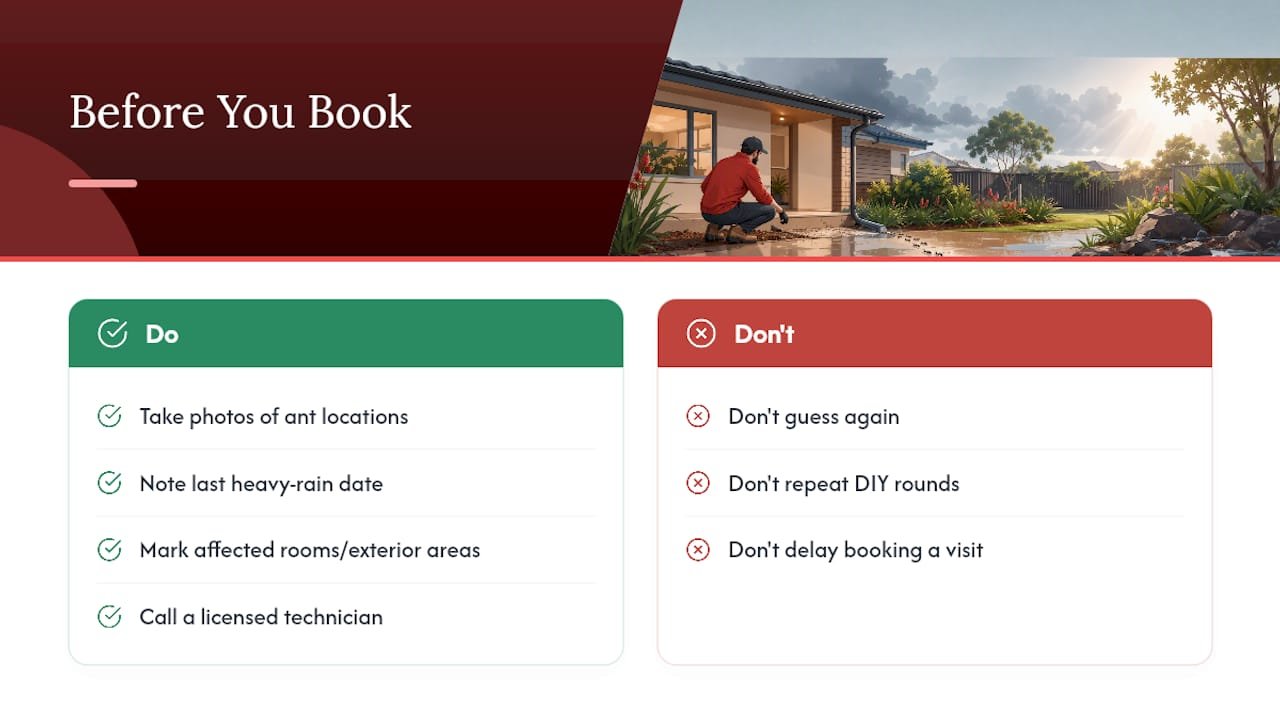
Before you book, take a few photos of where you’re seeing ants, note the date of the last heavy rain, and mark which rooms or exterior areas are affected. That speeds up the technician’s first visit considerably. You can browse the full range of pest services BugsPatrol offers, or go straight to booking a visit to get the problem handled properly.
Where to Learn More or Report an Invasive Species
If the ants in your yard look unusual, aggressive, or clustered in a way you’ve never seen before, report it rather than treat it yourself.
- NSW DPI’s yellow crazy ant guidance covers identification and reporting steps for suspected invasive ants.
- The Exotic Plant Pest Hotline (1800 084 881) takes reports on invasive ant sightings nationally.
- UC IPM’s ant management page is a solid reference for baiting and sanitation best practice.
Sources
- NSW moves quickly to prevent fire ants entering NSW after ex-cyclone
- Yellow crazy ant biosecurity guidance — NSW DPI
- Ant behavior and management (University of California Cooperative Extension handout)
- Ants / Home and Landscape / UC IPM
FAQ
Why Do Ants Appear in My House After It Rains?
Rain floods or disturbs underground nests, and displaced workers move toward dry shelter and available food, which is often your kitchen or bathroom. Most of this activity is temporary and fades within a few days to a week once food sources are removed and entry points are sealed.
Will Ants Go Away When It Stops Raining?
Often, yes. Once outdoor conditions dry out and food becomes available outside again, many ants return to normal foraging patterns and traffic indoors drops off. If activity hasn’t declined within about one to two weeks, or if numbers are still climbing, that points to an established issue rather than simple post-rain displacement.
Why Shouldn’t I Squish Ants I See Indoors?
Crushing visible ants doesn’t remove the colony, and it can trigger a defensive alarm response that draws more workers to the area. Ants rely on pheromone trails to coordinate foraging, so wiping the trail with soapy water and locating the entry point does far more to stop the problem than killing the ants you can see.
What Is an Ant’s Worst Enemy?
In the yard, ants face natural predators like birds, spiders, and other insects, but inside a home, the real threat to a colony’s survival is a disrupted food supply combined with sealed entry points and targeted baiting. Removing what an ant colony needs to survive works better than any single predator or product.
What If the Ants Look Different or More Aggressive Than Usual?
Don’t treat it yourself. Species like fire ants and yellow crazy ants require reporting to biosecurity authorities rather than DIY spraying or nest disturbance, since handling them incorrectly can spread the colony further. A professional inspection can confirm the species and recommend the right next step.