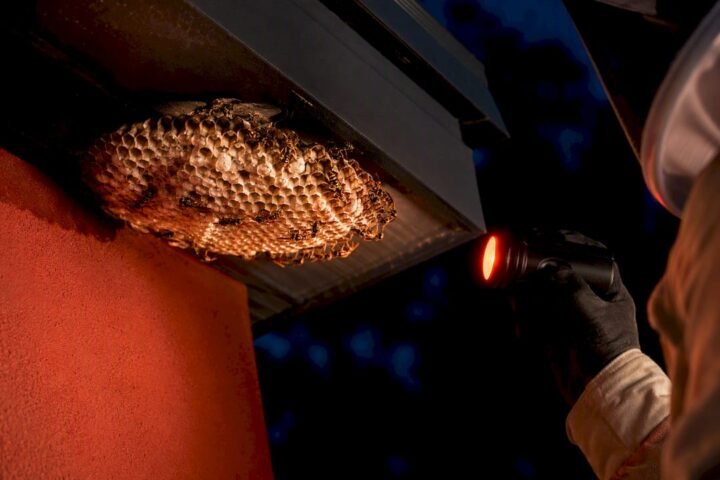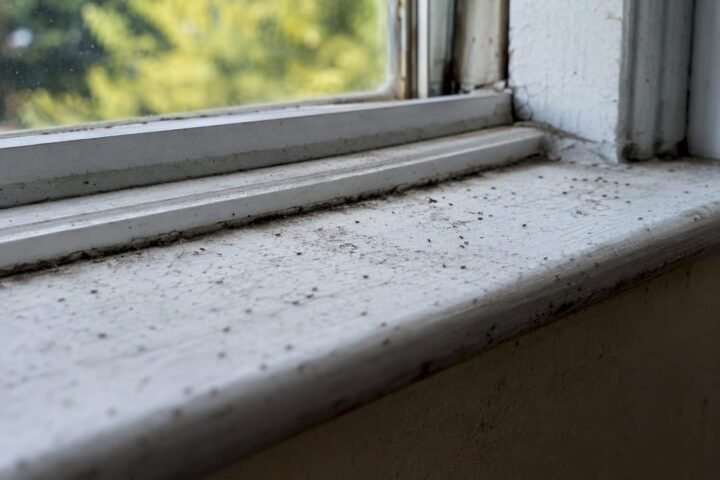
If you’ve found a termite nest, leave it completely alone. Don’t spray it, poke it, or break open a mud tube. Note where it is and what you’re seeing, then call a licensed termite inspector. A professional inspection is the only reliable way to confirm the species, gauge how far the colony has spread, and choose a treatment that actually works instead of scattering the problem.
TL;DR:
- Active termite colonies show signs such as visible workers, fresh mud tubes, discarded wings, hollow timber sounds, or fine frass, but location is also crucial for identification.
- Proper inspection by a licensed professional includes perimeter checks, thermal imaging, moisture testing, and species confirmation, all documented in a detailed report.
- The most effective treatments depend on species and nest location, with baiting systems and chemical barriers being common options, each requiring ongoing monitoring.
- Eliminating a termite colony can take several months with baiting, while local control with liquid treatments may show results within six weeks to six months, with early detection reducing damage risk.
- Prevention involves fixing drainage issues, removing wood-to-soil contact, and scheduling routine inspections, as re-infestations often stem from the same environmental conditions.
Table of Contents
- How Do You Know if a Termite Nest Is Active?
- What Happens During a Professional Termite Inspection?
- Which Termite Treatment Actually Works for Your Situation?
- How Long Does It Take to Eliminate a Termite Colony?
- How Do You Stop Termites From Coming Back?
- Why Hiring a Licensed Technician Beats Guesswork
- What Homeowners Get Wrong About Termite Nests
- Book a Termite Inspection With Bugspatrol Pest Management
- Sources
How Do You Know if a Termite Nest Is Active?
Not every mud tube or timber void holds a live colony, and treating a dead one the same as an active one wastes money and time. Active infestations usually show a combination of signs, not just one.
- Live workers or soldiers visible when you gently check (without breaking anything apart)
- Fresh, damp-looking mud tubes running up foundations, stumps, or piers
- Discarded wings near windows or light fixtures after a swarm
- A hollow or papery sound when you tap timber
- Fine, sand-like frass piling under timber, a telltale sign of drywood termites rather than subterranean ones
Nest locations matter almost as much as the signs themselves. Subterranean termites, the species behind most Australian infestations, typically nest underground or inside old tree stump roots and travel to timber through mud tubes. Drywood termites skip the mud tubes entirely and nest directly inside the wood they’re eating, which changes how a technician approaches treatment. That’s why spraying retail insecticide on what you can see rarely helps. It kills surface workers while pushing the rest of the colony deeper, and a nest that senses disturbance can split into subsidiary colonies, spreading the infestation rather than containing it.
What Happens During a Professional Termite Inspection?
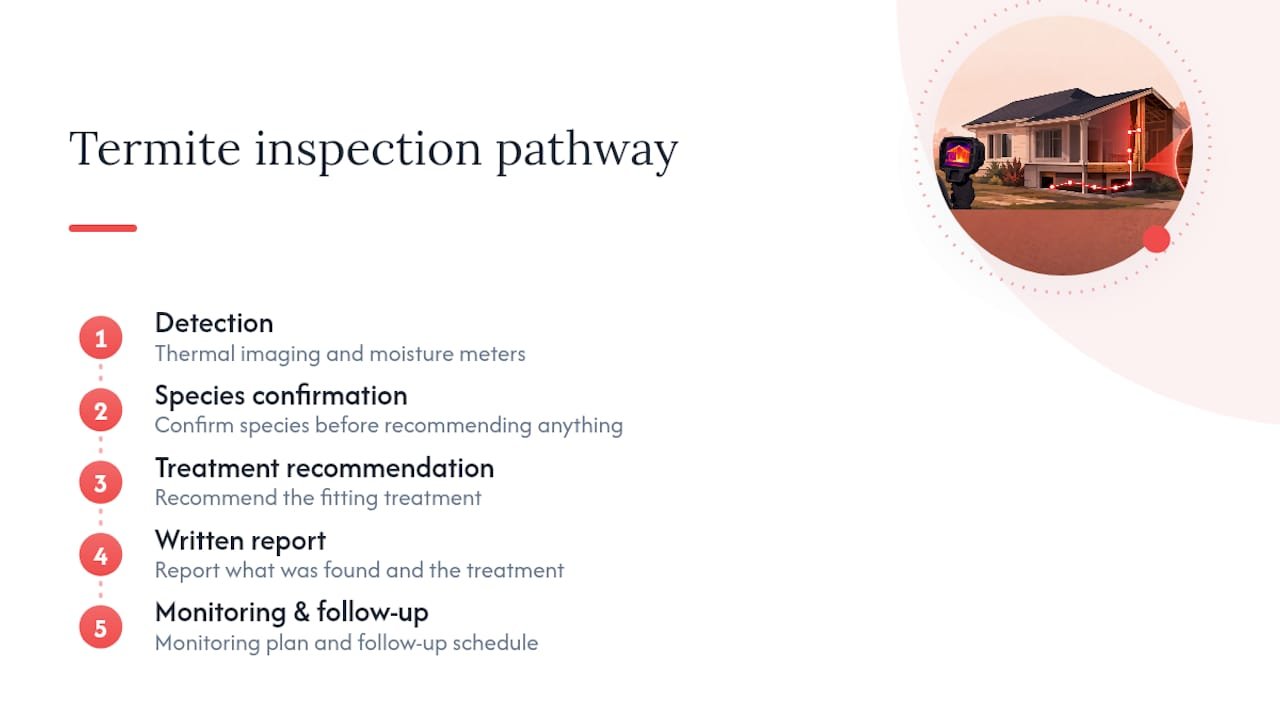
A proper inspection isn’t a quick glance at the skirting boards. Licensed technicians work through a set sequence designed to find activity you’d never spot on your own.
- Perimeter and subfloor check. The inspector walks the foundation line, garden beds, and any stumps or fence posts touching soil, looking for mud tubes and moisture buildup.
- Roof void and wall cavity scan. This is where thermal imaging earns its keep, picking up temperature differences that hint at hidden termite activity behind plaster or in ceiling timbers.
- Moisture meter and sounding tests. A moisture meter flags damp timber that’s attractive to termites, while a sounding stick or tap test identifies hollowed-out sections invisible from the surface.
- Species identification. Confirming subterranean versus drywood termites determines everything that follows, since the two require different treatment approaches entirely.
You should walk away with a written report covering findings, recommended treatment, a monitoring schedule, a cost estimate, and any warranty terms. If a technician can’t explain those five things clearly, ask more questions before signing anything.
Which Termite Treatment Actually Works for Your Situation?
There’s no single fix for every infestation. The right treatment depends on species, nest location, and how far the colony has already spread through your property.
- Baiting systems use slow-acting, non-repellent insect growth regulators that spread through the colony as foraging termites share bait with nestmates. Technicians check stations monthly, and because monitoring without re-inspection doesn’t guarantee success, follow-up visits are non-negotiable.
- Chemical soil barriers create a treated zone around the foundation, working preventively on undisturbed sites and curatively when active tubes are found crossing the perimeter.
- Dusting and above-ground baiting target termites working inside timber or wall cavities, delivering toxicant directly to the colony without excavation.
- Mound or stump treatments address nests found in the yard directly, often combined with barrier work if the mound sits close to the house.
- Fumigation is reserved mostly for severe drywood infestations confined to isolated timber structures.
Pro Tip: If a technician recommends baiting, ask how often the stations get checked. Monthly monitoring catches declining activity early; quarterly checks can miss a colony that’s already relocated.
Knocking down a mound yourself or dousing it with off-the-shelf spray rarely ends the problem. It just hides it, sending the colony underground where it keeps eating.
How Long Does It Take to Eliminate a Termite Colony?
Baiting systems typically require several months to eliminate an entire colony, since the process depends on termites carrying toxicant back to nestmates over repeated feeding cycles. Curative treatments like dusting or liquid termiticides can show local control within six weeks to six months, though every method still requires re-inspection to confirm the colony hasn’t just moved.
Why speed matters: measurable structural damage can appear within 3 to 6 months in favorable conditions, and serious repairs are often unavoidable by the 12-month mark if the infestation goes untreated. A mature colony left alone for two to three years can cause major structural damage.
Costs vary based on property size, species, and how many treatment zones are needed, but the pattern holds across almost every case: an inspection and early treatment cost far less than replacing load-bearing timber later. Waiting to “see if it gets worse” is the most expensive decision a homeowner can make here.
How Do You Stop Termites From Coming Back?
Treatment solves the current colony. Prevention is what keeps the next one from moving in. Most re-infestations trace back to the same conditions that attracted termites the first time.
- Fix drainage issues and clear gutters so water doesn’t pool near the foundation
- Eliminate any wood-to-soil contact, including timber garden edging and old fence posts
- Remove tree stumps and stored timber piles from near the house
- Ask about perimeter bait stations or a continuous soil barrier for ongoing protection
- Schedule routine inspections rather than waiting for visible signs to reappear
Concrete stumps instead of timber, proper subfloor ventilation, and barrier maintenance every few years all reduce the pressure on your property long term.
Why Hiring a Licensed Technician Beats Guesswork
Bugspatrol Pest Management has serviced more than 5,000 Canberra homes over 10-plus years, and the pattern is consistent: homeowners who call at the first sign of activity spend less and lose less timber than those who wait or try a DIY fix first. Licensed technicians use thermal imaging and moisture meters to find activity that’s invisible from a casual walkthrough, then confirm species before recommending anything.
An inspection with Bugspatrol Pest Management ends with a written report covering exactly what was found, which treatment fits the situation, a monitoring plan, and a follow-up schedule. That’s the standard a reputable termite service should meet, whether you book with Bugspatrol Pest Management or anyone else licensed to do this work.
What Homeowners Get Wrong About Termite Nests
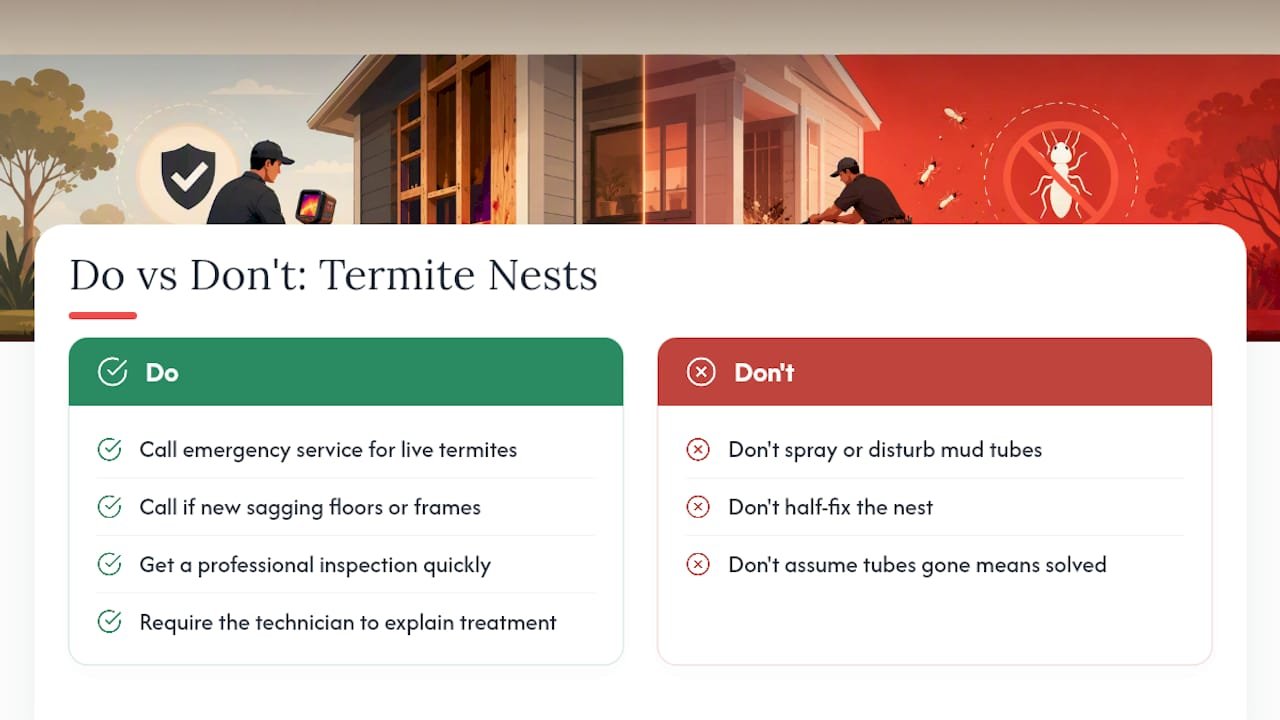
The biggest mistake isn’t ignoring a termite problem. It’s half-fixing it. Someone sees a mud tube, sprays it with whatever’s under the sink, and assumes the job’s done. Weeks later the tube reappears somewhere else, and now the colony knows to avoid that spot entirely.
Call for emergency service if you see live termites inside the house itself, notice sagging flooring or door frames that weren’t sagging last month, or witness a heavy swarm indoors. Short of that, the safest move is doing nothing to the nest and everything toward getting a professional out quickly. Family and pet safety shouldn’t be a trade-off here. Modern treatments are built to target termites specifically, and a technician worth hiring will walk you through exactly what’s being used and why before they start.
— navin
Book a Termite Inspection With Bugspatrol Pest Management
Bugspatrol Pest Management gives you what a bottle of hardware-store spray never can provide: a licensed technician who finds the actual nest instead of just the tubes you can see. Every inspection uses thermal imaging and moisture meters to locate hidden activity, followed by a written report with species identification, a treatment recommendation, and a monitoring plan you can actually follow.

Booking is straightforward. Reach out through the termite control specialist page to schedule an inspection, and a technician will walk your property, check the subfloor and roof void, and explain findings on the spot before recommending baiting, a barrier, or a targeted treatment. If you’re in one of Bugspatrol Pest Management’s Canberra service areas, same-week appointments are typically available. Get the inspection booked before the colony gets any further into your timber.
Sources
- Australian Museum — Termites
- PestOz — Termites (How to identify and what to do)
- Termite
- AEPMA / National code of practice for termite management (draft)