Those itchy red welts in a cluster or line on your arm are consistent with bed bug bites, but a rash alone can’t confirm it. Wash the area with soap and water, apply a cold pack to cut the itch and swelling, and skip the guesswork by checking your mattress seams and headboard for dark spotting or shed skins. See a doctor if the skin turns hot, spreads, or you develop fever or facial swelling.
TL;DR:
- Confirm a bed bug infestation by finding live bugs, shed skins, dark fecal spots, blood smears, or a musty odor, not just from bites.
- A typical reaction appears days after bites, with swelling that fades over two weeks and risks of secondary infection if scratched.
- Use heat, encasements, vacuuming, and professional treatment for effective eradication rather than relying solely on sprays or cleaning.
- Bites in clusters or lines on exposed skin after hotel stays or secondhand furniture, compared to random bites from fleas or mosquitoes, help differentiate infestations.
- Inspect mattress seams, bed frame joints, and nearby furniture with detection tools to accurately identify and treat bed bug presence.
Table of Contents
- What Bed Bug Bites Typically Look Like
- Symptoms, Complications, and Healing Timeline
- How to Confirm a Bed Bug Infestation
- Treating Bed Bug Bites Safely
- Preventing Bites and Controlling an Infestation
- Bed Bug Bites vs. Other Insect Bites
- What a Professional Inspection Actually Involves
- Sources
What Bed Bug Bites Typically Look Like
A bed bug bite usually starts as a small red bump with a darker, slightly raised center, sometimes called a weal. Some grow to roughly the size of a fingernail, up to about 2 centimeters across at most, especially if you scratch. The classic tell is arrangement, not shape: bites often show up in clusters or lines formed by repeated feeding in one spot before moving on.
That said, plenty of bites land as random single spots, so a lack of lines doesn’t rule bed bugs out.
- Raised, reddish welts, often with a firmer or darker center point
- Grouped in twos or threes, or arranged in a rough line
- Found mostly on skin left exposed while sleeping: forearms, shoulders, neck, lower legs
- On darker skin tones, bites may appear more purple or gray than red, and can be harder to spot until they’re scratched
Timing catches most people off guard. According to healthdirect, a reaction can take several days to show up after the actual bite, and some people won’t react at all. That gap between bite and bump is exactly why so many people blame a fresh mark on “something in the yard yesterday” when the real culprit fed on them a week earlier.
Symptoms, Complications, and Healing Timeline
Bites tend to follow a predictable arc: a flat red mark (a macule) within a day or two, swelling into a firmer welt as histamine kicks in, then a slow fade to a flat pink or brown spot over several days to about two weeks. Most people never get past mild itching and redness, and healing needs nothing more than time and restraint.
Scratching is where things go wrong. Broken skin lets bacteria in, and a secondary infection is the most common complication of bed bug bites. Watch for:
- Warmth or spreading redness beyond the original bite
- Increasing tenderness or swelling instead of gradual fading
- Pus, yellow crusting, or a bite that gets worse after day three
Rarer but serious reactions include widespread hives (urticaria), fluid-filled blistering (bullous eruptions), and, in uncommon cases, anaphylaxis, which needs emergency care immediately: difficulty breathing, throat tightness, or dizziness after a bite are red flags, not “wait and see” symptoms. RACGP guidance for GPs notes that reaction severity varies so much between individuals that appearance alone shouldn’t drive the diagnosis or the treatment plan.
How to Confirm a Bed Bug Infestation
You can’t diagnose an infestation from your skin. Healthdirect and RACGP clinical guidance both make the same point: bites are too variable to serve as proof, so confirmation depends on finding the bugs or their evidence, not interpreting a rash.
Look for these signs:
- Live bugs or shed skins — flat, reddish brown, about the size of an apple seed, often in seams and folds.
- Eggs — tiny, pale, and usually tucked into cracks or fabric folds, hard to spot without a flashlight.
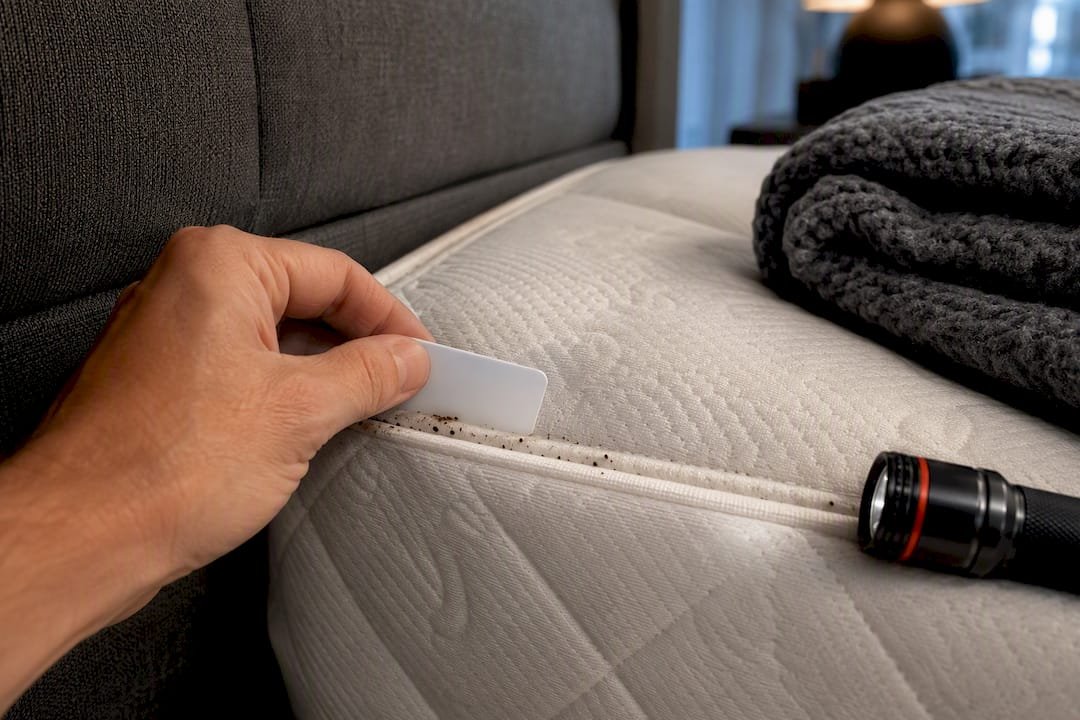
- Dark or rusty fecal spots — small ink like dots on sheets, mattress seams, or the underside of the bed frame.
- Blood spots — small smears on bedding from a crushed bug or a bite that bled slightly overnight.
- A sweet, musty smell — usually only noticeable once an infestation is well established, according to HealthyWA.
Check mattress seams and piping first, then the headboard, bed frame joints, skirting boards, loose wallpaper edges, and the seams of any luggage that’s been near the bed.
Pro Tip: Run a stiff card or old credit card along mattress seams and headboard joints. Faecal spots and shed skins tend to catch in the same tight crevices a bug hides in, so you’ll often find both in one pass.
Treating Bed Bug Bites Safely
Start simple. Wash the bite with soap and water to lower infection risk, then apply a cold pack for ten to fifteen minutes to knock down swelling and itch. Avoid scratching. It’s the single biggest driver of the secondary infections covered above.
For ongoing itch, over-the-counter options work well for most people:
- Calamine lotion or a topical antipruritic cream applied directly to the bite
- Oral antihistamines, which healthdirect notes are reasonable to use to control itching over a few days
- Loose, breathable clothing over the area to reduce friction and scratching at night
If a bite looks infected, a GP may prescribe a topical steroid to calm inflammation or an antibiotic if bacteria have taken hold. Escalate to urgent care if you notice spreading redness, fever, swelling that keeps growing, or any breathing difficulty. Those aren’t wait it out symptoms.
Preventing Bites and Controlling an Infestation
Short of full eradication, you can cut your exposure fast. Wash bedding and clothing on the hottest cycle the fabric allows, since heat kills bed bugs and their eggs. Fit a mattress and box spring encasement to trap any survivors, vacuum seams and skirting boards thoroughly, and seal obvious cracks near the bed frame.
Here’s where a lot of people go wrong:
- Skip the supermarket space spray. Applied inaccurately, it scatters bugs deeper into the room rather than killing them, according to guidance from Health.
- Don’t rely on cleaning alone. Vacuuming and laundering help, but bed bugs hide in crevices household cleaning never reaches, so an established infestation almost always outlasts a DIY clean.
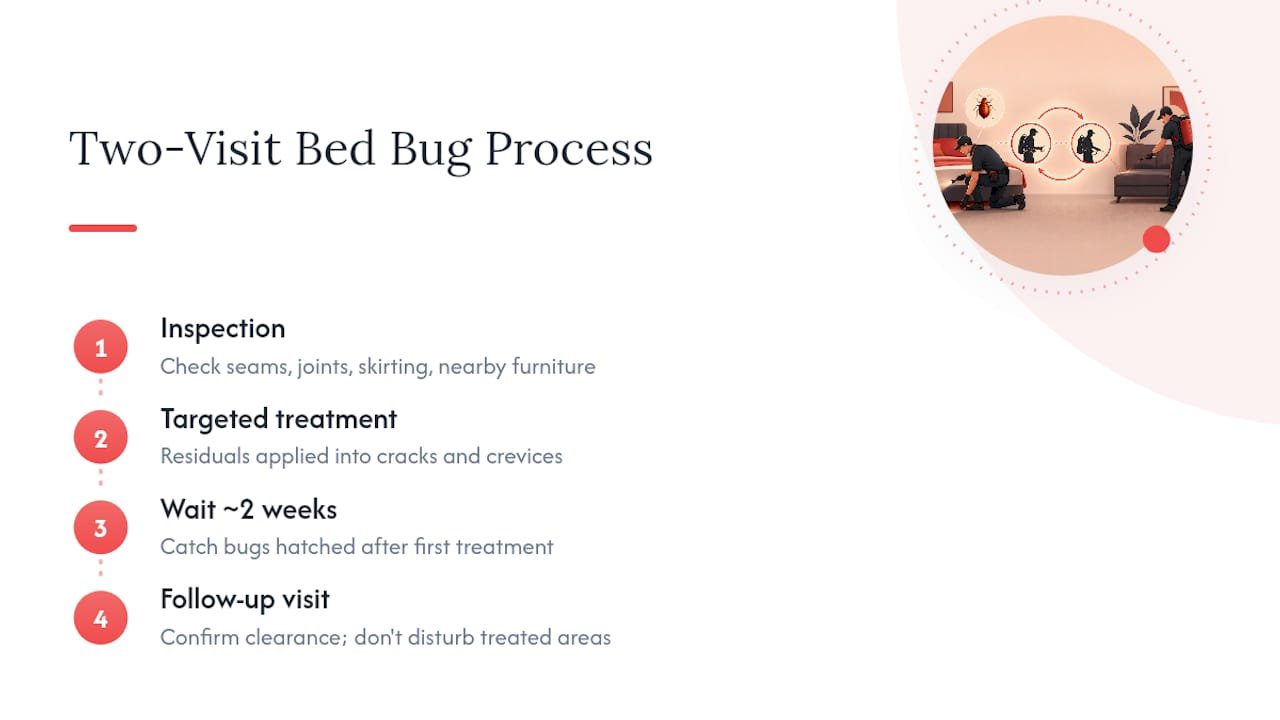
- Book a licensed pest manager for anything beyond a handful of confirmed bites. Professional treatment uses targeted residual applications in cracks and crevices rather than blanket spraying, and a follow-up visit a couple of weeks later is standard to catch bugs that hatch after the first treatment.
Pro Tip: Don’t deep clean or vacuum the treated areas right after a professional visit. It can strip the residual protection the technician just applied before it’s had time to work. Bugspatrol Pest Management’s bed bug infestation guide walks through preparing a bedroom before a technician arrives, and the DIY versus professional pest control breakdown covers exactly where home remedies fall short.
Bed Bug Bites vs. Other Insect Bites
Pattern, location, and context do more work than the bite itself. A rough line or tight cluster on arms and shoulders points toward bed bugs, especially after a hotel stay or a secondhand mattress. Random bites low on the ankles usually mean fleas, particularly if there’s a pet in the house. Scattered bites anywhere on the body after time outdoors are more likely mosquitoes, and they itch almost immediately rather than days later.
- Fleas: ankles and lower legs, pets in the home, bites appear in small irregular groups
- Mosquitoes: random placement, any exposed skin, itching starts within minutes
- Ticks: the tick itself often still attached or a single bite with a surrounding rash
- Scabies: intense nighttime itching, visible burrow lines between fingers, spreads through the whole household
If you’re weighing flea bites versus bed bug bites, the household context settles it faster than the bite shape does. Fleas travel with pets and cluster around ankles, while bed bugs feed on any exposed skin and travel with luggage or secondhand furniture. Environmental evidence, not the rash, is what actually confirms which one you’re dealing with.
What a Professional Inspection Actually Involves
After more than 10 years treating homes and 5,000+ properties serviced, we’ve seen how often bites alone lead people to the wrong conclusion. A proper inspection starts where bugs actually hide: mattress seams, bed frame joints, skirting boards, and any furniture near the sleeping area, checked with modern detection tools rather than a quick visual scan.
Treatment centers on targeted residual applications into cracks and crevices, not broad spraying, which is safer around children and pets and far more effective against an insect that hides in gaps a few millimeters wide. A follow-up visit around two weeks out is standard practice, timed to catch any bugs that hatch after the first treatment. Before a visit, our technicians will tell you what to leave alone, since vacuuming or deep cleaning treated areas too soon can undo the work. Most infestations need that two-visit rhythm to actually clear, and setting that expectation upfront saves homeowners a lot of frustration.
If the marks on your arm keep showing up and you’ve found fecal spots or shed skins in the mattress seams, it’s worth having a licensed technician confirm it before the problem spreads to another room. Bugspatrol Pest Management’s bed bug control service covers inspection, targeted treatment, and the standard follow-up visit, and the team works around families, kids, and pets as a matter of course. You can also look at Bugspatrol’s bed bug treatment page for what a typical service visit includes before you book.
This article is general information, not a substitute for advice from a qualified doctor. Consult a qualified healthcare professional about your own circumstances before acting on anything here.
Sources
Recommended
- Bed Bug Infestation Guide
- Bed Bug Prevention While Traveling in Canberra
- Bed Bugs Control
- Bed Bug Treatment in Canberra