Those tiny fuzzy moths hovering over your bathroom sink are almost certainly drain flies, and the only fix that actually sticks is physically scrubbing the biofilm out of the drain, then hitting it with an enzymatic cleaner daily for about a week. A single bleach pour or store-bought spray won’t touch the gel layer where the larvae live. Before you treat anything, run a quick tape or jar test to confirm which drain is actually breeding them, since bathrooms often have more than one suspect.
TL;DR:
- Proper treatment requires mechanical scrubbing of the drain biofilm followed by daily enzyme applications for about a week to break the breeding cycle.
- Confirm the breeding drain with a tape test or jar trap, and watch for behavioral clues like slow drainage or foul smell to identify the source.
- Persistent infestation after 20 days or presence at multiple drains indicates deeper plumbing issues requiring professional inspection and repair.
- Prevent future infestations by running water weekly, cleaning drain covers regularly, fixing leaks promptly, and maintaining bathroom ventilation.
- Chemical treatments alone are ineffective; combining manual cleaning, enzymatic cleaners, and thorough inspection is essential for long-term control.
Table of Contents
- Correctly Identifying Bathroom Drain Flies Infestations
- Finding Which Drain Is Actually Breeding Them
- The DIY Method: Scrub, Enzyme, Flush, Repeat
- When a Plumber or Pest Technician Needs to Get Involved
- Keeping Drain Flies From Coming Back
- Our Take: Drain Flies Are a Plumbing Signal, Not Just a Bug Problem
- Get a Bathroom Drain Inspection From Bugspatrol Pest Management
- Sources
- FAQ
Correctly Identifying Bathroom Drain Flies Infestations
Drain flies are fuzzy, moth-shaped insects, usually 1.5 to 5 millimeters long, with a body that looks dusted in fine hair. They’re weak fliers. Instead of buzzing around like houseflies, they tend to hop or flutter short distances and rest flat against tile walls near sinks, tubs, and showers, especially at night.
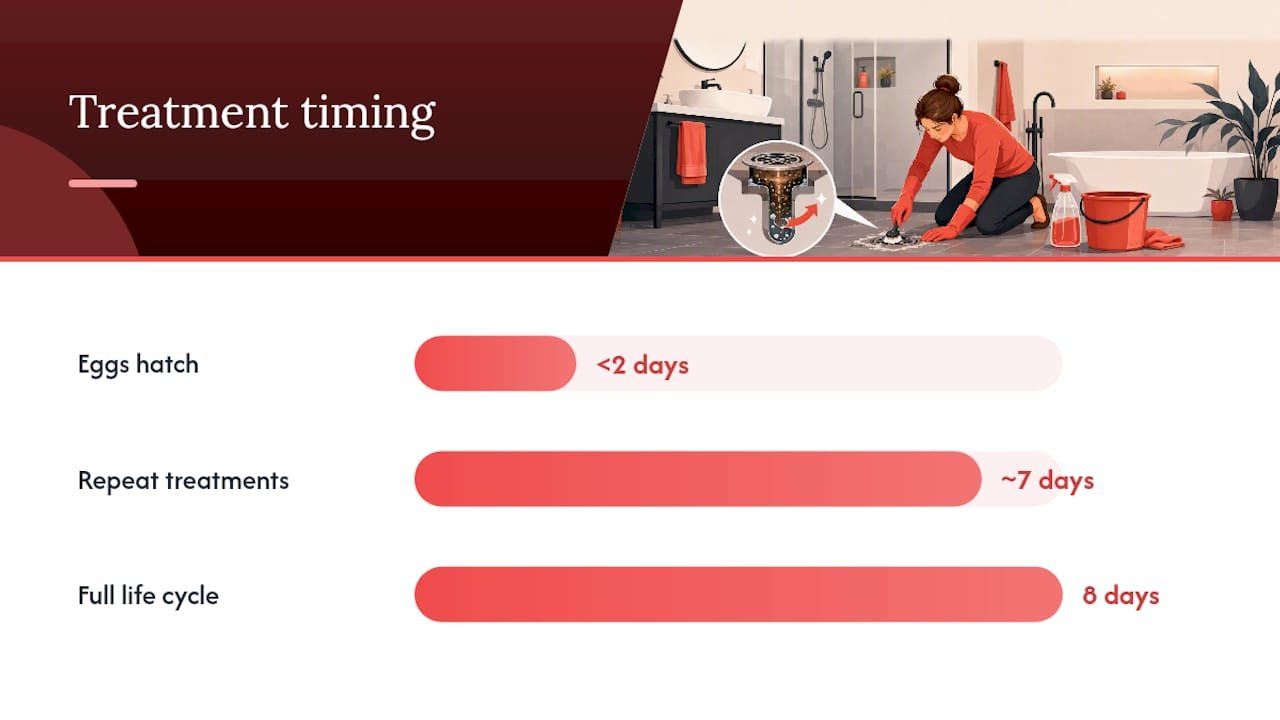
Their life cycle explains why a one-time cleaning never works. Females lay 30 to 100 eggs directly into the slimy biofilm coating your pipes, and those eggs hatch in under 48 hours. The full cycle from egg to adult runs 8 to 24 days, which is exactly why professionals recommend repeating treatment for roughly a week: you’re not just killing what’s flying around, you’re racing the next generation of eggs already hatching behind the drain cover.
A few things worth knowing about them:
- They don’t bite and rarely transmit disease to people or pets.
- Their presence is really a sanitation signal, not a health emergency.
- Large numbers usually mean a drain hasn’t been deep cleaned in months, or longer.
If you’re worried about health risks specifically, it’s worth understanding what flies actually pose a risk versus a nuisance before assuming the worst.
Finding Which Drain Is Actually Breeding Them
Bathrooms usually have three or four drains: the sink, the shower or tub, sometimes a floor waste. Only one is usually the source, and guessing wrong wastes a week of effort.
- Run the tape test. Cover each drain opening with a strip of clear tape overnight, sticky side down, leaving a small gap for air. Any adults that emerge get trapped against the tape, so whichever drain shows flies stuck to it by morning is your breeding site.
- Set a jar trap as backup. Place a jar with a bit of apple cider vinegar and a drop of dish soap near a suspected drain overnight. Flies drawn to the scent get trapped by the soap breaking the surface tension.
- Watch for behavioral clues. Flies clustering repeatedly around one specific drain, slow drainage, a faint sour smell, or a floor waste that only sees water once a month are all giveaways.
Dry traps are a common culprit. If a drain isn’t used often, the water seal in the trap evaporates, letting the biofilm dry out and the smell (and flies) travel back up into the room.
The DIY Method: Scrub, Enzyme, Flush, Repeat
This is the sequence that actually breaks the cycle, and it works because it targets the biofilm directly instead of just killing whatever’s flying.
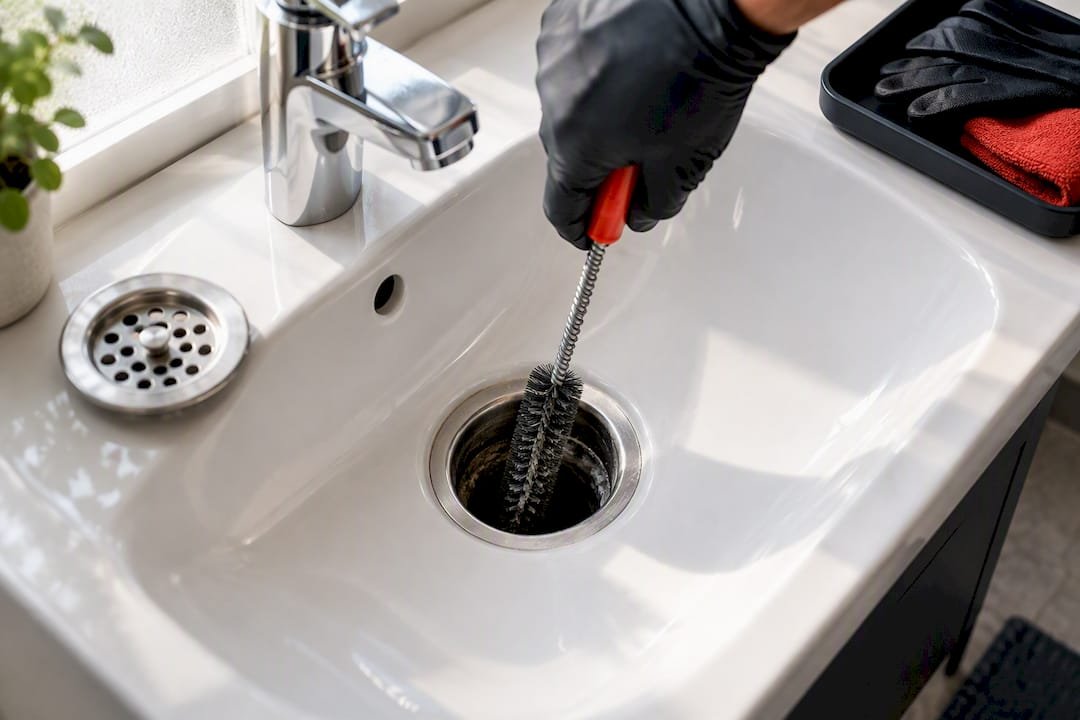
Step 1: Prep the drain. Put on rubber gloves before you start. Remove the drain grate or stopper by hand or with a small screwdriver, and set it aside for a separate scrub.
Step 2: Scrub out the biofilm mechanically. Use a stiff metal pipe brush (the kind sold for bottle or drain cleaning) and physically scrape the inside walls of the drain as far down as it reaches. This is the step most people skip, and it’s the one that matters most. Manual removal of the organic buildup is what actually gets rid of the gunk larvae feed on, since chemicals alone tend to flow over the gelatinous layer without breaking it apart. Scoop out the hair and slime you loosen and throw it in the trash, not back down the drain.
Step 3: Apply an enzymatic drain cleaner. Pour in a bio-enzymatic cleaner following the label instructions. Enzymes digest organic residue gradually and are gentler on pipes and septic systems than bleach, which can degrade rubber seals over repeated use without ever fully clearing the biofilm.
Step 4: Flush with hot water. Once the enzyme has had time to work, flush with hot or boiling water to help clear loosened debris. Be careful with boiling water on older PVC fittings, since it can occasionally soften joints.
Step 5: Trap the adults still flying around. Keep an apple cider vinegar and soap trap or a sticky trap near the sink while the larvae die off underground in the pipe.
Repeat this entire sequence daily for about a week. Because eggs hatch in under two days and the full cycle can wrap up in as little as 8 days, a single treatment only kills the flies that happened to be adults that day. Daily repetition catches each new wave before it can lay more eggs.
- Never rely on a single bleach pour as your only step.
- Don’t skip the mechanical scrub, even if the smell seems to improve after the enzyme alone.
- Dispose of scraped debris in the trash, not the drain, or you’re just feeding the next batch.
Pro Tip: Do the tape test again on day 8. If it comes back clean, you’ve broken the cycle. If flies are still showing up, you’re either missing a second breeding drain or dealing with something deeper in the pipe.
When a Plumber or Pest Technician Needs to Get Involved
Most bathroom drain fly problems clear up with a week of consistent scrubbing and enzyme treatment. When they don’t, it usually points to something the pipe brush can’t reach.
Watch for these red flags:
- The infestation is still active after 20 days of correct daily cleaning.
- Flies are showing up at multiple drains at once, not just one.
- There’s a strong sewer smell, not just a mild musty odor.
- You notice damp patches, soft flooring, or discoloration near a fixture, which suggests a leak feeding moisture into a wall or subfloor.
Persistence past that point often means a cracked pipe, a failed trap, or a deeper blockage that’s sitting somewhere your brush simply can’t reach. Plumbers use camera inspections to see inside the pipe and high-pressure jetting to strip biofilm from sections you can’t scrub by hand. If the issue is confirmed as an active infestation rather than a one-off plumbing fault, a licensed pest technician can treat the breeding sites and follow up to confirm it’s actually gone. Some cases genuinely need both: a plumber to fix the structural cause, a pest technician to clear what’s already breeding.
Keeping Drain Flies From Coming Back
Prevention is mostly about not letting biofilm build up again in the first place, and it takes minutes, not hours.
- Run water in every drain weekly, including ones you rarely use, so the trap stays primed and the seal doesn’t dry out.
- Clean drain covers and clear hair after every shower, since hair is one of the main things biofilm forms around.
- Do a light enzyme treatment monthly, even without visible flies, to keep buildup from getting a foothold again.
- Fix leaks the moment you spot them, since a slow drip under a vanity or behind a tile creates the constant moisture drain flies need to breed outside the pipe entirely.
- Improve bathroom ventilation. A drier bathroom means less ambient moisture overall, which makes the whole room less hospitable to breeding sites beyond just the drain itself. If mildew keeps returning on your bathroom walls too, reducing humidity generally helps both problems at once.
Small, boring habits like these are genuinely more effective long term than any single big cleaning session. For more routine upkeep ideas, see these ongoing fly prevention tips.
Our Take: Drain Flies Are a Plumbing Signal, Not Just a Bug Problem
Most homeowners treat drain flies like any other bug problem: spray something, hope it works, move on. That’s the wrong mental model. A drain fly infestation is closer to a warning light on a dashboard. It’s telling you there’s organic buildup, standing moisture, or a slow drain somewhere in the system, and killing the adults you can see does nothing about the cause.
At Bugspatrol Pest Management, we treat these calls as diagnostic work first. Our licensed technicians look at whether the fix is mechanical (a stubborn biofilm problem that daily scrubbing solves) or structural (a hidden leak, a failing trap, a blockage that needs a camera and real plumbing work). Most bathrooms clear up within that first week of scrub-and-enzyme cycling. If flies are still active after that, or if you’re seeing them at more than one drain, that’s usually our cue to recommend a proper inspection rather than another round of home treatment.
— navin
Get a Bathroom Drain Inspection From Bugspatrol Pest Management
If you’ve scrubbed, treated, and repeated for a week and the flies are still showing up, it’s not a cleaning problem anymore, it’s a plumbing or infestation problem that needs a trained eye. A professional pest control company is the option for homeowners who want a licensed technician to actually inspect the drain rather than sell another bottle of cleaner off the shelf.

The process starts with an inspection to confirm the breeding site, followed by a clear quote before any treatment begins, with a focus on family and pet safe methods. If your bathroom problem points to something bigger, like a hidden leak or a run of affected drains, our fly control service covers both the infestation and the follow-up check to confirm it’s cleared. For ongoing peace of mind beyond a single visit, our maintenance plans keep drains and common pest entry points checked on a regular schedule. Book an inspection through our general pest control page if any of the red flags above apply to your bathroom, or reach out through our main site for a general enquiry.
Sources
- Drain Fly Psychoda spp. (Insecta: Diptera: Psychodidae)
- How to Get Rid of Drain Flies: A Complete Guide for Homeowners
- DRAIN FLY (ExoPest PDF)
- Drain Flies in the Bathroom: What They Signal About Your Drains
FAQ
Why Am I Getting Drain Flies in My Bathroom?
Drain flies show up because biofilm, the slimy organic buildup of hair, soap, and skin cells, has accumulated inside a drain and given them a place to breed. It’s almost always tied to a drain that’s slow, rarely used, or hasn’t been scrubbed in a while, rather than anything coming in from outside.
How Do I Get Rid of Drain Flies in the Bathroom Permanently?
Permanent removal means physically scrubbing the biofilm out with a pipe brush, then applying an enzymatic cleaner and repeating the process daily for about a week. Skipping the mechanical scrub and relying on chemicals alone is the most common reason infestations keep coming back.
Do Drain Flies Mean I Have a Leak?
Not always. Most cases point to ordinary biofilm buildup or a dried-out trap, but persistent flies at multiple drains, damp patches near fixtures, or a sewer smell can indicate a hidden leak or plumbing fault that needs a plumber’s camera inspection.
What Instantly Kills Drain Flies?
Nothing kills the whole problem instantly, since the adults you see are only part of an active breeding cycle. A vinegar and soap trap or sticky trap will catch flying adults quickly, but the larvae in the biofilm still need mechanical scrubbing and enzyme treatment to actually clear.
When Should I Call a Professional Instead of Treating It Myself?
Call in help if the infestation is still active after 20 days of correct daily cleaning, if several drains are affected at once, or if you notice a strong sewer odor or signs of a leak. A licensed pest technician or plumber can access breeding sites and structural issues that a pipe brush simply can’t reach.