Most commercial pest control contracts in Canberra fail not because the technician missed a cockroach, but because the paperwork would not survive an audit. For facilities managers and procurement officers operating under ACT Government contracts or ISO 14001 certification requirements, that distinction matters enormously. Integrated pest management systems Canberra providers offer vary widely in quality, but the difference between a compliant programme and a liability often comes down to documentation, not chemical application.
IPM is not an environmental buzzword. It is a structured, evidence-based framework combining systematic monitoring, threshold-based intervention decisions, and chemical minimisation protocols, all recorded in a repeatable cycle that procurement teams and environmental auditors can verify. When your organisation is subject to government procurement expectations or environmental management certification, IPM compliance shifts from a preference to a contractual baseline.
This post defines what IPM actually means in commercial practice, walks through the operational cycle, and explains precisely what documentation must exist to satisfy audit requirements. It also identifies where commercial programmes typically break down and what to demand from any provider you engage.
What Integrated Pest Management Actually Means
Integrated Pest Management is defined by the USDA as a science-based decision-making process that coordinates biological, cultural, and chemical tools to prevent unacceptable pest activity. It is not a preference for organic methods or a reduced-chemical philosophy. Pesticides are part of the toolkit, applied only after monitoring indicates they are warranted.
The operational definition matters more than the concept. IPM functions as a repeating cycle: monitor conditions, establish written action thresholds, select the least-disruptive effective intervention, then document outcomes and adjust. Remove any one of those steps and what remains is conventional pest control with better marketing.
For Canberra commercial properties, including office buildings, government-leased facilities, and warehouses, this cycle applies wherever pest activity can affect occupant health, product integrity, or regulatory standing. We protect homes and businesses across the ACT, and in commercial settings, the documentation IPM generates is as operationally significant as the treatment itself.
The term is routinely misused as a label rather than a system. The practical test is straightforward: can the provider produce dated monitoring records, written threshold criteria, and intervention logs on request? If not, the service does not constitute genuine IPM, regardless of how it is described in a proposal.
This distinction is directly relevant to procurement officers and facilities managers evaluating whether a pest management contract will satisfy an ISO 14001 audit or ACT Government prequalification review.
The IPM Cycle in Commercial Practice
Genuine IPM in a commercial building runs across five sequential steps.
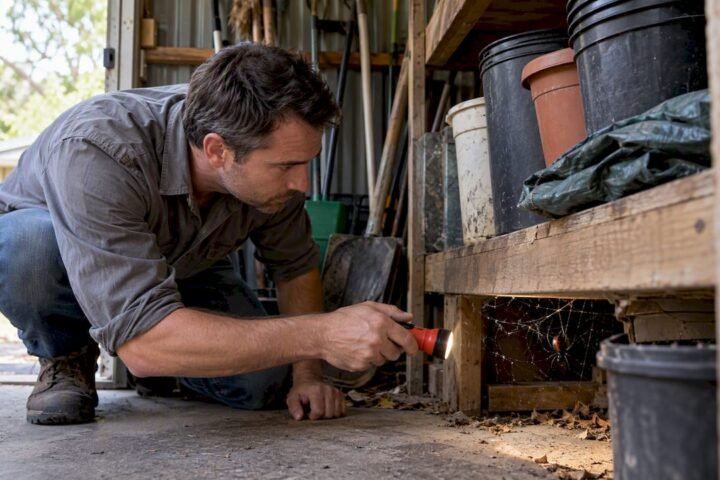
Step 1: Inspection and baseline monitoring. A systematic site survey maps pest species, entry points, harbourage zones, and current activity levels. This baseline determines everything that follows; without it, subsequent decisions lack objective grounding.
Step 2: Action thresholds. Written criteria define the pest pressure level at which intervention becomes warranted. Below that threshold, monitoring continues and no treatment is applied. This written standard separates IPM from reactive pest control and is the record an auditor will ask to see.
Step 3: Intervention selection hierarchy. Cultural controls, including exclusion and sanitation, are assessed before chemical options. Biological methods follow. When chemicals are necessary, the least hazardous effective product is selected. This hierarchy is embedded in IPM frameworks across jurisdictions because, as Illinois statute recognises, pest control strategies must be the least hazardous to human health and the environment.
Step 4: Application and control. Treatment is targeted to the specific site, pest, and activity zone. Blanket application across unaffected areas is avoided, minimising exposure to occupants and non-target environments.
Step 5: Evaluation and documentation. Post-intervention monitoring assesses effectiveness, updates site records, and feeds into the next inspection. This closed loop is what makes IPM a system rather than a sequence of isolated callouts.
For properties with multiple tenancies or high foot traffic, the cycle must be executed and recorded consistently across every visit. Gaps in routine monitoring logs are as problematic as gaps in intervention records during procurement or certification review. The same documentation logic applies in structured service programmes, such as our 4-step bird control services Phillip process, where each visit produces a complete record regardless of whether activity was detected.
IPM and ACT Government Procurement Expectations
That documented cycle matters because ACT Government procurement doesn’t operate on goodwill or verbal assurances. The ACT Government procurement framework requires suppliers to demonstrate structured, consistent service delivery with clear accountability trails. Pest management providers operating under this framework must be capable of showing what they did, when, and why.
To be precise: no explicit ACT-specific IPM mandate currently exists in publicly available regulatory sources. However, the structural expectations of the framework, including demonstrated compliance, documented service delivery, and audit-ready records, align directly with what a genuine IPM system produces as a matter of course. The 2025 amendments to the ACT procurement framework, commencing 1 July 2026, further emphasise transparency and accountability, reinforcing this alignment without prescribing it.
Procurement officers should ask for site-specific monitoring records, written thresholds, and dated intervention logs, not certifications alone.
Federal procurement trends through 2025 and 2026 reinforce this direction. The preference is for commercially practical, cost-justified approaches rather than prescriptive environmental mandates. IPM satisfies this because it is evidence-based and outcome-focused, not ideologically driven.
For ACT Government contractors and tenants in government-leased facilities, the ability to produce IPM records on request is straightforward risk management, whether or not a contract clause names the term explicitly.
BugsPatrol’s commercial pest management services in Canberra are structured to produce this documentation as a standard deliverable on every service visit, not as an upgrade or an afterthought.
How IPM Documentation Supports ISO 14001 Compliance
ISO 14001:2015 requires organisations to maintain a documented environmental management system covering monitoring, measurement, and control of environmental impacts. Chemical use on site, including pest treatments, falls within that scope as an operational environmental aspect. The standard then requires organisations to set environmental objectives, track performance against those objectives, and retain records available for certification audit review. A properly maintained IPM programme satisfies all three requirements within the pest management domain without requiring separate record-keeping systems.
Auditors assessing ISO 14001 compliance will look for specific evidence: documented chemical minimisation practices, a demonstrable review cycle, and corrective action records where pest incidents have occurred. These are not supplementary requirements; they are structural outputs of any genuine IPM programme. A pest management provider who conducts IPM in practice but delivers inconsistent documentation creates a gap the property operator must account for during audit, not the provider.
Organisations pursuing or maintaining ISO 14001 certification should include explicit contractual obligations in pest management agreements. Every service visit should produce monitoring records, threshold assessments, product safety data sheets, and intervention logs in a format that can be presented to an auditor without reconstruction.
What IPM Documentation Must Include to Be Audit-Ready
Knowing that ISO 14001 requires this documentation is one thing; knowing precisely what it must contain is another. An audit-ready IPM file has five distinct components, each serving a different evidentiary purpose.
Site-specific pest management plan. This is the foundation document. It records the property’s risk profile, target pest species, designated monitoring locations, and agreed action thresholds. Every subsequent record traces back to it. A generic service agreement does not substitute for it.
Monitoring records. Dated logs from every inspection visit, capturing pest activity levels, trap counts or detection results, and site conditions observed at each monitoring point. Undated or summary-only logs will not satisfy an auditor.
Intervention records. A written account of every treatment applied, including the product name, its Safety Data Sheet reference, the application method, the target pest, and the treated area. For properties managing termite risk, this requirement intersects directly with building compliance obligations; the same rigour applied to a professional termite inspection in Canberra applies here.
Threshold justification. This is the record that separates genuine IPM from reactive spray services. It documents that the agreed action threshold was reached before any chemical intervention was initiated, not assumed or estimated after the fact.
Review and corrective action records. Notes from periodic programme reviews confirming whether strategies are effective, whether thresholds need adjustment, and what changes were made in response to monitoring trends.
All five record sets should be retained for a defined period specified in the contract and aligned to your certification body’s audit cycle requirements, held in a format that can be presented directly to an auditor without reconstruction from invoices or staff memory.
Where Commercial IPM Programmes Break Down
Knowing what compliant documentation looks like makes it easier to spot when a programme falls short. Several failure patterns appear consistently in commercial pest management, and each one creates audit exposure.
Monitoring without thresholds is one of the most common. A provider conducts regular site inspections and logs the results, but no written criteria exist defining when those results warrant intervention. Activity logs without a decision framework are not IPM; they are a site diary. Monitoring data should drive intervention decisions, not occupant complaints.
Reactive-only service removes the proactive monitoring component entirely. When treatments are initiated only because staff report a problem, the provider is delivering conventional pest control under an IPM label.
Generic documentation fails at audit. Service reports recording only “no activity observed” or “treatment applied” contain none of the site-specific detail, product information, or threshold justification that a procurement reviewer or ISO auditor requires.
Inconsistent record-keeping across visits is equally damaging. Gaps in monitoring logs carry the same compliance weight as gaps in intervention records. IPM compliance depends on continuity across the full service period, not selective documentation of notable events.
Purchasing a “green” or “low-chemical” service does not constitute IPM if the monitoring cycle, threshold criteria, and documentation framework are absent.
Before signing any contract, request a sample documentation package from the provider. Discovering these gaps after an audit finding is a significantly more costly outcome than identifying them during procurement. For context on why provider credentials and structured processes matter, why hiring a licensed technician beats guesswork is worth reviewing before engaging any commercial pest management service.
Applying IPM to Canberra’s Common Commercial Pest Pressures
Those failure modes apply equally across all pest categories. What differs in Canberra is which pests create pressure, when, and what IPM monitoring looks like for each.
Rodents are a persistent pressure in Canberra commercial properties, with activity typically increasing as temperatures drop. IPM monitoring uses bait station activity records and physical exclusion audits to determine whether population pressure warrants active treatment or whether sealing entry points alone is sufficient. The distinction matters: applying rodenticide below threshold adds cost and chemical load without a documented justification.
Cockroaches and flies present differently across food service areas and waste management zones. Documented monitoring points with written action thresholds let the programme respond to actual conditions rather than the calendar.
Spiders in a structured IPM programme involve monitoring harbourage zones and entry points rather than routine broad application. Where activity stays below threshold, chemical intervention is deferred. Where it is warranted, treatment is targeted rather than applied broadly across occupied areas.
Termites carry the highest compliance stakes. Commercial properties with timber structural elements require a pest management approach supported by regular monitoring records. This is the pest category most likely to intersect with building compliance obligations, making documentation continuity non-negotiable.
The expert team at BugsPatrol structures commercial pest control services in Canberra around site-specific monitoring programmes for each of these categories, with documentation produced at every service visit. Critically, monitoring cycle frequency is set by seasonal pest pressure in the programme plan, not by fixed calendar intervals.
What to Require from a Commercial Pest Control Provider
Knowing which pest pressures affect your property is only half the evaluation. The other half is confirming that your provider can document their response in a format that holds up when it matters.
Before signing any commercial pest control agreement, request a written site-specific pest management plan, not a standard service agreement. This document should identify target pest species, nominated monitoring locations across your site, written action thresholds, and a scheduled review frequency. A generic agreement that describes services in broad terms is not a substitute.
Make documentation a contractual obligation: every service visit must produce written monitoring results, threshold assessment, and full intervention details.
Confirm the provider holds current licences and can supply Safety Data Sheets for every product used on site. This is a baseline requirement for sound occupational health practice and consistent with the operational documentation standards expected under environmental management frameworks. Knowing when to engage a licensed pest controller is also relevant context for facilities managers who manage mixed-use or sensitive-occupancy properties.
Ask directly whether the provider has delivered IPM programmes for clients subject to ACT Government procurement review or ISO 14001 certification audits. Then ask to see a sample report. If it would require reformatting before being handed to an auditor or procurement reviewer, it is not audit-ready.
BugsPatrol structures its commercial pest management services and service agreements to meet these documentation requirements for ACT clients operating under procurement or ISO 14001 frameworks.
IPM in Practice: The Operational Standard That Matters
That distinction determines whether a pest management programme satisfies procurement review or ISO 14001 audit requirements, or simply generates invoices.
For ACT commercial properties operating under government procurement frameworks or pursuing ISO 14001 certification, documentation is the practical output that matters. Specifying those documentation obligations in the contract before engagement is the only reliable way to ensure they are delivered consistently. Waiting until an audit finding or compliance issue to raise the question is a recoverable situation, but an avoidable one.
BugsPatrol provides commercial pest management services in Canberra structured around genuine IPM delivery. Site-specific pest management plans, monitoring records, and intervention documentation are standard deliverables, not optional extras available on request.
The first step is a site assessment. Contact BugsPatrol to discuss your property’s pest pressures, procurement obligations, and compliance framework. A service proposal aligned to your specific requirements, whether that is ACT Government procurement readiness, ISO 14001 documentation, or both, starts with understanding the site.
Conclusion
BugsPatrol delivers site-specific IPM programmes built around your property’s pest pressures and compliance obligations. Contact BugsPatrol today to arrange a site assessment and receive a service proposal aligned to your specific procurement or certification requirements.