Small round holes in furniture usually mean something has emerged from the wood at some point, but they do not automatically mean an infestation is active today. The clue is fresh, light colored frass (the fine powder borers push out) near clean edged holes. If you see that, isolate the piece and book an inspection; if the holes are old, discolored, and dust free, the damage is likely historic and needs no treatment.
TL;DR:
- Brush away visible frass, place white paper beneath the suspect hole, and check after 3 to 7 days; new powder confirms activity and warrants isolation and inspection.
- Sandlike frass and 1 to 2 mm holes suggest furniture beetles; flourlike dust may be historic, but only confirmed inactivity rules out treatment.
- Controlled heat at 52°C for 4 hours works; freeze small items at 20°C below zero for at least 7 days, and leave chemicals to licensed applicators.
- Keep indoor humidity at 40 to 60%, and quarantine secondhand furniture for 2 to 3 weeks before placing it near other wood.
- Hollow sounds, sagging load bearing parts, crumbling wood, or loose joints alongside fresh frass signal urgent inspection, especially in chairs and bed frames.
Table of Contents
- How to inspect furniture for signs of active borers
- Which borers commonly make holes in furniture
- If the infestation is active: treatment options and their limits
- Practical prevention: humidity, storage, and monitoring
- When to call a professional
- Safe handling and disposal of infested furniture
- Non-chemical ways to prevent future borer damage
- How fast does a borer infestation progress?
- Signs the damage has become structural
- Our take on treating furniture borers
- Get a professional inspection and treatment plan
- FAQ
- Sources
How to inspect furniture for signs of active borers
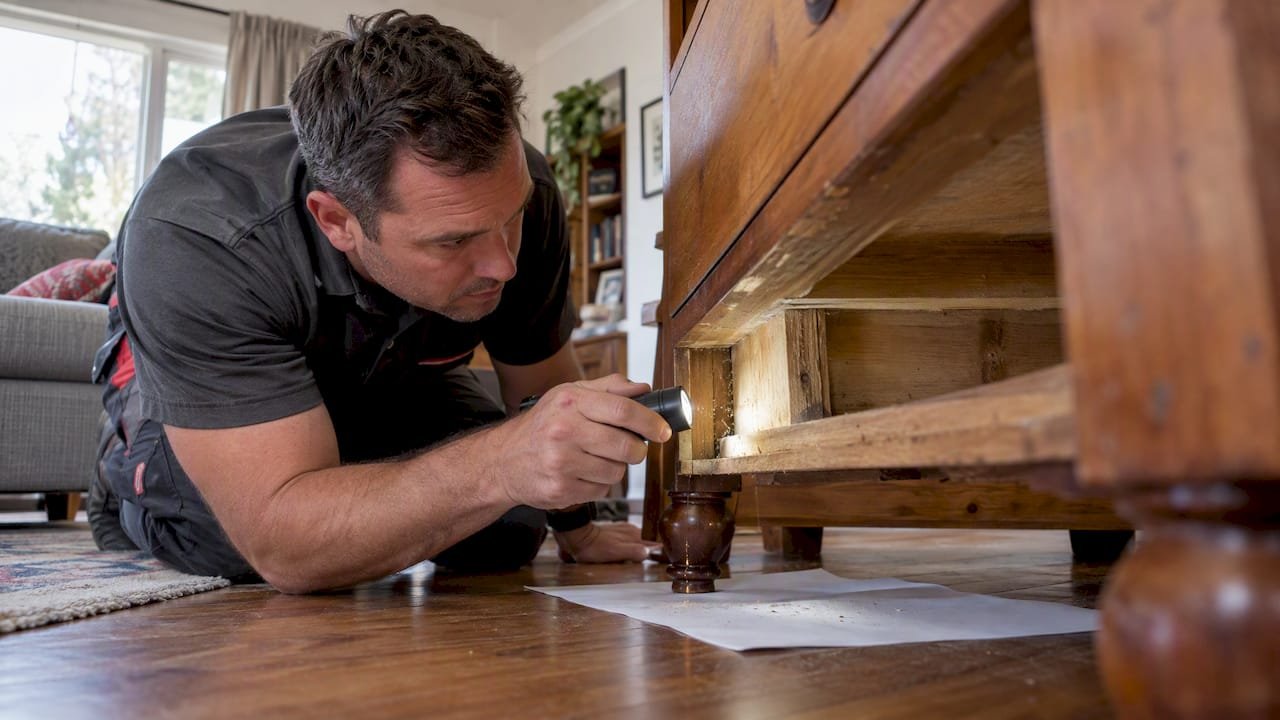
A thorough check needs nothing more than a flashlight, a piece of white paper, and a bit of patience. Start by turning the furniture over or pulling out drawers, since borers often tunnel through unfinished undersides and joints where moisture lingers longest.
Fresh frass is the single most useful clue. It looks like fine sawdust or powder, usually pale and loose, and it collects in small mounds directly beneath or around a hole. Old frass, by contrast, is darker, compacted, and often mixed with dust or cobwebs that have settled over years.
To confirm activity rather than guess, run a short test:
- Brush away any visible frass, then place a sheet of white paper or a strip of clear tape beneath the suspect hole.
- Check back after 3 to 7 days. New powder on the paper means something is still active inside the wood.
- Shine a flashlight across the surface at a low angle. This raking light makes crisp, pale edged holes (recent emergence) stand out from older holes that have darkened or rounded over.
- Rub a little frass between your fingers. Gritty, salt-like texture points to one borer type, while a very fine, flour-like powder points to another, a distinction covered in the next section.
Pro Tip: Photograph each hole cluster with a coin or ruler for scale before you clean anything up. If you later need a professional opinion, those images speed up diagnosis considerably. Keep the item away from other wooden furniture until you know what you are dealing with. For a step by step walkthrough, our 5-step wood borer diagnostic covers the same checks in more detail.
Which borers commonly make holes in furniture
Hole size, shape, and frass texture narrow down the likely culprit well before any lab test is needed.
- Furniture beetle (Anobiid): round holes about 1 to 2mm wide with gritty, sand-like frass. It favors damp or aged timber and can remain active for years in older, poorly ventilated pieces, feeding for 2 to 5 years before adults emerge.
- Powderpost beetle (Lyctid): very fine, powdery frass, almost flour-like. According to heritage timber guidance, this damage is frequently historic and may need no further action once it is positively identified as inactive.
- Pinhole and ambrosia beetles: small circular holes that form in green, unseasoned timber before it is milled into furniture. The damage is typically already done by the time the piece is in your home, so it usually needs no treatment at all.
- European house borer (EHB): larger, oval holes roughly 5 to 10mm long, with the potential for serious structural damage in susceptible seasoned softwood. It is unusual to find in finished furniture but worth flagging if the holes are notably larger than pinhead size.
Hole shape and frass texture give you a strong lead, but a licensed technician’s identification is what settles the question when the stakes are higher, such as with antiques or structural timber pieces.
If the infestation is active: treatment options and their limits
Once you have confirmed fresh frass or live activity, the right response depends on the item’s size, value, and how deep the damage runs. Conservation guidance recommends heat treatment at 52°C held for 4 hours as one of the more reliable, low-impact options when it can be applied with controlled equipment. That precision matters: uneven heat can warp veneer, crack joints, or damage finishes, so it is not a job for a household oven or a tarp in the sun.
Three main options cover most active cases:
- Thermal treatment: Holding the piece at 52°C for 4 hours kills borer life stages effectively when the heat is even and controlled, but it needs calibrated equipment to avoid scorching finishes or stressing glued joints.
- Freezing: Sealing the item and freezing it at -20°C for at least 7 days works well for smaller items, provided the piece is wrapped properly beforehand and allowed to thaw slowly afterward to prevent condensation from soaking back into the timber.
- Chemical treatment and fumigation: Insecticidal treatments and fumigation remain effective against many active infestations, but they involve safety, environmental, and legal requirements that call for a licensed applicator rather than a DIY approach.
Not every hole-bearing piece needs any of this. Historic damage with hardened, dark frass and no fresh dust after a week of monitoring generally calls for no intervention beyond keeping an eye on it. Confirming activity first saves you from treating furniture that already stopped being a problem years ago.
Practical prevention: humidity, storage, and monitoring
Most active furniture beetle infestations trace back to damp, poorly ventilated conditions, which makes moisture control the single most useful habit you can build.
- Keep indoor relative humidity in the 40 to 60% range and ensure rooms with wooden furniture get regular airflow, since stagnant, damp basements and closed-up garages are where borers thrive longest.
- Seal or finish exposed sapwood and end grain on unfinished or antique pieces, since bare, absorbent surfaces are easier entry points than varnished or painted ones.
- Quarantine any secondhand furniture or attic finds for 2 to 3 weeks before bringing them near other wooden items, and inspect them under raking light first.
- Set up simple monitoring: a sticky trap nearby or a periodic flashlight check catches new activity early, and keeping dated photos lets you compare hole clusters over time rather than relying on memory.
For valuable antiques, talk to a conservator before attempting any heavy restoration, since stripping or re-finishing can obscure evidence a specialist would otherwise use to judge whether treatment is warranted.
When to call a professional
Book a professional inspection if you spot fresh, light colored frass, several new holes appearing close together, live adult beetles, or if the piece has meaningful monetary or sentimental value. A technician’s visit typically checks for the extent of frass and tunneling (called galleries), confirms the species, and estimates how far the damage has spread, which determines whether the right next step is no action, a targeted treatment, or removal of the affected section. Our pest inspection checklist outlines what a thorough inspection typically covers. A short visit is often enough to settle whether invasive treatment is actually necessary.
Safe handling and disposal of infested furniture
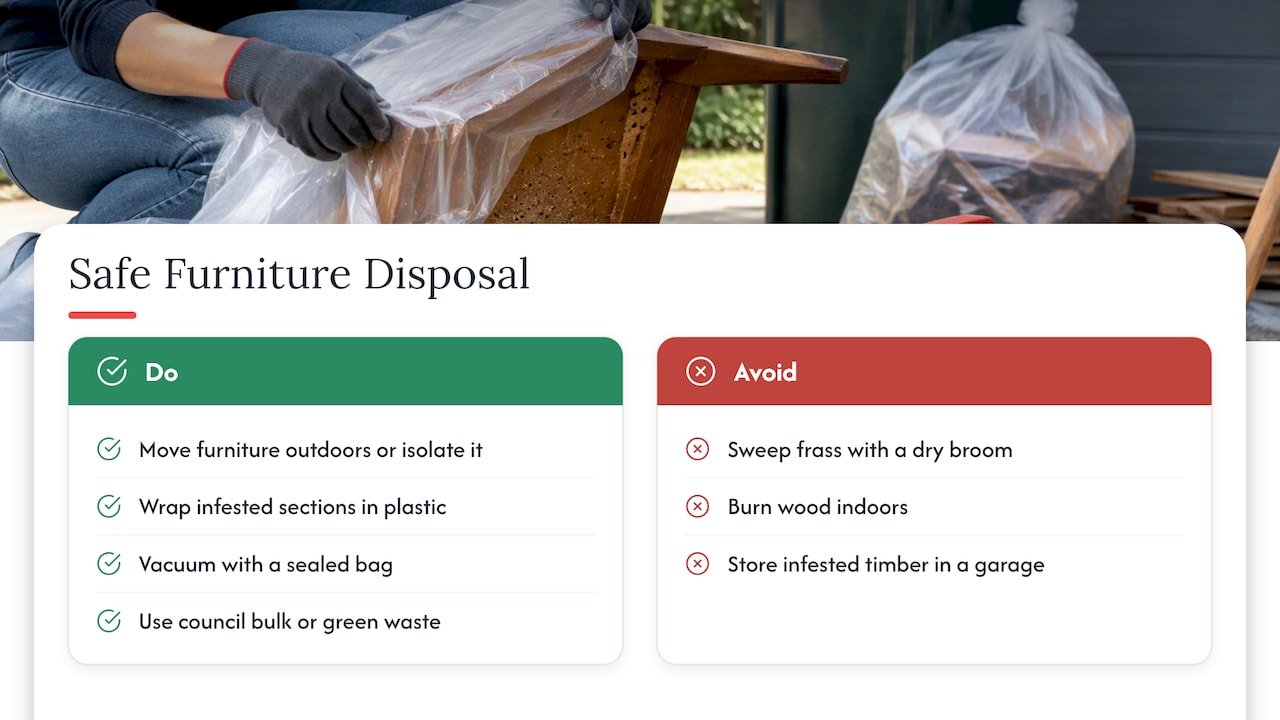
If you decide a piece is too damaged to save, handling it correctly limits the risk of spreading borers to other wooden items in the house. Move the furniture outdoors or into an isolated space before you do anything else, since dislodged frass and any live insects can fall into carpets, skirting boards, or nearby timber furniture during transport.
Wrap heavily infested sections in plastic sheeting before carrying them through the house, and avoid sweeping frass with a dry broom, which scatters fine dust into cracks and crevices. A vacuum with a sealed bag works better for cleanup around the affected area.
Dispose of condemned wood through your local council’s bulk waste or green waste collection rather than burning it indoors or storing it in a garage “just in case,” since stored infested timber can keep a population going in your home long after the original piece is gone. If only part of a piece, such as a drawer base or chair rail, is affected, a professional can sometimes cut out and replace that section rather than discarding the whole item, which is worth asking about before you write off something with sentimental value.
Treat any tools used on the infested wood, such as chisels or sanders, as needing a wipe down before you use them on other furniture, since frass and tiny larvae can cling to blades and brushes.
Non-chemical ways to prevent future borer damage
Sealing and barrier methods give you a layer of protection that does not rely on insecticides, which matters for furniture that sees regular contact from children or pets.
Varnish, shellac, wax, or polyurethane finishes close off the open pores in bare or sanded wood that borers use to lay eggs, so refinishing older, unfinished pieces is one of the more effective steps you can take without chemicals. Pay particular attention to end grain and the undersides of tabletops and chair seats, since these are usually left unfinished during manufacturing and are exactly where beetles target first.
Caulk or wood filler closes small cracks and joints where eggs can be deposited unnoticed, and it is worth doing on any seams that have opened up with age. For outdoor timber structures near your home, such as garden cabins or sheds, external treatments formulated for exposed timber offer a comparable barrier; guidance on treating cabin exteriors covers the kind of surface preparation and reapplication schedule that keeps timber protected season to season.
Physical barriers also help indoors: keeping furniture raised slightly off damp concrete floors, using breathable covers rather than airtight plastic on stored pieces, and avoiding direct contact between infested firewood stacks and furniture in the same room all reduce the odds of cross contamination without a single spray.
How fast does a borer infestation progress?
Borer infestations move slowly compared to pests like termites, which is part of why the holes you notice today may represent damage that began years earlier. Common furniture beetle larvae can feed inside wood for 2 to 5 years before maturing, exiting as adults, and leaving behind the small round holes you see on the surface.
That long larval stage means a single generation’s damage can go completely unnoticed until the adults emerge and fly off to mate, often in warmer months. By the time you spot fresh holes and frass, the insects responsible have usually already left the piece, though eggs laid nearby can start a new cycle if conditions stay favorable.
This timeline is exactly why urgency depends on current activity rather than the presence of holes alone. A piece with old, scattered holes and no fresh frass has likely finished its infestation cycle. A piece producing new frass repeatedly may still be active, and the sooner you intervene, whether through environmental changes or treatment, the less structural damage may accumulate before the current generation completes its life cycle.
Signs the damage has become structural
Surface holes are cosmetic until the tunneling beneath them compromises how much weight or stress a piece of furniture can bear. Watch for a hollow or papery sound when you tap the wood, which suggests extensive internal tunneling rather than a few isolated holes.
Visible sagging in load-bearing parts, such as chair legs, table aprons, or bed frame rails, points to advanced damage, as does wood that crumbles or flakes away when pressed rather than holding firm. Joints that have loosened without an obvious cause, especially in pieces that were previously solid, can also indicate that tunneling has undermined the glue and wood fiber around dowels or mortise and tenon connections.
A cluster of holes concentrated in one small area, rather than scattered individually, often means the internal galleries have merged into a larger hollow space, which weakens that section significantly more than the same number of holes spread across the piece. If you notice any of these signs alongside fresh frass, treat the item as a priority for inspection rather than routine monitoring, since continued use could risk a structural failure, particularly in load-bearing furniture like chairs and bed frames.
Our take on treating furniture borers
We favor inspecting before treating. Reaching for heat, freezing, or chemicals before confirming activity wastes effort and risks damaging furniture that was never at risk to begin with. With over 10 years of experience and 5,000+ homes serviced, we have learned that documenting evidence and getting a second opinion usually settles the question faster than guesswork.
— navin
Get a professional inspection and treatment plan
If fresh frass or live borers turn up during your checks, we offer a direct path from diagnosis to treatment rather than leaving you to guess at the right chemical or heat parameters yourself. Our licensed technicians assess hole patterns, frass, and gallery extent on site, then recommend a treatment matched to the piece rather than a one-size approach.

- A one-off general pest control visit covers inspection and targeted treatment for an active infestation.
- Ongoing protection is available through the Gold Complete, Silver Combined, Bronze Termite, or Bronze General Pest subscription plans, starting from $29.98 AUD per month for Bronze Termite or Bronze General Pest.
- Our technicians use low-impact methods where suitable, with safety for families and pets built into every visit.
Reach out through our professional pest control services page to book an inspection and get a plan specific to your furniture.
FAQ
How to get rid of borers in wooden furniture?
Confirm activity first by checking for fresh, light colored frass, then treat with controlled heat at 52°C for 4 hours or freezing at -20°C for at least 7 days for smaller items. For larger pieces or heavier infestations, a licensed technician can apply targeted chemical treatment safely.
Are wood borers as bad as termites?
Wood borers generally cause slower, more localized damage than termites, since common furniture beetle larvae feed inside wood for 2 to 5 years before emerging, while termite colonies can consume structural timber much faster. Borer damage mainly affects individual furniture pieces rather than a building’s framework, though species like the European house borer can cause more serious structural harm in susceptible timber.
What is the best poison to get rid of wood borers?
Chemical and fumigation treatments can be effective against active infestations, but they involve safety, environmental, and legal requirements that call for a licensed pest control professional to apply correctly. Many historic borer holes need no chemical treatment at all once confirmed inactive.
How long do wood borers last?
Common furniture beetle larvae typically develop inside wood for 2 to 5 years before emerging as adults, which is why holes you notice may reflect damage that started years earlier. An active infestation can continue across multiple generations if moisture and timber conditions stay favorable, while confirmed historic damage means the cycle has already ended.
How can I tell if borer holes are old or new?
Fresh holes have crisp, pale edges and loose, light colored frass nearby, while old holes look darker, rounded, and are free of fresh dust. Placing white paper beneath a hole for several days and checking for new powder is a reliable way to confirm current activity.
Sources
- Managing pests in the collection: Integrated Pest Management (IPM)
- Wood and furniture – Australian Institute for the Conservation of Cultural Material
- Heritage maintenance: Wood preservation Information sheet 5.1
Recommended
- Australian Homeowners: 5 Step Wood Borer Diagnostic Before You Spray
- Homeowners: Spot Harmless Garden Termites and When to Call an Inspector