
Small round holes with fine, pale powder scattered underneath usually point to powderpost or furniture beetle activity, not termites. If the holes look fresh, there are more than a handful, or they sit in structural timber like joists or rafters, stop guessing and get a licensed inspector out. Surface sprays rarely reach larvae tunneling deep inside the wood, so photograph the damage and act before booking any DIY fix.
TL;DR:
- Most visible exit holes and fresh, loose frass indicate active wood borer larvae, especially in structural timber like beams or joists, requiring urgent inspection.
- Common borer species such as Lyctus and Anobium often cause cosmetic damage that stops naturally once vulnerable timber is consumed, unlike the structural threat posed by European house borer.
- Differentiating between termite and borer damage is crucial, as termites leave hollow, unbroken surfaces, while borers create round or oval exit holes with loose frass.
- Homeowners should photograph, collect samples, and check for new dust over a couple of weeks to confirm whether larvae are still active before calling a professional.
- Professional inspections with moisture meters and thermal imaging are essential for accurate species identification and effective treatment planning, especially in structural timber.
Table of Contents
- What Wood Borer Identification Actually Involves
- Active Infestation or Old Damage? A Quick Diagnostic
- Common Borers Homeowners Should Know
- Reading Damage: Furniture, Floors, Framing, and Trees
- Confirming the Species: What You Can Check, What an Inspector Adds
- Treatment Options and Why DIY Sprays Fall Short
- Prevention: Making Timber Unattractive to Borers
- Why a Licensed Inspection Changes the Outcome
- Monitor or Act Now? A Straight Answer
- Book a Licensed Timber Pest Inspection
- Where to Report or Verify a Suspected Priority Pest
- Sources
- FAQ
What Wood Borer Identification Actually Involves
Wood borer identification means matching the damage in front of you to the beetle species that caused it, since the culprit is almost never the beetle itself but its larvae. Adult beetles lay eggs on or just under the wood surface, and it’s the grub-like larvae that spend months or years chewing through timber before finally emerging as adults, leaving the telltale exit holes homeowners actually notice.
That biology is exactly why borer damage looks so different from termite damage. Termites build mud tubes, hollow out timber from the inside while leaving a thin, unbroken surface skin, and rarely leave any visible holes at all. Borers do the opposite: they leave clean, round or oval exit holes and dump loose, dry frass (a mix of digested wood and droppings) either inside the tunnel or piled beneath it.
- Termites: mud tubes, hollow-sounding timber, no exit holes, damage hidden until the surface is disturbed.
- Wood borers: visible exit holes, frass that spills out or collects below, damage visible from the outside as it happens.
- Shared risk: both can go undetected for years, since larval development for some species runs several seasons before the first adult ever appears.
That multi-year larval stage is the sneaky part. A borer can already be halfway through chewing a support beam before you ever see a single hole, which is one reason inspectors look for evidence beyond the obvious.
Active Infestation or Old Damage? A Quick Diagnostic
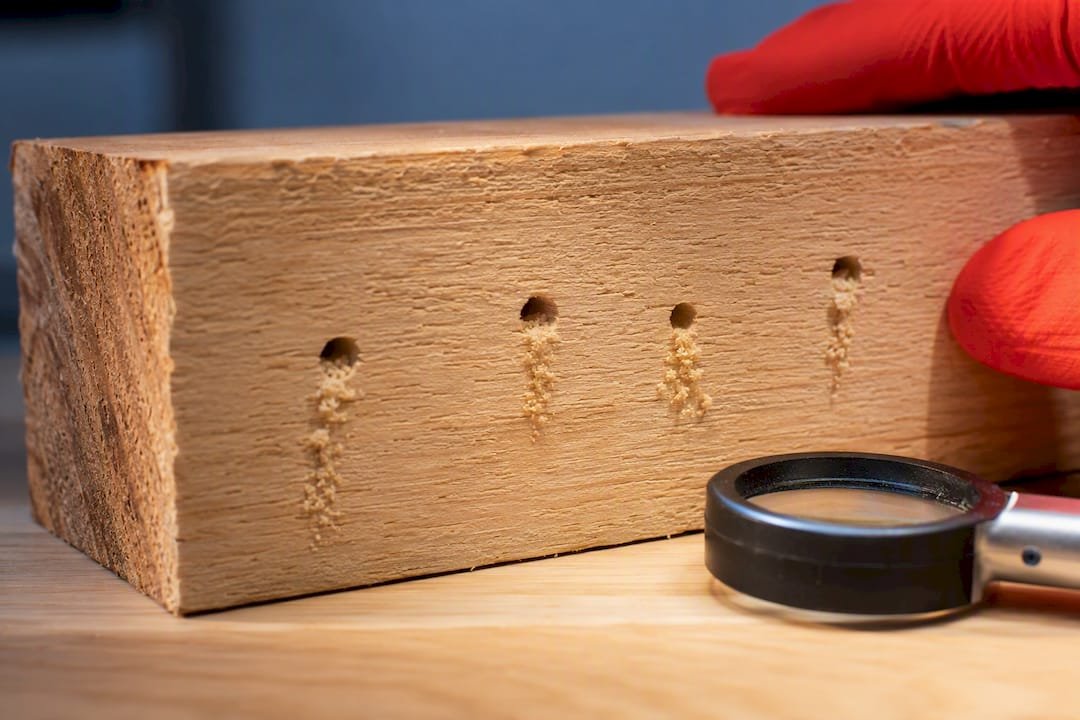
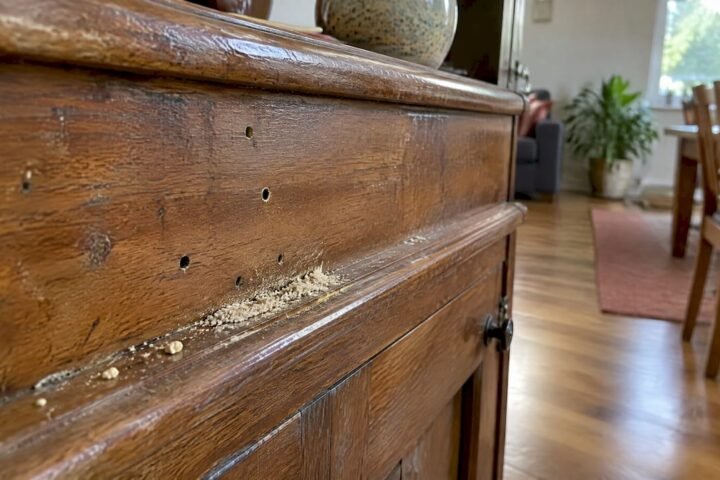
Fresh frass looks pale, feels fine and powdery, and often falls in small mounds directly below a hole. Old frass turns grayish, packs down, and picks up dust or cobwebs, a sign the activity that produced it happened years ago. New exit holes also show sharp, clean edges with pale wood showing inside; old holes darken, weather, and sometimes get filled with dirt or paint over time.
Run through this before deciding whether to worry:
- Check frass color and texture. Pale and loose means recent activity; dull and compacted means it’s probably historical.
- Look for new dust. Wipe the area clean, check again in a week or two. Fresh piles mean larvae are still active.
- Listen and watch at dusk. Adult beetles are most active in evening light in warmer months, and a faint clicking or rustling from timber can indicate live movement inside.
- Count the holes. A cluster of new holes spreading across a beam is a different problem than one old hole in a picture frame.
- Check whether structural timber is involved. Furniture is a wait-and-watch situation; roof trusses or floor joists are not.
Pro Tip: Tape a sheet of dark paper under a suspect area for two weeks. Fresh frass collecting on it is far more reliable than a single glance, since dust from cleaning or renovation can fool even careful homeowners.
Treat multiple fresh holes, structural timber, or anything resembling an unfamiliar oval exit hole as an urgent call, not a monitor-and-wait situation.
Common Borers Homeowners Should Know
Most homeowner cases in older or timber-framed properties trace back to a handful of species, and each leaves a distinct calling card.
- Lyctus (powderpost beetles): exit holes about 1 to 2mm across with frass that feels like fine flour. They target the sapwood of hardwoods, and many Lyctus infestations are self-limiting once the sapwood is consumed, meaning they often stop on their own once the vulnerable timber runs out. Usually cosmetic in flooring trims or furniture rather than a structural threat.
- Anobium (furniture beetle, sometimes called common house beetle): holes around 2mm with coarser, gritty frass that feels closer to table salt than flour. This one can persist for years, and severe infestations can channel along the grain and leave floorboards spongy underfoot, which is when repair or replacement enters the conversation.
- Longicorn borers (Phoracantha species): oval holes in the 6 to 10mm range with coarser, sawdust-like frass. These are more commonly associated with living or recently felled trees, showing kino bleeding and fine frass around the trunk base, though imported or untreated timber can carry signs indoors too.
- Pinhole (ambrosia) borers: tiny, almost invisible flight holes with little to no frass, since these beetles feed on fungus inside the wood rather than the timber itself. They typically leave once the wood dries out during seasoning and rarely cause ongoing structural concern.
- European house borer (Hylotrupes bajulus): oval emergence holes roughly 5 to 10mm, frass packed tightly inside the gallery rather than spilling out, and sometimes blister-like swellings visible on the timber surface. Adults run 18 to 25mm long with larvae reaching up to 41mm, and the larval stage can stretch on for years inside seasoned softwood framing. This one is a recognized priority pest and a genuine structural risk, not a cosmetic nuisance.
Not every borer deserves the same reaction. Lyctids and pinhole beetles frequently amount to nothing more than a cosmetic mark once the timber dries and the vulnerable sapwood is gone, while European house borer and severe Anobium activity in structural members call for a real remediation plan.
Reading Damage: Furniture, Floors, Framing, and Trees
Damage severity depends heavily on where you find it, and a good triage habit is to separate cosmetic problems from structural ones before deciding what to do next.
- Furniture and trim: scattered holes, small frass piles, occasional blistering on the finish. Usually low urgency unless the piece has sentimental or resale value worth protecting.
- Flooring: sagging or spongy boards underfoot signal that galleries have weakened the timber from within, not just the surface.
- Framing and joists: internal galleries here are the ones that matter most, since a compromised joist affects the load path of the whole structure. This is where a bore scope or thermal imaging earns its keep.
- Trees: kino bleeding, fine frass at the trunk base, and dieback in the canopy suggest longicorn or related activity, and a large, structurally significant tree near a house or driveway deserves faster attention than an isolated fence post.
Prioritize by consequence, not by how alarming the hole looks. A pinhole cluster in a garden shed post can wait for the next dry season; a spongy patch of hallway floorboard cannot.
Confirming the Species: What You Can Check, What an Inspector Adds
A homeowner can gather real evidence before ever picking up the phone, and that evidence makes any professional visit faster and more accurate.
- Photograph the holes, frass, and any adult beetles you spot, with something for scale like a coin or ruler in frame.
- Collect a small frass sample in a sealed bag rather than sweeping it away, since texture and color are diagnostic.
- Tap the timber gently and listen for a hollow or dull sound, which can indicate internal galleries even where the surface looks intact.
- Clear the area and recheck for new dust over one to two weeks to confirm whether larvae are still active.
- Set a simple light trap near suspect timber at dusk during warmer months, when adult beetles are most likely to emerge and fly.
A licensed inspector builds on that groundwork with a moisture meter to flag damp timber that attracts and sustains larvae, thermal imaging to spot temperature differences that hint at hidden galleries, and sometimes a bore scope to look inside a joist without cutting it open. If the species can’t be confirmed on sight, samples get sent for identification, and suspected exotic or priority pests should be reported to state biosecurity authorities rather than treated as a routine job.
Treatment Options and Why DIY Sprays Fall Short
What you can reasonably handle yourself is limited, and knowing the boundary saves money and frustration.
- Remove and dispose of small, non-structural infested items like old picture frames or firewood.
- Reduce moisture around timber, since damp wood is far more attractive to borer larvae than dry, well-ventilated wood.
- Replace small cosmetic trims yourself if the damage is confirmed old and inactive.
Beyond that, professional options do the real work. Localized injection treatments target active galleries directly, surface treatments can handle shallow infestations in accessible timber, fumigation works for contained items like furniture that can be sealed and treated as a unit, and full timber replacement becomes the answer once structural integrity is genuinely compromised. The reason DIY sprays frequently fail is straightforward physics: larvae sit deep inside galleries that a surface application never reaches, so the beetle population keeps developing untouched underneath a treated shell. Inspection details for termite-adjacent damage follow a similar logic. What looks treated on the outside can still be very much alive inside.
Pro Tip: If a hardware-store spray hasn’t stopped new frass appearing within a few weeks, that’s your signal the infestation is deeper than a surface product can handle, not that you bought the wrong brand.
Priority pests carry their own reporting obligations on top of treatment, since structural damage from species like European house borer can be significant enough to warrant a coordinated regional response, not just a private pest job.
Prevention: Making Timber Unattractive to Borers
Moisture control does more heavy lifting here than any chemical treatment, since damp, poorly ventilated timber is what most borer species need to thrive in the first place.
- Fix roof and plumbing leaks promptly, since a slow drip into a ceiling cavity can sustain an infestation for years without anyone noticing.
- Improve sub-floor ventilation and clear any pooling water around the foundation.
- Keep stored or structural timber off direct soil contact.
- Choose seasoned or treated timber for visible trims, flooring, and outdoor structures.
- Inspect second-hand furniture closely for holes and frass before bringing it indoors, since infested pieces are a common way borers enter a home in the first place.
- Set a seasonal check for attics, roof timbers, and any stored lumber, since these spots go unchecked for months at a time.
None of this eliminates risk entirely, but a dry, well-ventilated home gives most borer species far less reason to settle in.
Why a Licensed Inspection Changes the Outcome
Grouping every hole and frass pile under one label leads homeowners toward the wrong fix more often than people realize, since species-level identification is what actually determines whether a property needs chemical treatment, monitoring, or nothing at all. Bugspatrol Pest Management’s licensed technicians use moisture meters and thermal imaging on every timber pest job, backed by more than 10 years in the field across 5,000+ homes serviced.
A confirmed diagnosis, not a guess, decides whether a homeowner needs a targeted treatment plan, ongoing monitoring, or nothing more than a moisture fix. Getting that call wrong in either direction costs money, either through unnecessary chemical treatment or through damage left to spread unchecked.
That written condition report and remediation plan also matters at resale, when a buyer’s building inspection turns up old borer evidence and asks for proof it was properly assessed.
Monitor or Act Now? A Straight Answer
If the holes sit in structural framing, or if fresh frass keeps appearing week after week, get an inspection booked rather than waiting to see what happens. Isolated, old-looking powderpost holes in a piece of furniture or a skirting board are a reasonable case for watching and rechecking in a season. Where the two overlap, resale risk tips the scale: a documented professional assessment now is cheaper than an awkward conversation with a buyer’s inspector later.
— navin
Book a Licensed Timber Pest Inspection
Guesswork on borer holes tends to go one of two ways: an unnecessary chemical treatment on cosmetic damage, or a missed structural problem that gets worse every season it’s ignored. Licensed technicians use moisture meters and thermal imaging on inspections to provide species-level diagnosis and written remediation plans instead of guesses.

A booked inspection typically covers accessible roof space, sub-floor timber, and any flagged problem areas, followed by a report that spells out what’s active, what’s historical, and what (if anything) needs treatment. Experienced pest management services provide reports that help determine whether targeted treatment, moisture fixes, or monitoring are appropriate. Book a general pest and timber inspection or check the termite and timber pest control page for details on what’s included before you schedule a visit.
Where to Report or Verify a Suspected Priority Pest
If a beetle or damage pattern doesn’t match anything familiar, Agriculture Victoria’s European house borer page and the Australian Government’s exotic longhorn beetle page both offer identification photos and reporting guidance. For suspected polyphagous shot-hole borer or other priority pests, Business Queensland’s reporting page lists the Exotic Plant Pest Hotline for fast reporting. If structural safety is a concern alongside pest damage, a dilapidation report can document existing conditions before any repair work begins.
Sources
- European house borer | Agriculture Victoria
- Exotic longhorn beetles (Australian Government – Department of Agriculture)
- Your Home — Termites and Borers (archicentreaustralia)
FAQ
How do you know if you have a wood borer problem?
Look for small round or oval exit holes paired with loose, powdery frass either inside the hole or piled beneath it. If the frass is pale and fresh-looking rather than gray and compacted, activity is likely still ongoing.
Are wood borers as bad as termites?
Not usually. Most common borers like Lyctus and pinhole beetles cause cosmetic or self-limiting damage, while termites can silently hollow out structural timber over a much larger area. European house borer is the exception among common borers, since it’s a recognized structural risk to seasoned softwood framing.
What kills wood borer naturally?
Reducing moisture and improving ventilation removes the conditions larvae need to survive, and letting timber dry out fully can stop pinhole and ambrosia beetle activity on its own. There isn’t a reliable natural treatment for active larvae already deep inside timber galleries, so persistent infestations still need professional assessment.
How do I get rid of wood borers?
Small, cosmetic infestations in non-structural items can sometimes be managed by removing the affected piece and controlling moisture, but active infestations in structural timber need professional treatment, since over-the-counter sprays rarely reach larvae inside the wood. A licensed inspection determines whether the answer is targeted treatment, fumigation, or timber replacement.
Do all wood borer holes mean an active infestation?
No. Old, weathered holes with dull, compacted frass usually mean the activity happened years ago and the timber may already be clear, while fresh holes with pale, loose frass point to a live infestation worth checking further.
Recommended
- Termite Inspection Signs
- Termite Damage Identification
- White Ants vs Termites
- Termite Prevention for New Home Canberra

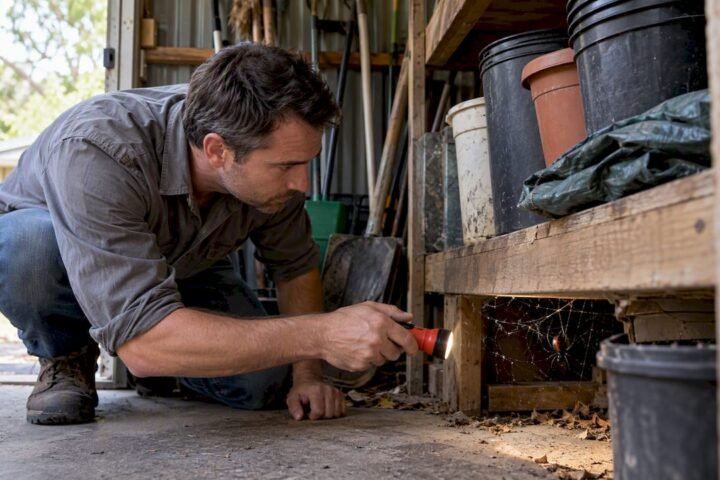
[…] wooden furniture until you know what you are dealing with. For a step by step walkthrough, our 5-step wood borer diagnostic covers the same checks in more […]