Blast aphids off with a firm jet of water or remove them by hand for small outbreaks, then reach for potassium soap or horticultural oil only if the problem persists. Favor physical removal and biological control over broad-spectrum insecticides, which kill the predators that keep aphids in check. If an infestation keeps coming back despite good care, that is the point to consider professional help.
TL;DR:
- Inspect new shoots weekly in spring, checking leaf undersides for clusters, sticky honeydew, curled growth, or ants that may protect aphids.
- Contact sprays work only where they land, so coat buds and leaf undersides, avoid hot sun, and repeat every 7 to 14 days.
- Leave tan, swollen aphids intact because they may contain parasitic wasp larvae; ladybirds, lacewings, and hoverflies also feed on aphid colonies.
- Cut back on nitrogen fertilizer and excess watering, and prune crowded rose centers to limit tender growth and improve airflow.
- If hosing has not reduced numbers after a week, use soap or oil; call a professional if the infestation persists for two more weeks.
Table of Contents
- How to identify aphids on roses
- Step-by-step immediate actions you can take today
- Homemade sprays: recipes and safe application
- Safer commercial options: oils and potassium soaps
- Cultural practices that make your roses less appealing to aphids
- Attracting beneficial predators that do the work for you
- Disposing of infested trimmings and cleaning your tools
- When to call a pest professional
- Patience first, intervention when it is earned
- How we can help with persistent aphid problems
- FAQ
- Sources
How to identify aphids on roses
Rose aphids, known scientifically as Macrosiphum rosae, are small, soft-bodied insects measuring about 2.5 millimeters long, usually green or pink. They cluster in tight groups on the tenderest parts of the plant, where sap is easiest to pierce.
Look for them in these spots and signs:
- Clustered on buds, new shoots, and the tips of stems where growth is softest
- Hiding on the undersides of young leaves, often missed at a glance
- A sticky residue called honeydew coating leaves and stems, sometimes dripping onto plants below
- Black, sooty mold growing on that honeydew, dulling the foliage
- Curled, twisted, or stunted new leaves where feeding has distorted growth
- Ants patrolling the stems, since they feed on the honeydew and sometimes protect the aphids producing it
Aphids reproduce fast, and populations can explode within days once conditions suit them. They are most active on soft new growth and tend to peak in spring, when roses are pushing out the tender shoots aphids prefer. A light dusting on a few buds is manageable with a few minutes of attention. Thick clusters coating multiple stems, heavy honeydew, and visible sooty mold signal an infestation that needs a more deliberate response.
Step-by-step immediate actions you can take today
For a minor infestation, physical removal is often enough on its own, and it keeps the beneficial insects you want around intact.
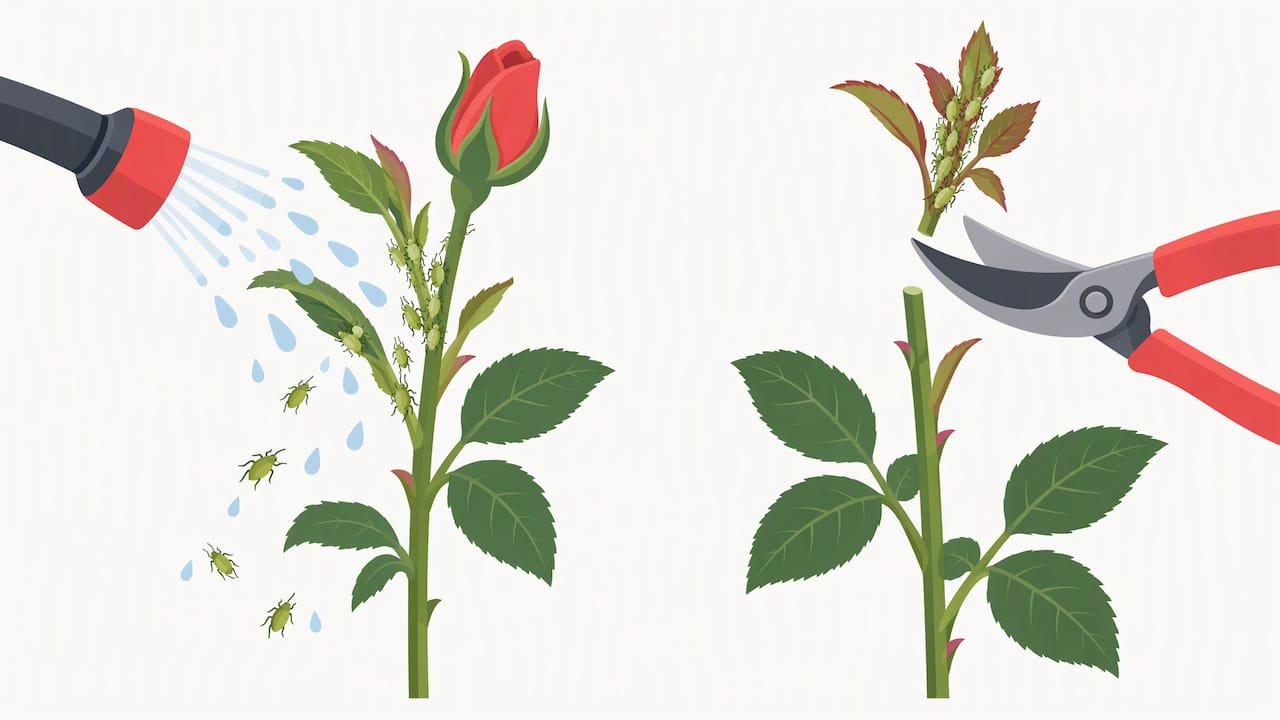
- Spray affected stems early in the morning with a firm jet of water from a hose, aiming at the crowns and the undersides of leaves where aphids cluster.
- Give the foliage time to dry afterward, since damp leaves overnight can invite fungal problems.
- Repeat the hose treatment every few days until numbers drop noticeably.
- For small clusters, squash aphids between your fingers or wipe them off with a damp cloth, checking the undersides of leaves as you go.
- Prune out shoots that are heavily distorted or coated in aphids, cutting back to clean growth.
- Bag pruned material immediately rather than dropping it on the ground, where aphids can crawl back onto the plant.
Before squashing, look closely at the cluster. Tan or bronze, swollen aphids are likely already parasitized, and squashing them wastes a predator that is doing your work for you.
Pro Tip: Hose off aphids in the morning, not the evening, so foliage has all day to dry before temperatures drop and fungal spores find damp leaves.
This combination of physical removal and careful pruning handles most minor infestations without any need for sprays at all, which is exactly what Home to Love’s rose pest guide recommends as the first line of defense.
Homemade sprays: recipes and safe application
When hosing and hand removal are not enough, a simple spray can finish the job without harming the rest of your garden.
- Insecticidal soap: mix a mild liquid soap, roughly one to two teaspoons per liter of water, and spray directly onto aphid clusters, making sure to coat the undersides of leaves and buds where coverage is usually weakest.
- Garlic and chili spray: blend several cloves of garlic with a hot chili and a liter of water, let the mixture sit overnight, strain it through cloth to remove solids, and transfer the liquid to a spray bottle.
- Application safety: wear gloves when handling chili mixtures, avoid spraying in direct sun or high heat, and reapply after rain washes the residue off.
- Reapplication schedule: repeat soap or garlic sprays every few days during an active outbreak, since neither leaves a long-lasting residue.
Insecticidal soaps and horticultural oils work by direct contact, breaking down the aphid’s protective outer coating rather than poisoning the plant tissue. Soaps and oils act on contact only and leave no meaningful residual effect, which is why thorough coverage and repeat applications every 7 to 14 days matter more than spray strength. That lack of residue is a feature, not a limitation: it means the spray stops working on beneficial insects almost as quickly as it stops working on aphids, as long as you time your applications around their presence.
Store-bought potassium soaps are a convenient alternative to mixing your own, and they work the same way: contact-based, no lingering residue, safe to use around pets once dry.
Safer commercial options: oils and potassium soaps
When homemade sprays are not practical, horticultural oils and potassium-based soaps are the next step up, and they remain far gentler on your garden than broad-spectrum insecticides.
- Horticultural oils, sold under names like Eco Oil or Pest Oil, smother aphids on contact and break down quickly without leaving toxic residue on foliage.
- Potassium soaps, sold as Clensel or Natrasoap, dissolve the aphid’s outer layer in the same way a homemade soap spray does, just with a tested, consistent concentration.
- Mix and apply according to the label, generally covering the whole plant including stem joints and leaf undersides, and avoid spraying in the middle of a hot day since heat can scorch treated foliage.
- Skip broad-spectrum insecticides unless nothing else has worked. These products, preferred over broad-spectrum insecticides by gardening experts, kill off the ladybirds, lacewings, and parasitic wasps that would otherwise keep future outbreaks in check.
Reserving stronger chemical options for genuinely stubborn infestations protects the predator population that does most of the long-term work in your garden.
Cultural practices that make your roses less appealing to aphids
Aphids are drawn to soft, nitrogen-rich growth, so the way you feed and water your roses has a direct effect on how often they show up.
- Cut back on nitrogen-heavy fertilizer and avoid over-watering, since excessive feeding produces the lush, sappy new growth that aphids prefer above all else.
- Inspect new shoots weekly through spring, when aphid activity typically peaks, so you catch a small cluster before it spreads.
- Prune roses to open up the center of the bush, improving airflow and making it harder for aphid colonies to hide undetected.
- Deadhead spent blooms regularly and time fertilizer applications to avoid sudden bursts of soft new growth all at once.
- Space plants so foliage is not crowded against neighboring roses, which slows the spread between plants.
Pro Tip: Feed roses on a steady, modest schedule rather than one heavy application, since a slow release of nutrients avoids the growth spurts that attract aphids in the first place.
Good plant health is the quiet, unglamorous part of aphid control, but it does more to prevent recurring problems than any spray ever will.
Attracting beneficial predators that do the work for you
Ladybirds, lacewings, and hoverflies are the garden’s natural aphid control, and a single ladybird can eat up to 5,000 aphids over its lifetime. Parasitic wasps add another layer of control: Aphidius rosae was introduced in South Australia specifically to target rose aphids and has since established in multiple states.
- Watch for tan or bronze, swollen “mummified” aphids, a sign that a parasitic wasp has already laid eggs inside and is doing its job.
- Plant umbel-shaped flowers, alyssum, parsley, or native daisies nearby to give predators nectar and shelter between hunting bouts, though it is worth checking local weed status before adding any of these to your garden.
- Holding off on sprays gives these predators room to establish, and natural predators often arrive within days once an aphid colony appears, frequently bringing numbers down before you need to intervene at all.
- Ordering predator releases commercially is possible for severe or recurring problems, but establishment is not guaranteed and works best alongside the habitat features above, not as a replacement for them.
Patience pays off here more than almost anywhere else in the garden.
Disposing of infested trimmings and cleaning your tools
Heavily infested prunings belong in general waste, not the compost bin. Aphids and their eggs can survive typical composting conditions and reinfest other parts of the garden once the compost is spread.
- Bag infested cuttings immediately during pruning rather than leaving them on the ground nearby.
- Send heavily infested material straight to general waste instead of the compost heap.
- Wipe secateurs and pruning tools with a damp cloth or disinfectant between plants, a habit also echoed in general guidance on cleaning for pest prevention around the home.
When to call a pest professional
DIY control handles most aphid problems, but a few signs point to something bigger. Repeated large-scale outbreaks across several rose bushes, heavy sooty mold that keeps returning despite good care, or infestations that persist season after season despite correct feeding and watering all suggest it is time for a professional look.
- A technician inspects the full garden, not just the roses, to rule out a broader pest issue feeding the problem.
- Treatment is targeted to the infestation rather than applied as a blanket spray.
- Follow-up visits check that the treatment held and that beneficial insect populations are recovering.
We focus on treatments that are safe for families, children, and pets, pairing targeted pest control with respect for the beneficial insects already working in your garden.
Our aphid removal service is built around this balance: dealing with the infestation without wiping out the ladybirds and wasps doing the same job for free.
Patience first, intervention when it is earned
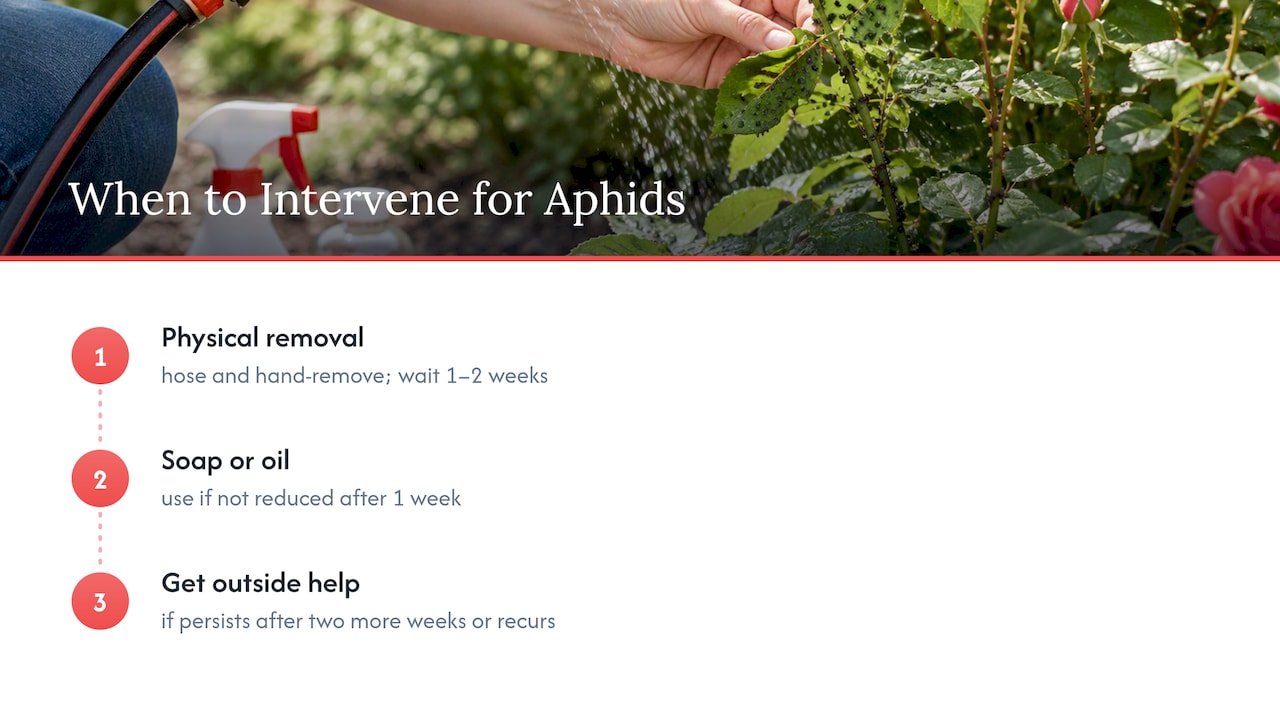
The instinct when you spot aphids is to reach for a spray immediately. Resist it. Every source on rose care points the same direction: physical removal and patience solve most outbreaks within a week or two, and predators often arrive before you even need the soap bottle.
Set a clear threshold for yourself. If hosing and hand removal have not reduced numbers after a week, move to soap or oil. If that fails after two more weeks, or the problem keeps returning across a season, that is a reasonable point to bring in outside help rather than escalate to stronger chemicals on your own.
— navin
How we can help with persistent aphid problems
When home remedies have not held, our garden aphid control service gives your roses a targeted, professional treatment without resorting to harsh, broad-spectrum sprays.

- Technicians assess the infestation and the surrounding garden before recommending treatment.
- Treatments are chosen with safety in mind, considering factors beyond just aphid numbers.
- Follow-up visits may confirm the treatment worked and that beneficial insects are returning.
If you would rather ask a few questions first, our aphid removal services page outlines what an eco-aware approach to rose pests looks like before you book anything.
FAQ
What is best to kill aphids on roses?
Insecticidal soap or potassium-based soap sprays are among the most reliable options, since they break down the aphid’s protective coating on contact. For light infestations, a firm water spray or hand removal is often enough without any product at all.
What kills aphids immediately?
A strong jet of water knocks aphids off the plant right away, though it will not prevent new ones from arriving. Contact sprays like insecticidal soap or horticultural oil kill aphids quickly on the spots they touch, but they need thorough coverage of leaf undersides to work.
What happens if you leave aphids on roses?
Left untreated, aphid colonies spread to new shoots and buds, leaving behind sticky honeydew that develops into black sooty mold. Heavy, prolonged infestations distort new growth and can weaken the plant’s overall vigor over a season.
What is the most effective spray to get rid of aphids on roses?
Potassium soap sprays and horticultural oils are generally the most effective low-toxicity options, working by contact to break down the aphid’s outer layer. Reapplying every 7 to 14 days and covering the undersides of leaves matters more than which specific product you choose.
Sources
- Aphids on Roses — Treloar Roses
- Rose pests and diseases — Home to Love
- Aphids — Gardening Australia / ABC
- How to kill aphids — Better Homes & Gardens Australia
- Aphids — Yates Australia