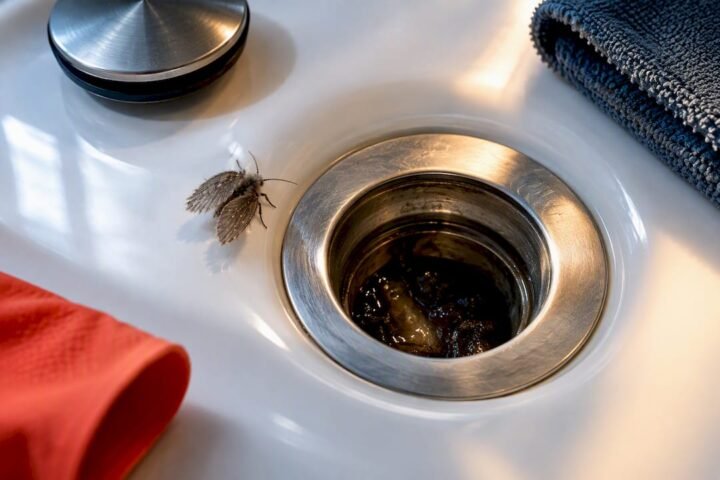
When a pest problem surfaces in a commercial facility, the consequences move fast. A failed health inspection, a regulatory notice, or a single complaint to a food safety authority can escalate into fines, reputational damage, or temporary closure. For facility managers, choosing the right commercial pest control provider is not a routine vendor decision. It carries real compliance, liability, and operational continuity implications.
Yet many facilities select providers based on price or proximity alone, searching for “commercial pest control near me” and contracting with the first available option. That approach leaves significant gaps in coverage, documentation, and accountability.
This post gives you a structured evaluation framework built around seven critical questions to ask any provider before signing a contract. Working through these questions will help you assess licensing compliance under ACT regulations, verify insurance coverage, understand warranty terms, confirm documentation practices for audit readiness, and clarify response time commitments. Each question is designed to surface the information that separates a capable, accountable provider from one that will create problems down the track. Ask them before the contract is signed, not after an incident forces your hand.
Why This Decision Carries Real Operational Risk
Selecting a commercial pest control provider is not a routine maintenance decision. According to the NPMA, a single pest incident can trigger a failed health inspection, a regulatory fine, damaging public reviews, or a full shutdown. That makes provider selection a procurement decision with genuine compliance and liability implications.
The market reflects this reality. A 2025 survey conducted by The Harris Poll on behalf of the NPMA found that 96% of commercial pest control decision-makers require a provider that can customise services to their specific needs. Generic packages are no longer acceptable.
Pest pressures are also growing more complex. Species are expanding their geographic ranges due to climate shifts, pesticide resistance is increasing, and regulations across food service, healthcare, and lodging continue to tighten. Knowing when to hire a licensed pest controller matters, but choosing the right one from the outset matters more.
Facility managers who have framed pest control as a compliance and liability decision, rather than a maintenance line item, tend to ask better questions before a contract is signed. The seven questions that follow give you that framework.
Question 1: Are You Licensed to Operate Commercially in the ACT?
Licensing is the first filter and it is non-negotiable. The ACT Government recognises pest and weed control operators as a distinct regulated category under Access Canberra, governed by the Environment Protection Act 1997 ACT. An ACT operator licence is a legal baseline, not an optional credential.
Before signing any contract, ask for the provider’s ACT pest control operator licence number and verify it against the publicly searchable ACT operator registry. This takes minutes and confirms the business is legally authorised to operate in the territory.
An ACT-licensed operator has met government-mandated standards covering pesticide application and chemical handling. An interstate-only operator cannot rely on their home-state licence here; a licence issued in NSW or Victoria carries no standing in the ACT.
For specialist treatments, confirm the provider’s ACT registration covers the specific pest types your facility requires. If your site carries termite risk, verify that their credentials extend to that work. Providers covering residential and commercial pest pressure across Canberra should supply this information without hesitation.
Red flag: any provider who hedges on licensing details, cites only national industry membership as a substitute for ACT credentials, or cannot produce documentation promptly.
Question 2: What Insurance Covers Your Organisation If Something Goes Wrong?
Licencing confirms legal authority to operate; insurance determines who bears the financial consequences if something goes wrong.
Public liability insurance is the baseline requirement. It covers your organisation if a treatment causes property damage, chemical contamination, or harm to occupants. Do not accept verbal assurance. Ask for the certificate of currency, which will confirm the insurer, policy number, coverage amount, and expiry date. Public liability limits for commercial work commonly sit at $10 million to $20 million; anything lower warrants scrutiny for larger sites.
Professional indemnity insurance becomes relevant if the provider conducts pest inspections or produces written pest management reports. Where a report informs a property transaction or a compliance decision, errors or omissions in those assessments can have significant consequences.
Confirm the policy limits match your facility’s scale. A residential-grade liability policy carries materially lower limits than a commercial site with high occupant density or sensitive operations requires. Ask the provider directly whether their coverage is structured for commercial and industrial work.
Ask about subcontractor coverage. If any part of the service is delivered by a third party, confirm whether that subcontractor is covered under the provider’s policy or carries their own.
Facility managers who skip this verification step carry the residual risk of an underinsured operator. A certificate of currency request at the screening stage costs nothing and eliminates that exposure before a contract is signed.
Question 3: How Is the Service Customised for Our Specific Facility and Pest Profile?
Generic service packages applied to every commercial client regardless of sector or pest history represent a documented gap. As established earlier, the overwhelming majority of commercial decision-makers now treat customisation as a baseline expectation.
A credible provider conducts a site assessment before quoting. That assessment should identify facility-specific risk factors: food handling areas, waste storage access points, landscaping features, building entry points, and seasonal pest pressure patterns relevant to the ACT and surrounding NSW regions. A quote issued without inspection cannot meaningfully reflect your facility’s actual risk profile.
Ask how treatments are adapted as conditions evolve. Given the evolving resistance and range-expansion pressures noted above, a static treatment protocol is not sufficient. A provider unable to explain how they respond to these shifts is applying yesterday’s solutions to a changing problem.
Customisation also applies to scheduling. Food-service and healthcare environments carry strict treatment timing constraints that office buildings do not. Your provider should demonstrate clear awareness of those operational realities, not ask you to explain them.
If termites are a concern, it is worth understanding how site-specific that assessment process genuinely is: explore what a thorough termite inspection involves with BugsPatrol.
Red flag: any provider who quotes before inspecting, or who cannot articulate how your facility’s service plan differs from their standard residential offering.
Question 4: What Does the Warranty Actually Cover, and for How Long?
Customisation addresses how a provider treats your facility; warranty terms determine what happens when the treatment falls short.
Warranty structures vary significantly. Some providers offer a single-service guarantee, a free retreat if pests return within a short window after treatment. Others provide longer rolling coverage that includes scheduled follow-up visits and intervention at no additional call-out cost. These are not equivalent commitments.
Always request warranty terms in writing. Review specifically:
- Which pest species are covered
- Conditions that void coverage, such as undisclosed prior infestations or structural modifications made after treatment
- The process for lodging a warranty claim and the expected response timeframe
Note that warranty scope is not always uniform across a single contract. Termite treatments and general pest treatments may carry distinct warranty conditions, confirm what each element covers before signing.
For facilities subject to compliance audits or zero-tolerance pest policies, longer warranty coverage with scheduled monitoring provides meaningfully stronger continuity assurance than a short-term retreat guarantee. Reviewing our service guarantee gives a practical example of what documented, multi-month coverage looks like in practice.
Finally, treat a verbal-only or short-term warranty as a signal. Providers who commit to extended, documented coverage are demonstrating confidence in both their technical capability and their service standards. Those who cannot or will not put warranty terms in writing are telling you something important before the contract begins.
Question 5: What Documentation Will We Receive, and How Does It Support Compliance Audits?
Warranty terms confirm what a provider will do if problems persist. Documentation confirms they were there, what they did, and who did it, a distinction that matters when a health inspector arrives.
Facilities operating in food service, healthcare, childcare, and hospitality are routinely subject to audits where a tax invoice alone is unlikely to satisfy an inspector’s request for pest management records. Ask your provider what documentation they supply after each visit.
After each service visit, you should receive a written report covering the date, treatment areas, chemicals applied (with Safety Data Sheets available on request), pest activity observed, and any recommendations for structural or sanitation improvements. Technician certification records should also be available on request, confirming that the individual who treated your facility holds the appropriate licensed and certified ACT licence class for the work performed.
Ask how the provider stores historical service records and whether you can access them easily. A complete, accessible service history creates an audit trail that protects your organisation if a compliance question surfaces months or years after treatment.
Red flag: a provider who delivers no written service report, offers only a tax invoice as evidence of attendance, or cannot produce chemical use records when asked. In a regulated environment, that gap is your liability, not theirs.
Question 6: What Is Your Response Time Commitment for Urgent Pest Issues?
Documentation confirms what a provider has done. Response time reveals what they will do when something goes wrong between scheduled visits.
A rodent sighting in a commercial kitchen or a wasp nest near a building entrance cannot wait until the next routine service call. Ask every shortlisted provider to state their response SLA for urgent, unscheduled call-outs. Same-day, next-day, and within 48 hours are meaningfully different commitments; for any zero-tolerance facility, only one of those is acceptable.
Critically, ask whether that SLA is written into the service contract. A provider who commits verbally but declines to document the timeframe is unlikely to honour it under operational pressure. If it is not on paper, it is not a commitment.
For Canberra facilities specifically, ask whether the provider is locally based and whether their technicians are ACT-based full-time. A locally owned and operated company with staff on the ground in the ACT will consistently outperform a provider dispatching technicians from outside the region when speed matters. Geographic proximity is a structural advantage, not a marketing point.
Finally, ask for references from commercial clients who have called on a provider during an urgent situation. A simple, fast, effective response under pressure is one of the most reliable indicators of a provider’s genuine operational capability, far more so than what their sales materials promise.
Question 7: What Are the Contract Terms, and What Happens If We Need to Exit?
Contract terms deserve the same scrutiny as service quality. Before signing, confirm the contract duration, whether it renews automatically, and the notice period required to exit. Auto-renewal clauses are standard; missing the cancellation window can lock your facility into another term regardless of performance.
Ask about payment structure. Monthly payment options with no large upfront fees reduce cash flow friction and keep service continuity from becoming a budget-timing problem.
Clarify what happens to your warranty on early exit. Some warranties are voided upon cancellation, which effectively penalises you for leaving a provider even when service has declined. Review the warranty conditions before signing, not after. You can also review our service guarantee as a reference point for what documented coverage should look like.
Establish who owns the service records. Request written confirmation that inspection reports and treatment histories will remain accessible to your facility before the contract starts.
Finally, read the scope carefully. Does the contract cover all pest species relevant to your facility, or are termites, rodents, and other specific pests billed separately? A base contract that excludes your highest-risk pests understates the real cost. Ask for an itemised breakdown covering every species and treatment type before you agree to any terms.
Building Your Evaluation Shortlist for Commercial Pest Control in Canberra
With the contract terms reviewed and understood, the seven questions above become your screening instrument. Any provider who cannot answer them clearly and in writing should be removed from consideration before further evaluation.
When narrowing the field, prioritise providers who meet four baseline criteria: locally based in the ACT, current ACT pest control operator licence, adequate public liability insurance, and documented 12-month warranty coverage. These criteria alone will reduce a broad market to a small group of credible candidates for commercial pest control in Canberra.
From that shortlist, request written service proposals covering treatment scope, warranty terms, documentation commitments, and response SLA. Comparing written proposals against a consistent set of criteria produces a more defensible procurement decision than comparing sales conversations.
For facilities with complex pest risk profiles, including food service, healthcare, and large office or industrial premises, ask shortlisted providers for references from comparable facilities in the Canberra region. Peer-sector references reveal operational capability that a proposal document cannot.
Proudly serving Canberra and surrounding regions, BugsPatrol operates locally out of Throsby in the ACT, holds the relevant licences, provides 12-month warranties with year-round protection plans, and offers flexible monthly payment options with no large upfront fees. They service both commercial and residential clients across the ACT and surrounding NSW, making them a strong candidate to evaluate against this framework.
The Right Questions Protect Your Facility Before a Contract Is Signed
Selecting a commercial pest control provider is a compliance, liability, and continuity decision. Price alone is an unreliable selection criterion for a decision with these compliance stakes.
The seven questions in this framework give facility managers a consistent, defensible evaluation structure across every provider conversation:
- Licensing: Is the provider legally authorised to operate in the ACT?
- Insurance: Does their coverage adequately protect your organisation?
- Customisation: Is the service designed for your facility, not a generic template?
- Warranty: Is coverage documented, multi-month, and clearly scoped?
- Documentation: Will service records support your compliance audits?
- Response SLA: Is emergency response time committed in writing?
- Contract terms: Are payment structure, exit conditions, and record ownership clearly defined?
Asking these questions before signing eliminates the most common triggers for mid-contract provider switches: undisclosed service limitations, weak warranty coverage, inadequate documentation, and slow emergency response.
Conclusion
Choosing the right commercial pest control provider in Canberra is not a routine procurement task. It is a decision that directly affects compliance standing, operational continuity, and organisational liability.
The key takeaways are straightforward: verify licensing and insurance before any other conversation; insist on customised service plans backed by documented warranties; confirm that records will support your audit requirements; and get response time commitments and contract exit terms in writing.
Facilities that apply this framework consistently avoid the costly mid-contract disruptions that come from overlooked gaps in coverage, documentation, and accountability.
Download or bookmark these seven questions and make them part of your standard vendor evaluation process. That preparation is what protects your facility long before a provider ever sets foot on-site.