If you’re seeing ants inside your home on a regular basis, especially in defined trails or near food, you likely have an active infestation rather than a few stray foragers. The three most telling signs are repeated worker sightings, a visible trail between a food or water source and an entry point, and winged ants indoors. From there, follow the trail to its source, check kitchens and bathrooms for the attractant, and leave any suspected fire ant mound alone.
TL;DR:
- A visible, thickening trail of worker ants leading to a food or water source indicates a nearby colony actively foraging indoors.
- Winged ants inside the house often mean an established nest, while similar-looking termites require a completely different treatment approach.
- Outdoor nests are typically mound-shaped with no visible entrance, and fire ant mounds can be large and dome-shaped without easy access points.
- DIY baiting and sanitation may work for small, outdoor trails but fail against complex indoor nests or multiple colonies, requiring professional intervention.
- Regular inspections by licensed technicians using thermal imaging can locate hidden nests in wall cavities or roof voids and ensure effective, species-specific treatment.
Table of Contents
- 1. Common signs of an active ant problem
- 2. How to tell ants from termites
- 3. Where ants build nests, indoors and out
- 4. A short inspection checklist you can run today
- 5. Deciding between a DIY fix and calling a professional
- 6. Prevention steps that keep ants from coming back
- 7. What a professional ant inspection actually finds
- What homeowners get wrong about ant signs
- Getting help with an ant problem now
- Sources
- FAQ
1. Common signs of an active ant problem
A single ant on the kitchen counter doesn’t mean much. A line of them walking the same path every day does. Ants that forage successfully recruit nestmates fast, so a trail that grows thicker over a few days is a strong signal that a colony nearby has locked onto a food source in your home, and ants can be drawn to a wide range of foods including sugars, proteins, fats and oils, and will hunt for water during dry spells.
Look for these patterns:
- Visible foraging workers appearing daily, especially at the same time and same spot, which suggests an established path rather than a one-off wanderer.
- A defined trail with a consistent width, often following pheromone lines along skirting boards, countertop edges or door frames.
- Concentrated activity around kitchens, pantries, sinks and pet food bowls, where crumbs, grease and standing water offer easy meals.
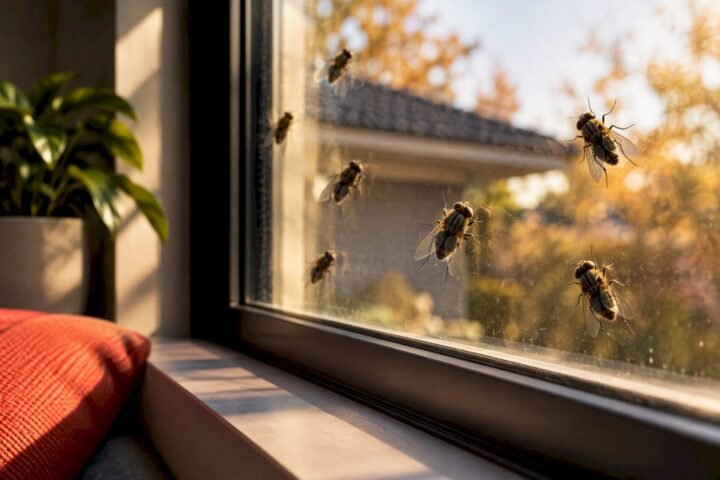
- Winged ants indoors or clustered at windows, which often points to a mature nest inside the structure rather than an outdoor colony passing through.
- Faint rustling or dry, scratching sounds inside wall cavities or ceilings, a sign of a larger nest than what you can see on the surface.
- Mounds of loose soil or fine granular deposits outdoors, sometimes tucked beside pavers, logs, pots or utility pits.
Fire ant mounds can reach up to 40 centimeters high and often have no obvious entrance hole, which makes them easy to mistake for a garden quirk until they’re disturbed. If you see a dome-shaped mound like this, keep children and pets away and do not touch it.
2. How to tell ants from termites
Getting this distinction right matters because a termite problem calls for a different, often more urgent, response than an ant trail. The two insects look alike at a glance, especially the winged reproductives that swarm in warm weather, but a few physical details settle it quickly.
- Wing shape and veining: winged ants have a larger front pair of wings and a smaller back pair, both with strong, visible veins, while termites have two pairs of equal-sized wings with simple, faint venation.
- Antennae: ant antennae are bent at a sharp elbow, while termite antennae are straight and bead-like.
- Body shape: ants have a pinched, narrow waist between the thorax and abdomen; termites have a thick, uniform body with no waist at all.
Photograph any winged insect you find indoors before it flies off or loses its wings, ideally next to a coin for scale. Winged ants found inside a home often signal an established indoor nest rather than a passing swarm from outside, which is useful information for whoever inspects the property. If the wings and body match termite features instead, treat it as a separate, time-sensitive issue and get a termite inspection rather than an ant treatment.
3. Where ants build nests, indoors and out
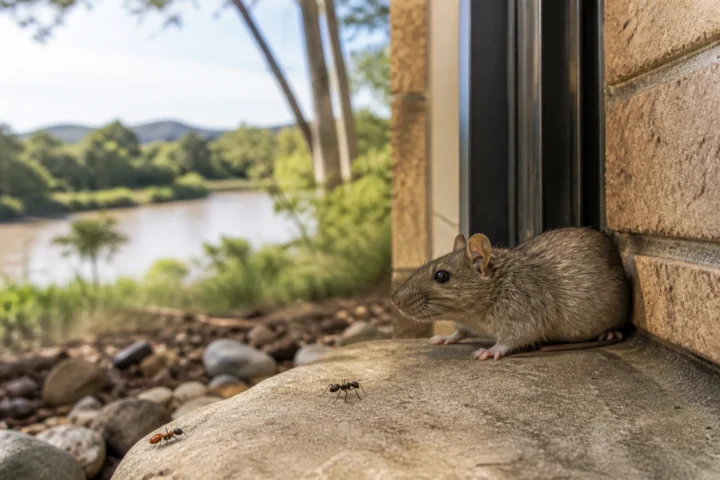
Outdoors, ants nest in mounds, under pavers, beside logs, in potted plant soil, and around utility pits where the ground stays undisturbed. Fire ant nests fit this same pattern of open, grassed areas and disturbed soil near structures, but their mounds lack a visible entrance, which is one of the clearest markers separating them from other species.
Indoors, ants exploit gaps that already exist rather than chewing new ones. According to Victorian health guidance on ant control, ants typically nest in wall voids, behind skirting boards, under flooring, inside potted plants and in roof voids, favoring quiet, dark spaces near moisture or food.
- Wall cavities and skirting gaps are common because they’re dark, stable and close to kitchens or bathrooms.
- Potted plants, both indoor and on patios, offer soil that stays consistently moist.
- Roof and ceiling voids provide shelter that’s rarely disturbed, letting colonies grow unnoticed.
Which spots matter most depends on the species. Some ants nest in a single location, while others spread across multiple interconnected nests, which changes how far an inspection needs to reach. Heavy rain, drought and thick mulch beds near the foundation all push ants indoors seasonally as they chase stable moisture and temperature.
4. A short inspection checklist you can run today
You don’t need special equipment to get a clear picture of what’s happening in your home. A methodical walk-through, done over a day or two, tells you most of what a technician would ask about on a first call.
- Photograph the evidence: get close-up shots of workers, the trail itself, any winged ants, and outdoor mounds.
- Follow the trail: trace it both toward its food source and away from it, since the direction that thickens usually leads closer to the nest.
- Check food and water zones at two different times: look under appliances, inside pantries and around pet food bowls in the morning and again at night, since some species forage more actively after dark.
- Inspect skirting boards, wall cavities, potted plants and roof access points: a flashlight and a slow, quiet pass along baseboards often reveals activity you’d otherwise miss.
- Leave any suspected fire ant mound untouched: photograph it from a safe distance and report it instead of digging or spraying.
Pro Tip: Keep a simple log of the date, time and location of every sighting. That pattern, more than any single sighting, is what tells a technician whether you’re dealing with one nest or several.
5. Deciding between a DIY fix and calling a professional
A handful of workers on a single trail, especially outdoors, is often manageable with a targeted bait and better kitchen hygiene. Once the picture gets more complicated, DIY tools tend to fall short.
- Try DIY measures first when you see a single trail, low numbers, and no winged ants or wall sounds; a gel bait placed directly on the trail, paired with cleaning up food residue, is a reasonable starting point.
- Call a licensed technician when you find nests inside walls, hear activity near electrical fittings, see repeated re-infestation after cleaning, or notice more than one ant type active at once.
- Expect baiting to take time: slow-acting baits typically need 5 to 10 days to show a real drop in numbers because workers carry the toxin back to the queen before the colony declines.
For a broader look at species-specific treatment differences, see this ant control guide and this overview of fire ant reporting obligations.
6. Prevention steps that keep ants from coming back
Treatment only holds if the conditions that attracted ants in the first place go away too.
- Store food in sealed containers and wipe down counters and floors regularly, since even microscopic crumbs are enough to draw a colony back.
- Fix leaking taps and pipes, and avoid overwatering potted plants, since ants gravitate toward reliable moisture as much as food.
- Keep mulch and garden beds away from the foundation, trim any vegetation touching exterior walls, and seal visible gaps around pipes, windows and door frames.
- Manage pet food bowls by picking them up between feedings rather than leaving them out all day.
Pro Tip: If you use bait stations, place them along the trail rather than near the food source itself, and choose covered or child-resistant stations if pets or kids are in the house.
7. What a professional ant inspection actually finds
Licensed technicians see patterns that homeowners often miss on a first pass. BugsPatrol Pest Management technicians are licensed and use modern detection tools, including thermal imaging, to trace activity inside walls and roof spaces without cutting into them unnecessarily. On many jobs, what looks like a single trail on the kitchen floor turns out to trace back to a nest inside a wall cavity, or to a colony budding off into a second nest nearby, a pattern more common in certain species than others.
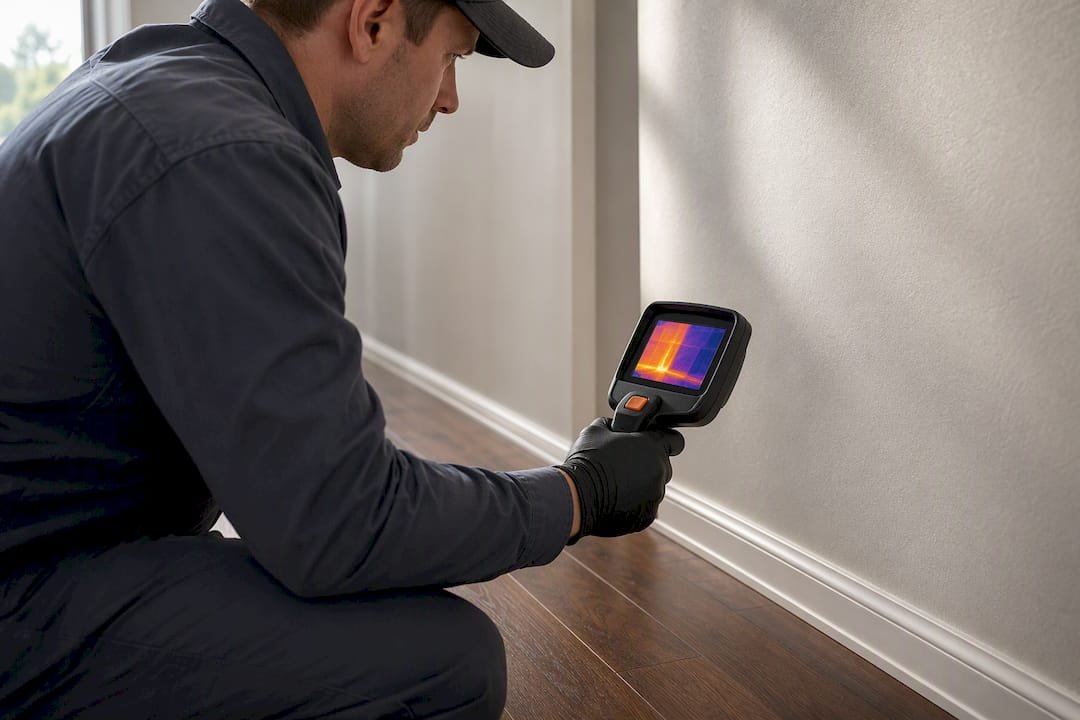
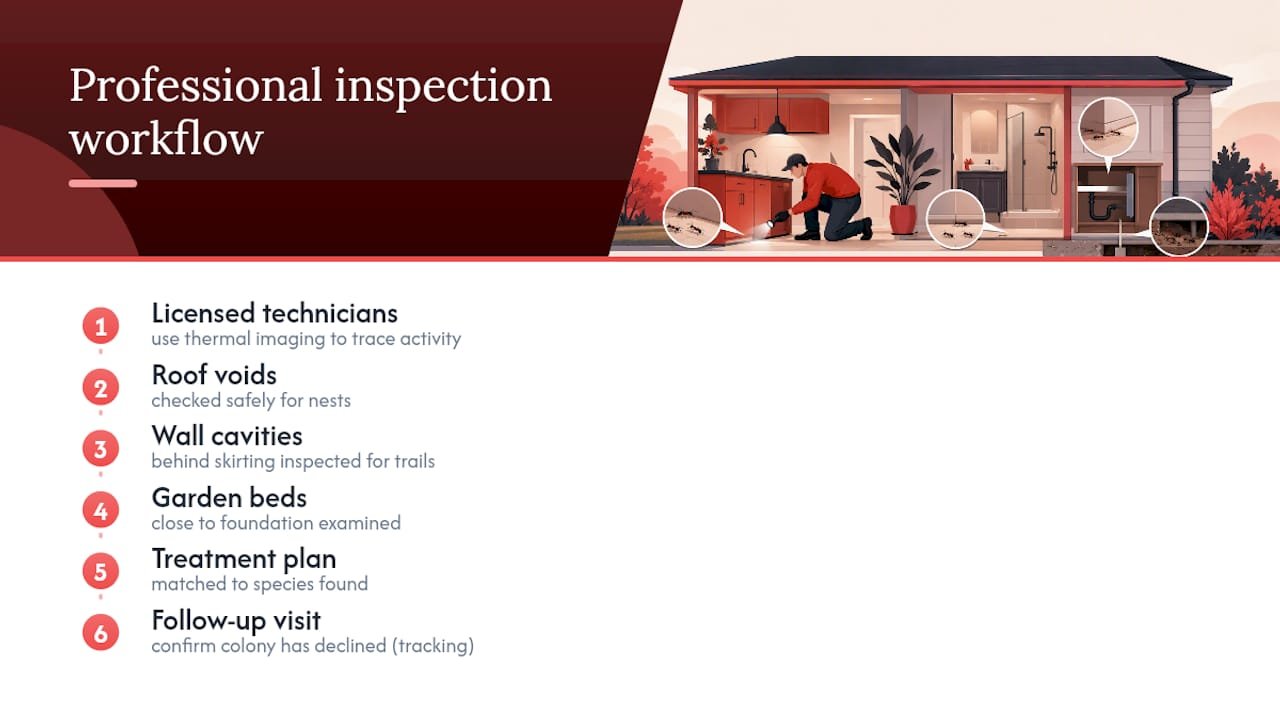
A typical inspection covers the areas homeowners are least likely to check safely themselves: roof voids, wall cavities behind skirting, and garden beds close to the foundation, followed by a treatment plan matched to the species found and a follow-up visit to confirm the colony has declined. Structured job tracking tools like Pipeline are part of how modern pest control businesses keep inspection notes and follow-up schedules consistent across a property.
What homeowners get wrong about ant signs
The biggest mistake isn’t missing the signs, it’s misreading what they mean. Homeowners often treat a single ant sighting as trivial and a mound in the yard as unrelated to the ants indoors, when the two are frequently the same colony working two ends of the same trail. The conventional advice to “just spray what you see” also undersells how little a surface spray does against a colony that can relocate its nest after a spray disrupts the surface trail, especially with species that fragment and spread when disturbed.
What actually matters is sequence: identify the species and the nest location before choosing a treatment, because a method that works well on one ant type can make another type worse. Baits beat sprays for anything beyond a stray trail, and patience matters more than homeowners expect, since a real population drop takes days, not minutes. If there’s one thing to prioritize, it’s tracing the trail to its source rather than just wiping out what’s visible on the counter.
— navin
Getting help with an ant problem now
If the signs above point to more than a stray trail, a professional inspection settles the question fast and stops the guesswork over which species you’re dealing with. Professional pest control services, including general pest and fire ant control, are available across the service area, along with ongoing protection plans for homes that keep seeing repeat activity.

- General Pest Control covers a full inspection and targeted treatment for ant trails, nests and entry points around the property.
- Fire Ant Control is available for suspected fire ant mounds, handled by licensed technicians rather than DIY methods.
- Subscription plans, including Silver Combined at $55.98 AUD per month and Bronze General Pest at $29.98 AUD per month, cover ongoing pest checks so new activity gets caught early.
Before booking, take a few photos of any trails, mounds or winged ants you’ve found and note where and when you’ve seen activity. You can book a general pest inspection or view all subscription plans to set up ongoing protection.
Sources
- Victorian Department of Health — Ants and pest control guidance
- Queensland Government – Fire ant biosecurity information
- NSW DPI — Resources on red imported fire ant (RIFA)
FAQ
How do I tell if I have an ant infestation?
Look for a repeated trail of workers in the same spot over several days, activity concentrated near food or water, and any winged ants indoors, since these together point to an established nest rather than a stray visitor. Following the trail to its source is the quickest way to confirm how large the problem is.
Why do I suddenly have an ant infestation?
Ants often move indoors after environmental shifts like heavy rain or drought, since colonies relocate in search of stable moisture and food when outdoor conditions change. A sudden spike can also mean a nearby colony has simply found a reliable food source in your kitchen or pantry.
How do I permanently get rid of an ant infestation?
Permanent control starts with identifying the species, since treatment that works on one type can scatter or worsen another, then targeting the nest directly rather than just the visible trail. Baits typically take 5 to 10 days to reduce the colony because workers carry the toxin back to the queen, and ongoing hygiene and sealing entry points keep new colonies from moving in.
How can I get rid of an ant infestation outside my house?
For general outdoor ant activity, targeted baits placed on active trails work better than surface sprays, paired with clearing mulch and debris away from the foundation. If you find a dome-shaped mound with no visible entrance, do not treat it yourself. It may be a fire ant nest, and disturbing one causes aggressive swarming and stings, so report it to your state biosecurity authority instead.