
A wasp nest is papery, often gray or tan, and shaped like a round or teardrop ball, while a bee hive shows waxy hexagonal comb and may drip with honey. Wasps sting repeatedly and chase food, while honeybees sting once and mostly stick to flowers. If you spot either and you are not certain which it is, keep your distance and call a professional rather than guessing.
TL;DR:
- Wasps build nests from chewed wood pulp forming a papery shell, while bee hives feature waxy hexagonal combs often dripping with honey.
- Wasp nests are typically found underground, in roof cavities, or wall voids, and they mostly appear in spring and summer, dying back in late autumn or winter.
- Wasps are more aggressive, can sting repeatedly, and are mainly attracted to food, whereas honeybees usually sting once and focus on flowers.
- DIY removal often results in colony escape and injury risk, so professional pest control or beekeeper relocation is strongly recommended.
- Legal protections mean honeybee hives require careful handling, and misidentification can lead to legal issues or dangerous stings, especially with invasive wasp species.
Table of Contents
- 1. Visual differences: material, shape and insect features
- 2. Where nests turn up and when they appear
- 3. Behavior and sting risk: why aggression levels differ
- 4. Safe inspection steps and why DIY removal often backfires
- 5. Choosing between a pest controller and a beekeeper
- 6. How BugsPatrol approaches identification and safe removal
- 7. Legal protections and rules that apply to bee colonies
- 8. Coexisting with bees versus relocating wasp colonies
- 9. What these nests mean for your property and the yard around it
- 10. A technician field note on finding hidden nests
- 11. Quick help from BugsPatrol: inspection and safe removal
- Sources
- FAQ
1. Visual differences: material, shape and insect features
The fastest way to identify a nest is to look at what it is made from, not just its shape. Wasp nests are built from chewed wood pulp mixed with saliva, which dries into a papery, layered shell that often looks like gray or brown cardboard. That material distinction matters because a nest made from mud is not a European wasp nest at all, it is likely a mud dauber or another insect entirely. Bee hives, by contrast, show off waxy hexagonal comb, sometimes visible through a gap in a wall or roofline, and the comb often glistens with stored honey.
The insects themselves give away just as much. Bees tend to be plumper and fuzzier, built for carrying pollen on their legs and bodies. Wasps are sleeker, with a narrow waist, long legs that dangle in flight, and a shinier, less hairy exterior.
If you want to document a suspected nest before calling anyone, a few habits keep you safe:
- Photograph from several meters away using a zoom lens rather than walking closer.
- Note the nest shape (round, oval, or irregular papery layers) and any visible comb.
- Avoid using flash or bright light directly on the nest at night.
- Skip poking, tapping, or spraying anything until you know what you are dealing with.
2. Where nests turn up and when they appear
Location narrows things down almost as fast as appearance. Wasps favor ground holes, compost heaps, roof cavities, eaves, and wall voids, basically any sheltered gap that protects the colony. Bees lean toward hollow trees, wall cavities, chimney voids, or managed hive boxes kept by beekeepers, since honeybees prefer dark, enclosed spaces according to council guidance on honeybee and wasp control.
Timing helps too. Here is a rough sequence worth knowing:
- Colonies typically expand through spring and summer as workers forage and the nest grows.
- Activity slows in the early morning and at night, which is the safest window for any distant observation.
- Wasp nests usually die back in late autumn or winter, leaving the paper shell empty and brittle.
- Bee hives, if established and healthy, can persist for years without dying off seasonally.
If you cannot find the nest itself, watch insect traffic instead. Wasps and bees fly the same paths repeatedly, and following that traffic, sometimes with a neighbor’s help since wasps can travel up to half a kilometer from their nest, is often more reliable than assuming the nearest insect points straight to home.
3. Behavior and sting risk: why aggression levels differ
Behavior tells you almost as much as appearance, and it matters more for safety. Wasps are drawn to sweet drinks, rubbish bins, and picnic food, which is why they show up at barbecues uninvited. Bees mostly forage on flowers and rarely bother human food at all.
The sting mechanics differ in a way that changes the danger level:
- Wasps can sting multiple times in a single encounter because their stinger stays intact.
- Honeybee workers have barbed stingers and typically die after a single sting, which limits how often one bee can attack.
- A disturbed wasp nest tends to mob in numbers, while a disturbed hive usually reacts more cautiously unless directly threatened.
European wasps are widely reported as an introduced, aggressive species that stings repeatedly and is drawn to food and drink, according to Victorian health guidance. That aggression is the main reason wasp encounters send more people to urgent care than bee encounters do. Anyone with a known allergy, or anyone who develops swelling beyond the sting site, difficulty breathing, or dizziness after a sting, should seek medical help right away rather than waiting it out.
4. Safe inspection steps and why DIY removal often backfires
You can gather useful information without ever getting close. Watch from a distance, ideally with binoculars or a zoomed camera, and note the entry point where insects consistently come and go. Early morning or dusk works best since both wasps and bees are calmer and less active during those windows.
DIY removal is where most injuries happen, and it usually fails for a few predictable reasons:
- Disturbing an active nest triggers alarm pheromones that summon the rest of the colony to attack.
- A partial spray or knock-down often leaves the queen and core colony intact, so the nest rebuilds within days.
- Homeowners are typically responsible for treating nests on private property, which means a botched DIY job is still your problem to fix.
Our guide to wasp nest safety covers this in more depth if you want the full reasoning before deciding what to do next. While you wait for help, keep doors and windows shut near the nest, move food and rubbish indoors, and keep pets and children away from the area entirely.
Pro Tip: Mark the nest entrance on a phone photo with the time of day you observed the most traffic, it saves a technician time on the follow-up visit.

5. Choosing between a pest controller and a beekeeper
The right call depends on what species you are dealing with and where the nest sits. A simple decision path covers most situations:
- If you have confirmed honeybees in an open, reachable hive and a local beekeeper is available, relocation is usually the better option since the colony can survive the move.
- If the nest is inside a wall, underground, or the insects are aggressive wasps, a licensed pest controller is the safer and more effective choice.
- If you are unsure which species you have, treat it as a job for a professional rather than guessing, since misidentifying an aggressive wasp colony as bees can lead to painful surprises.
A licensed pest controller will locate the nest precisely, often schedule treatment for early morning or night when insects are the least active, apply a registered insecticide, and follow up to confirm the colony is gone. Our wasp pest control service follows that same process. A beekeeper, by contrast, focuses on safe extraction and relocation when honey and a living colony are present and the hive location allows it. Either way, expect the professional to ask about nest location, how long you have noticed activity, and whether anyone in the household has a sting allergy before booking a visit.
6. How BugsPatrol approaches identification and safe removal
BugsPatrol’s licensed technicians handle wasp jobs across a wide range of property types, using modern detection methods including thermal imaging to locate nests hidden inside walls or roof cavities. A typical visit starts with an inspection to confirm the species and nest location, followed by a clear quote before any treatment begins.
Where a job calls for wasp eradication, our team schedules treatment for low-activity hours and uses registered products chosen with families and pets in mind. If a visit turns up honeybees rather than wasps, we can point you toward relocation options instead of defaulting to treatment. Our wasp nest removal process notes walk through what that visit usually looks like from first call to follow-up.
7. Legal protections and rules that apply to bee colonies
Bees, and honeybees in particular, occupy a different legal category than wasps in most jurisdictions because of their role in pollination and commercial beekeeping. Many regions treat managed honeybee colonies as livestock or agricultural property, which means a hive cannot simply be destroyed the way a wasp nest can, especially if a registered beekeeper claims it.
This distinction shapes how councils respond to reports. Local guidance on honeybee and European wasp control generally recommends contacting a beekeeper for safe hive relocation while reserving pest control treatment for European wasps, which have no such protected status since they are an introduced pest.
Not every wasp is treated the same way either. Many native wasp species are solitary and do not form large colonies at all, unlike introduced social wasps such as Vespula germanica, according to guidance from Tasmania’s biosecurity authority. That matters because a homeowner who assumes all wasps are equally aggressive might overreact to a harmless solitary species, or underestimate a genuinely dangerous introduced colony. If you are unsure which category applies to a nest on your property, checking with a local council or licensed operator avoids an accidental breach of bee protection rules or an unnecessary treatment.
8. Coexisting with bees versus relocating wasp colonies
Bees and wasps call for different long-term strategies once identified. A honeybee hive tucked into a wall cavity or hollow tree, if it is not causing direct structural problems, can sometimes be left alone or scheduled for a calm, planned relocation by a beekeeper rather than an emergency removal. That approach protects the colony and avoids the mess of honey and wax left behind if a hive is destroyed rather than extracted.
Wasp nests rarely offer that option. Because European wasps are aggressive and their colonies do not carry the same ecological weight as honeybee colonies, the standard advice is straightforward eradication once a nest is confirmed active, ideally before the colony reaches peak size in late summer.
A few practical points guide the choice between the two paths:
- Confirm the species first, since treating bees like wasps risks legal issues and treating wasps like bees risks repeated stings.
- Ask whether a beekeeper can access the hive safely before assuming removal means destruction.
- Time any intervention for early morning or night regardless of species, since both are calmer then.
Homeowners weighing DIY coexistence should also check their own maintenance responsibilities, since a proactive maintenance schedule often flags nest risk areas like roof voids and gutters before a colony has a chance to establish itself.
9. What these nests mean for your property and the yard around it
Left alone, a wasp nest inside a wall void or roof cavity can grow large enough to cause damage over time, particularly if moisture from the nest material seeps into surrounding insulation or timber. A bee hive carries a different but related risk: honey and comb built up inside a wall cavity can ferment if the colony dies or is treated improperly, and that fermentation can attract secondary pests and cause staining or odor problems, according to council guidance on honeybee control.
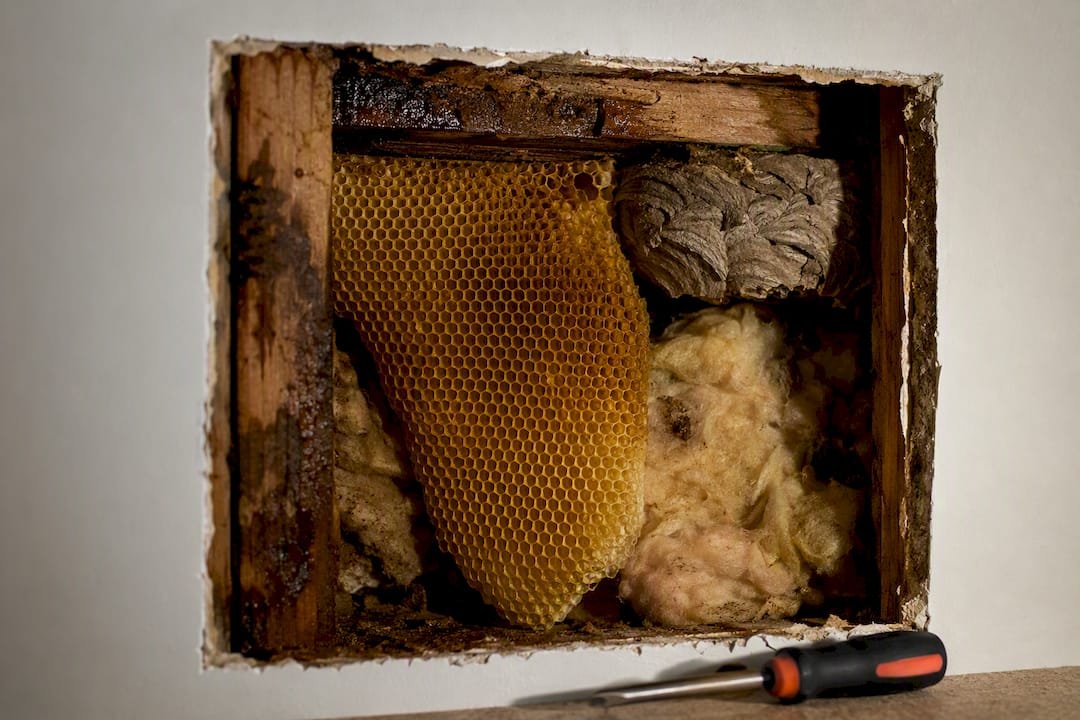
The ecosystem side of the equation cuts the other way. Bees are pollinators that support gardens, orchards, and native plants, so removing a hive without considering relocation has a cost beyond the property line. Wasps, particularly introduced species, offer little pollination benefit and can prey on other insects, including some beneficial ones, which is part of why eradication is the default response rather than protection.
Interestingly, research on nest architecture suggests honeybees and social wasps converge on the same hexagonal cell structure despite building from completely different materials, wax versus chewed wood pulp. It is a curious footnote for anyone interested in how nature solves the same engineering problem twice, though it does not change how you should treat the two nests on your property.
10. A technician field note on finding hidden nests
Follow the traffic, not the nearest bug. A single wasp on your deck could have come from a nest three properties away, so watching where a steady stream of insects consistently enters and exits tells you far more than chasing the one buzzing around your drink. Inspect only at dawn or dusk from a safe distance, and never attempt removal once you have confirmed the nest is active.
— navin
11. Quick help from BugsPatrol: inspection and safe removal
Spotting the difference between a wasp nest and a bee hive is only half the job, getting rid of one safely without a return trip is the part that actually protects your household. BugsPatrol handles that step directly, with licensed technicians who inspect the site, confirm the species, and either treat an active wasp nest or point you toward beekeeper relocation when honeybees are involved.

A typical booking starts with a quote based on what our technician finds during inspection, followed by scheduling treatment for the quieter hours of the day when insects are least active. If you would rather cover pest issues on an ongoing basis, our Bronze General Pest plan starts at $29.98 a month and includes regular checks that catch nests before they grow large enough to become an emergency. You can also book a one off visit directly through our wasp control service page whenever you spot a nest you would rather not approach yourself.
Sources
FAQ
Should I destroy a wasp nest myself?
No, disturbing an active wasp nest risks multiple stings and often leaves the colony intact since a partial treatment rarely reaches the queen. Council guidance recommends contacting a qualified pest operator instead, since homeowners are typically responsible for nests on private property.
How can you tell if it’s a wasp nest?
Look for a papery, layered shell made from chewed wood pulp, often gray or tan and shaped like a round or teardrop ball. A true European wasp nest is never built from mud, so a mud structure points to a different insect entirely.
How can you tell if it’s a bee or a wasp?
Bees are plumper and hairier with a stockier build, while wasps have a slim body, a narrow waist, and a shinier, less hairy exterior. Bees also build waxy hexagonal comb that can hold honey, while wasps build papery nests with no comb visible from outside.
Are bees afraid of wasps?
Bees are generally defensive rather than fearful, and honeybee workers sting only once before dying since their stinger stays behind in the target. Wasps can sting repeatedly and are more likely to mob when their nest is disturbed, which makes them the more aggressive of the two in most encounters.

[…] Certain signs point straight to calling a professional rather than weighing a DIY attempt. Public health guidance recommends professional treatment whenever a nest location is unclear, hard to reach, large, or near people who could be stung during an amateur attempt. A nest in a wall or roof void, one with several visible exits, or one generating repeated wasp traffic near a back door or patio all fall into that category. Councils generally recommend a licensed pest controller for nest removal on private property rather than handling it without the right equipment. For a closer look at telling a wasp nest apart from a bee hive before deciding how to respond, see our guide to identifying wasp nests. […]