“Bed bugs? Here in Australia? Surely not.”
If that thought has ever crossed your mind, you are far from alone. Many Australians assume bed bugs are someone else’s problem, a pest confined to dodgy overseas hotels or horror stories from other countries. But here is the reality: are there bed bugs in Australia? Absolutely, and they are more common than most people realise.
Bed bugs are classified by Australian health authorities as a relatively common pest across the country, and their capacity to hitchhike on travellers means infestation risk rises wherever people and accommodation overlap. Hotels, university housing, and second-hand furniture are quietly bringing these tiny hitchhikers into local homes every day.
The good news is that understanding the real picture is the first step toward protecting yourself. In this post, we will cover where bed bugs come from, which species are actually found in Australia, why Canberra carries its own specific risks, how to spot the signs of an infestation early, and what to do if you find yourself dealing with one. Let’s start with the basics.
Yes, There Are Bed Bugs in Australia, And They Are More Common Than You Think
Yes, there are bed bugs in Australia. Full stop.
The Victorian Department of Health classifies bed bugs as “a relatively common pest across Australia”, which directly contradicts the widespread belief that they simply do not exist here. That belief is one of the more persistent myths in Australian households, and it is costing people.
So where does the misconception come from? Largely from the insects themselves. Bed bugs inject an anaesthetic, so bites go unnoticed at the time, covered in more detail below. Without obvious evidence, it is easy to assume nothing is there.
Bed bugs are classified by Australian health authorities as a relatively common pest across the country, and their capacity to hitchhike on travellers means infestation risk rises wherever people and accommodation overlap. The specific local vectors that put Canberra at risk are covered in the next sections.
The false sense of security makes things worse. Many infestations go unreported, untreated, or blamed on mosquitoes or other insects entirely. By the time someone investigates properly, the infestation is already well-established and harder to treat.
One more thing worth knowing: bed bugs have no meaningful seasonal pattern. Unlike some pests that ease off in cooler months, bed bugs are a year-round concern wherever people sleep. Awareness should be consistent, not reactive.
For Canberra residents, this is not a theoretical risk. As covered in detail across BugsPatrol’s broader guide to pest control across the ACT, local conditions create real and specific exposure points worth understanding.
Which Species of Bed Bug Is Found in Canberra?
So bed bugs are confirmed in Australia, but which species are actually relevant to where you live?
Two species are established here. Cimex lectularius, the Common Bedbug, is adapted to temperate climates and is widely distributed across Australia’s temperate regions. C. hemipterus, the Tropical Bedbug, is confined to tropical and subtropical regions north of the NSW/QLD border. If you are in Canberra, the tropical species is not your concern.
Canberra’s climate means residents are dealing exclusively with C. lectularius. This is the species with the broadest global reach and the most established presence in ACT households, hotels, and student accommodation. It has been closely associated with human habitation for thousands of years and thrives precisely in the kinds of enclosed, climate-controlled spaces that characterise Canberra homes.
Importantly, Canberra’s cold winters offer no protection, as noted above, bed bugs are a year-round concern in any heated indoor space.
If you have read anything suggesting bed bugs are mainly a “tropical” problem in Australia, that framing does not apply to the ACT. The geographic distinction between the two species is real, but it carries no difference in severity. Both feed on human blood, both hide in the same locations, and both require the same professional treatment approach. The only practical takeaway is that the local risk is specific and confirmed.
Why Canberra Is Not as Low-Risk as Residents Assume
So the species is confirmed, the climate provides no buffer, and the risk is real. But why is Canberra specifically exposed? The answer comes down to who lives here, how they move, and what they buy.
Canberra’s accommodation sector is unusually busy. Hotels and short-stay properties here serve a constant rotation of politicians, public servants, interstate conference attendees, and international visitors. These are people who move frequently between cities and sleep in multiple beds each month, making travel accommodation one of the most consistent vectors for bed bug introduction into the ACT.
University housing adds another layer of risk. ANU and UC together bring in thousands of students each year, many living in furnished college rooms with high turnover. Shared laundry facilities, second-hand furniture purchases, and back-to-back room changeovers create exactly the conditions bed bugs need to move between buildings without detection.
Second-hand goods are a significant transmission route that many residents overlook. Used mattresses, bed frames, couches, and wardrobes sourced from charity shops, Facebook Marketplace, or kerbside pickups can carry bed bugs or eggs invisibly. When people ask where bed bugs come from in Australia, a second-hand purchase is one of the most common answers.
ACT Health does not publicly report jurisdiction-specific infestation figures, but that absence of data is not evidence of absence. Every vector driving infestations nationally, including travel accommodation, student housing, and second-hand goods, is well-represented in Canberra’s economy and demographics. The team at Serving All of Canberra sees this play out regularly across both residential and commercial properties.
Finally, Canberra has a high proportion of renters and share-house residents. If one unit becomes infested, neighbours are genuinely at risk through wall cavities, shared laundry, and common areas. Low risk was never the right assumption.
Why Bed Bug Infestations Are So Easy to Miss
Even knowing where bed bugs come from, many people are genuinely shocked to discover they have them. That’s not carelessness; it’s biology working against you.
Why They’re So Hard to Spot
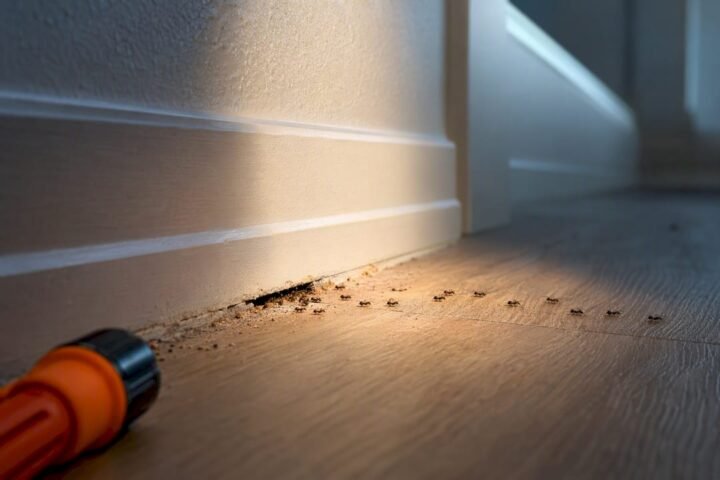
Start with size. Adult bed bugs measure just 1 to 5mm, roughly the size of an apple seed, flat, wingless, and fast. The Victorian Department of Health confirms they escape immediately when exposed to light, vanishing into mattress seams, bed frame joints, skirting boards, and electrical outlets before you’ve registered what you saw.
Their saliva makes the problem worse. Bed bugs inject a natural anaesthetic before feeding, so the bite is completely painless. Most people sleep through it. Any skin reaction typically shows up hours later, making it easy to blame mosquitoes or an allergic reaction rather than a pest problem.
Feeding happens every five to ten days, but bed bugs can survive several months without any blood meal at all. An infestation can sit dormant through a vacant rental or a long holiday and still be alive when the next occupant arrives.
Eggs compound this. Near-invisible to the naked eye, they hatch quietly in the background long before a single adult is spotted. This hidden reproduction is a different challenge to something like identifying bird mites in your house, which tend to show themselves differently.
By the time most people notice bite patterns, blood spots on sheets, or shed skins, the infestation is already well-established. That’s the real reason so many cases go undetected for weeks or months.
How to Know If You Have Bed Bugs in Australia: Signs to Look For
So you know bed bugs are easy to miss, but what should you actually be looking for?
Bites are the obvious starting point. They typically appear as small, red, itchy welts in a line or cluster on exposed skin: arms, neck, shoulders, and legs are most common. The catch is that some people show no visible skin reaction at all, so a clear complexion is not a clean bill of health.
Spots on your bedding matter more than bites. Check your sheets, pillowcases, and mattress seams for small rust-coloured or dark spots. These are bed bug excrement or the residue of crushed bugs, and they are often the first concrete evidence of an infestation, well before you ever see a live insect.
Shed skins are another reliable indicator. As bed bugs grow, they shed their exoskeletons (cast skins). Check mattress seams, behind the headboard, and along skirting boards. Finding shed skins confirms the bugs have been present long enough to breed.
If you have recently stayed in a hotel, bought second-hand furniture, or had overnight guests, and you are now noticing any combination of the above, do not wait it out. Get in touch with Canberra’s local pest specialists for a professional inspection. Early action is significantly easier than dealing with an established infestation.
Practical Prevention: Reducing Your Risk in Canberra
Knowing the signs matters, but stopping bed bugs from reaching your home in the first place is a better outcome. These habits are straightforward and take very little time.
When staying in hotels or short-stay accommodation, resist the urge to drop your bags on the bed. Store luggage on hard surfaces or in the bathroom, then take two minutes to check the mattress seams, headboard, and bed frame before you settle in. Bed bugs cluster in these spots first.
After you get home from any trip, wash all clothing on the hottest cycle the fabric allows before it goes near your wardrobe. Inspect your luggage outside or in the laundry, not in the bedroom. This one habit is your single most effective barrier against bringing an infestation home.
Before buying second-hand furniture, examine every seam, joint, and hidden surface under good lighting. This applies to bed frames, couches, and wardrobes. Avoid second-hand mattresses altogether unless they come sealed in a certified encasement; the risk simply is not worth the saving.
In share houses and university accommodation, fit a mattress encasement as a baseline measure from day one. If you spot any warning signs, report them to your property manager immediately. Early reporting keeps a single-room problem from spreading through an entire building.
Finally, reduce clutter around your sleeping area. Fewer hiding spots means earlier detection. Make a quick check of your bed frame and skirting boards a regular habit, especially if you live in a higher-risk setting.
The same principle applies to other hidden household threats. Just as bed bugs can establish quietly before anyone notices, termites work the same way. If you are thinking about broader household protection, this guide to termite treatment options for Canberra homeowners is worth reading alongside your bed bug prevention routine.
When DIY Is Not Enough: The Case for Professional Bed Bug Removal
Prevention habits reduce your risk significantly, but if bed bugs are already established in your home, most over-the-counter sprays and traps will not finish the job. The core problem is eggs. Bed bug eggs are extremely difficult to see and have a significant incubation period, meaning a partially successful treatment leaves surviving eggs behind. Those eggs hatch, and the infestation restarts within weeks.
The Victorian Department of Health is clear on this: controlling a bed bug infestation typically requires a combination of multiple non-chemical and chemical treatments working together. That level of coordinated treatment is genuinely difficult to execute reliably without professional equipment and training.
What professional bed bug pest removal actually looks like:
- A thorough inspection to map where the infestation has spread
- Targeted heat or chemical treatment designed to reach all life stages, including eggs
- A follow-up assessment to confirm the infestation is fully resolved
- Practical advice to reduce the risk of reintroduction
This staged approach matters because missing a single harborage point can mean starting over. (The same logic applies to other stubborn infestations; professional wasp removal when you’d rather not risk it yourself follows a similar principle of doing it properly the first time.)
BugsPatrol provides bed bug treatment across the ACT and surrounding NSW regions, working across residential and commercial properties including rental units, share houses, and short-stay accommodation.
The practical case for acting early is straightforward. Each failed DIY round gives the infestation more time to spread to adjacent rooms or neighbouring units. Professional assessment at the first confirmed sign is not an overreaction; it is simply the most cost-effective and least disruptive response available.
The Bottom Line for Canberra Residents
The evidence is clear: bed bugs are officially classified as relatively common across Australia, and the belief that they simply do not exist here is not supported by the facts. That false confidence is what allows infestations to take hold unnoticed and grow into problems that are significantly harder to treat.
Canberra is exposed through the same everyday vectors that drive infestations nationally, including hotel stays, university housing, share houses, and second-hand goods, all part of ordinary ACT life and all established routes for bed bugs to enter a home.
Check for bites, rust-coloured spots on bedding, and shed skins near mattress seams, see the detection section above. Prevention is equally achievable through travel precautions, post-trip laundry habits, and careful inspection of second-hand furniture, as covered in the prevention section.
If any of those warning signs appear, the most reliable path to full elimination is a professional inspection from a licensed local provider. BugsPatrol provides bed bug treatment across the ACT and surrounding NSW regions. Getting in touch at the first sign of a problem is always easier than managing one that has had time to spread.
Conclusion
Bed bugs are a real and growing concern for Canberra residents, not a problem confined to other cities or countries. They travel easily, hide well, and establish themselves quickly in homes across every suburb and living situation the ACT has to offer.
The key takeaways are simple: know the warning signs, act on them early, take consistent preventive steps when travelling or buying second-hand, and call a licensed professional the moment something looks suspicious.
Awareness is your strongest first line of defence. The residents who avoid serious infestations are not lucky; they are informed and proactive. Do not wait for confirmation before reaching out for help.
If you have noticed any signs of bed bugs in your Canberra home, contact BugsPatrol today for a professional inspection and take back control before the problem has a chance to grow.