Neither method wins every time. A chemical barrier is built to stop termites getting into the building from the soil. Baiting is built to wipe out the colony that is already feeding. If live termites are active at your property, the usual order is bait first and barrier second. If you have no activity and want lasting protection around the structure, a barrier installed to Australian Standard AS 3660 is the usual starting point. Most homes end up needing a plan that includes regular inspections whichever way they go.
TL;DR
- Barrier: a continuous treated zone in the soil and around the structure that termites have to cross to reach the timber. Done properly, it is installed to AS 3660.
- Bait: stations placed in the ground that termites feed on and carry back to the colony. It targets the colony rather than the soil around the house.
- Live termites: the Australian Pest Control Association recommends baiting for one to two months before a chemical soil treatment.
- Either way: inspections stay on the calendar, and the contract fine print matters as much as the product.
Table of Contents
- How a chemical barrier works
- How termite baiting works
- Bait and barrier side by side
- If you have live termites, start with bait
- Why a colony being gone does not mean the job is done
- What decides which one fits your property
- Inspections are part of both options
- Read the contract before you choose the method
- What it costs
- Our perspective
- Get a termite inspection in Canberra
- Frequently asked questions
- Sources
How a chemical barrier works
A chemical barrier is a treated zone that sits between the soil and your building. Termites travelling from the ground to the timber have to cross it. The aim is a continuous, gap-free band around the foundations, under slabs where accessible, and around pipes, piers and other penetrations.
The word that matters is continuous. Installation of chemical barriers should follow the AS 3660 series, which sets out requirements for continuous, gap-free zones. A barrier with a gap behind a retaining wall, a patio slab or a pipe entry gives termites a route in, however good the product is.
In practice a barrier job can involve trenching and drilling along the edges of paths and slabs, treating the soil, and sometimes laying a physical or chemical layer during construction. That is why it is more disruptive than baiting, and why access to the perimeter matters. Garden beds, decks, pergolas and paving all affect how complete the zone can be. If you want the detail on how this looks in the capital region, our guide to termite barrier systems in Canberra walks through it.
How termite baiting works
Baiting takes a different approach. Stations containing a bait are placed in the ground around the property. The idea is that foraging worker termites find the stations, feed, and carry the active ingredient back to the nest. Baiting uses slow-acting insect growth regulators that worker termites spread through the colony, so the colony declines over time rather than dying on contact.
Timing is the point to understand. Elimination can take several weeks to a few months, and the same source notes it can be unsuccessful or take years. That is not a fault of the idea, it is how the method works: baiting depends on termites finding and feeding on the bait. Per Texas A&M University’s extension factsheet, the time until termites begin feeding is difficult to predict.
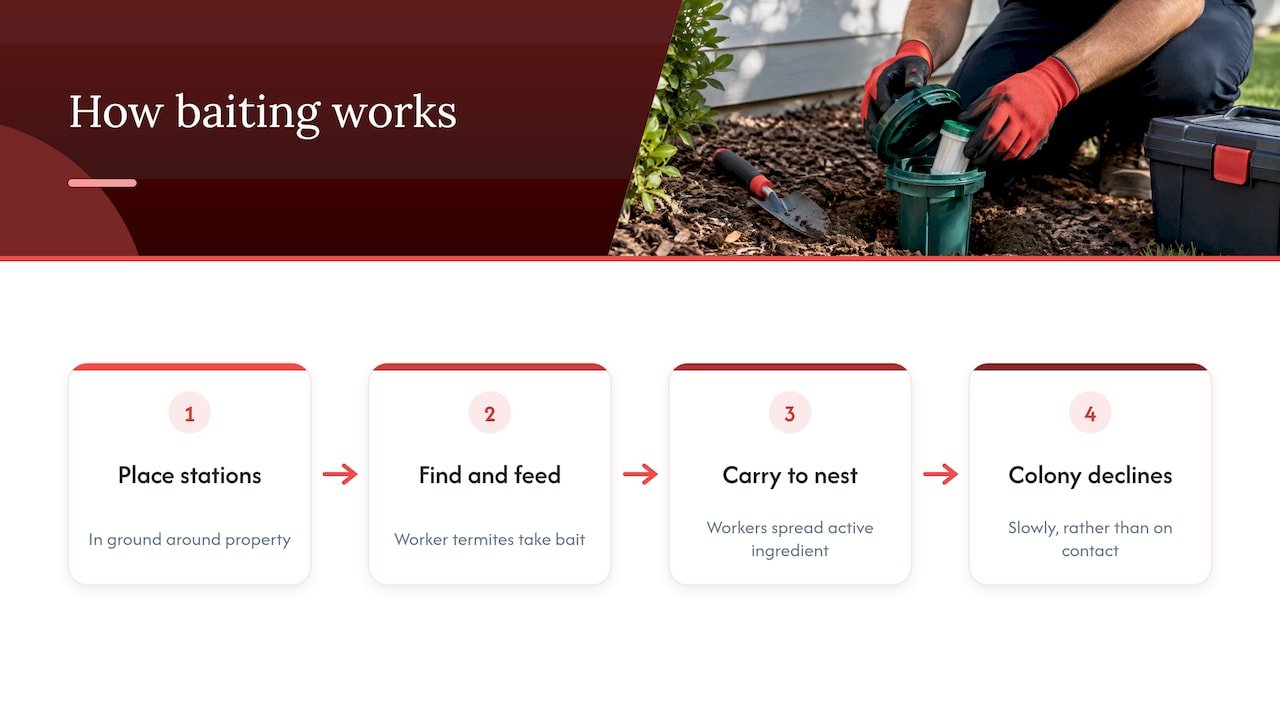
Because stations have to be checked, baiting is a service, not a one-off installation. Bait stations are usually inspected every four to six weeks, according to the Australian Pest Control Association.
Bait and barrier side by side
| Chemical barrier | Termite baiting | |
|---|---|---|
| What it targets | Termite entry into the building from the soil | The foraging termites and the colony they come from |
| How it works | Continuous treated zone termites must cross | Stations that workers feed on and carry back to the nest |
| Speed | Protection in place once installation is complete | Weeks to months to take effect, sometimes longer |
| Disruption | More physical work around the perimeter | Stations installed in the ground, less digging |
| Ongoing work | Regular inspections still required | Stations checked on a regular cycle, usually every 4 to 6 weeks |
| Best suited to | Homes with no activity, new builds, long-term structural protection | Properties with live termites or active foraging |
| Key dependency | Complete, gap-free coverage to AS 3660 | Termites finding and feeding on the stations |
The table shows why people ask the question in the wrong form. These are not two versions of the same product. One is a defense line for the building, the other is a way to deal with the colony. They answer different problems, and sometimes the right answer is both.
If you have live termites, start with bait
This is the clearest piece of guidance in the research. If live termites have been found, the Australian Pest Control Association strongly recommends baiting for one or two months before a chemical soil treatment, and the colony may be eradicated. A barrier alone does not remove termites that are already inside the structure or feeding in the timber, so installing one as the first and only job leaves the active problem in place.
What to do the moment you see signs:
- Leave the activity undisturbed. Do not spray or break open mud tubes. Disturbing a colony can push termites to feed elsewhere.
- Photograph what you see: mud tubes, damaged timber, discarded wings.
- Book a licensed inspection. A thermal imaging inspection helps locate activity behind walls without cutting into them. Our guide to identifying termite damage shows what to look for.
- Agree the sequence in writing: what is done first, what follows and when it is reviewed.
Once the colony is dealt with, a barrier or a maintenance plan becomes the long-term layer. Our overview of termite treatment options in Canberra covers how the stages fit together.
Why a colony being gone does not mean the job is done
Baiting removes the colony that found the stations. It does not make the property permanently unattractive to the next one. University experts at Texas A&M explain that eliminated colonies can be replaced by new colonies from the yard, and that baiting gives no ongoing protection once the service contract ends.
That is the reason many homeowners pair the two ideas: deal with the active colony, then keep a protective layer and a schedule of inspections going. It is also why the question “which is better” often misses what you are really buying, which is a plan with a start, a middle and a review date.
What decides which one fits your property
No single formula picks for you, and a good technician will look at several things before recommending anything.
Is there current activity? This is the first question and it changes everything. Live termites point to baiting first. No activity and no history points to protection around the building.
What is the building like? Slab on ground, raised floors, sub-floors with limited access, attached garages and extensions with different foundations all affect how a continuous barrier can be laid. Where the perimeter is covered by paving, decking or concrete you cannot lift, complete coverage gets harder, and that can shift the balance towards a different approach or a combined one.
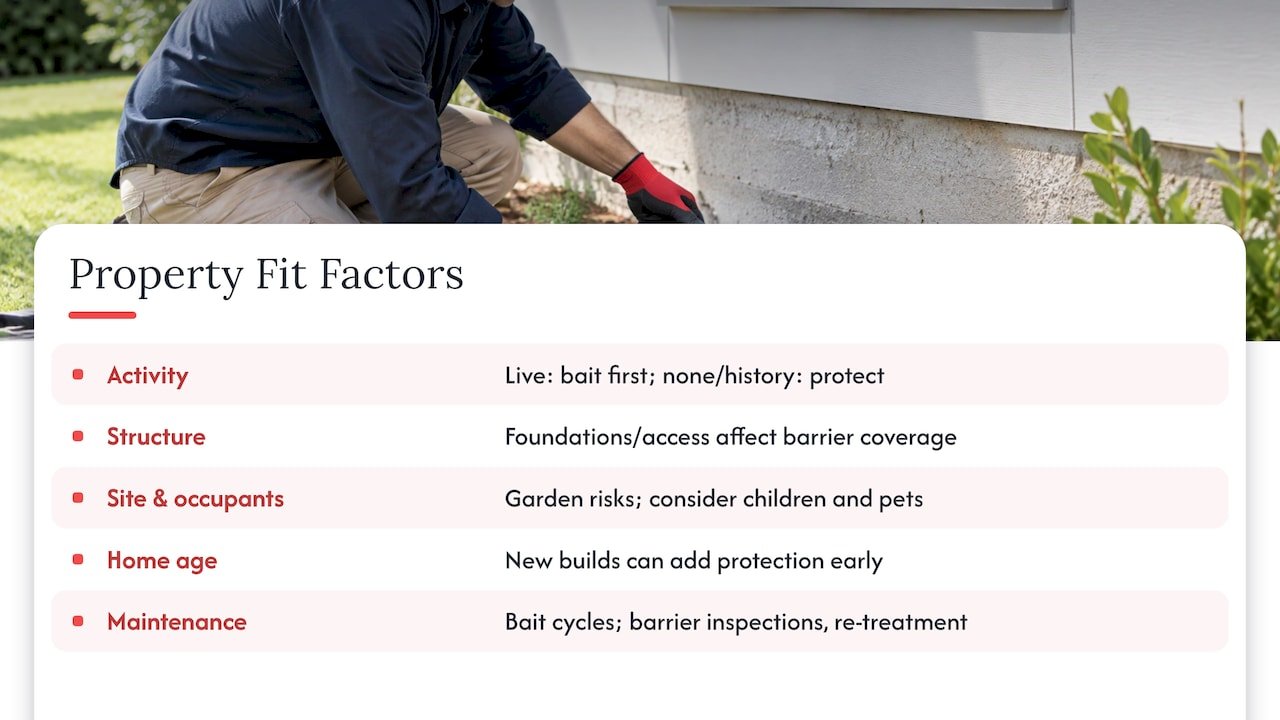
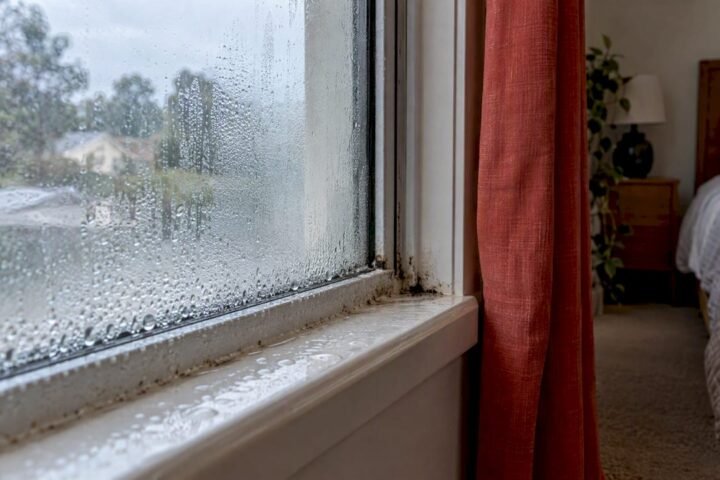
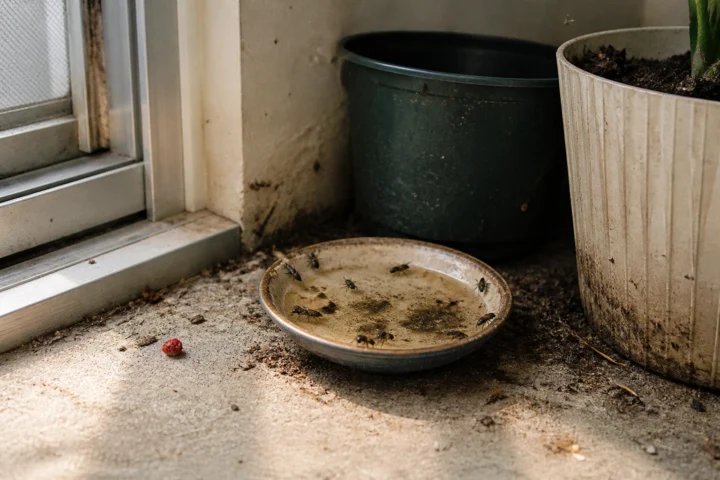
What is around the building? Garden beds against walls, timber retaining walls, stored firewood, leaking taps and poor drainage all invite termites. Our guide to weekend termite fixes and a yearly AS 3660 plan covers the ones you can sort yourself before any treatment.
Is the home new or old? A new build has the chance to get protection in at the start. Our article on termite prevention for a new home in Canberra explains what to ask the builder.
How will you maintain it? Baiting needs stations to be visited on a cycle. A barrier needs inspections and eventual re-treatment. Check how long a barrier lasts in our guide on whether termite barriers expire in Canberra.
Who is in the house? Families with young children and pets want to know what is used and where. Products sold for termite control in Australia are assessed and approved by the Australian Pesticides and Veterinary Medicines Authority before use. As an example, the APVMA assessed the efficacy and safety of a bistrifluron bait product before it was approved. Whatever is used at your home, ask for the product name and the label, and follow the re-entry and handling directions it gives.
Inspections are part of both options
No termite system is install-and-forget. The Australian Pest Control Association notes that chemical barriers do not remove the need for inspections, and that high-risk properties should be inspected at least every three to six months. For many homes, our guide to termite inspection frequency explains why 12 months is the minimum. Our inspection archive has more on what a good inspection includes.
A useful inspection report tells you which areas were accessible, which were not, what was found, and what is recommended next. If a report cannot say what it could not reach, treat it as incomplete.
Read the contract before you choose the method
The product matters less than what the paperwork promises. The Australian Pest Control Association advises homeowners to check the contract fine print before relying on a timber-replacement warranty for termite damage. Questions worth asking before you sign:
- What exactly is covered, and what is excluded?
- Does the warranty depend on annual inspections, and who must carry them out?
- What happens if the stations or the treated zone are disturbed by building work or landscaping?
- What is the renewal cost, and what happens if you stop renewing?
- Is the work to be done to AS 3660, and will you receive the documentation?
If you are buying, the same attitude applies earlier. A guide on termite inspection before buying a property sets out what Australian buyers should check before they commit, including what a pre-purchase report can and cannot tell you.
What it costs
Prices vary too much to quote responsibly without a site visit. Property size, the extent of activity, site access, the location and the method all move the quote, and a job with live activity followed by a barrier costs more than either alone. Get a written quote that itemizes the inspection, the treatment, any follow-up visits and the ongoing monitoring or inspection costs, so you can compare like with like.
If you prefer to spread the cost, our maintenance plans are billed monthly. Bronze Termite is $29.98 a month, Silver Combined is $55.98 a month and Gold Complete is $79.98 a month.
Our perspective
We get this question a lot, and our answer is always to look first and decide second. Before we recommend baiting, a barrier or a combination, our licensed technicians inspect the property using modern detection methods, including thermal imaging for termite inspections, so the recommendation rests on what is actually happening in your walls and soil.
Our view is that the best protection is a layered one. If termites are active, deal with the colony first. Once that is done, a properly installed protective barrier and a regular inspection schedule give you the long-term cover that a one-off job cannot. That is why we put so much weight on inspections and on maintenance plans: the property is protected between visits, not just on the day of the treatment.
We have serviced more than 5,000 Canberra homes over more than a decade, and we focus on effective, responsible treatments for families, children and pets. All our treatments are guaranteed for effectiveness, and we are licensed and insured. If you want to understand your options before you spend anything, an inspection is the right first step.
navin
Get a termite inspection in Canberra
If you are weighing bait against barrier, the quickest way to a sound decision is to have someone look at your property. Our licensed technicians inspect with thermal imaging, explain what they find in plain words, and recommend the treatment that fits, whether that is a termite treatment, a barrier or an ongoing plan. Look at our termite control service or contact us through bugspatrol.com.au to book.

We also offer same-day emergency service if you have found live activity and need someone quickly.
Frequently asked questions
Is termite baiting better than a chemical barrier?
Neither is better in every situation. Baiting is aimed at the colony and is the usual first step when live termites are found. A barrier is aimed at stopping entry into the building from the soil. Many homes benefit from both, in that order, plus regular inspections.
Can I install a barrier if I already have termites?
Yes, but the usual advice is to deal with the colony first. The Australian Pest Control Association recommends baiting for one or two months before a chemical soil treatment when live termites are found. A barrier alone does not remove termites already feeding in the structure.
How long does baiting take to work?
It depends on how quickly termites find and feed on the stations. Elimination may take several weeks to a few months, and sometimes longer. Because this is hard to predict, baiting comes with regular station checks, usually every four to six weeks.
Do I still need inspections after a barrier is installed?
Yes. A barrier does not replace inspections. High-risk properties should be inspected at least every three to six months, and for most homes 12 months is the minimum. Regular checks are also usually a condition of any warranty.
Is either option safe for children and pets?
Products used for termite control in Australia are assessed and approved by the APVMA before use. Ask your technician for the product name and label, and follow the handling and re-entry directions. If anyone in the household has a medical condition, talk to your doctor or the Poisons Information Centre on 13 11 26.
Sources
- Australian Pest Control Association: Termite control
- Texas A&M University: Frequently asked questions about subterranean termites
- APVMA: Termite barrier product label (AS 3660 requirements)
- APVMA: Public release summary for a bistrifluron termite bait product
- Termite inspection before buying a property
Recommended
- Termite Treatment Options: What Canberra Homeowners Need to Know
- Do Termite Barriers Expire in Canberra? What to Do Next
- Termite Reticulation Systems for Canberra Homes: What They Are and When to Choose One
- Weekend Termite Fixes for Australian Homes and Yearly AS 3660 Plan