Flies in a commercial kitchen are not simply a flying-insect inconvenience. They are evidence of a breeding site, and until you find and fix that site, sprays and traps will only suppress the symptom. A fly control program in Canberra must begin with a source audit of your own premises, because that is the work you can act on today.
This tutorial walks you through waste storage and bin areas, drains, grease traps and by-product chutes, plus entry points, deliveries and staff areas. You will learn what screens, air curtains and drain traps can realistically achieve, how to monitor with a pest control checklist, and what a treatment schedule should include through summer. We also cover your responsibilities as a food business operator, the questions to ask before appointing a fly control company in Canberra, and the first moves to take this week. By the end, you will know where flies are breeding, which proofing measures matter, and how to keep numbers down with a program that treats causes before adults.
Why a fly problem in a commercial kitchen is really a breeding-site problem
A fly on your prep bench is the symptom. The larvae, pupae and organic sludge producing it usually sit metres away, in a bin bay, a floor drain or a by-product chute. Start with where flies breed and how to find the source.
Flies transfer contamination from dirty to clean areas (Food Standards Scotland, Meat Industry Guide Chapter 6), so activity near a food contact surface is a food safety signal, not an annoyance.
Adult-only control therefore fails. An aerosol, spray or unit kills the adults in front of you while the source keeps replacing them, so the weekly catch count resets instead of falling.
When BugsPatrol walks a Canberra kitchen, we map where flies could complete a life cycle on site before we look at where they land. That sequence is our own assessment approach, not a published standard.
Commercially, a treatment cycle that never touches the breeding site is a recurring line item on your P&L rather than a fix. What matters next is who carries the legal duty to act on it.
What Canberra food businesses must do about pests, and where the responsibility sits
Whoever holds the food business licence holds the pest control duty. The Food Standards Scotland Meat Industry Guide, Chapter 6, is a UK document cited here for its principles; verify your obligations against ACT Government and FSANZ guidance. Meat Industry Guide Chapter 6 is explicit that operators are responsible for controlling pests whether the work is done by their own staff or by a contractor, so engaging a fly control company transfers the task, not the obligation. Pests entering a premises are a potential source of microbiological and physical hazards, which places fly activity inside your food safety program rather than beside it.
Repeated fly findings should prompt a site review, not a heavier spray schedule. Persistent infestation sits alongside inadequate cleaning and maintenance as a serious underlying hygiene failure in the same guidance.
Refuse stores should also be designed and managed so they can be kept clean and free of animals and pests, with layout accounting for pest pressure from the outset.
Check ACT Government and FSANZ guidance for the obligations that apply to your premises type, and verify that a documented pest management cycle is in place.
Source audit step 1: waste storage and bin areas
With the legal duty established, the audit starts behind the kitchen, not inside it.
Look under the bins first. Pooled liquid and food slurry in the bin bay is often the most productive fly breeding surface on a site, and it is invisible from the kitchen door. Scrape caked residue from bases before washing, because a film of debris is enough to sustain larvae.
Audit dwell time, not bin size. How long waste sits on site matters more than volume, especially across warm weekends and public holidays when collection gaps open.
Check lids, bases and wash-down practice: who rinses the bins, how often, with what, and where that water drains.
Separate the streams. Food waste, cardboard and used cooking oil each need their own containment and collection cycle so one cannot soak or contaminate the others.
Apply the refuse store standard. Standard 3.2.3 requires garbage storage areas to be kept clean and designed with pest control in mind.
Then name an owner. Bin bay cleaning that is not assigned to a specific person on a specific shift generally does not happen.
Next: the wet side of the kitchen.
Source audit step 2: drains, grease traps and by-product chutes
The bin bay is only half the audit. Now work the wet side: floor drains, gully traps, grease interceptors and by-product chutes all hold the organic film larvae feed in.
Drain traps and chute end flaps are the control measures for these openings, recognised in the Food Standards Scotland meat industry guidance, and they only work if fitted, intact and sized for the opening.
Check that your drain maintenance removes organic buildup, not only grease.
Set a grease trap service interval, verify it happened, and keep the paperwork. A trap serviced on paper only is a common hidden source behind repeated fly sightings in an otherwise clean kitchen.
In our experience, inspecting at the end of service, when drains are warm and wet, gives the clearest picture of activity. From there, trace the same openings outward to where flies get in.
Source audit step 3: entry points, deliveries and staff areas
With the wet side mapped, shift to openings and the traffic through them. Doors, windows, ventilation openings and by-product chutes all need assessing, and each has a matching control: self-closing mechanisms, fly screens, drain traps, chute end flaps or air curtains (Food Standards Scotland, Meat Industry Guide Chapter 6).
Follow a delivery through the back door: how long it stays open, where pallets are broken down, where cardboard is stacked, where the driver sets crates.
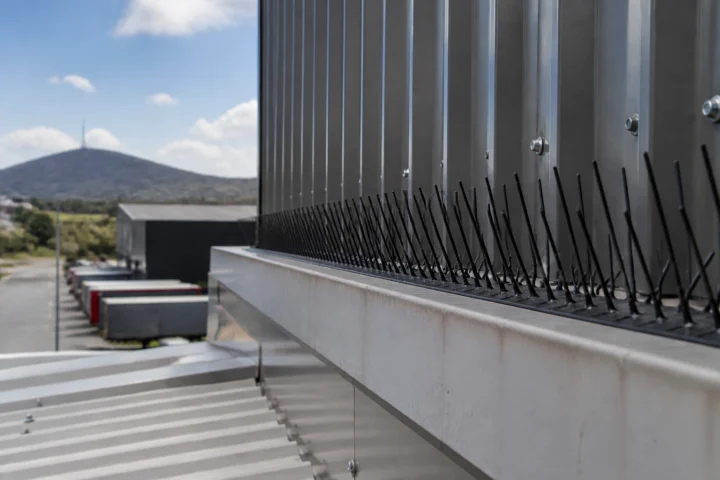
Then inspect the building fabric for gaps: damaged door seals, missing screen panels, unscreened vents, windows propped open in prep areas.
Look at the edges of the operation too: staff change rooms, smoko areas, outdoor seating and front-of-house waste all feed fly pressure back toward the kitchen.
Log findings as you walk, they become the starting point for proofing recommendations.
Proofing: what screens, air curtains and drain traps actually achieve
Proofing turns audit findings into hardware, and sequence decides whether it works: fix the reservoir and the openings first, then specify equipment.
Air curtains reduce flies crossing a doorway through directed airflow, but only when velocity, width and mounting height suit the opening, and no competing cross-draught pushes the barrier back inside.
Fly screens are passive and inexpensive, yet a torn or missing panel is an open door, so screens belong on the same checklist as drains.
Drain traps and chute end flaps physically separate the breeding reservoir from the food area, which is why they achieve more than any unit mounted in the room.
UV fly units capture adults; reviewing the catch regularly helps you track whether adult pressure is rising or falling. Siting and specification follow the manufacturer’s instructions and your layout, and the catch itself supports monitoring the health risks flies carry into food areas.
Handle chemistry carefully: careless storage and use of insecticides can introduce chemical hazards in a food premises, so commercial fly killer units, baits and sprays must be stored and used according to the label.
Sequence the spend last: fix the source before you specify equipment.
Monitoring: the pest control checklist that proves what you did
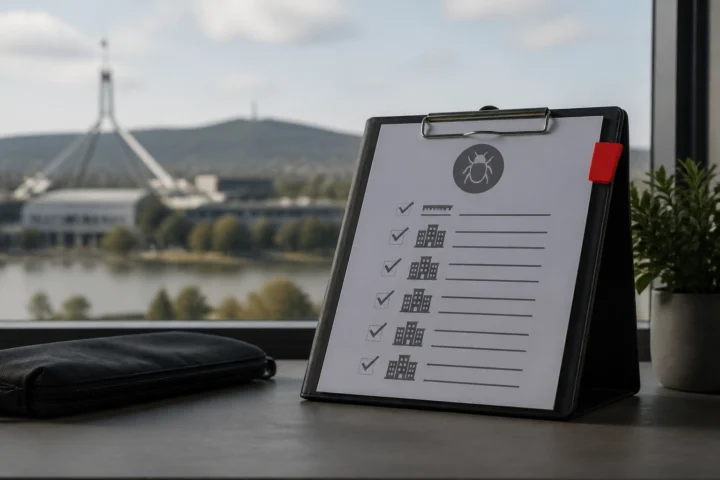
Proofing closes the openings; monitoring proves they stayed closed. As the Food Standards Scotland meat industry guide sets out in Chapter 6, a pest control checklist helps staff confirm no area is missed and records whether infestations were found and what action followed.
Build yours around your own sources: bin bay, every drain and trap, every chute, every entry point, every unit. List each by location so nothing depends on memory.
Record four things per finding: what was seen, where, when, and what was done about it. A weekly trend at one location tells you far more than a single count.
Assign a named person per shift, and keep the log where an auditor or verifier can find it. The record is the evidence that monitoring happened.
Set an escalation trigger. As a practical rule, a rising catch count or the same finding twice in a row suggests the source has not been fixed; treat it as a prompt to return to the audit rather than increase treatment. Review the log weekly, not only when flies appear.
What a fly control program should include, and when to treat
Your monitoring records are also your scheduling tool. If the trend holds steady, the interval stays; if it moves, the interval changes.
Sequence matters most, source first, treat second, as set out at the start of this guide.
A complete fly control program covers five things: site inspection and monitoring, targeted adult control, source treatment where appropriate, written proofing recommendations, and a documented service report. Anything missing from that list is a partial service.
On timing, this is our own practice rather than a published standard. BugsPatrol schedules more frequent visits across the warmer months, when fly pressure on Canberra kitchens and waste areas is highest, and we adjust frequency to what your monitoring records show.
Chemical handling sits inside your food safety obligations: insecticide use, storage and disposal should follow the label so treatment does not introduce a chemical hazard.
Keep every service record. Documented visits support your food safety program and give you evidence for an auditor, a franchisor or a landlord.
Be sceptical of any fly control company that prices a schedule before walking your site; the right interval depends on your sources, not a fixed template. Apply that same standard when you compare providers.
Choosing a fly control company in Canberra: questions to ask first
Before you commit to a schedule, vet the provider the way you would vet a new staff member.
As established above, that duty stays with your business regardless of who does the work.
Ask for the audit, not the brochure: what did they inspect, what did they find, and what did they recommend in writing?
Ask what happens between visits, how findings are reported, and whether monitoring records are shared with you or kept by the provider. Your records should live on site.
Ask how proofing is handled. Screens, seals, drain traps and air curtains are usually a maintenance fix, not pest control work, so a provider who flags them and walks away has done half the job.
BugsPatrol is locally owned and operated from Throsby, servicing Canberra, the ACT and surrounding NSW, is fully licensed, and offers year-round protection plans with 12-month warranties, rolling cover, easy monthly payments and no upfront fees.
Compare providers on one test: do they find sources, or only treat symptoms?
Conclusion: your first moves this week
Ask those questions first, then act on what you already control.
Walk the bin bay and every drain today, before you call anyone about treatment, and write down exactly what you see. Assign bin bay wash-down and drain checks to a named person on a named shift, in writing; unassigned cleaning does not happen. Start a one-page checklist covering bins, drains, chutes, entry points and units, and keep the completed sheets as your evidence.
Fix the cheap fabric faults now. Door seals, screen panels, chute end flaps and unscreened vents cost little and close pathways no spray can.
Then bring in treatment for what remains, backed by a documented program, monitoring records and written proofing recommendations. BugsPatrol builds year-round protection plans on exactly that sequence. Start today; the audit costs nothing but a walk.