Canberra’s winter pest problem is mostly a rodent problem, with cockroaches, spiders and flies close behind and termites working quietly through it all. Cold, frosty weather pushes animals toward warmth and food, and your roof void, subfloor, pantry or commercial kitchen offers both. The sooner you spot the signs, the cheaper the fix. If you already have droppings, gnawing or scratching in the walls, our licensed technicians at BugsPatrol offer same-day emergency service across Canberra, and every treatment we do is guaranteed for effectiveness.
TL;DR
- Mice and rats are the main winter invaders in Canberra, and once they are inside a warm home with food they rarely leave on their own.
- Cockroaches, flies and spiders also turn up indoors or in food premises, and termites stay active out of sight all year.
- Droppings, gnawing, noises in walls, greasy rub marks and daytime sightings are the signs that mean act now.
- Block entry points, remove food and shelter, and use child- and pet-safe methods if you treat anything yourself.
- Call a licensed professional when signs persist, when you see rodents in daylight, or when you suspect termites.
Table of Contents
- Why winter sends pests indoors in Canberra
- The winter pests to watch for
- Signs that winter pests are already inside
- Where they get in and what draws them
- How to keep winter pests out: a practical routine
- Safe treatment around children, pets and wildlife
- When to call a professional
- Our view on winter pest control
- Keeping Canberra winters pest-free with a plan
- FAQ
- Sources
Why winter sends pests indoors in Canberra
Canberra is the coldest capital city in Australia. According to the Bureau of Meteorology figures reported by the ABC, the average winter maximum sits around 12.6 degrees Celsius, and frost is visible on most winter mornings. For a mouse, a rat or a cockroach living in a garden, a woodpile or a drain, that is a strong reason to relocate.
A heated house gives them three things at once: warmth, food and shelter. Rob Boschma of the Australian Environmental Pest Managers Association told SBS that winter mouse activity in the southern states is a fairly uniform problem. Once mice get into a warm home with food, he said, they rarely leave by their own accord. He also said that he has hardly ever inspected a roof, new or old, without finding some evidence of rodents.
The point for you is that the question is rarely whether rodents are nearby. It is how many there are and how active they have become, and that is something you can influence by removing what attracts them.
The winter pests to watch for
Mice and rats
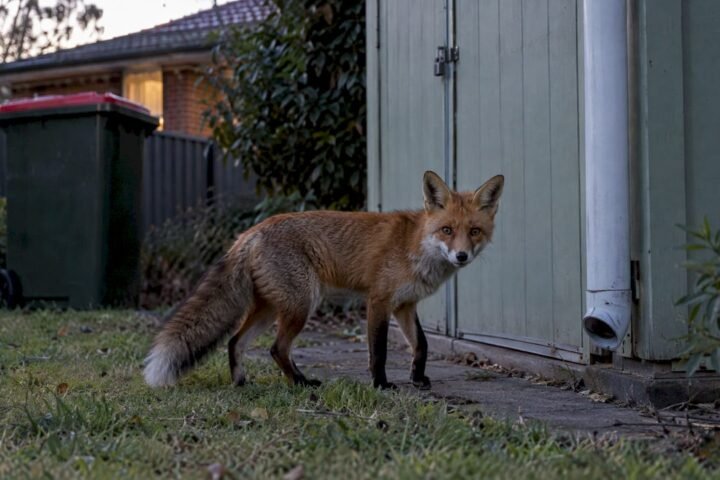
These are the pests that most often prompt an urgent call in Canberra between May and September. The ACT Government’s guidance on rats and mice says they shelter in walls, ceilings and under floors, behind or under cupboards and appliances, behind boxes and furniture, and in rubbish heaps, wood piles, thick vegetation and holes under buildings.
They are not just a nuisance. The same ACT page says feral rodents can carry leptospirosis, which is passed on through exposure to urine. They also contaminate food with hair, droppings and urine, carry fleas and ticks, and gnaw through food containers, timber, particle board, insulation and wiring. Chewed wiring is the one that turns a pest problem into a repair bill.
If you are not sure which one you have, our article on why getting rats or mice wrong makes the problem worse explains the difference, because the control approach for each is not the same.
Cockroaches
Cockroaches do not disappear in winter if they have found a warm kitchen, bathroom or plant room. SBS quoted medical entomologist Associate Professor Cameron Webb of the University of Sydney saying that cockroaches thrive where rubbish or waste material accumulates. He said minimising those conditions helps prevent disease transmission, and that people should only use commercially available insecticides or a licensed professional pest controller.
For cafes, restaurants and other food businesses, the ACT Government lists rats, mice, flies and cockroaches as the most common pests that might infest food premises. Rats, mice and cockroaches are nocturnal, so you often see the evidence long before you see the animal.
Flies and spiders
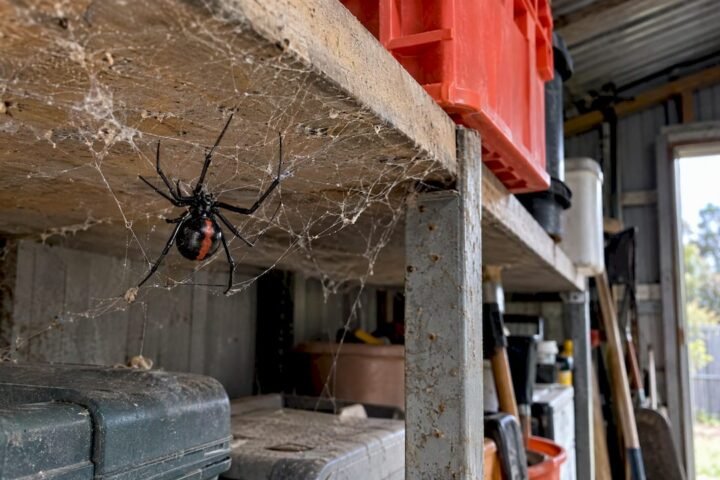
Flies get into food premises through open doors, drains and gaps, and the ACT guidance lists them among the main pests for food businesses. Spiders follow their prey indoors, and a house that holds insects will hold spiders. We treat both as part of general pest control, and we also offer dedicated spider and fly control.
Termites
Termites are not a winter pest in the sense of arriving with the cold, but they are the one problem that winter’s closed-up house can hide. SBS notes that termites are covert: they stay under floors or in wall cavities until the damage is severe, sometimes until a door falls off its hinges or a foot goes through the floor. A heated, sealed home in July is not a time when many people crawl under the floor to check.
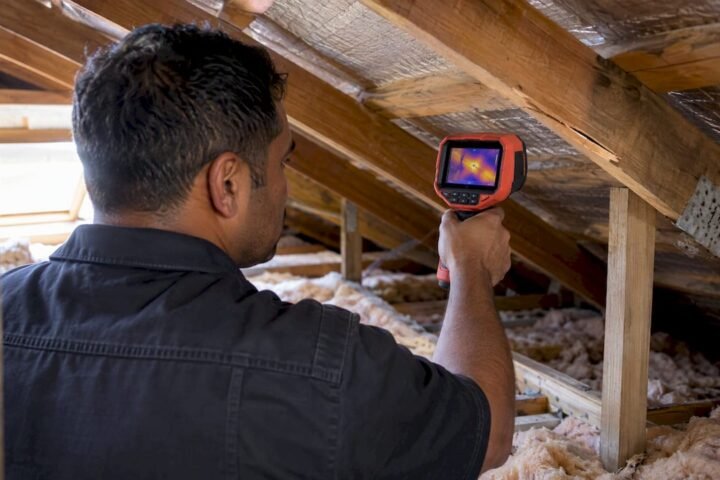
Our technicians use thermal imaging in termite inspections, which helps find activity behind walls without cutting into them. If you are buying, a termite inspection before you buy a property is worth planning into the process, and the same applies to agents preparing a listing.
Signs that winter pests are already inside
Signs are your early warning. Check these once a month in winter, and more often if you have noticed anything unusual.
The ACT Government lists these rodent signs:
- black, moist droppings (fresh ones are soft and dark)
- urine odours
- squeaking, gnawing or movement noises in walls, cupboards, ceilings and under floors
- worn run paths and greasy rub marks along walls
- burrow holes around the building
- gnaw damage to fruit, wood, insulation and electrical cabling
- nests made of cardboard, paper or straw
- pets that are more excitable than usual
The same page says that sightings in daytime usually point to high numbers or a nearby food supply. Treat a rodent in daylight as a sign the problem is larger than one animal.
For cockroaches and other food-store pests, the ACT food-business guidance lists live or dead bodies, eggs, larvae, droppings, damage to packaging, food, wires or woodwork, footprints in spilt flour, musty odours, larval webbing that binds food particles, and customer complaints. A customer complaint counts as a sign. If one reaches you, assume there is more you have not seen.
For termites, the signs are quieter: hollow-sounding timber, mud tubes, blistered paint or sagging skirting. Because they are so easy to miss, an inspection beats waiting for a visible sign.
Where they get in and what draws them
Winter pests are looking for the path of least resistance. In Canberra homes the usual entry points and attractants are these:
- Gaps at the roofline, eaves and subfloor vents. Mice can get through very small openings, so a gap you would not think twice about can be a doorway.
- Vegetation touching the house. Mr Boschma lists vines and bushes abutting houses, subfloor gaps, harborage and building refuse as common attractants.
- Food outside. The ACT Government points to food scraps, fallen fruit and seeds, bird-feeder seed, open compost and accessible pet or poultry food.
- Clutter. Stacked timber, boxes and rubbish give rodents somewhere to nest, and that includes the back of your shed and the space behind your fridge.
- Gutters full of debris. Blocked, leafy gutters hold moisture and give pests cover near the roofline. Our gutter guard installation reduces the build-up that creates that habitat.
For businesses, the picture is similar but with higher stakes. Food premises in the ACT must be free from pests, and the government lists pest-proofing, sealing holes and access points, self-closing doors, weather strips, air curtains, fly screens and drain grates among the preventive steps.
How to keep winter pests out: a practical routine
The ACT Government’s advice is specific, and it works best when you do all of it, not some of it. Here is the routine in a sensible order.
- Walk the outside first. Look for gaps around pipes, vents, doors and the roofline. Block rodent entrances. Cover rainwater tank openings and floor vents with vermin mesh, as the ACT advises.
- Cut off the food. Dispose of food scraps promptly, use tight-fitting bin lids, pick up fallen fruit, and remove bird-feeder seed. Avoid open compost and animal-product compost. Store pet and poultry food in vermin-proof containers and limit how much you put out.
- Remove shelter. Clear rubbish, clean out sheds, cut back vegetation, and keep stacked materials at least 30 cm off the ground.
- Secure the kitchen. Block access to food cupboards and keep pantry food in sealed containers.
- Check the roof void and subfloor. This is where evidence tends to show up first. If you find droppings or nesting material, you have your answer and the next step is treatment, not more tidying.
The weak point in this routine is step 5. You can do everything right outside and still have rodents already inside, in places you cannot easily reach. Roof voids, wall cavities and subfloors are where our licensed technicians work every week. For ongoing protection, our rodent proofing guide for Canberra and our winter pest-proofing guide go through the entry points in more detail.
The point is that prevention reduces how many pests you attract, but once they are inside a warm home, it takes more than tidying up to remove them. That is the stage for a professional.
Safe treatment around children, pets and wildlife
Safety is the first question for most families we speak to, and it is a fair one. Rodent control involves products and devices that can harm a curious child or pet if used carelessly.
The ACT Government’s guidance covers the essentials:
- Use several traps, placed away from food-preparation areas.
- Where children or pets may be exposed, consider child- and pet-safe traps that fully enclose the rodent.
- Check traps daily.
- If you use chemical control, follow the label, wear the personal protective equipment it directs, and keep baits inaccessible to children, pets, wildlife and livestock, or use lockable bait stations.
- Keep records, tell occupants, and avoid contaminating food.
- If a child or pet contacts a chemical agent, call the Poisons Information Line on 131 126.
Native rodents such as the rakali (water rat) are protected and should be left alone. If you are unsure what you are looking at near a creek or pond, leave it and ask for advice before doing anything.
Our approach focuses on effective and responsible treatments for families, children and pets, and our technicians are licensed and insured. For eco-minded households and businesses, that means treatment is matched to the pest and the property rather than applied everywhere. We also tell you how to protect your own habits afterwards, such as storing food and pet feed properly.
When to call a professional
Some signs mean you should stop and book an inspection or treatment. Call a licensed pest controller if:
- you see a rodent during the day, since the ACT Government says this usually indicates high numbers or a nearby food supply
- you hear scratching or movement in walls or the ceiling more than once
- you find droppings in more than one room, or fresh droppings after you have cleaned
- you find gnaw marks on wiring, insulation or stored food
- cockroaches appear in daylight or in more than one room
- you suspect termites, because they hide and the damage is expensive
- you run a food business and any sign of pests has appeared, since premises must be free of them
- you are about to sell, buy or lease, and need a property pest inspection
In an emergency, speed matters, because rodent numbers grow quickly in a warm, food-rich house. We offer same-day emergency service for urgent pest problems, and our rodent removal service covers rats and mice in homes and businesses.
If you are not sure whether you have a problem, our home pest inspection is the place to start. For real estate agents and property managers, inspection reports give you a clear record before a sale or lease.
Our view on winter pest control
We have been working in Canberra for more than ten years and have serviced more than 5,000 homes. What we say to almost every household in winter is the same: do not wait for the problem to be obvious.
Rodents and termites are the two winter issues that stay hidden the longest. By the time a family sees a mouse in the kitchen, there is usually a nest somewhere else. That is why we start with finding the source and the entry points, not just treating what you can see.
We prefer treatment that is safe for children and pets and responsible for the environment, and we stand behind it with a guarantee for effectiveness. Our technicians are licensed and insured, and we use modern detection methods, including thermal imaging for termite inspections.
Winter is also the right time to look at ongoing protection. A maintenance plan means someone is checking your property through the year, so a small sign in June does not become a large repair in September.
navin
Keeping Canberra winters pest-free with a plan
If you would rather not think about pests every season, we offer annual protection plans. Prices published on our site are:
| Plan | Price |
|---|---|
| Gold Complete | $79.98 per month |
| Silver Combined | $55.98 per month |
| Bronze Termite | $29.98 per month |
| Bronze General Pest | $29.98 per month |
You can see what each plan includes on our protection plans page. For a one-off job, such as a rodent infestation or a wasp nest, our general pest control service covers homes and businesses across Canberra, and our team can be reached through our main site.
FAQ
Which pests are most common in Canberra in winter?
Mice and rats are the most common, because they move indoors for warmth and food. Cockroaches, flies and spiders also appear indoors, and termites remain active out of sight. In food businesses, the ACT Government names rats, mice, flies and cockroaches as the main pests.
How do I know if I have mice or rats in the roof?
Listen for scratching, squeaking or gnawing in walls and ceilings, mostly at night. Look for black droppings, greasy rub marks, worn run paths and nests of paper or cardboard. Pets acting more excitable than usual can also be a sign. If you find any of these, book an inspection.
Is it safe to use rodent baits at home with children or pets?
The ACT Government says baits must be kept out of reach of children, pets, wildlife and livestock, ideally in lockable bait stations, and the label must be followed. Where children or pets could be exposed, enclosed traps are an option. If a child or pet touches a chemical, call the Poisons Information Line on 131 126. Our technicians handle treatment with families and pets in mind.
Can termites be active in winter?
Yes. Termites hide inside timber, wall cavities and under floors, so winter does not stop them and you are unlikely to see them. Regular inspection is the way to find them early, and we use thermal imaging as part of our termite inspections.
Do I need a professional or can I handle it myself?
Prevention is something every household can do: seal gaps, remove food and clear clutter. Once pests are established inside, a licensed technician can find the source and treat it properly. Our team can arrange an inspection and treatment on the same day in an emergency.
Sources
- Rats and mice, ACT Government
- Controlling pests in food businesses, ACT Government
- How to protect your home from Australia’s common pests, SBS
- Why is Canberra so cold?, ABC News
Recommended
- ACT Pest Calendar: What’s Active in Canberra Each Season
- Pest Control in Belconnen: What Canberra’s North Homeowners Should Know