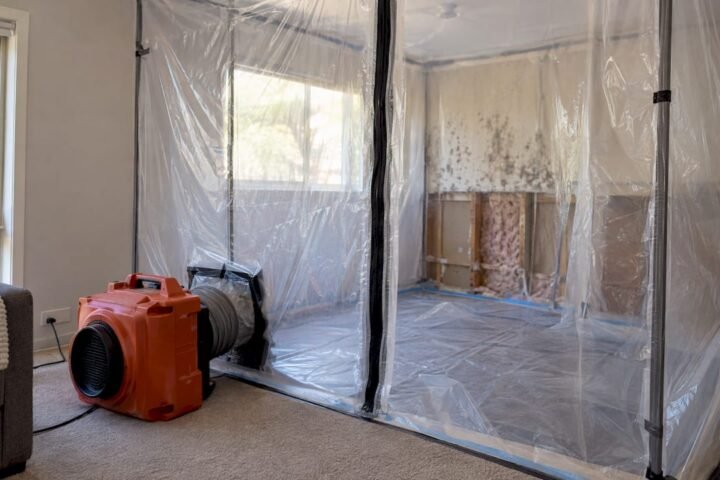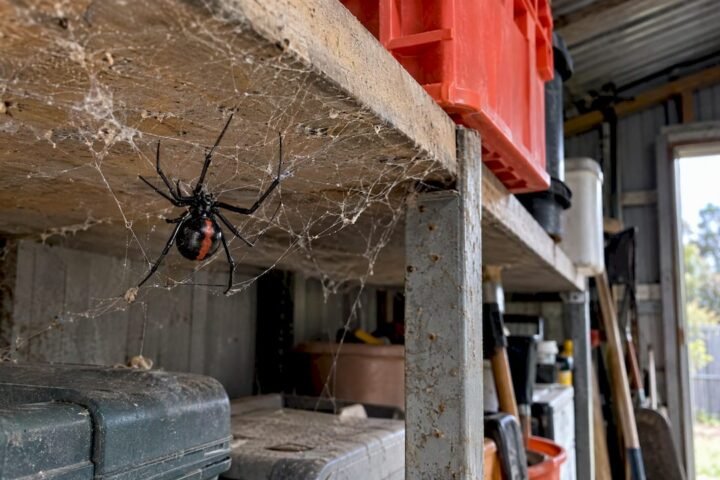
A pet business has a pest problem that most shops and offices do not: the animals in your care are the people most at risk from both the pests and the treatment. The best answer is a written pest-control program run by a licensed technician who plans every visit around the animals, the staff and the customers who walk through your door. That is how we approach pet shops, groomers, boarding kennels and catteries in Canberra.
This guide covers the pests that matter, what the animal welfare codes expect, how to treat safely around dogs and cats, what to do the day you find an infestation, and the records worth keeping.
TL;DR
- Fleas, ticks, flies, lice, mosquitoes and wild rodents are the pests the Australian animal welfare codes name for pet businesses, and they must be controlled while animals are in your care.
- Keep a written pest-control program on site, known to staff, and review it regularly. The NSW breeding code sets a maximum of two years between reviews.
- Some pest chemicals and disinfectants are toxic to cats and dogs, so treatments should be planned and applied under professional supervision, following the product label.
- Sealed food, sealed waste and daily cleaning stop most infestations before they begin.
- Keep dated service reports and treatment records. They protect your animals, your staff and your licence to trade.
Table of Contents
- Which pests pet businesses actually face
- What the animal welfare codes expect
- Prevention: the daily habits that keep pests out
- Treating around animals safely
- You have found an infestation: what to do today
- Records that protect you
- What a pet business should expect from a pest controller
- Our point of view
- Getting a program started
- FAQ
- Sources
Which pests pet businesses actually face
The NSW code for pet shops names fleas, flies, lice, mosquitoes and wild rodents as the pests relevant to a shop, and says pest operations should protect staff and animals. The grooming and boarding codes add ticks to that list. The Australian Cat Care guideline for catteries goes further and notes that flies, mosquitoes, lice, fleas, ticks and rodents can transmit disease to cats.
The codes are written by New South Wales and national bodies, but they are the clearest published description of what good practice looks like, and the ACT has its own codes for grooming establishments and boarding establishments. If you operate in Canberra, read the ACT versions for your type of business.
In practice, each pest shows up in a different part of the business:
- Fleas and ticks arrive on animals. A single boarder or a groomed client can bring them into kennels, holding areas and bedding, and they spread quickly between animals. Our flea control guide for Canberra explains how an infestation develops.
- Flies are drawn to food, waste, faeces and wet floors. They carry disease between surfaces and animals, and customers notice them immediately.
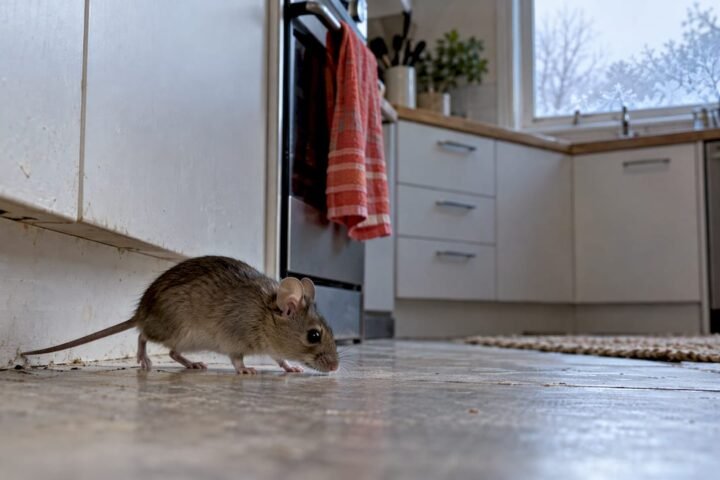
- Rodents are drawn to stored feed, seed, bedding and rubbish. They contaminate food and can spread disease, which is why the codes name them. A shop with a pet-food storeroom and a loading area is an easy target.
- Mosquitoes breed in standing water, so outdoor runs, water bowls and blocked drains are the places to watch.
What the animal welfare codes expect
The codes do not ask you to be pest-free by luck. They ask for a plan.
A documented program. The NSW pet-shop code requires a documented pest-control program covering fleas, flies, lice, mosquitoes and wild rodents, kept on the premises and familiar to staff. The NSW breeding code asks for a program covering insects, ectoparasites and vertebrate pests, and says plans should be written down and accessible to animal-care personnel.
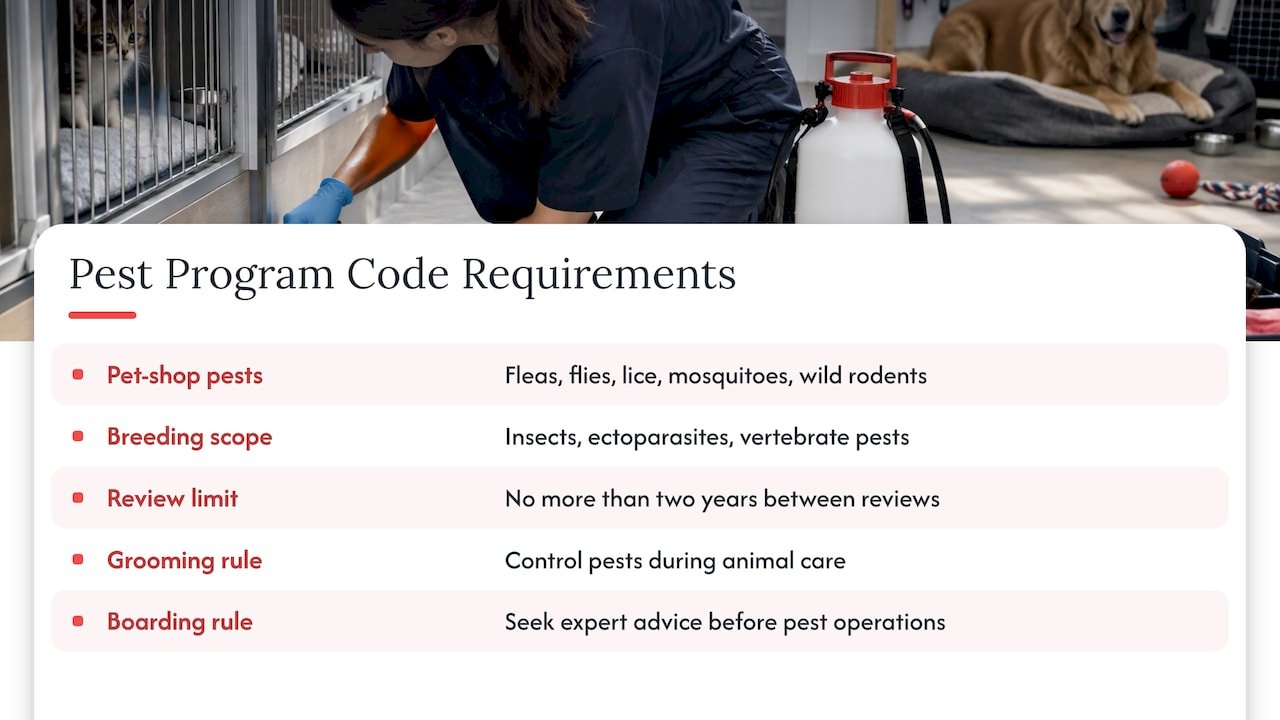
Regular review. The same breeding code says procedures should be reviewed and approved periodically, with no more than two years between reviews. For a pet business, a sensible habit is to review the program after any infestation, any change to your layout or stock, and at least once a year.
Control while animals are in your care. The NSW grooming code requires pests including fleas, ticks, flies, lice, mosquitoes and wild rodents to be controlled, and its standards apply while dogs and cats are in the establishment’s care. The boarding code lists the same pests and recommends expert advice before pest operations, because dogs and people may be adversely affected.
That last point is the heart of this topic. The codes expect an expert, and a plan, before anything is sprayed.
Prevention: the daily habits that keep pests out
Treatment works best on top of good housekeeping. The codes and the cat care guideline give a clear routine:
- Clean daily. The NSW grooming code requires holding, bathing and grooming areas to be cleaned and disinfected at least daily, with faeces and urine removed promptly and holding areas left dry after cleaning.
- Disinfect on schedule. The NSW boarding code recommends daily cleaning and weekly disinfection of kennel and cat-housing working surfaces, before new animals arrive and after disease outbreaks.
- Seal the food. The Australian Cat Care guideline says dry food and wet-food sachets should be sealed in pest-proof containers and stored in a cool, dry place, and that garbage should be sealed and not allowed to accumulate.
- Remove standing water. Empty buckets, clear gutters and fix dripping taps to deny mosquitoes a breeding site.
- Close the gaps. Check door sweeps, vents, roller doors and pipe penetrations, especially around feed storage and bin areas.
One warning belongs in this list. Not every disinfectant is safe where animals live. NSW DPI warns that phenol, cresol and chloroxylenol disinfectants are toxic to cats and should not be used where cats are held. The breeding code adds that tea tree oil is toxic to cats and dogs, and that some coal- and wood-tar-derived disinfectants, including pine oil, phenol, cresol and chloroxylenols, are toxic to cats. A “natural” cleaner is not automatically a safe one, so check the active ingredients before it goes anywhere near animals.
Treating around animals safely
The grooming code says pest chemicals should be registered under the Pesticides Act, used according to the manufacturer’s instructions, and used only under professional supervision, because some are toxic to dogs and cats. The ACT grooming code says the same in Territory terms: chemicals must be registered under the relevant Commonwealth and ACT legislation, used according to the label, and applied under professional supervision.
The pet-shop code points the same way: a documented program, specialist advice, and chemicals registered by the national regulator, the APVMA, used as the manufacturer directs.
In plain terms, that means a few rules for your business:
- Use registered products only, exactly as the label says.
- Do not improvise. Mixing, decanting and spraying are tasks with their own risks. WA Health’s pesticide guidance says a workplace risk assessment is required for tasks including mixing, decanting, spraying, transport and storage, and that risks to workers, visitors and other people must be considered. It is a Western Australian document, but the principle of assessing risk to everyone on site applies in any workplace.
- Plan the animals, not just the pests. Decide before the visit which animals will be moved, where they will go and when they return.
- Control access. The ACT boarding code requires visitors to be supervised in areas containing animals or animal feed. During a treatment, keep customers and unaccompanied staff out of the treated zones.
When can animals return?
There is no single answer, and anyone who gives you one without seeing the product is guessing. Re-entry depends on the product and its approved label. As an example, the APVMA’s 2024 review of malathion states that treated areas must not be re-entered until the spray is dry, with separate requirements for treated animal housing. The exact direction depends on the label of the product actually used.
The practical step is to ask your technician for the product name and the re-entry instruction in writing before the visit, and to schedule treatment so that animals are out of the area and the area is dry and ventilated before they come back. Writing the plan in advance also gives your team a clear instruction on the day.
Moving animals out safely
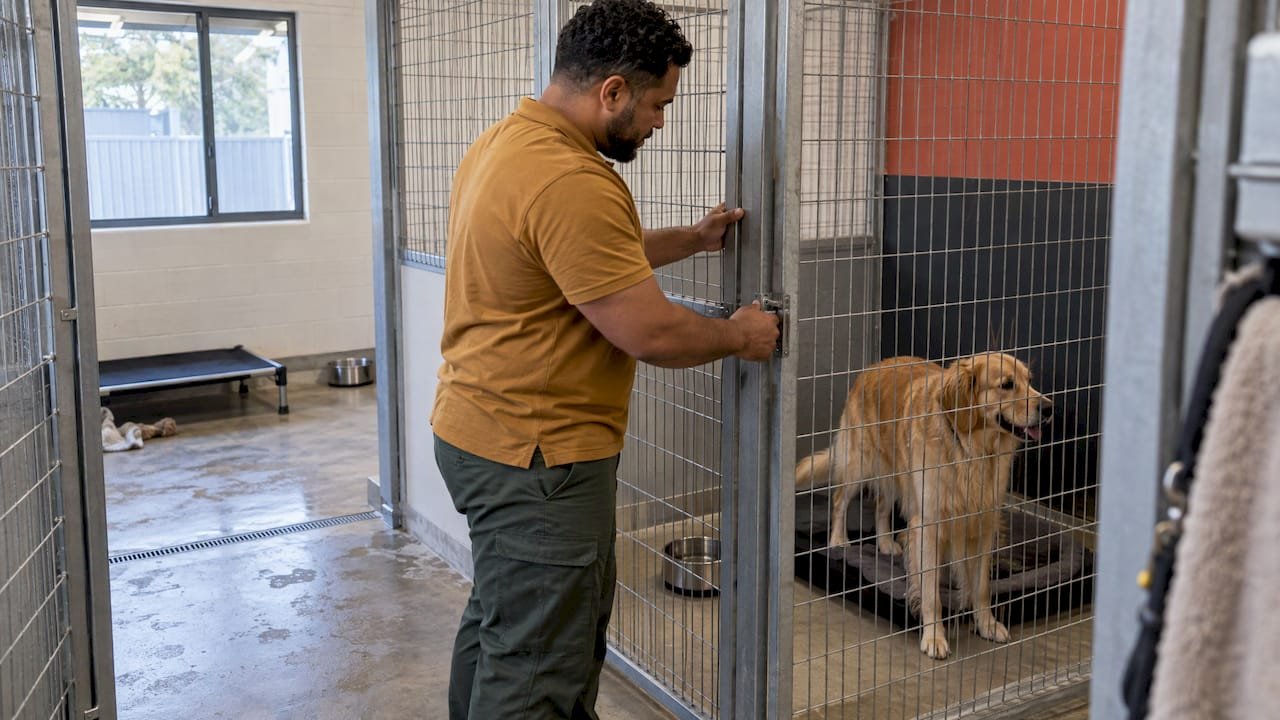
Treatment day goes best when staff have rehearsed how to get animals out quickly and calmly, in the same way you would for any emergency. A pet escape plan is a useful starting point for thinking through routes, carriers and who is responsible for which animals. Brief your staff on the plan before the technician arrives, and tell them which areas will be off limits and for how long.
You have found an infestation: what to do today
A flea outbreak in the kennels or droppings behind the food shelves is stressful, and the first hours matter. Work through this order.
- Protect the animals first. Move affected animals away from the area, and do not put out baits or sprays yourself. Rodent baits in particular can poison animals that eat them.
- Record what you see. Note the date, the location, what you found (droppings, live insects, gnaw marks, bites on animals) and which animals may have been exposed.
- Contain it. Seal food, bag waste, and stop moving bedding and equipment between rooms.
- Call a licensed technician. Give them the details below so the first visit can solve the problem rather than start the investigation.
- Tell your vets and customers if animals are affected. If an animal in your care shows signs of illness or bites, contact its owner and a veterinarian.
What to tell the technician:
- The type of business and which animals are on site (dogs, cats, birds, small animals, reptiles, fish).
- Where you found the problem and when you first noticed it.
- Where food and waste are stored.
- What you have already used, including cleaners and any products on the premises.
- Your opening hours, so the treatment can be scheduled around animals and customers.
What to ask for: the product names, how they will be applied, which areas must be cleared, when the area is safe to re-enter, and a written service report afterwards. A good technician will expect these questions.
For an urgent problem, we offer fast pest removal and emergency pest control for homes and businesses across Canberra and surrounding suburbs, including same-day emergency service.
Records that protect you
Your written program is only as strong as the paperwork behind it. Keep:
- the pest-control program itself, where staff can reach it;
- dated service reports from every visit;
- the products used, and the instructions for re-entry;
- the date of each review of the program;
- notes on any sighting, outbreak or incident and what you did about it.
These records show an inspector, an insurer or a customer that you manage risk deliberately. Our article on what ACT inspectors ask to see in pest control records lists the documents worth having ready, and our piece on pest control for Canberra care sites shows how a compliance-first program is structured where vulnerable people or animals are present. If you run more than one location, standardising pest control across multiple sites keeps every branch on the same program.
What a pet business should expect from a pest controller
Use the codes as a checklist when you choose a provider:
| What the codes expect | What it means for your contract |
|---|---|
| Documented pest-control program on site | A written schedule and scope covering fleas, flies, rodents and other relevant pests |
| Specialist advice before operations | A technician who plans around your animals before any product is applied |
| Registered chemicals used as labeled | Product names and label directions supplied for each visit |
| Professional supervision | Licensed technicians doing the application, not staff |
| Regular review | A scheduled review of the program, and after any incident |
Our technicians are licensed and insured, and our approach is built around safe, effective treatments for families, children and pets. All our treatments are guaranteed for effectiveness. Our professional pest control services cover commercial premises, and our preventive schedules for commercial sites explain what a regular visit includes.
Our point of view
Pet businesses carry two duties at once. You have to keep pests away, and you have to keep animals, staff and customers safe while you do it. The codes make this clear: a written program, expert advice and registered products used as labeled.
That is why we treat a pet business differently from an ordinary shopfront. Before anything is applied, we want to know which animals are on site, where food and waste sit, and when the premises are quiet. Our focus is on effective and responsible treatments for families, children and pets, and the same thinking applies when the animals are your customers’ pets.
With more than 10 years in the industry and more than 5,000 Canberra homes serviced, we know that the best results come from a regular program, not a panic call. A scheduled visit finds the first signs early, and a documented record shows you did the right thing.
Choose a program, put it in writing, review it, and keep the records. That protects your animals and your business.
navin
Getting a program started
If you run a pet shop, grooming salon, boarding kennel or cattery in Canberra, the simplest first step is a program rather than a one-off treatment. Our monthly plans start at $29.98 per month for Bronze General Pest, and our Silver Combined plan is $55.98 per month, while Gold Complete is $79.98 per month. You can see what each plan includes on our subscriptions page. For a specific problem, our general pest control and rodent removal services cover the pests this guide covers.
To discuss your premises and your animals, start from the BugsPatrol home page and tell us what you run and what you have seen.
FAQ
Do pet businesses legally need a pest-control program?
The NSW pet-shop code requires a documented pest-control program, kept on the premises and familiar to staff. The NSW grooming, boarding and breeding codes also require pests to be controlled. In the ACT, read the ACT code that applies to your type of business and confirm the details with the regulator.
Is it safe to use pest control around dogs and cats?
Yes, when it is planned and done properly. The codes say chemicals should be registered, used according to the label and applied under professional supervision, because some are toxic to dogs and cats. Ask your technician which products will be used and when animals can return.
How long before animals can go back into a treated area?
It depends on the product and its approved label. As a general principle, treated areas should not be re-entered until sprays are dry, and animal housing can have separate requirements. Get the product name and the re-entry direction in writing before the visit.
How often should a pet business review its pest program?
The NSW breeding code says procedures should be reviewed with no more than two years between reviews. A yearly review, and one after any infestation, is a sensible routine for a busy shop or kennel.
Sources
- Animal Welfare Code of Practice: Animals in pet shops (NSW DPI)
- NSW Animal Welfare Code of Practice: Animals in pet grooming establishments
- NSW Animal Welfare Code of Practice No 5: Dogs and cats in animal boarding establishments
- Animal Welfare Code of Practice: Breeding Dogs and Cats (NSW DPI)
- Environmental and infection control guidelines for cattery operations (Australian Cat Care)
- Code of Practice: Pet Grooming Establishments in the ACT
- Boarding Establishments Mandatory Code (ACT)
- Malathion Final Review Technical Report (APVMA, 2024)
- Guidelines for the safe use of pesticides in non-agricultural workplaces (WA Health)