Professional mould remediation is a sequence, not a spray: find the moisture, contain the area, remove or clean the affected material, dry everything, then check that the mould has not come back. Done in that order, the mould stays gone. Skipped or rushed, it returns within weeks. In Canberra, our licensed technicians handle mould treatment for homes and businesses, and this guide shows what a properly run job involves so you can recognise one.
TL;DR
- Mould returns when the moisture source is left unfixed, so a real remediation job treats the cause and the growth together.
- Health authorities say growth larger than 1 m², recurring dampness, sewage or floodwater, or suspected mould in the ducted system calls for professional help.
- The core steps are assessment, a written plan, containment, careful removal, drying, waste disposal and a post-job check.
- Dry brushing and dry sweeping spread spores. Professionals use damp cleaning and HEPA vacuums instead.
- Australian law does not require a post-remediation assessment, but a final check is the best way to confirm the job worked.
Table of Contents
- When mould is a job for a professional
- The professional mould remediation process, step by step
- What a good job looks like, at a glance
- Our view on mould remediation
- Getting mould treated in Canberra
- FAQ
- Sources
When mould is a job for a professional
A small patch in a bathroom corner is a cleaning task. The Western Australian Department of Health separates simple mould from complex mould, and its indoor mould guidance says complex problems usually need professional help. The triggers it lists are:
- growth larger than 1 m², or growth in several rooms
- mould or dampness that keeps recurring
- suspected or confirmed mould in the ducted heating or cooling system
- moisture caused by building design or structural faults that are hard to repair
- contaminated water such as sewage or floodwater
- mouldy odours or unexplained illness with no visible damage
- other hazards, such as asbestos, in the affected area
The same guidance says people who are more susceptible should not do the cleaning themselves. That means people with weakened immune systems, respiratory conditions or allergies, children and pregnant women. If anyone in your household fits that description, hand the work over even when the patch is small.
The 1 m² line is the one most homeowners meet first. Our guide to the 1 square metre rule for ceiling mould shows how to judge it on a ceiling, and this explanation of the DIY limit of one square metre covers why household cleaners stop being enough beyond it.
If you are unsure what you are looking at, start with the difference between mould and mildew. If someone at home has symptoms, read about mould health risks and who is vulnerable and speak to your doctor.
The professional mould remediation process, step by step
Australian guidance is not written as a single national rulebook. A 2025 peer-reviewed study in Building & Environment found that state and territory advice on mould assessment and remediation is inconsistent. For example, some jurisdictions say testing is unnecessary while Western Australia recommends it in certain cases. Most do advise calling a remediation professional or occupational hygienist for extensive mould or flooding. The steps below follow the points the official guidance agrees on.
Step 1: Inspection and assessment
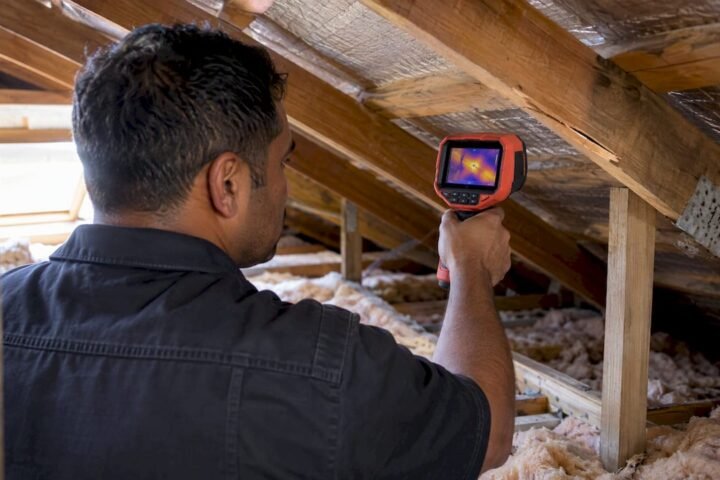
The job starts with finding out how much mould there is, what material it is growing on and why it is there. A good inspector looks beyond the visible patch: behind furniture, in wall cavities, under floors and around ducted systems. Moisture readings matter more than the mould’s colour. The mould is the symptom, and the wet material or leak is the cause.
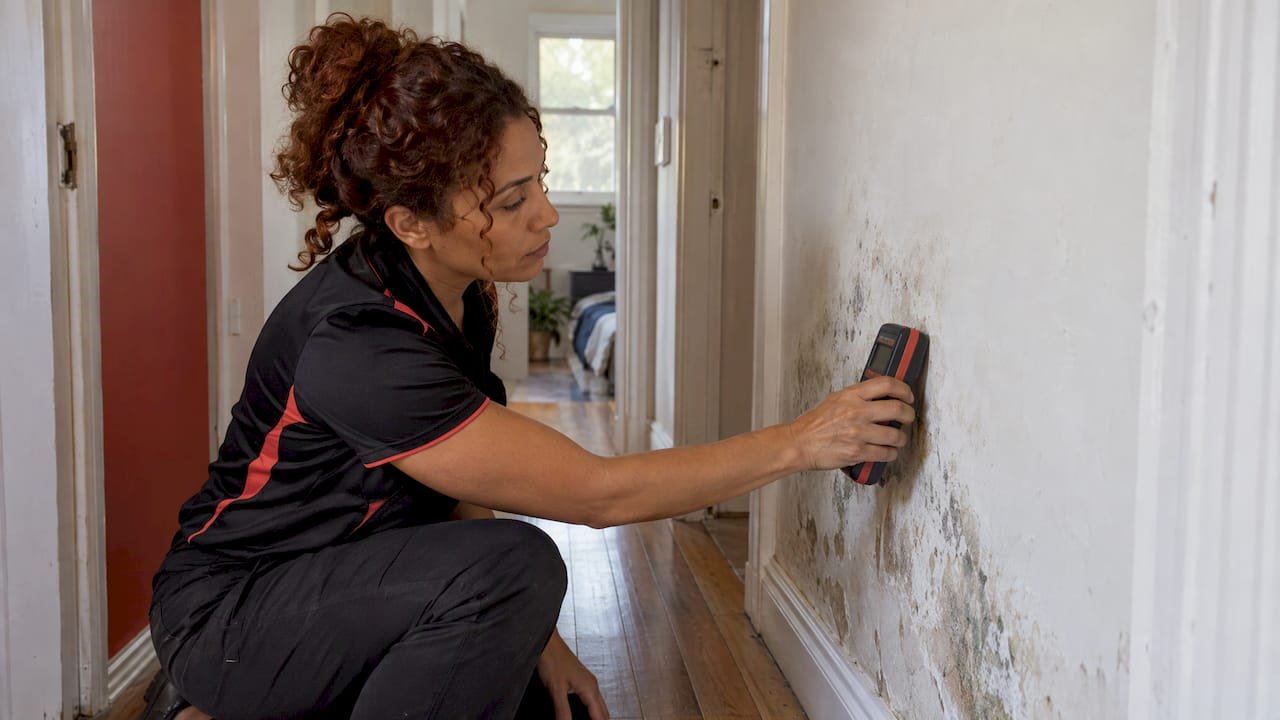
Sampling is not automatic. Air or surface testing is sometimes useful, for example when illness is unexplained or the growth is hidden, but it is not needed to decide that visible mould must go. Where the Australian guidance on testing differs between states, the safest approach is to base decisions on moisture readings, visible damage and the inspector’s findings.
What you should have at the end of this step is a clear account of what is affected, how far it extends and what is feeding it.
Step 2: A written remediation plan
The Western Australian Department of Health’s mould guidelines recommend a site-specific plan for complex jobs. The plan covers containment, structural drying, cleaning of surfaces and contents, treatment of any ducted system, waste disposal, a schedule, protective equipment, environmental controls and the final evaluation.
The plan is also what lets you compare quotes fairly. Two quotes that cover different steps are not the same price for the same work. Check that each includes the drying and the final check, not just the removal.
Step 3: Containment
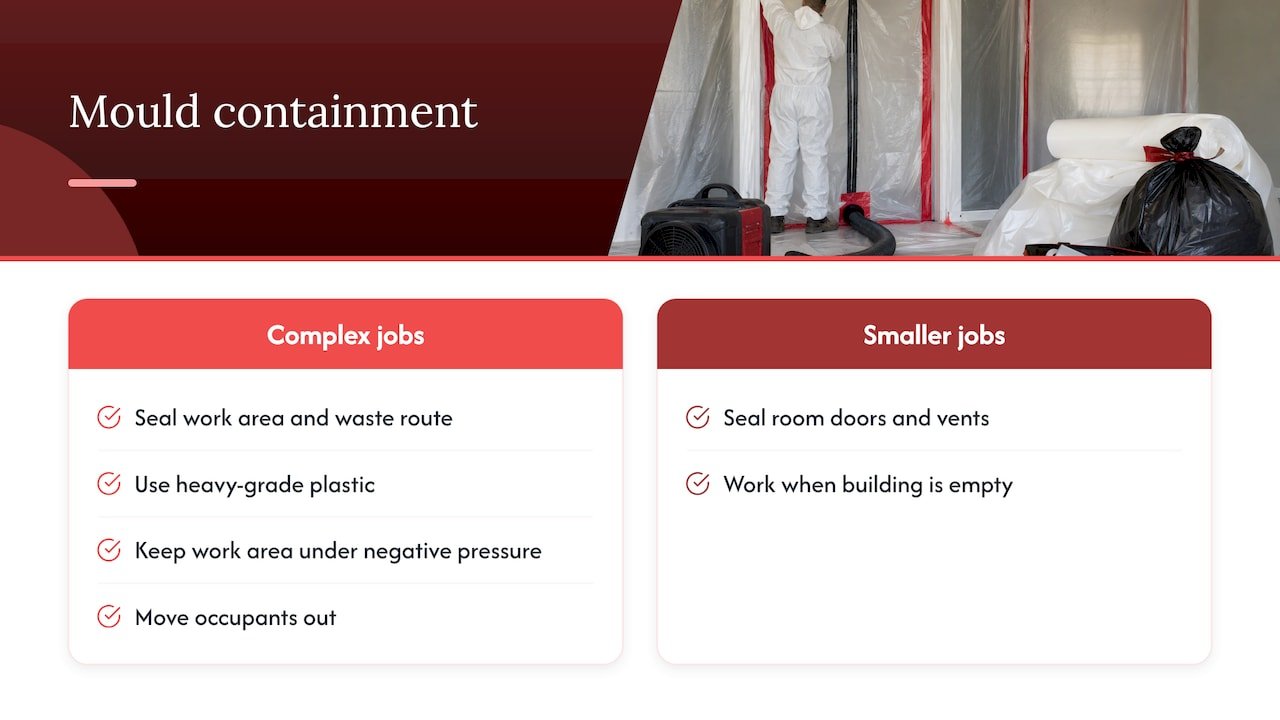
Disturbing mould releases spores. Containment stops them travelling to clean rooms. For complex contamination, the WA guidance says the work area and the route waste takes out of the building must be sealed off with heavy-grade plastic. It is kept under negative pressure using an exhaust fan with a HEPA-filtered vacuum, which means air flows into the work area rather than out of it. A changing room next to the area lets workers remove protective gear before they leave, and occupants are moved out.
For smaller jobs, containment can be lighter, such as sealing the room’s doors and vents and working when the building is not in use. WorkSafe Queensland’s managing mould guidance advises containing the affected area and scheduling the work for when the building is empty.
Step 4: Protective equipment
Professionals do not work in a dust mask and a hope. The WA guidance says large contamination calls for full-face powered air-purifying respirators, non-breathable disposable overalls and gloves, with respiratory protection following AS/NZS 1716. This is one of the clearest reasons not to attempt a big job yourself: the gear is specialised, and getting it wrong means breathing in what you are trying to remove.
Step 5: Removing the mould and damaged materials
Two principles drive removal: do not spread spores, and take out what cannot be cleaned.
Hard surfaces are cleaned, not brushed dry. The WA guidance describes scrubbing with soapy water and extending the clean 30 to 50 cm beyond the visible mould. The Department of Health and Aged Care’s Biotoxins clinical pathway makes the same point: use a cloth rinsed regularly in clean water, and avoid dry brushing because it flicks spores into the air.
Porous materials such as plasterboard, ceiling tiles and insulation that are mouldy usually cannot be cleaned and are removed. WorkSafe Queensland lists these among the materials to discard. Contaminated soft furnishings may also need to go.
Residue is picked up with a HEPA-filtered vacuum and damp cloths, working past the visible edge of the contamination.
If you have been wondering whether bleach or vinegar belongs in this step, see our comparison of vinegar and bleach for mould. The short version is that the process rests on physical removal and drying, not on a chemical doing the work alone. The Australasian Society of Clinical Immunology and Allergy’s colleagues at the Australasian Society for Biological Building take the same line in their position statement: mould should be physically removed using IICRC S520 protocols, and depending on the condition may need a trained, IICRC-certified professional.
Step 6: Drying and fixing the moisture source
This is the step that decides whether the job lasts. The WA indoor mould guidance says remediation must deal with the root cause of moisture: eliminate the structural cause, such as a leaking tap, dry out affected materials, and remove porous items that cannot be restored. The remediation guidelines add that the source must be identified and fixed at the same time as the mould is removed, with a plumber or builder for leaks and repairs. Surfaces must be fully dry before anything is painted or sealed.
Drying uses dehumidifiers and fans that move air across surfaces, not directly onto them, and outdoor air when humidity is low. The WA guidance notes that complete drying can take days. That is normal, and it is why a same-afternoon job that promises to be finished and dry is worth questioning.
On the standards side, the building’s own ducted heating and cooling should not be used to dry a contained area. Dedicated drying equipment does that work. The relevant Australian standard was updated recently: AS-IICRC S520:2025, based on the 2024 American edition, was approved on 5 November 2025 and published on 28 November 2025.
Condensation is the most common moisture source in Australian homes. If that is your problem, our articles on what causes condensation mould and why wiping alone won’t stop window mould explain the ventilation and humidity fixes that keep it from returning.
Step 7: Waste disposal and cleaning of tools
Mouldy porous material is sealed in plastic bags before it leaves the work area. The WA guidance says mould is not hazardous waste, so the bagged material goes through normal waste channels. WorkSafe Queensland also advises cleaning tools and equipment after use so spores are not carried to the next room or the next job.
Step 8: The final check
The job is not finished when the equipment leaves. The WA guidelines list the indicators of success:
- the work was carried out as the plan set out
- the moisture causes have been eliminated
- visible mould is gone and the area is dry and clean
- no mould regrowth appears within two to four weeks
- occupants have no ongoing health complaints
The same guidance recommends the evaluation not be carried out by the business that did the remediation, and notes there is no legal requirement for a post-remediation assessment in Australia. For larger jobs, the training standard for mould remediators, CPPCLO4107, requires the remediator to decide whether post-remediation testing is needed and, if so, arrange it according to accepted industry practice, then act on the results.
For a home, the practical version is simple: ask what the final check will be before work begins, and keep an eye on the area for the first month.
What a good job looks like, at a glance
| Stage | What should happen | Where it goes wrong |
|---|---|---|
| Assessment | Moisture source identified, extent mapped | Only the visible patch is looked at |
| Plan | Written scope covering drying and the final check | Quote covers removal only |
| Containment | Work area sealed, air kept flowing inward | Doors left open, dust carried through the house |
| Removal | Damp cleaning, HEPA vacuuming, porous material out | Dry brushing, painting over mould |
| Drying | Dedicated equipment, surfaces fully dry | Sealing or painting while damp |
| Disposal | Material bagged before leaving the area | Loose carry-through the house |
| Final check | Dry, clean, no regrowth in two to four weeks | No one looks again |
Our view on mould remediation
Most mould calls we get begin the same way: the homeowner has cleaned it, it looked fine for a few weeks, and it came back. That pattern tells us the cleaning was never the problem. The moisture was.
We have spent more than ten years working in Canberra homes and have serviced over 5,000 of them. That background in pest and property protection shapes how we think about mould: as a building condition to be understood and treated at its cause, not a stain to be removed. Our licensed technicians treat the growth and look for what is feeding it, whether that is a leak, poor ventilation or condensation.
We design our treatments to be effective and responsible around families, children and pets, and our treatments are guaranteed for effectiveness. For households where someone is more susceptible to mould, we think handing the work to a professional is the right call from the start, not after a failed attempt at home.
Mould, termites, borers and pests often share a root cause: moisture in the building. Having one team look at the whole property means the damp problem that invited the mould is not treated in isolation from the others.
navin
Getting mould treated in Canberra
BugsPatrol Pest Management provides mould treatment for homes and businesses across Canberra and surrounding suburbs, alongside emergency pest control for urgent problems. If you manage a rental, a strata building or a property being sold, a clear treatment record also helps the next conversation with a tenant, a buyer or an agent.

To discuss a mould problem, start at bugspatrol.com.au. If you want ongoing protection against pests as well, our maintenance plans start at $29.98 per month for the Bronze General Pest plan, and the pest inspection routines in our buyer’s pest inspection checklist are useful before a purchase.
FAQ
How long does professional mould remediation take?
It depends on the size of the affected area and how wet the materials are. Removal can be quick for a small area, but the WA guidance says complete drying can take days, and the final check looks for regrowth over the following two to four weeks. Your written plan should state the schedule.
Is professional mould removal worth it?
For growth over 1 m², recurring mould, floodwater or sewage, or any case where a susceptible person lives in the home, health authorities say professional help is the right path. The value is in the containment, the correct protective equipment and the work on the moisture source, which together are what stop the mould returning.
Is it mould or mold in Australia?
Australians spell it mould, and Australian government and health documents use that spelling. Mold is the American spelling. They are the same thing.
Who is responsible for mould in a rental?
That depends on your state or territory’s tenancy law and on the cause of the mould, so check with your tenancy authority. Whoever is responsible, the remediation steps are the same, and moisture caused by a structural fault or leak is the key point to document.
Sources
- Indoor Mould: Health Risk Assessment and Management, WA Department of Health
- Mould guidelines, Healthy WA
- Managing mould, WorkSafe Queensland
- Biotoxins (indoor damp and mould) Clinical Pathway, Australian Government
- Position Statement on Mould, Australasian Society for Biological Building
- AS-IICRC S520:2025 standard for professional mould remediation
- CPPCLO4107 Remediate mould contaminated structures and contents
- Field practitioners’ perspectives on mould assessment and remediation, Building & Environment
Recommended
- Mould Health Risks: Symptoms, Who’s Vulnerable and What to Do
- 1 Square Metre Rule for Ceiling Mould in Australian Homes
- Vinegar vs Bleach for Mould: What Works in Australian Homes
- What Causes Condensation Mould in Australian Homes