When moles start tearing up your Canberra garden, the first instinct is often to grab a DIY solution from the hardware store. But do those sonic stakes and castor oil granules actually work? Or are you better off calling a professional from day one? This honest comparison breaks down the real costs, effectiveness, and time investment of each approach so you can make the right choice for your situation.
DIY Mole Control Methods: A Reality Check
Hardware stores and garden centres sell dozens of mole control products, but the evidence behind most of them is thin. Here’s what the research and practical experience tells us about each popular method:
| Method | Cost | Effectiveness | Verdict |
|---|---|---|---|
| Vibrating/Sonic Stakes | $25–60 each | Very Low — moles habituate quickly | Not recommended |
| Castor Oil Granules | $20–40 per bag | Low — temporary deterrent at best | May work short-term |
| Flooding Tunnels | Free (water cost) | Very Low — moles simply relocate | Waste of water |
| DIY Traps (scissor/claw) | $30–80 each | Moderate — requires skill to set correctly | Can work if placed right |
| Garlic/Chilli Repellents | $10–20 | No evidence of effectiveness | Garden myth |
| Mothballs in Tunnels | $10–15 | None — also toxic to soil and groundwater | Harmful, don’t use |
| Grub Treatment (DIY) | $40–80 per application | Moderate — reduces food source over time | Worth doing alongside other methods |
The total cost of trying multiple DIY methods often exceeds $200-300 — approaching the cost of a single professional treatment that actually resolves the problem.
Professional Mole Control: What You Get
Professional mole control differs from DIY in three critical ways: expertise in reading tunnel systems, access to commercial-grade traps, and a systematic approach that addresses both the moles and their food source.
A professional service from Bugs Patrol includes a thorough site assessment to map active tunnel networks and identify primary runs versus feeding tunnels. This distinction is crucial — traps placed in feeding tunnels rarely catch moles, while those in primary runs (the main highways between feeding areas) are highly effective.
Professional-grade traps are more reliable than consumer models and are set with the experience of hundreds of previous jobs. Technicians know the soil conditions, seasonal behaviour patterns, and common tunnel configurations specific to Canberra’s suburbs and soil types.
DIY Approach
- Trial and error with multiple products
- No expertise in tunnel identification
- Consumer-grade traps less reliable
- Often costs $200-400+ over time
- Weeks or months of frustration
- High reinfestation rate
Professional Service
- Expert tunnel mapping and assessment
- Commercial-grade trapping equipment
- Results typically within 1-2 weeks
- Fixed cost: $200-500 total
- Grub treatment to prevent return
- Follow-up visits included
When DIY Might Be Enough
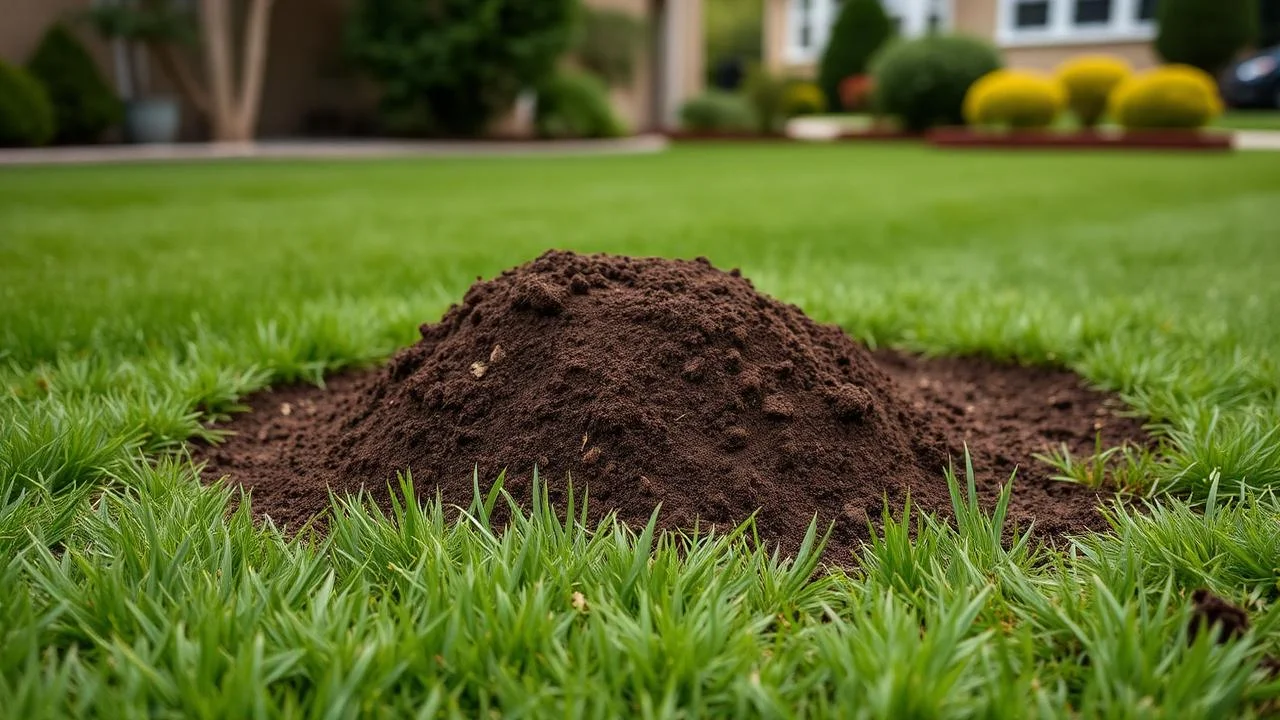
DIY approaches can work in very specific circumstances. If you’ve spotted a single mole hill for the first time, treating your lawn for grubs may discourage the mole from establishing permanent tunnels. If the activity is limited to a small area near your property boundary, the mole may be passing through rather than settling in.
However, if you’re seeing multiple fresh molehills daily, if tunnel networks are spreading across your lawn, or if the problem has persisted for more than 2-3 weeks, DIY methods are unlikely to resolve it. At that point, each day of delay means more damage to your lawn and garden.
Long-Term Prevention Strategies
Regardless of whether you choose DIY or professional removal, long-term prevention requires addressing why moles are attracted to your garden in the first place:
- Grub management — annual lawn grub treatment in spring reduces the food source
- Soil health — extremely rich, heavily composted soil supports higher worm populations that attract moles
- Drainage — well-drained soil is harder for moles to tunnel through than constantly moist soil
- Monitoring — check for fresh activity monthly and act early before populations establish
Tried DIY and Still Have Moles?
Bugs Patrol’s professional mole control program delivers results within days, not months. Expert assessment, proven trapping methods, and follow-up visits included.
Still have questions?
The best pest control company will solve your issue for a long time.
Bugs Patrol is Canberra’s trusted choice for professional spider control with lasting results.
Frequently Asked Questions
Professional trapping combined with grub reduction is the most effective approach. Trapping removes existing moles while treating the underlying grub population reduces the food source that attracts new moles. This combined strategy provides the best long-term results for Canberra gardens.
Vibrating stakes and ultrasonic devices have very limited effectiveness. While they may temporarily deter moles from a small area, research shows moles quickly habituate to the vibrations. They simply move their tunnels a few metres away and continue feeding. Professional pest controllers generally don’t recommend these devices.
A professional mole trapping program typically takes 1-3 weeks depending on infestation size. The initial assessment and trap placement happens on day one. Traps are checked every 24-48 hours and repositioned as needed. Most Canberra properties see results within the first week, with follow-up visits to confirm all activity has ceased.
Moles are territorial, so removing existing moles creates a vacancy that neighbouring moles may eventually fill. This is why treating the grub population alongside trapping is important — it makes your garden less attractive to new arrivals. Annual monitoring and preventive grub treatment significantly reduce the chance of reinfestation.