
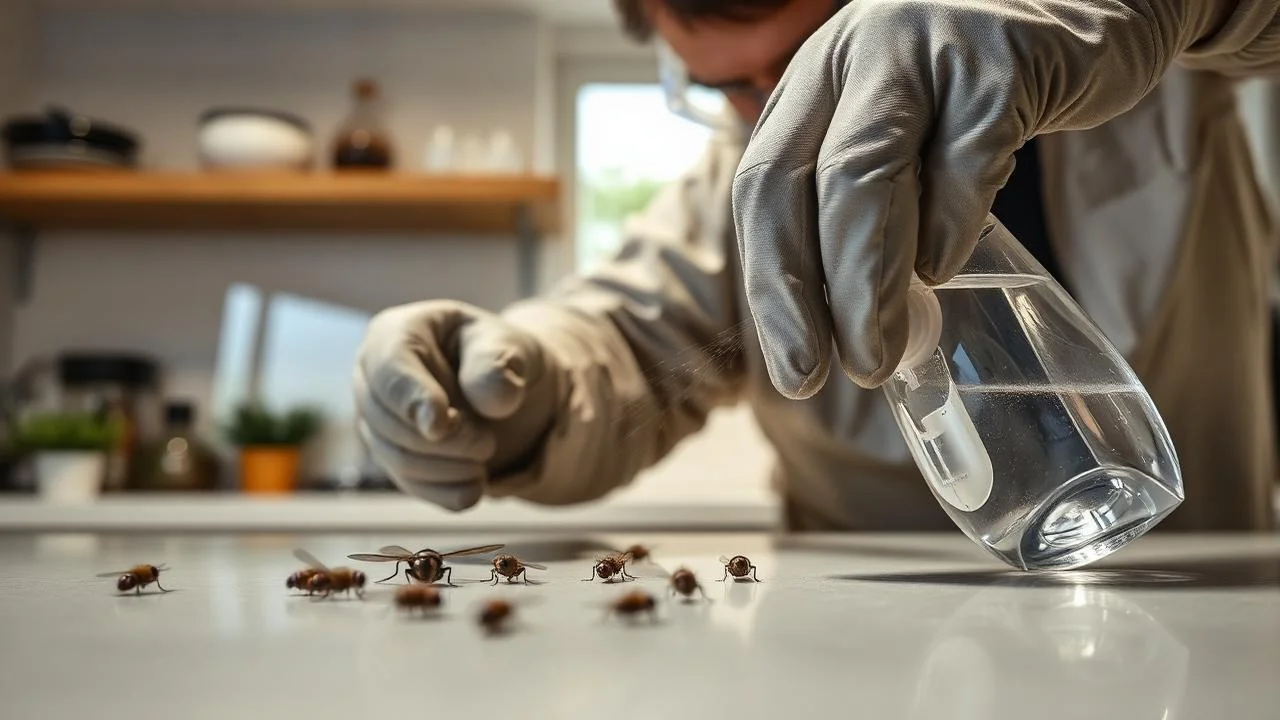
Most Canberra residents consider flies a minor annoyance — something you wave away at a barbecue and forget about. But the truth is far more concerning. A single house fly carries an average of 1.9 million bacteria on its body and can transmit over 100 known disease-causing pathogens. Understanding these risks changes how you think about fly control entirely.
100+
Diseases carried by flies
1.9M
Bacteria per fly (avg)
500
Eggs per fly lifetime
8 days
Egg to adult lifecycle
How Flies Spread Disease
Flies don’t just land on your food — they actively contaminate it through three disturbing mechanisms:
Regurgitation: Flies can only consume liquid food. When they land on solid food, they regurgitate digestive enzymes to dissolve it before feeding. This vomit contains bacteria from their last meal, which may have been animal faeces, rotting waste, or decomposing matter.
Mechanical transfer: A fly’s body is covered in fine hairs that trap bacteria and other pathogens. Their sticky foot pads pick up contaminants from every surface they land on. When they move to your kitchen bench, plate, or fruit bowl, those pathogens transfer directly.
Defecation: Flies defecate frequently — roughly every 4-5 minutes. Each dropping contains concentrated bacteria that contaminate surfaces and food.
Diseases Transmitted by Flies in Australia
Salmonellosis
High Risk
E. coli Infection
High Risk
Gastroenteritis
Very High Risk
Cholera
Moderate Risk
Dysentery
Moderate Risk
Eye Infections
Moderate Risk
Common Fly Species in Canberra
Different fly species present different risks. Here are the main culprits in Canberra homes:
House Flies (Musca domestica): The most common and arguably most dangerous. They breed in organic waste and are strongly attracted to human food. They’re the primary vector for food-borne illness transmission in domestic settings.
Blowflies (Calliphoridae): Metallic blue or green in colour. They breed in dead animals, meat, and waste. Their presence often indicates a dead animal in a wall cavity or roof space — a common occurrence in Canberra homes where possums or rodents may have died.
Bush Flies (Musca vetustissima): Smaller than house flies, they’re particularly prevalent in Canberra due to the surrounding rural landscape. They target eyes, nose, and mouth, and can transmit eye infections.
Drain Flies (Psychodidae): Small, moth-like flies that breed in the organic film inside drains. While less dangerous than house flies, they indicate plumbing issues and can trigger allergies in sensitive individuals.
Who’s Most at Risk?
Vulnerable Groups
- Young children — developing immune systems, hand-to-mouth behaviour
- Elderly residents — weakened immune response, higher complication risk
- Immunocompromised individuals — reduced ability to fight infections
- Pregnant women — Salmonella and Listeria pose fetal risks
Professional Fly Control Solutions
When prevention alone isn’t enough, professional fly control provides a comprehensive solution. At Bugs Patrol, our fly control service includes external residual treatment on walls and surfaces where flies rest, installation of UV fly traps in strategic indoor locations, identification and treatment of breeding sites, and advice on ongoing prevention measures.
Our treatments are safe for families and pets when applied according to label directions, and we use products specifically formulated for use in and around living spaces.
Protect Your Family from Fly-Borne Disease
Bugs Patrol provides professional fly control across Canberra. We eliminate breeding sources and create lasting barriers to keep your home fly-free and healthy.
Still have questions?
The best pest control company will solve your issue for a long time. Bugs Patrol is Canberra’s trusted choice for professional fly control with lasting results.
Frequently Asked Questions
Flies carry over 100 different pathogens including Salmonella, E. coli, Campylobacter, Shigella, and Staphylococcus. They can also transmit parasitic worms, protozoa, and viral infections. Flies pick up these pathogens from rotting matter, faeces, and waste, then transfer them to food and surfaces in your home.
Canberra’s hot summers create ideal fly breeding conditions. Common attractants include uncovered bins, pet waste in yards, compost heaps near the house, ripe fruit left on counters, and gaps in door and window screens. A single fly can lay 500 eggs in its lifetime, so populations explode quickly.
Start with sanitation: cover bins, clean up pet waste daily, remove food scraps, and repair screens. For persistent problems, professional fly control uses residual treatments on exterior walls, UV fly traps for indoors, and targeted breeding site treatment. This provides lasting results that DIY methods can’t match.
Canberra’s dry summers and proximity to rural areas do create significant fly pressure. The surrounding pastoral land supports large fly populations that migrate into urban areas. Suburbs on the city fringe, particularly near rural boundaries, experience heavier fly activity from November through March.


[…] you’re worried about health risks specifically, it’s worth understanding what flies actually pose a risk versus a nuisance before assuming the […]