If you’re worried about bed bugs in luggage, keep the suitcase off the bed and any upholstered furniture immediately, and set it on a bathroom floor or a hard luggage rack instead. The single most reliable way to kill them is heat: wash clothes and run them through a hot dryer cycle, or arrange professional thermal treatment for the whole suitcase. Don’t unpack in the bedroom, and don’t touch soft furnishings until you’ve inspected everything.
TL;DR:
- Placing luggage on hard surfaces away from beds and upholstered furniture significantly reduces the risk of bed bug infestation.
- Heating luggage and clothing to at least 45°C for one hour effectively kills all bed bugs, including eggs, while chemical and freezing methods have limitations.
- Inspecting mattresses, furniture, and luggage with a flashlight for live insects, fecal dots, or shed skins helps catch infestations early before they spread.
- Professional thermal treatment and targeted chemical applications are necessary for large or established infestations that DIY methods cannot fully resolve.
- Rapidly notifying hotel management, photographing signs of bugs, and promptly laundering or sealing contaminated items are crucial steps after discovering bed bugs.
Table of Contents
- How to Prevent Bed Bugs From Getting Into Your Luggage
- How Do You Check Luggage and a Room for Bed Bugs?
- How Do You Kill Bed Bugs in Luggage and Clothing?
- What Should You Do the Moment You Find Bed Bugs?
- What’s the Right Cleanup Routine After You Get Home?
- Why DIY Treatment Has Limits (and Professionals Don’t)
- What I’ve Learned Watching Travelers Get This Wrong
- Booking a Professional Bed Bug Inspection
- Where This Guidance Comes From
- Sources
How to Prevent Bed Bugs From Getting Into Your Luggage
Prevention beats treatment every time, mostly because bed bugs are patient hitchhikers, not aggressive invaders. They don’t jump or fly. They crawl onto whatever is nearest their hiding spot, which is almost always your luggage if you set it down in the wrong place. Change where you put your bag and you cut off most of their opportunities before they start.
Here’s the order of operations that actually works, ranked by impact:
- Never place luggage on the bed or upholstered chairs. These are the two spots bed bugs are most likely to be hiding, since healthdirect notes they cluster around mattress seams, bed frames, and nearby furniture.
- Use the bathroom floor, a luggage rack, or a hard surface away from walls. Tile is a poor habitat for bed bugs, and a metal luggage rack keeps your bag elevated and away from carpet edges where insects can hide.
- Choose hard-shell luggage when you can. Fewer seams means fewer crevices for bed bugs to wedge into, which is a meaningful advantage over soft fabric duffels covered in stitching and pockets.
- Pack clothes in sealed plastic bags inside your suitcase. If you’re stuck with fabric luggage, this creates a second barrier. Even if something crawls into your bag, it can’t get into your clothes.
- Check accommodation reviews before booking. A quick scan for words like “bites,” “itchy,” or “bugs” in recent reviews takes thirty seconds and can save you a ruined trip.
- Pack a small flashlight or use your phone’s torch. You’ll need it for inspecting dark seams and corners the room lighting won’t reach.
During your stay, keep worn clothes sealed in a separate bag rather than tossed on a chair or the floor near the bed. Avoid draping anything over the headboard. And resist the habit of unpacking everything into the room’s drawers on night one. Bed bugs need time and opportunity to spread from a hiding spot into your belongings. Every night your clothes sit in an open drawer near an infested bed frame is another chance for that to happen.
A few items are worth keeping in your carry-on every trip: zip-lock bags in a couple of sizes, a compact folding luggage rack if your hotel doesn’t provide one, a handful of disposable bags for worn clothes, and a lint roller. That last one sounds minor, but running a lint roller over luggage seams before you check out can pick up shed skins or stray insects you’d otherwise miss.
Pro Tip: Book accommodations with hard flooring over deep carpet when you have the choice. Bed bugs are far easier to spot on tile or wood, and they have fewer places to hide between guests.
If you want a deeper breakdown of packing habits specific to trips through the region, BugsPatrol’s bed bug prevention guide for travelers covers seasonal risk periods and destination-specific advice.
How Do You Check Luggage and a Room for Bed Bugs?
Do this before you unpack anything, not after. It takes five minutes and it’s the difference between a clean trip and dragging an infestation home in your suitcase.
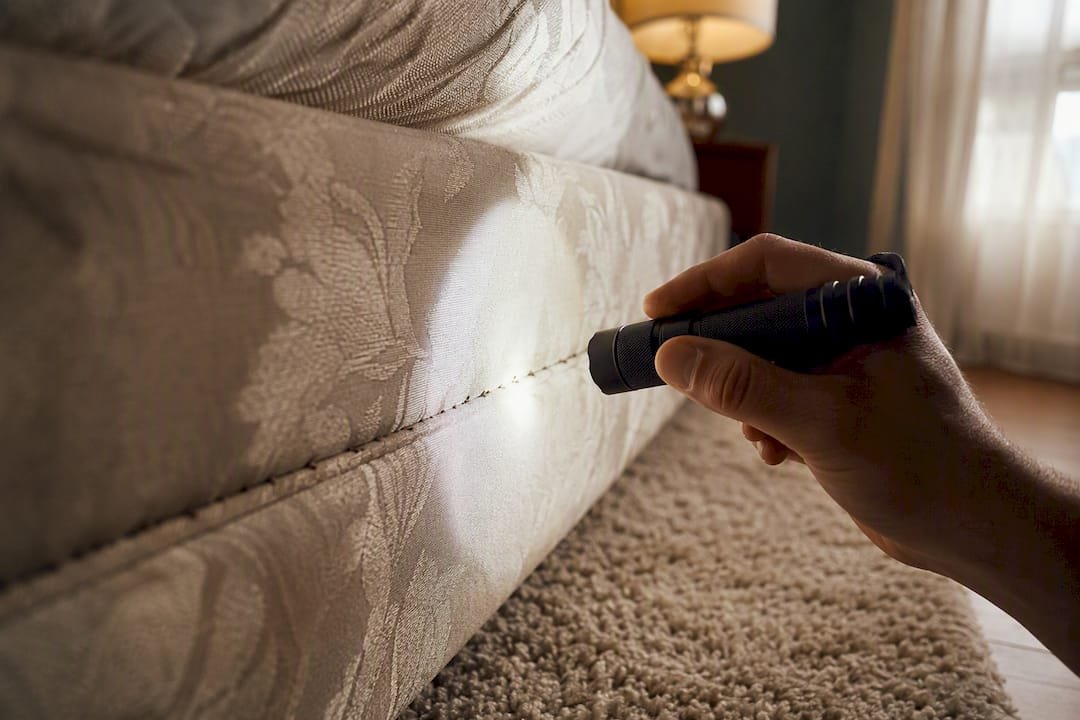
Start with the room, not your bag. Pull back the fitted sheet and check the mattress seams first, since that’s the number one hiding spot according to healthdirect. Use your phone’s flashlight at a low angle along the seam. This casts shadows that make small insects and their shed skins easier to spot than direct overhead light does.
What you’re looking for:
- Live bed bugs, which are flat, reddish-brown, and roughly the size of an apple seed.
- Tiny dark spots along seams that look like ink dots. These are fecal marks and a strong sign of activity.
- Pale, papery shells left behind after a bed bug molts.
- Small rust-colored smears on the sheet or mattress, usually from a crushed insect.
- Musty, sweetish odor in heavier infestations, though this is rare enough that you shouldn’t rely on it alone.
After the mattress, check the headboard, especially if it’s attached to the wall with a gap behind it, and the joints of the bedside table. These crevices offer the same shelter as mattress seams and get overlooked constantly.
Once the room checks out, move to your own luggage. Run your fingers and the flashlight along every seam, the underside of the wheels, zipper tracks, and any interior pockets or removable linings. Bed bugs and their eggs wedge into stitching gaps you’d never think to check otherwise. If your suitcase has a lining that unzips or peels back, check underneath it too.
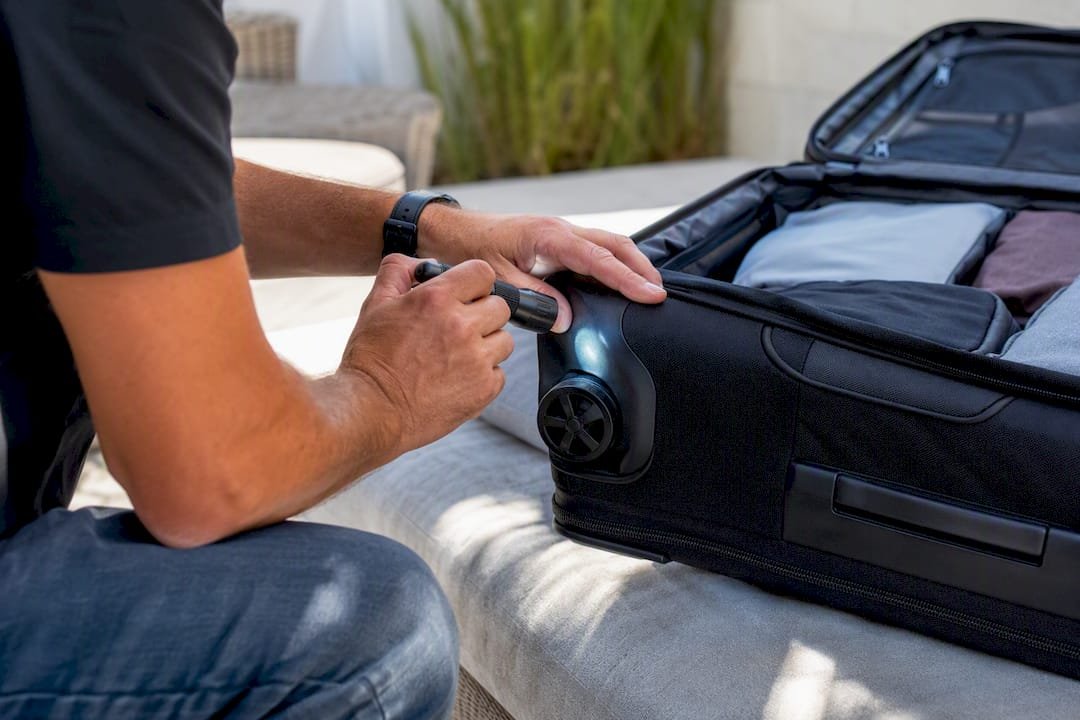
Do a second, faster check partway through your stay, particularly if you’re somewhere for more than three or four nights. Repeat the full inspection again before you pack to leave. A quick five-minute recheck at checkout catches anything that crawled in mid-stay before it makes the trip home with you.
If you do find something, photograph it before you do anything else. Get a clear shot of the insect or the marks, plus a wider shot showing where you found it on the mattress or luggage. This documentation matters if you need to request a refund, a room change, or want the hotel to take the issue seriously.
How Do You Kill Bed Bugs in Luggage and Clothing?
Heat is the tool that actually works, and it’s not close. Chemical sprays, freezing, and sealing things in a bag for a few days are all weaker options with real limitations, which is worth understanding before you rely on any of them.
Statistic Callout: According to the Victorian Department of Health, bed bugs die immediately when exposed to 60°C, and they die within one hour at 45°C. That threshold is why washing machines and clothes dryers are the most accessible, most reliable tools travelers already own.
Here’s how to apply that guidance in practice:
- Wash clothes on the hottest setting the fabric allows. Washing alone gets many bed bugs, but it’s inconsistent for eggs, which can survive brief exposure to water that isn’t hot enough or long enough.
- Dry on high heat for at least 30 minutes after washing. The dryer is doing the real work here. Sustained heat above that 60°C threshold is what finishes off anything the wash cycle missed, including eggs.
- For items that can’t be washed, run them through the dryer alone on high heat if the fabric can tolerate it. A short cool cycle won’t cut it. You need sustained heat, not a quick tumble.
- Vacuum every seam, pocket, and wheel well of the suitcase itself. Use the crevice attachment and go slowly along stitching lines. Empty the canister or bag immediately outside, into an exterior bin, not indoors.
- Wipe down hard-shell exteriors and interiors with soapy water after vacuuming, then let the suitcase air out, ideally in direct sunlight.
For items you can’t wash or dry, like shoes, books, or electronics, sealed isolation is an option, but treat it as a stopgap, not a solution. Bed bugs can survive many months without feeding, so tossing an item in a sealed bag in a closet for a couple of weeks doesn’t guarantee anything is dead. It just delays the problem and risks reintroducing live insects later.
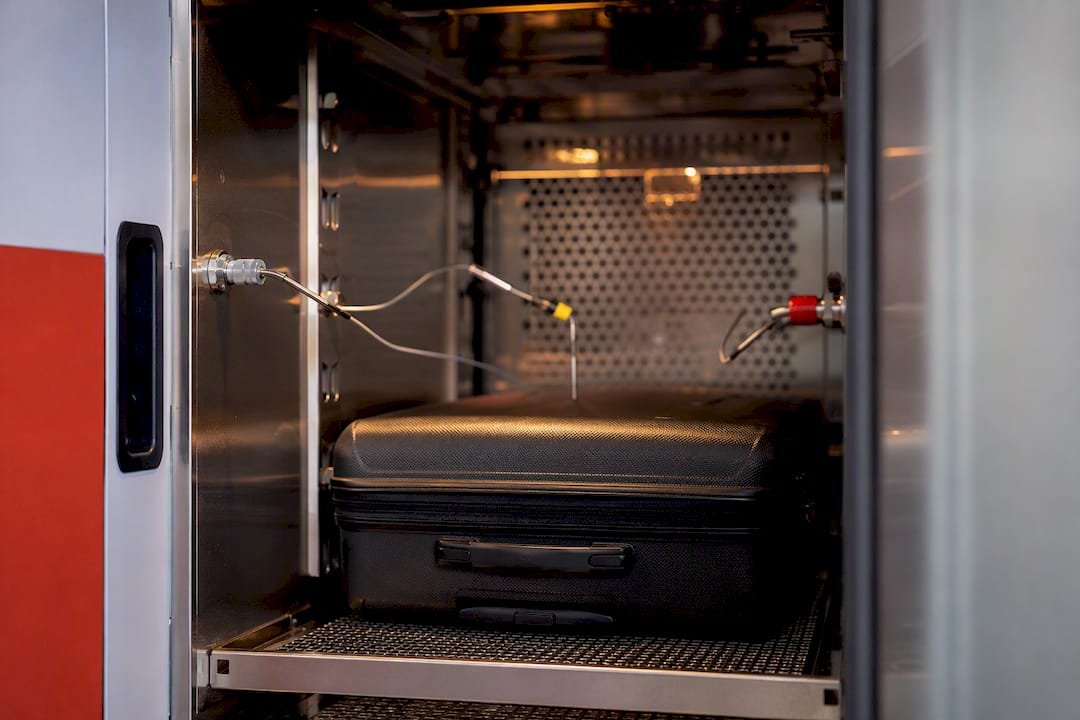
This is also where DIY heating attempts get risky. Some travelers try improvised heat boxes, using space heaters or car trunks on hot days, to bake a whole suitcase. The idea is sound in principle, but uneven heat distribution means parts of the suitcase interior may never reach a lethal temperature, while other spots overheat and create a fire hazard. Professional thermal treatment solves this by heating the entire load in a controlled, monitored chamber that verifies internal temperature throughout, not just at one probe point.
Pro Tip: If you’re not sure a fabric can handle high heat, wash it cold and skip straight to a full 45 to 60 minute high-heat dryer cycle instead. The dryer is doing the heavy lifting either way.
Chemical sprays deserve a caution here. Products sold for exterior application on luggage may repel or kill bed bugs crawling on the surface, but they’re not a substitute for heat treatment of the interior, and label compliance matters. Always check that a product is registered for this use and follow the instructions exactly, since misuse on fabric or enclosed spaces can create its own health risks.
What Should You Do the Moment You Find Bed Bugs?
Speed and order matter here. Panicking and unpacking everything to “check” is the worst possible first move, since it spreads the risk to every surface in the room.
- Stop. Don’t unpack anything else. Zip the suitcase closed if it isn’t already, and move it to the bathroom floor or another tiled surface away from the bed.
- Notify hotel or rental management right away. Ask for a room change or, if you’re in a rental, contact the host immediately. Most legitimate accommodations take this seriously and will act fast.
- Photograph everything before you move it. Get clear shots of the insect, marks on the mattress, and the general location. Ask for written confirmation of what action the property takes, whether that’s a refund, a room change, or a treatment plan.
- Decide on immediate laundering versus containment. If you have laundry access on-site, wash and dry everything on high heat before you repack. If not, seal worn and unworn clothes separately in plastic bags until you can launder them at home.
- Call a licensed pest technician if the infestation looks established rather than a single stray insect, especially if you’re staying somewhere for an extended period. SA Health recommends contacting a licensed pest control operator for assistance, since bed bugs travel easily in the seams of clothing, luggage, and bedding once they’ve established themselves.
Every one of these steps buys you time and information. Skipping the photos, for instance, makes it much harder to get a refund later if the property pushes back.
What’s the Right Cleanup Routine After You Get Home?
The trip isn’t over when you land. The next 24 hours matter just as much as anything you did at the hotel, because this is where most infestations either get stopped cold or make it into the house.
Unpack in the garage, laundry room, or another space outside the bedroom, never on your own bed. Inspect everything as you pull it out rather than dumping the whole bag onto a surface at once.
- Launder every travel-worn item at 60°C or higher where the fabric allows, then finish with a full high-heat dryer cycle.
- Vacuum the entire interior and exterior of the suitcase, focusing on seams, pockets, and wheel wells, then immediately empty the canister into an outdoor bin.
- Wipe hard-shell surfaces with soapy water and let the suitcase sit in direct sunlight for a few hours if possible.
- Store the empty suitcase unzipped, either upright in a closet away from bedrooms or inside a large sealed storage bag.
- Check your car if you drove home from the airport or a road trip stop, since bed bugs can transfer to seat seams and floor mats too.
Pro Tip: Keep a “travel only” storage bin in the garage for suitcases. Storing luggage away from bedrooms year-round means even a missed insect has nowhere useful to go.
If you spot live bugs, shed skins, or bite marks appearing on family members days after your trip, don’t wait to see if it resolves on its own. That’s the point to call a licensed inspection, since a suitcase that made it past your own checks can still carry eggs into carpet or furniture where a follow-up DIY effort won’t reach them. BugsPatrol’s bed bug infestation guide walks through what a home infestation looks like once it’s spread beyond the suitcase stage.
Why DIY Treatment Has Limits (and Professionals Don’t)
Bed bug eggs are the reason so many DIY efforts fail. A wash cycle or a spray might kill every adult and nymph in a suitcase and still leave viable eggs tucked into a seam, ready to hatch a week later. That’s not a flaw in your technique. It’s biology. Eggs are more heat-resistant and chemical-resistant than the insects that laid them, which is exactly why follow-up treatment matters so much in a real infestation.
Licensed treatment generally involves a few distinct approaches:
- Whole-room or whole-item thermal treatment, which raises ambient temperature high enough, long enough, to guarantee lethal exposure throughout, not just at the surface.
- Targeted chemical application to cracks, crevices, and known harborage points, using products and concentrations not available for general consumer purchase.
- Inspection and monitoring, including follow-up visits to confirm the treatment worked and catch anything that survived the first pass.
BugsPatrol has spent over 10 years treating homes across the region, relying on licensed technicians who deal with this exact biology daily. A typical service visit starts with an inspection to confirm the extent of the problem, followed by a treatment plan tailored to the property and a scheduled follow-up to check for survivors. That follow-up step is not optional. It’s built into the process because eggs hatch on a delay that a single visit can’t fully account for. You can see the full scope of options on the bed bug treatment page.
What I’ve Learned Watching Travelers Get This Wrong
The single most common mistake I see isn’t a lack of knowledge. It’s habit. People know bed bugs exist, but they still toss their suitcase on the bed out of pure muscle memory the second they walk into a hotel room. That one motion undoes almost everything else in this guide.
Three changes make the biggest difference, in order of how often people skip them. First, physically put your suitcase somewhere other than the bed before you do anything else, even before you check in your head that the room looks clean. Second, do the mattress seam check with a flashlight every single time, not just when a place looks sketchy. Nice hotels get bed bugs too. Third, treat your laundry routine at home as part of the trip, not an afterthought for whenever you get around to it.
None of this requires special equipment or expertise. It requires doing the same five minutes of work every trip, even when nothing looks wrong. If you’ve already unpacked and you’re seeing bites or signs you can’t explain, don’t spend weeks guessing. Get a suitcase inspected or call a licensed technician early. It’s a much smaller job before an infestation spreads than after.
— navin
Booking a Professional Bed Bug Inspection
Most of what’s in this guide will stop bed bugs before they become a real problem, but once they’ve spread past your suitcase into carpet, furniture, or wall cavities, heat and vacuuming from a home toolkit won’t reach them. That’s the gap Bugspatrol Pest Management closes: licensed technicians running calibrated thermal treatment and targeted chemical application where DIY methods physically can’t get consistent results, backed by scheduled follow-ups to catch anything that survives the first pass.

Bugspatrol Pest Management handles the full sequence for a suspected bed bug problem: inspection to confirm what you’re dealing with, thermal or chemical treatment matched to the property, and a follow-up visit to verify it worked. Call sooner rather than later if you’re noticing repeated bites with no clear cause, spotting live insects or shed skins in more than one room, or if a suitcase-level problem has clearly spread beyond the bag itself.
A first visit starts with a full inspection and a straightforward cost estimate before any treatment begins, so you know what you’re dealing with and what it takes to fix it. If you’re ready to get a property checked, book an inspection through the bed bug control page, or browse general pest control services if you’re dealing with more than one pest issue at once.
Where This Guidance Comes From
The temperature thresholds and detection advice in this guide come directly from Australian public health authorities. The Victorian Department of Health sets out the 60°C and 45°C kill thresholds used throughout this article. Healthdirect details where bed bugs typically hide in accommodation. SA Health covers how infestations spread through luggage and when to call a licensed operator. For additional traveler-focused inspection tips, Kammerjäger Wolf’s guide on bed bugs after vacation offers a useful complementary perspective from another pest-management practice.
Sources
- Bed bugs – Victorian Department of Health
- Bed bugs | healthdirect
- Bed bugs – prevention and treatment | SA Health