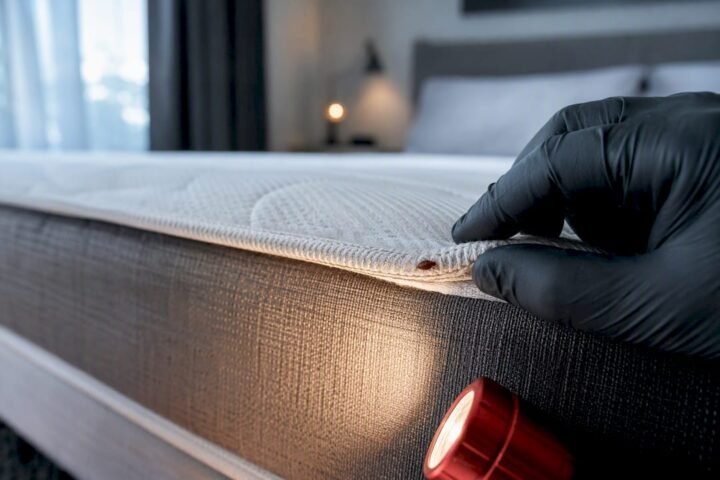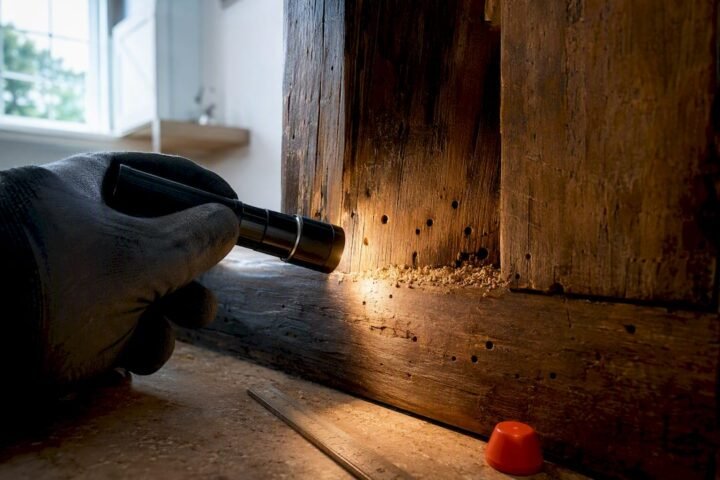
You finally booked a termite inspection in Canberra, the inspector spent an hour crawling around your property, and now you’re staring at a multi-page document filled with terms like “AS 3660.2,” “Class 2 risk,” and “conditions conducive to timber pest attack.” Sound familiar? You’re not alone.
Most homeowners receive their termite inspection report and genuinely have no idea what to do with it. Is the news bad? Do you need to call someone today? Can you wait until next month? The report doesn’t exactly make it easy to tell.
Here’s the good news: once you understand how these reports are structured, they become a lot less intimidating and a lot more useful. In this guide, we’ll walk you through everything you need to know. We’ll explain what the Australian standard behind your report actually means, break down each section of the document, decode the key terms that matter most, and help you translate those findings into real decisions. By the end, you’ll know exactly what questions to ask your inspector and what steps to take next.
Why Your Termite Inspection Report Looks So Confusing
If you’ve just received a termite inspection report and felt your eyes glaze over at the first page, you’re not alone. These documents aren’t written for homeowners. They’re written to satisfy AS 3660.2, the Australian Standard governing timber pest inspection and reporting. Compliance comes first; clarity comes second. Understanding that gap is the first step to making sense of what you’re holding.
The terminology inside your report is deliberately precise, not accidentally complicated. Phrases like “Timber Pest Activity,” “Conditions Conducive,” and “Major Safety Hazard” have specific legal definitions under AS 3660.2 that don’t match how you’d use those words in conversation. “Activity” doesn’t just mean termites were nearby. “Conducive conditions” isn’t a vague warning. Each term triggers a defined category of response, and misreading one can lead you to either panic unnecessarily or ignore something genuinely urgent.
There’s another layer worth knowing: your report is also a liability document. Inspectors write findings to precisely reflect what was observed, what was accessible, and what was recommended, partly to protect themselves professionally and legally. That careful, hedged language isn’t evasiveness; it’s the professional standard at work. But it does mean you need to read reports differently than you’d read a plain-English summary from a tradesperson.
If you own a home in Canberra, you’ll face an extra layer of complexity. Slab-on-ground construction, split-level designs, and the older housing stock found in some suburbs all affect how accessible different parts of your property are during inspection. Sections of your report about subfloor access or roof space may read very differently depending on your home’s build type. Before a termite inspection in Canberra, it helps to understand what a professional inspection actually involves and what to expect from the process.
Finally, reading your report correctly means sorting findings into three buckets: what needs urgent action, what is preventive, and what records past damage that no longer poses a live threat. The rest of this guide will show you exactly how to do that.
What AS 3660.2 Actually Means for Your Inspection
So where does that confusing language actually come from? It comes from a document called AS 3660.2, and understanding it changes how you read everything else in your report.
AS 3660.2 is the Australian Standard governing the inspection and reporting of timber pests. Developed by Standards Australia, it is the national benchmark licensed pest managers across Australia are expected to follow. Think of it as the rulebook that sits behind every termite inspection in Canberra, whether the inspector works in Gungahlin or Tuggeranong.
The standard does three things that matter to you as a homeowner. It sets minimum requirements for what must be physically inspected. It specifies how findings must be recorded. And it mandates the terminology used to describe them. That last point is why your report uses phrases like “Conditions Conducive” rather than plain language; the words carry precise legal and technical meanings, not just descriptive ones.
The Six Sections Every Compliant Report Must Include
A pest inspection report produced under AS 3660.2 must follow a consistent structure. If your report contains all six of these sections, it meets the standard:
- Results of Inspection Summary – the at-a-glance overview
- General Information – property details, inspection date, inspector licence
- Accessibility Details – which areas were and were not inspected
- Significant Items – the core findings, listed by location
- Conclusion – what the overall findings mean
- Risk Management Options – recommended next steps, including whether treatment is advised
Each section has a specific purpose, which the rest of this guide covers in detail.
Why the 2017 Revision Matters
The standard was updated in 2017. If you are comparing a recent report against an older one from a previous purchase or inspection, some terminology may differ slightly. This is not an error; it reflects the updated version of the standard.
Knowing AS 3660.2 exists puts you in a stronger position. If a section is missing from your report, or a finding is listed without explanation, that is a legitimate question to raise with your inspector. A fully licensed pest manager should be able to account for every section. Understanding which termite treatment options connect to which findings starts with knowing what a complete, standard-compliant report actually looks like.
Section-by-Section Walkthrough of Your Report
Now that you know the standard shapes every report the same way, here is what you will actually find on each page.
Results of Inspection Summary
Think of this as the cover page. It tells you at a glance whether timber pest activity, damage, or conditions conducive to attack were detected. The critical mistake homeowners make is stopping here. A ticked “activity found” box means nothing without the Significant Items section to tell you where, what, and how serious. Never read the summary in isolation.
General Information
This page records the property address, inspection date, weather conditions at the time, and your inspector’s licence details. It sounds routine, but check it carefully. An incorrect address or wrong date can affect the report’s validity for insurance claims or conveyancing. If anything looks wrong, ask for a correction before the report is filed.
Accessibility Details
This section tells you exactly which parts of your property were and were not inspected. AS 3660.2 sets the minimum access thresholds: roof spaces must be at least 600mm high by 600mm wide, and subfloor spaces at least 400mm high by 600mm wide. Any area below those dimensions will be listed as inaccessible, not negligently skipped. If your report lists several inaccessible zones, that matters; later sections of this guide explain what to do about it.
Significant Items
This is the section that does the real work. Every finding is recorded by location and sorted into one of four categories: activity, damage, a major safety hazard, or a condition conducive to attack. Each category carries a different level of urgency, and understanding the difference between them is what separates a homeowner who acts appropriately from one who either panics or does nothing. To understand what happens during a professional termite inspection and how these findings are gathered, it helps to see the process first-hand.
Conclusion and Risk Management Options
This is where the inspector translates findings into a recommended path forward, whether that is a treatment program, a follow-up inspection at a specified interval, or a preventive measure. It is the bridge between what was found and what you should book next.
Understanding Accessibility: What Your Inspector Could Not Check
The Accessibility Details section of your report tells you exactly where your inspector went, and where they couldn’t. That distinction matters more than most homeowners realise.
Under AS 3660.2, “Readily Accessible Areas” are defined as spaces an inspector can safely reach without causing damage to the property. When an area falls outside those limits, it’s noted as inaccessible. That’s a regulatory classification, not a shortcut.
As covered in the report walkthrough above, the standard thresholds are 600×600mm for roof spaces and 400×600mm for subfloors. Anything below those dimensions gets flagged as inaccessible. Areas above 3.6 metres are assessed visually from below, and your report should state that clearly.
Why inaccessible areas are a genuine risk concern
Termites favour confined, undisturbed spaces precisely because they’re less likely to be detected. A tight subfloor cavity or a low-pitch roof void is ideal foraging territory. So a report with several inaccessibility notations isn’t just an admin observation; it’s a gap in your risk picture.
If those notations appear in your report, ask your pest manager whether thermal imaging or moisture detection tools were used, or whether they’re worth adding. These technologies can identify heat signatures and moisture anomalies through surfaces that a physical inspection simply can’t reach.
Questions worth asking for Canberra homes specifically
Some Canberra properties, particularly older builds, include features that can generate inaccessibility notations as a matter of course: sealed subfloors, enclosed wall cavities, and low-pitch roofs can be present. If your home has any of these, ask your pest manager directly how those areas were assessed.
Also ask whether findings in adjacent accessible zones point toward risk in the inaccessible space nearby. A finding of moisture or activity close to a sealed cavity doesn’t confirm a problem inside it, but it does justify closer investigation.
For broader context on the pest pressures Canberra properties face, BugsPatrol’s guide to pest control across the ACT covers what local homes are up against year-round.
Decoding the Four Key Terms Every Homeowner Must Understand
Once you know what your inspector could and couldn’t access, the next step is understanding exactly what they found. Four terms appear in almost every Australian timber pest report, and each one signals something different about urgency and next steps.
Timber Pest Activity
This is the highest-urgency finding on any report. It means there is current evidence of live or active pests: live termites, fresh mud leads, or active workings in timber. When this appears in your Significant Items section, treatment needs to be arranged promptly, not scheduled around your calendar. Weeks of delay can mean thousands of dollars in additional structural damage.
Timber Pest Damage
Damage and activity are not the same thing, and the distinction matters enormously. Damage refers to structural impairment caused by pest attack, which can exist with or without current activity. An old infestation that was treated years ago may still show damage in your report. If damage appears alongside active findings, both the urgency and the treatment scope increase. The activity-versus-damage split also matters for insurance claims; insurers often ask whether damage was pre-existing or caused by an active, ongoing infestation.
Major Safety Hazard
This classification is a legal signal, not just a strong recommendation. When an inspector writes “Major Safety Hazard,” they are formally recording that something constitutes an immediate risk to life, health, or property integrity. Normal use of the property should be paused until the issue is addressed. If you are unsure whether a finding rises to this level or what action it requires, reviewing guidance on when to hire a licensed pest controller can help you assess the appropriate response.
Conditions Conducive to Timber Pest Attack
These are risk factors, not active findings. Poor drainage, timber-to-soil contact, blocked weep holes, and subfloor moisture create conditions that attract termites. Many of these items are things you or a builder can fix before your next inspection, without any specialist pest treatment required.
Class 1 and Class 2 Risk Ratings
Some reports include risk classifications or ratings. If your report uses numbered or labelled risk categories, ask your inspector to explain precisely what each level means for your property and what action, if any, it triggers.
Canberra-Specific Factors That Affect How You Read Your Report
Those general report terms give you a foundation, but reading a Canberra inspection report well means layering in some local context that no national standard can provide.
Species identification matters for treatment
Your report should identify the species detected. Species identification matters because different termites nest, forage, and respond to treatment differently. Ask your inspector to confirm the species found and explain what that means for treatment. If the report notes only “termite activity” without naming a species, that is a fair question to raise.
Timing affects what your report can and can’t show
Termite activity in Canberra is generally higher during warmer months. An inspection done in mid-winter may not capture early-stage activity that becomes visible once temperatures rise. If your report is dated during the cooler months, factor that into how confidently you read a clean result.
Older properties generate more inaccessibility notations
Some Canberra properties, particularly older builds, may have construction features such as limited subfloor clearance that generate more inaccessibility notations. That is a structural reality rather than a reflection of inspector effort, and it makes thermal imaging and moisture detection genuinely useful supplements, not optional extras.
Seasonal moisture swings affect conducive conditions ratings
The ACT’s cold winters and dry summers create subfloor moisture levels that fluctuate significantly across the year. A “conducive conditions” notation tied to moisture doesn’t automatically mean poor maintenance. It may reflect normal seasonal variation. Ask your inspector when the reading was taken and whether it should be retested in a different season before you commission remediation work.
Bushland proximity is a genuine risk factor
Canberra’s urban layout weaves green corridors and nature reserves through residential areas. Properties near bushland reserves or green corridors can face higher foraging pressure from established colonies. If your property backs onto or is near a nature reserve, make sure your inspector is aware. BugsPatrol services areas across Canberra, and local knowledge of where colony pressure is highest is part of what an experienced local inspector brings to your report interpretation.
Translating Report Findings Into Treatment Decisions
Once you understand your property’s local risk factors, the next step is matching what your report actually found to the right response.
Active termite activity points toward two treatment pathways: a liquid chemical barrier or a baiting system.
Liquid barriers create a treated zone in the soil around the perimeter. This approach suits situations where the entry point is identifiable, or where broad perimeter protection is the priority. It is a strong fit for properties with straightforward slab or strip footings where the soil is accessible without major disruption.
Baiting systems use in-ground stations that foraging termites encounter and feed on. Baiting is often preferred where the colony location is unknown, where drilling through a slab or removing landscaping would be impractical, or where you want ongoing monitoring built into the solution rather than a single chemical application. Your pest manager can explain how each method works and which suits your specific findings.
Conditions Conducive findings, as described in the definitions section above, are a separate category. Items like blocked weep holes, stored timber offcuts, or poor subfloor drainage are often things a homeowner or general builder can address before the next inspection, without specialist pest treatment.
Major Safety Hazard findings, as defined earlier, require immediate action. Call a licensed termite inspector promptly. BugsPatrol’s team can review your specific report findings and advise whether a liquid barrier, baiting system, or structural repair is the right first step for your situation.
Termite Inspection Costs in Canberra and What Happens After
Once you know what your report is telling you, the next question is usually: what did this cost, and what do I need to spend next?
What drives the inspection fee
A termite inspection cost in Canberra varies based on property size, how accessible the subfloor and roof space are, and whether supplementary tools like thermal imaging or moisture meters were used alongside the visual inspection. A compact townhouse with a fully accessible subfloor costs less to inspect thoroughly than a large split-level home with restricted access points. If a pest manager used a thermal camera or moisture meter during your inspection, expect that to be reflected in the fee; those tools add genuine diagnostic value, particularly in properties with multiple inaccessibility notations.
The report is part of what you paid for
Confirm with your pest manager that the written report is part of the service, and that findings meet AS 3660.2 requirements. A compliant report is not optional for a licensed inspection. If you receive an itemised quote where the report is listed apart from the inspection itself, ask directly what the inspection fee covered.
How often you need to reinspect
Your report’s Risk Management Options section should specify a recommended review interval. Follow that guidance rather than defaulting to a fixed calendar reminder. For properties where active activity or significant conducive conditions were found, the recommended interval may be more frequent.
Folding the cost into ongoing cover
BugsPatrol’s year-round protection plans include 12-month warranties and rolling cover, so the initial inspection cost does not have to sit as a standalone expense. It can be absorbed into a treatment and monitoring program that keeps your property protected continuously. If that approach suits your situation, get in touch with Canberra’s best to discuss how an ongoing plan maps to your specific report findings.
Comparing quotes carefully
A lower pest inspection cost in Canberra is not automatically better value. An inspection that skips accessible areas, omits conducive conditions findings, or delivers a report without clear treatment recommendations leaves you with gaps that cost more to address later.
Questions to Ask Your Termite Inspector Before They Leave
Before your inspector packs up and heads out, take five minutes to ask these questions out loud. The answers rarely make it into the written report, but they’re often the most useful things you’ll hear.
“Which areas couldn’t you access, and does anything nearby concern you?”
Your inspector will have noted inaccessible spaces in the Accessibility Details section, but the report won’t always connect those gaps to nearby findings. Ask directly: if there’s activity in an accessible wall cavity adjacent to a sealed subfloor section, what does that suggest about the space they couldn’t reach? This is also the right moment to ask whether thermal imaging or a moisture meter would add value given your specific property layout.
“Is this activity live, or am I looking at old evidence?”
The distinction between current termite activity and historical infestation shapes everything that comes next, including urgency and treatment type. Inspectors draw on indicators like moisture levels, mud lead condition, and frass appearance to make this call, but their confidence level matters too. Ask them to be straight with you about how certain they are and what would change that assessment.
“Why are you recommending that treatment option specifically?”
If your report points toward treatment, ask your inspector to explain why they’re leaning toward a liquid barrier or a baiting system for your property. The reasoning should match your specific findings, not be a default recommendation. As covered in the treatment section above, the right choice turns on your property’s layout, the colony’s location, and what the Significant Items section actually found.
“What on this list can I fix myself?”
Conditions Conducive items vary widely in complexity. Clearing timber offcuts from under the house or improving drainage are jobs most homeowners can handle. Others, like repairing structurally compromised bearers or sealing penetrations near a slab edge, need a licensed contractor. Get clarity on which is which before your next Canberra pest inspection rolls around.
“Does the risk rating affect my insurance or my ability to sell?”
Inspectors aren’t insurance brokers or conveyancers, but they can tell you whether the classification warrants a conversation with those professionals. If the report flags a high-risk finding, ask directly whether you should seek further advice before listing the property or lodging a claim.
Your Report Is Only Useful If You Know How to Use It
Once you’ve asked the right questions and worked through each section of your report, the real task begins: turning what’s on the page into decisions you can actually act on.
Think of the report as a starting point, not a final verdict. It captures a moment in time. What you do with it determines whether your home stays protected.
Work through your findings in this order:
- Major Safety Hazards – address these immediately, before anything else
- Timber Pest Activity – live or recent evidence that requires prompt treatment
- Conditions Conducive – building deficiencies to fix before the next inspection
- Historical damage – document it, monitor it, but don’t let it crowd out the urgent items above
That sequence keeps you focused on what genuinely needs action now versus what simply needs watching.
If you’re a Canberra homeowner, layer in the local context before drawing conclusions. As covered in the Canberra-specific section above, the species identified, the season of your inspection, and your property’s proximity to bushland all shape how confidently you can read the findings.
With that context in mind, push your pest manager on the specifics of any recommended treatment. BugsPatrol’s team works with both liquid barriers and baiting systems and can match the approach to what your report actually found, rather than applying a one-size-fits-all solution.
Finally, book your follow-up inspection before the review date your report recommends, not after you receive a reminder or notice something concerning. Staying ahead of the inspection cycle is the single most cost-effective termite management habit available to any Canberra homeowner. The cost of a timely inspection is a fraction of what reactive treatment and structural repair can involve.
Your report gave you the information. Now you know how to use it.
Conclusion
Reading a termite inspection report is not a passive exercise. It is the first step in protecting one of your most significant investments.
The key takeaways are straightforward. Standard AS 3660.2 governs what inspectors must assess and report. Every finding must be read in context, including species identified, seasonal timing, and your property’s specific risk profile. Treatment decisions should be driven by report findings, not generic recommendations. And staying ahead of your inspection schedule is always cheaper than responding to damage already done.
If your report is sitting on your desk right now, do not file it away. Read the Significant Items section, note the review date, and contact a qualified pest manager to discuss your next steps.
Your home deserves a clear plan, not a wait-and-see approach. Start that conversation today.