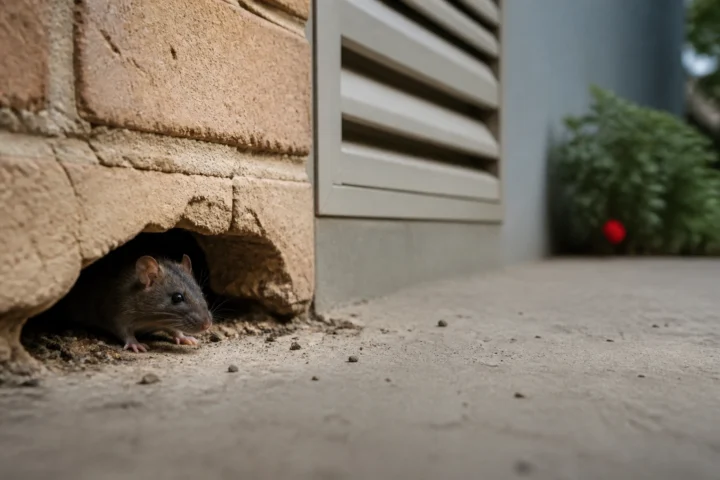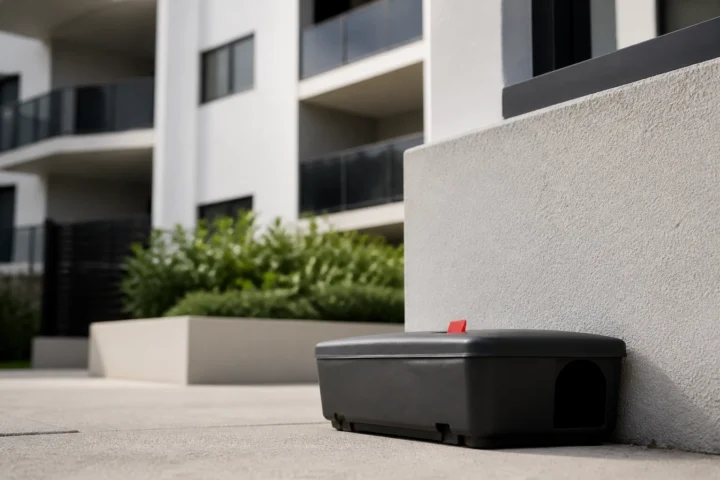
Yes, active wasp nests on your property raise the odds that someone gets stung, and the fix starts today. Remove food and drink attractants around bins, outdoor eating areas, and pet bowls, then call a licensed pest controller rather than poking at a nest yourself. Nests are often hidden underground or in wall cavities, workers roam far from home, and if the nest sits on your land, the removal responsibility is yours, not the council’s.
TL;DR:
- Wasps forage up to 500 meters from their nests, increasing sting risk near food, waste, and outdoor activity areas even if the nest is hidden.
- Most European wasp nests are concealed underground or inside wall cavities, making visual spotting difficult without observing repeated wasp traffic.
- Removing attractants like uncovered bins and fallen fruit significantly reduces wasp activity, but DIY nest disturbance often fails and can provoke dangerous defenses.
- Professional treatment kills the colony at its core with targeted application, greatly increasing removal success compared to store-bought sprays.
- Anyone with a known allergy or experiencing symptoms beyond a local sting should seek emergency medical help immediately, as reactions can escalate quickly.
Table of Contents
- How On-Site Wasps Translate to Sting Risk
- Where Nests Hide and How to Spot Them
- Quick Property Fixes That Reduce Wasp Attraction
- Why DIY Nest Disturbance Is Dangerous
- What to Expect From Professional Wasp Removal
- Seasonal Prevention Plan and Weekly Checklist
- What Are the Medical Symptoms of a Wasp Sting Allergy?
- What Raises a Person’s Risk of a Wasp Sting Allergy?
- How Do You Recognize and Respond to Anaphylaxis?
- When Should You Seek Emergency Medical Help?
- What Prevention Options Exist for People With a Wasp Sting Allergy?
- How Is a Wasp Venom Allergy Managed Long Term?
- A Practical Note on Balancing Safety and Conservation
- How BugsPatrol Handles Safe Wasp Removal and Prevention
- Sources
- FAQ
How On-Site Wasps Translate to Sting Risk
Worker wasps don’t stay near the nest. They range widely in search of protein and sugar, which is exactly what your kitchen bins, staff lunchroom, or outdoor café tables offer. European wasps forage up to 500 meters from their nest, so a colony you never see can still show up at your barbecue or loading dock every afternoon.
That range is why sting risk climbs even when the nest itself feels far away. Any spot where people eat, drink, or dispose of food waste becomes a magnet, and repeated visits mean repeated chances for a defensive sting. Nest activity ramps up through spring and peaks in late summer into autumn as colonies grow and workers need more food to feed developing brood. Weekly visual checks during that stretch catch a problem while it’s still one nest, not three.
Where Nests Hide and How to Spot Them
Most European wasp nests aren’t hanging in a tree where you’d notice them. Around 80% are built in concealed or ground-level spots: holes at the base of trees, gaps in retaining walls, rockeries, wall cavities, and roof voids. That concealment is precisely why so many nests go unnoticed until someone is stung mowing near a garden bed or leaning against a wall.
Watching flight paths from a safe distance is the easiest way to help a technician zero in on the nest without anyone getting close. Wasps fly in relatively straight lines to and from the entrance, so if you spot repeated traffic heading toward one patch of dirt or one gap in brickwork, that’s your lead.
- Watch for a steady stream of wasps entering and exiting one small opening, especially near midday.
- Check retaining walls, garden edges, compost areas, and roof eaves for repeated activity.
- Note the time of day and general direction of travel rather than approaching the spot.
- Photograph the location from a distance for the technician.
Pro Tip: Stand at least 5 meters back and watch for two or three minutes before deciding a location is active. A single wasp passing through means little; a steady queue in and out means you’ve likely found the entrance.
Quick Property Fixes That Reduce Wasp Attraction
Cutting off food and drink sources is the fastest lever a property owner has, and it works whether you manage a house or a commercial site. Removing attractants matters more than most people expect, because wasps that stop finding easy meals on your property forage elsewhere.
- Secure bin and compost lids so wasps can’t smell or reach food waste.
- Pick up fallen fruit under trees daily during warmer months.
- Cover pet food bowls and drinks left outside, even briefly.
- For businesses, enforce a policy of covered bins and no food left on outdoor tables overnight.
- Run a quick outdoor cleanup after lunch service or events, especially near seating areas.
Traps and repellents have a narrow but real use. They rarely eliminate a colony on their own, but a placed trap can help confirm wasps are active in a zone and give a technician a rough bearing on where the nest sits.
Why DIY Nest Disturbance Is Dangerous
Spraying a visible nest entrance might kill the workers you see, but it almost never reaches the queen, and a colony with a surviving queen simply rebuilds. Local pest authorities note that DIY attempts commonly fail precisely because they don’t neutralize the nest core, and disturbing a nest without the right equipment tends to provoke a mass defensive response instead.
Around 80% of European wasp nests sit hidden underground or in wall and roof voids, which means the person poking at what looks like a small hole often has no idea how large the colony behind it actually is.
Responsibility for a nest on private land falls to the property owner, while councils generally handle nests on public land. A few signs mean you shouldn’t wait for a scheduled appointment:
Multiple stings have already occurred, or someone shows signs of a serious reaction.
The nest sits near a doorway, playground, or high-traffic walkway.
Wasp numbers have visibly grown over just a few days.
When you call a technician, tell them where you’ve seen flight-path activity, how long the nest has been active, and whether anyone on site has a known allergy. Our wasp nest removal guidance covers what else helps speed up a visit.
What to Expect From Professional Wasp Removal
A licensed technician doesn’t just spray what’s visible. Treatment is built around getting an active ingredient into the nest cavity itself, in dust or liquid form, so it reaches the queen and brood before anyone attempts physical removal. That single difference is why professional treatment succeeds where a can of spray from the hardware store usually doesn’t.
A typical visit looks like this:
- Inspection to confirm the nest location, often guided by the flight-path observations you’ve already logged.
- Targeted application directly into the nest entrance or cavity.
- A waiting period for the treatment to neutralize the colony before extraction.
- Verification checks to confirm no activity remains.
Technicians will usually ask you to cordon off the area and keep people and pets away for a set window, both during and shortly after treatment. Good operators also flag when a follow-up visit or seasonal monitoring plan makes sense, particularly on properties that have had repeat nests. More detail on the safety steps involved is in our wasp nest safety guide.
Seasonal Prevention Plan and Weekly Checklist
A short recurring routine through the warmer months beats a scramble once you’ve already spotted a nest. Community trapping programs support this too. Seasonal Adopt-a-trap efforts show a trap catch usually points to a nest within roughly 200 meters, which is useful intel to hand a technician.
- Weekly (spring through autumn): Walk the property, check bins and eating areas, and note any flight-path activity.
- Monthly: Review outdoor waste storage, fruit trees, and staff food handling procedures.
- As needed: Set a trap if you suspect wasps are foraging nearby, and log catch dates and locations.
Pro Tip: Keep a simple log with photos, dates, and trap counts. Handing a technician two weeks of notes instead of a vague “we’ve seen a few wasps” can cut inspection time significantly. Our wasp infestation guide walks through building that habit properly.
What Are the Medical Symptoms of a Wasp Sting Allergy?
Most wasp stings cause pain, swelling, and redness confined to the sting site, and that reaction usually fades within a day or two. A true allergic reaction looks different and spreads beyond the sting site itself.
Watch for hives or itching across areas of the body far from the sting, swelling of the lips, tongue, throat, or face, and a feeling of tightness in the chest. Gastrointestinal symptoms like nausea, cramping, or vomiting can appear too, sometimes within minutes of the sting. Dizziness, a rapid or weak pulse, and difficulty breathing signal the reaction is escalating toward a medical emergency rather than a routine irritation.
The distinction that matters for property managers is scale. A local reaction, even a painful and swollen one, generally stays at the sting site. An allergic reaction shows up somewhere else on the body or affects breathing, swallowing, or circulation. Anyone stung on a property you manage who reports symptoms beyond the sting site itself should be treated as a possible medical situation, not a minor complaint to shrug off.
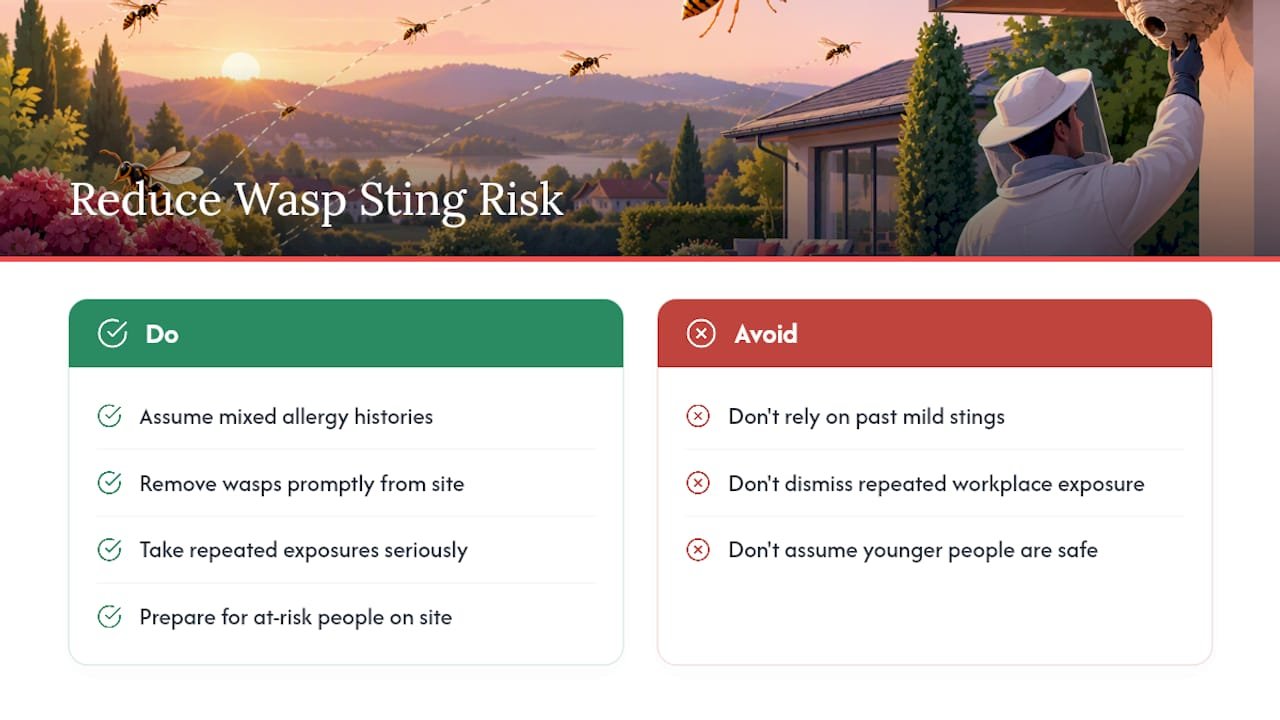
Because wasp venom allergies can develop or worsen after repeated stings, a person with no history of reacting badly isn’t automatically low risk going forward. Staff, tenants, or family members stung multiple times over a season warrant extra attention even if each individual sting seemed unremarkable at the time.
What Raises a Person’s Risk of a Wasp Sting Allergy?
A prior systemic reaction to a wasp sting is the single strongest predictor of a worse reaction next time. Someone who developed hives away from the sting site, swelling in the throat, or breathing trouble after a past sting faces meaningfully higher odds of a severe or life-threatening reaction on a repeat sting.
Multiple stings in a short period, whether from one nest disturbance or several encounters in a season, also raise risk. Beekeepers, groundskeepers, and outdoor maintenance staff who get stung repeatedly over years sometimes develop stronger reactions over time rather than building tolerance. That’s counterintuitive to how a lot of people assume the immune system works, and it’s part of why repeated exposure on a work site isn’t something to dismiss just because past stings were mild.
Existing conditions matter too. People with asthma or other respiratory conditions tend to face more severe outcomes if a sting triggers airway swelling. Mastocytosis, a rare condition involving excess mast cells, is associated with a higher risk of severe venom reactions. Age plays a role in a different way: reactions in older adults are statistically more likely to be severe, partly because cardiovascular strain during anaphylaxis hits harder later in life.
None of this means younger, healthy people with no allergy history are risk-free. It means property owners managing groups of people, staff, tenants, event guests, should assume a mix of unknown allergy histories is present on any given day, which is exactly why removing the wasps in the first place matters more than trying to screen who’s vulnerable.
How Do You Recognize and Respond to Anaphylaxis?
Anaphylaxis is a whole-body allergic reaction that can turn dangerous within minutes. The signs to act on immediately include difficulty breathing or wheezing, swelling of the throat or tongue, a sudden drop in blood pressure that causes dizziness or fainting, a rapid weak pulse, widespread hives, and a sense of impending collapse.
If you witness these signs in someone who was just stung, treat it as a medical emergency without waiting to see if symptoms pass. Lay the person down with legs elevated unless they’re having trouble breathing, in which case sitting upright is often more comfortable. If the person carries an epinephrine auto-injector, help them use it immediately, or administer it yourself if you’ve been trained and they’re unable to.
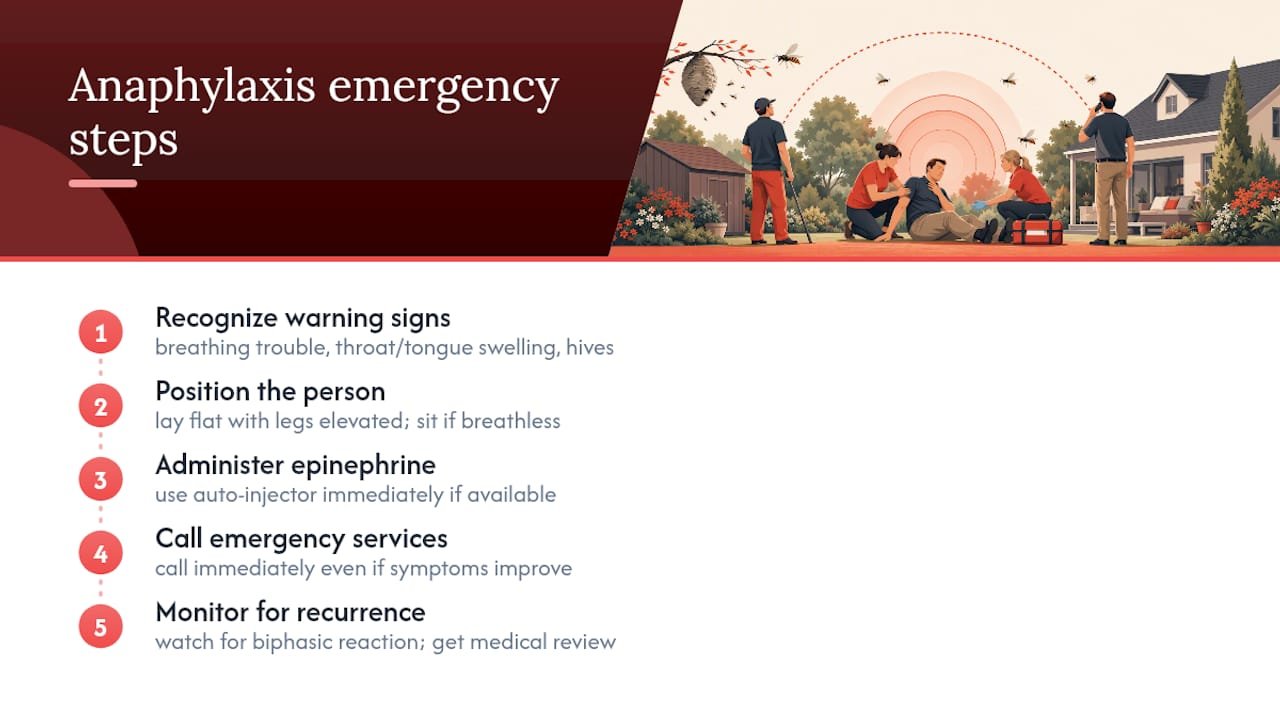
Call emergency services right away, even if symptoms seem to improve after an epinephrine dose. A second wave of symptoms, known as a biphasic reaction, can occur later, which is why anyone who receives epinephrine needs professional medical observation afterward regardless of how they feel in the following half hour.
Property managers overseeing workplaces, schools, or public-facing venues benefit from having at least one person trained in recognizing and responding to anaphylaxis on-site during business hours. A course like Prime First Aid Training’s anaphylaxis management program covers exactly this kind of response and is worth considering for any site with regular foot traffic or an outdoor eating area prone to wasp activity.
When Should You Seek Emergency Medical Help?
Call emergency services immediately for any sign of a systemic reaction: swelling away from the sting site, trouble breathing or swallowing, dizziness, a racing or weak pulse, or widespread hives. Don’t wait to see whether symptoms worsen. Anaphylaxis can progress from mild to life-threatening within 15 to 30 minutes, and treatment works far better started early.
Even a reaction that looks moderate deserves a call if the person has a known history of severe allergic reactions to stings, since past severity is one of the better predictors of how quickly a current reaction might escalate. If in doubt, treat it as an emergency rather than waiting for confirmation.
Multiple stings in one incident also justify a trip to urgent care or a call to emergency services, even without classic allergy symptoms, because venom load rises with sting count and can trigger reactions in people who’ve never had one before. This matters directly for property owners: a person disturbed by an active nest may get stung five or ten times in a single encounter, which is a different medical situation than one isolated sting.
After any emergency epinephrine use, the person needs to go to an emergency department or be transported by ambulance, not just rest at home, because of the risk of a delayed second reaction. If you’re the one managing the property where the sting occurred, staying with the person, keeping them calm, and having someone call for help while another person monitors their breathing gives first responders the best information when they arrive.
What Prevention Options Exist for People With a Wasp Sting Allergy?
The most direct prevention step for someone with a known wasp sting allergy is carrying an epinephrine auto-injector at all times, not just when they expect to be near wasp activity. Reactions don’t announce themselves in advance, and a sting can happen during a routine walk across a parking lot as easily as during a picnic.
Wearing closed-toe shoes outdoors, avoiding walking barefoot on grass in late summer and autumn, and steering clear of eating or drinking near known nest sites all lower exposure. For anyone managing a property, flagging areas with recent wasp activity to staff, tenants, or guests, especially those with a known allergy, gives people a real chance to avoid the risk rather than discover it the hard way.
Wearing a medical alert bracelet or carrying an allergy card helps first responders act faster if someone with the allergy is unable to communicate during a reaction. For workplaces or venues where outdoor exposure is routine, keeping a spare epinephrine auto-injector on-site, alongside training for at least one staff member on how to use it, closes a gap that many properties don’t think about until it’s too late.
None of these steps replace addressing the source. Reducing sting exposure for an allergic individual matters, but so does removing the nest that’s putting everyone on the property at elevated risk in the first place.
How Is a Wasp Venom Allergy Managed Long Term?
Anyone who has had a systemic reaction to a wasp sting should see an allergist for formal testing rather than relying on guesswork about how they’ll react next time. Skin testing or blood tests for venom-specific antibodies can confirm the allergy and help clarify how severe a future reaction might be.
Venom immunotherapy is the long-term treatment option for people with confirmed wasp venom allergy, particularly those who’ve had a serious reaction. It involves a series of controlled injections that gradually build tolerance to the venom over time, and it has a strong track record for reducing the severity of future reactions in people who complete the course.
Regular follow-up with an allergist matters even after starting immunotherapy, since risk can shift with age, health changes, or how many stings someone has had since their last reaction. People managing this long term typically carry an epinephrine auto-injector even during immunotherapy, since building tolerance takes time and doesn’t offer immediate protection.
For property owners, the practical takeaway isn’t medical, it’s environmental: the fewer wasps present on a site, the fewer chances anyone, allergic or not, has to test their own risk in the first place.
A Practical Note on Balancing Safety and Conservation
Targeted professional treatment beats amateur spraying because it reaches the nest core instead of just angering the colony, and that precision also limits collateral damage to surrounding vegetation and non-target insects. Not every stinging insect on a property is a threat. Native bees are protected pollinators, and treating them like an invasive wasp problem does real ecological harm for no safety benefit. Knowing the difference, or asking a technician to confirm it, protects both people and the insects that don’t deserve to be treated as pests.
— navin
How BugsPatrol Handles Safe Wasp Removal and Prevention
Bugspatrol Pest Management is the practical alternative to guessing at a nest yourself: licensed technicians who use targeted, family-safe treatment methods instead of a can of spray and a hope that it worked. We’ve handled wasp removal across more than 5,000 Canberra homes and businesses, and our technicians know exactly where nests concealed underground or in wall cavities tend to turn up.

Booking a visit gets you a full inspection, not just a spot treatment. Our wasp control service covers nest location, targeted application into the cavity to neutralize the colony at its core, and a verification check afterward so you’re not left wondering if the queen survived. For properties that deal with recurring nests season after season, our maintenance plans build ongoing monitoring into the schedule instead of waiting for the next call.
If you’ve spotted flight-path activity or a suspicious gap in a wall or garden bed, get in touch through Bugspatrol and we’ll schedule an inspection.
Sources
For deeper guidance beyond this article, Health Victoria’s European wasp control page covers attractant removal and nest biology in detail, while DPIRD WA’s European wasp resource explains community trapping programs. Long-term management approaches are discussed in University of New England research on biological control options.
- European wasps — pest control (Health Victoria)
- Wasps – City Services (ACT)
- European wasps and mosquitos (Indigo Shire Council)
- European wasp (DPIRD WA)
FAQ
Does a Wasp Nest on My Property Really Raise Sting Risk?
Yes. Worker wasps forage up to 500 meters from an active nest, so any nest nearby increases traffic around food, drink, and waste areas where people gather.
Who Is Responsible for Removing a Wasp Nest on Private Land?
The property owner is responsible for arranging removal of a nest on private land, while councils generally manage nests found on public land. Licensed technicians handle wasp nest removal on private property.
Why Doesn’t Spraying a Nest Myself Work?
Store-bought spray usually kills visible workers but rarely reaches the queen, so the colony often rebuilds. Professional treatment uses targeted dust or liquid applications that penetrate the nest cavity to neutralize it at the core.
What Does BugsPatrol Charge for Wasp Removal?
Pricing for one-off wasp control is available on request through Bugspatrol, while ongoing protection plans like Bronze General Pest start at 29.98 AUD per month through our subscriptions page.
How Do I Know If a Sting Reaction Needs Emergency Care?
Any swelling away from the sting site, trouble breathing, dizziness, or widespread hives means you should call emergency services immediately rather than wait. Multiple stings in one encounter also justify urgent medical attention even without classic allergy symptoms.