A redback spider indoors is a genuine bite risk, not a household emergency: its venom causes intense, spreading pain and sometimes systemic symptoms, but deaths are effectively unheard of since antivenom became available. Keep people and pets away from the area, avoid touching or provoking the spider, and read on for safe identification, removal, and prevention steps.
TL;DR:
- For one spider in an accessible spot, cover it with a jar, slide stiff card underneath, then release it well away from the house.
- An egg sac, clustered webs, repeated sightings, or spiders in a roof void call for sealing the area and hiring a licensed pest controller.
- Use a torch and gloves to inspect low, sheltered spots such as letterboxes, shoes, sheds, and roof spaces, and check footwear before putting it on.
- After a bite, wash the site, apply a cold pack for 15 minutes, and avoid pressure bandages; call 000 for breathing trouble or chest pain.
Table of Contents
- What to do right now if you find a redback indoors
- How to tell a redback apart from other house spiders
- Where redbacks hide inside houses and how to check safely
- Safe removal and control options for a single redback
- Prevention and exclusion to keep redbacks out of your home
- Redback bites: symptoms, first aid, and when to escalate
- BugsPatrol field notes: what our technicians see and do
- A quick note from the author
- How BugsPatrol can help with redback spiders at home
- FAQ
- Sources
What to do right now if you find a redback indoors
Your first move is to create distance, not to act fast. Redbacks rarely wander or chase, so the immediate danger comes from someone reaching into the spot where it is hiding, not from the spider itself.
- Keep children and pets out of the room or area until you have assessed the situation.
- Do not touch, flick, or handle the spider with bare hands or bare feet.
- Note the exact spot (shoe, skirting board, toy box) so you or a technician can check it properly later.
- If you plan to capture it, use a jar or clear container and a stiff piece of card: place the jar over the spider, slide the card underneath to seal it, then release the spider well away from the house or dispose of it in the sealed jar.
- If a bite has already happened, wash the area with soap and water and apply a cold pack for about 15 minutes to ease pain, as HealthDirect recommends, then watch for worsening symptoms.
Some situations are not worth handling yourself. If you find an egg sac (a round, papery cream or beige ball), multiple messy webs clustered together, or several spiders in one void, that points to an established population rather than a single wanderer. In those cases, sealing the area and calling a licensed pest controller is safer than trying to clear it out piece by piece, since disturbing a nest can scatter spiderlings into new parts of the house.
Pro Tip: Keep a torch and a spare jar near the laundry or garage door. Most redback encounters happen when people reach into dark, cluttered spots without checking first.
How to tell a redback apart from other house spiders
A mature female redback is the one to worry about: a shiny black, rounded body roughly the size of a large pea, with a distinctive red or orange stripe or patch on the top of her abdomen. Males and juveniles are much smaller, lighter brown, and rarely cause medically significant bites, which is part of why most first aid advice focuses on the female.
Confusion with other spiders is common, especially with cupboard spiders (Steatoda), which share a similar dark, rounded shape but lack the clear red marking and tend to have a more mottled, brownish pattern. A few checks help before you decide how worried to be:
- Look for the red or orange stripe on the top of the abdomen, not just a red mark underneath.
- Check the web: redbacks build irregular, messy, tangled webs low to the ground, rarely the neat orb shapes of garden spiders.
- Note the location: redbacks favor dry, sheltered, undisturbed spots rather than open walls or ceilings.
- Compare size: an adult female’s body is about the size of a large pea, with much longer, thin legs.
One of the clearest field markers cited by Australian pest authorities is that redback spiders are typically found in dry, sheltered areas such as sheds, garages, letterboxes, and shoes, which narrows down both identification and search effort at the same time.
If you are unsure, photograph the spider from a safe distance using your phone’s zoom function rather than moving closer, and try to get a clear shot of the top of the abdomen against a plain background. That image is often enough for a pest professional or Poisons Information to confirm what you are dealing with without you needing to get close again.
Where redbacks hide inside houses and how to check safely
Redbacks are not spiders that roam across open floors or walls looking for prey. They build a web in one sheltered, undisturbed spot and wait, which means the real risk comes from humans reaching into that spot without checking first. Redback webs are irregular and easy to miss, built in low, dark, sheltered spaces, and the spiders are nocturnal, hiding through the day in crevices such as under toilet seats or inside letterboxes.
Inside and around a typical Canberra home, the highest-probability spots include:
- Roof voids and ceiling cavities, especially near downlights where warmth and insect activity concentrate.
- Eaves, external wall cavities, and gaps around pipe or cable penetrations.
- Sheds, garages, and anywhere tools, pots, or gardening gear sit undisturbed for weeks.
- Letterboxes, meter boxes, and the underside of outdoor furniture.
- Shoes left outside or in garages, stacked boxes, and children’s outdoor toys.
- The underside of toilet seats and cisterns in outdoor or semi-enclosed toilets.
These spots share three things redbacks need: shelter from weather, a steady supply of insects drawn to warmth or light, and long stretches without disturbance. Activity typically increases through the warmer months, when redbacks breed and spread into new voids, while in cooler months they tend to retreat toward heat sources like roof spaces near light fittings or warm wall cavities.
A safe inspection routine matters more than speed. Wear gloves, use a torch rather than your bare hand to probe dark gaps, and use long-handled tools (tongs, a broom handle) to move items rather than reaching in directly. Always shake out shoes and check folded clothing or towels left outdoors before putting them on, since bites often happen when a hand or foot meets a spider that was already settled in.
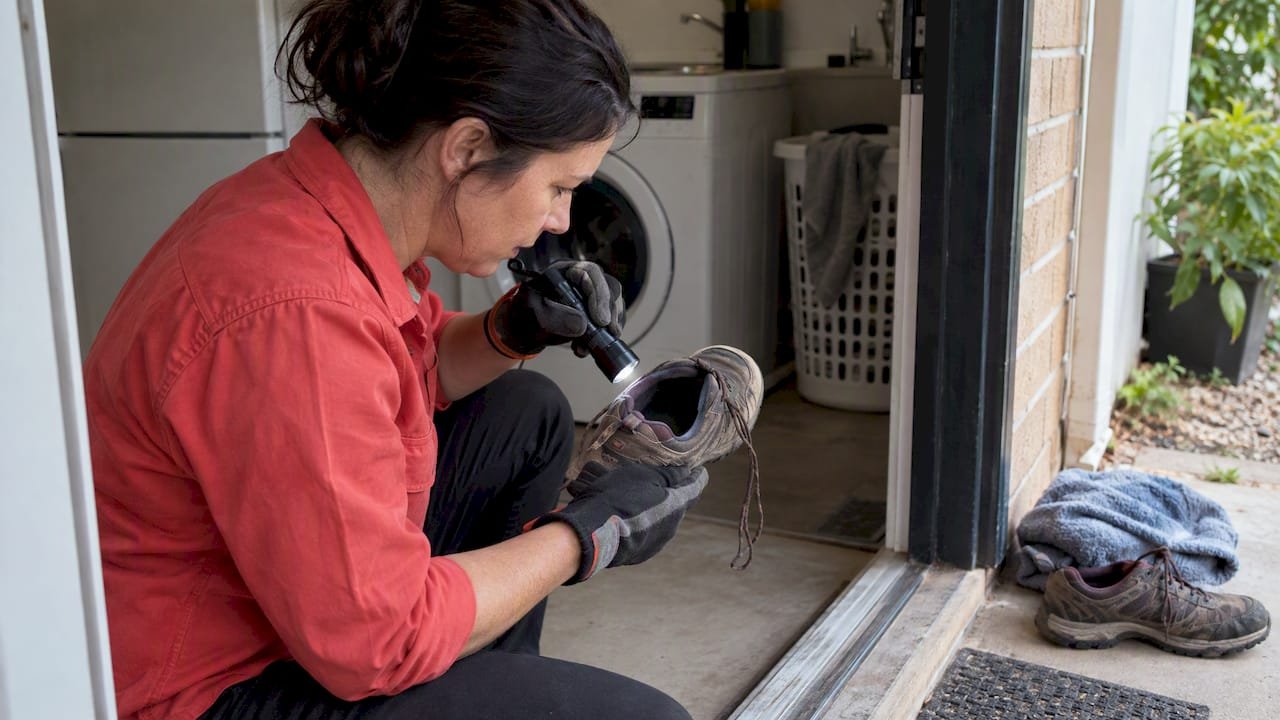
Pro Tip: Check letterboxes and outdoor toilet fixtures with a torch before reaching in, especially after a few weeks without use. These are two of the most overlooked redback hiding spots in Australian homes.
If you find more than one web close together, an egg sac, or webs in several separate spots around the same structure, that is a sign of an established population rather than a single stray spider. At that point, stop the inspection and call a licensed pest controller rather than continuing to search blind, particularly if the webs are in a roof void or anywhere that needs ladder access.
Safe removal and control options for a single redback
For one spider in an accessible spot, the jar-and-card method described earlier is the lowest-risk approach: it keeps your hands away from the spider and lets you release or dispose of it without direct contact. Wear gloves regardless, since redbacks can bite through brief contact with bare skin even during capture.
Pesticide sprays are available, but they come with real caveats for home use. Treat them as a targeted tool, not a general-purpose spray:
- Read the label fully before use and apply only to the specific void, crevice, or web, not broad surfaces.
- Keep sprays away from clothing, bedding, food preparation areas, and anywhere children or pets spend time.
- Ventilate the area after application and keep people and animals out until it has dried or cleared, per the label’s instructions.
- Avoid spraying directly into areas you cannot see into, such as deep wall cavities, since you cannot confirm coverage or check for egg sacs.
Crushing a redback inside the home is often counterproductive. A mature female can be carrying an egg sac nearby, and disturbing her without finding and removing that sac leaves spiderlings to disperse into new hiding spots around the house. Redbacks recolonize quickly once habitat and shelter remain available, so a single treatment without addressing the surrounding clutter or access points rarely solves a recurring problem.
A few signs point clearly toward calling a licensed pest controller rather than persisting with DIY methods: repeated sightings in the same area over several weeks, visible egg sacs, multiple webs in a roof void or wall cavity, or any situation requiring roof, ceiling, or solar panel access. Our spider control technicians handle exactly these cases, with the equipment and access tools to inspect voids safely rather than guessing from the ground.
Prevention and exclusion to keep redbacks out of your home
Reducing redback presence comes down to removing the clutter, gaps, and shelter they rely on, more than any single spray or trap. Start indoors and work outward:
- Declutter sheds, garages, and storage areas, and keep items like toys, shoes, and tools off the ground where possible.
- Shake out shoes and check gardening gloves or outdoor equipment before use, especially after they have sat untouched for a while.
- Clear cobwebs regularly in low-traffic areas like under furniture, behind appliances, and in corners of garages.
- Check children’s outdoor toys and play equipment periodically, particularly anything with small gaps or cavities.
Sealing gaps matters as much as tidying. Check and seal around eaves, letterbox joints, and plumbing or cable penetrations where pipes enter the house, and fit brush seals on external doors to close off a common entry gap. Downlights and roof penetrations deserve particular attention since warmth and insect traffic around them make these some of the most consistently favored redback sites found during inspections.
Outdoors, remove general rubbish and debris, stack firewood off the ground and away from the house, and keep pot plants and play areas tidy rather than letting leaf litter or mulch build up against them. Trimming shrubs back from exterior walls reduces the shaded, sheltered microclimate redbacks favor right next to entry points.
Pro Tip: Fit brush seals on external doors and check them once a year. A gap as small as a few millimeters is enough for a spider to pass through.
Some exclusion work is better left to professionals, particularly anything involving gutter or roof access, solar panel undersides, or a property that keeps getting recolonized despite regular cleanup. Our gutter guard installation and general pest services address these access points directly, since they are the spots homeowners can rarely inspect or seal thoroughly on their own. For broader guidance on managing spiders around the home and knowing when DIY is enough, see our guide to keeping spiders out safely.
Redback bites: symptoms, first aid, and when to escalate
A redback bite typically causes immediate, sharp, localized pain that spreads over the following hour, sometimes accompanied by sweating, nausea, headache, or muscle weakness as the venom affects the nervous system. Clinical guidelines describe these systemic symptoms as possible but manageable in most cases, with symptomatic treatment being the standard approach rather than automatic antivenom use.
First aid for a suspected redback bite follows a few clear steps:
- Wash the bite site with soap and water to reduce infection risk.
- Apply a cold pack to the area for about 15 minutes to help with pain.
- Take over-the-counter pain relief as needed and as directed on the packaging.
- Do not apply a pressure immobilization bandage.
That last point matters because it runs against general snakebite first aid. Pressure immobilization is recommended for funnel-web spider bites but specifically not recommended for redback bites, since it can concentrate and worsen the local pain rather than help. Confusing the two can mean doing the wrong thing at the worst time.
Call 000 for any sign of severe systemic illness, such as difficulty breathing, chest pain, or significant swelling beyond the bite site. For anything short of that, Poisons Information (13 11 26) is the right first call for advice on whether home monitoring is enough or whether you need to see a doctor. Most redback bites can be managed with the steps above, with antivenom reserved for cases where pain or systemic symptoms are severe and do not settle with basic analgesia, decided in consultation with a clinician or toxicologist rather than applied automatically.
BugsPatrol field notes: what our technicians see and do
Across more than 5,000 Canberra homes serviced over 10+ years, we see redback activity follow a consistent pattern tied to the ACT’s hot, dry summers and cold winters. Sightings climb through spring and summer as redbacks breed and spread into new shelter, then concentrate around heat sources like roof voids and wall cavities once the weather cools.
A few patterns show up repeatedly on inspections:
- Downlights and roof voids are among the most common redback sites we find, since the warmth and insect traffic around light fittings create ideal conditions.
- Letterboxes, meter boxes, and garden sheds consistently turn up webs that homeowners had not noticed from the outside.
- Solar panel undersides are an increasingly common hiding spot as more homes install rooftop systems, which is part of why we offer dedicated bird and pest proofing for these areas.
- Recurring sightings in the same room or structure usually trace back to an unaddressed gap or void rather than a new spider each time.
Our licensed technicians check these areas using proper roof and ladder access equipment rather than guesswork from the ground, and we favor eco-aware, targeted treatments over broad spraying, particularly in homes with children or pets. Same-day response is available for urgent cases, and ongoing maintenance plans help catch new activity before it becomes a recurring problem rather than a one-off callout.
A quick note from the author
Our approach to a redback indoors comes down to three priorities, in order: keep people and pets away first, identify the spider before deciding what to do next, and then either trap-and-release it safely or call a professional if there is any sign of a nest. Modern Australia is a genuinely low-risk place to encounter one of these spiders, given how rare severe outcomes have become since antivenom reached hospitals, but that does not mean casual handling. If the checklist above leaves you still unsure, the FAQ section covers the most common follow-up questions, and our BugsPatrol team is available if you would rather have a professional confirm what you are dealing with.
— navin
How BugsPatrol can help with redback spiders at home
Dealing with a redback problem yourself works fine for a single spider in an open, accessible spot, but roof voids, solar panel undersides, and recurring infestations call for tools and access most homeowners do not have on hand. That is exactly the gap our team closes for Canberra properties.
A typical visit starts with a full inspection of the hotspots covered above: roof voids, downlights, sheds, letterboxes, and garden areas, followed by targeted treatment in the specific voids and crevices where we find activity rather than a blanket spray across the property. We take precautions around children, pets, and outdoor living areas throughout.
Our relevant services include:
- Spider control for identification, targeted treatment, and removal of redbacks and other spiders.
- General pest control for broader household pest issues alongside spider activity.
- Gutter guard installation to reduce roof-line shelter that attracts spiders and other pests.
- Subscription plans, including Gold Complete at $79.98 AUD per month and Silver Combined at $55.98 AUD per month, for ongoing inspections and prevention.
If you have found a redback indoors or keep finding webs in the same spot, book an inspection with our team and we will take it from there.
This article is general information, not a substitute for advice from a qualified doctor. Consult a qualified healthcare professional about your own circumstances before acting on anything here.
FAQ
What do you do if you find a redback spider in your house?
Keep people and pets away from the area and avoid touching or provoking the spider. If it is in an accessible, open spot, you can trap it with a jar and stiff card and release it outside; if you find a nest, multiple webs, or an egg sac, seal off the area and call a licensed pest controller instead.
Do redback spiders live in houses?
Yes, redbacks commonly set up in dry, sheltered parts of homes such as sheds, garages, letterboxes, roof voids, and shoes, where they find shelter, warmth, and a steady supply of insects. They are most active during warmer months but often retreat toward heat sources indoors as temperatures drop.
Does one redback mean more?
Not necessarily, since a single wandering male or juvenile does not indicate a nest nearby. However, finding a mature female, an egg sac, or several messy webs clustered in one area is a stronger sign of an established population worth having a professional check.
What smell do redback spiders hate?
There is no scientifically confirmed scent that reliably repels redback spiders, so relying on a particular smell is not a dependable control method. Reducing clutter, sealing entry points, and removing shelter are the approaches with actual support behind them for keeping redbacks away from a property.
Sources
- AEPMA pest profile: Redback
- HealthDirect: Spider bites – treatment, symptoms and first aid
- NSW Emergency Care Institute clinical tool: Snake and spider bite
- Australian Museum: Redback spider
Recommended
- Keep Spiders Out Safely in Australian Homes and When to Call a Pro
- Spider Control in Canberra: Which Species Actually Warrant a Call to a Professional?