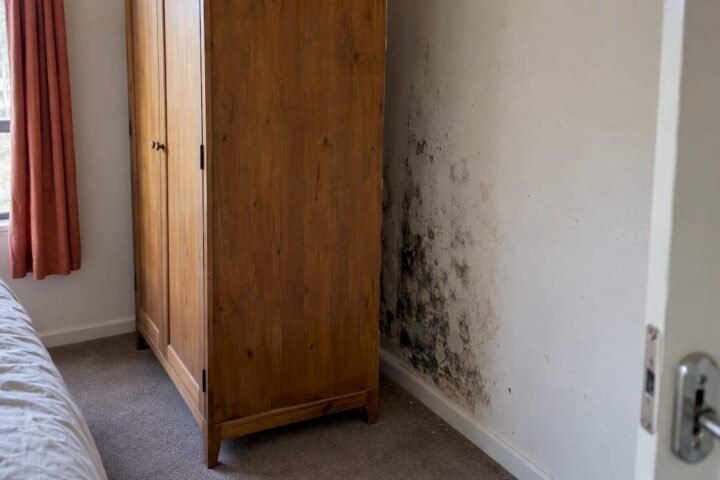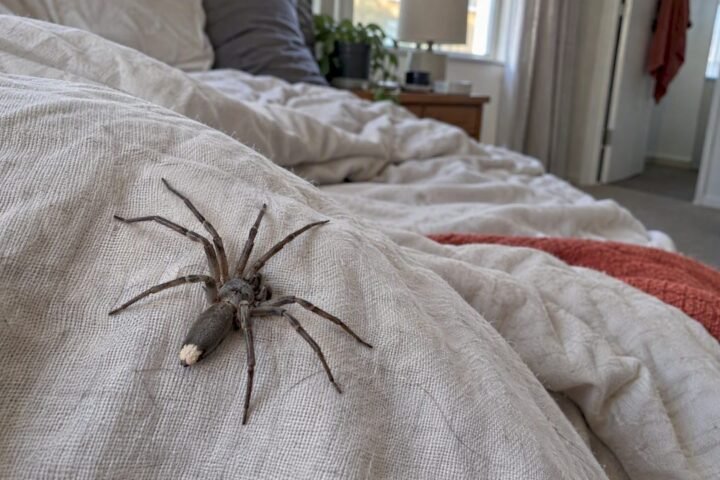
Borers and termites both eat timber, but they are different insects and they leave different evidence. Borers are beetle larvae, and the clue is usually small round exit holes with fine, floury dust. Termites are social insects related to cockroaches, and they usually stay hidden inside the wood, leaving hollowed galleries and mud-packed tunnels. The difference matters because the risk, the treatment and the urgency are not the same. If you are unsure which one you have, stop and read the do-not-touch advice below before you spray, scrape or fill anything.
TL;DR
- Borer damage tends to show as small “shot” holes and powdery frass. Termite damage tends to show as hollowed, mud-packed galleries and mud shelter tubes.
- Termites are a far bigger structural threat to a home, so any doubt should be treated as a termite question until a licensed professional says otherwise.
- Do not spray, scrape or clean up suspect damage. Disturbed termites can abandon the spot and attack somewhere else.
- Coffee grounds and other home remedies do not stop termites. Regular licensed inspections do far more.
- In Canberra, we can inspect with thermal imaging and tell you which pest you have before any treatment starts.
Table of Contents
- Two different insects, two different lifestyles
- What each type of damage looks like
- Why termites are the bigger worry
- What to do the moment you find something
- Can you get rid of borers?
- Does treated timber protect you from both?
- How termite management really works
- Our perspective: identify first, treat second
- Getting it checked in Canberra
- FAQ
- Sources
Two different insects, two different lifestyles
It helps to start with what these pests actually are, because the damage follows from their biology.
Termites are social insects in the order Isoptera. They are more closely related to cockroaches than to ants, which is why the old name “white ants” is misleading, as the Australian Museum explains. They live in colonies, and a single colony can include thousands of workers feeding quietly on timber.
Wood borers are beetles (order Coleoptera). The damage comes from the larvae, which tunnel through the wood. The adult beetle then chews its way out, which is what leaves the holes you can see. CSIRO’s guide to managing termites describes this contrast: termites build mud tunnels to keep moisture in, while borer damage is often first noticed when adults emerge through exit holes.
In practice, that gives you a simple mental model:
- Termites hide. They avoid light and air, and they keep their workings sealed.
- Borers advertise, but only at the end. The larvae work unseen for a long time, then the adults leave holes behind.
What each type of damage looks like
Use this table as a first pass. It is a guide to what to look for, not a diagnosis.
| Sign | Wood borer | Termite |
|---|---|---|
| Holes in the surface | Small, round “shot” holes where adults have emerged | Often none. Surface may look intact, or have small pin-sized breaks |
| Dust or debris | Fine, floury wood dust (frass) | Mud or carton packed into galleries. Drywood species leave gritty, sand-like frass |
| Inside the timber | Tunnels filled with fine powder | Hollowed-out galleries, often with mud or carton |
| Mud tubes | None | Mud shelter tubes on walls, piers and slabs (subterranean species) |
| Sound when tapped | May sound hollow where heavily tunnelled | Often hollow, with a papery thin outer layer |
| Where you notice it | Exit holes in floors, furniture, framing, battens | Along skirting, door frames, sub-floor timber, wall cavities |
The first three rows are consistent with CSIRO’s description: termite damage often appears as hollowed galleries packed with mud or carton, while borer activity is typically characterised by small shot holes and fine, floury frass.
Holes in wood: the question behind most searches
If you have found holes in timber, the first questions are whether they are fresh and whether there is dust beneath them.
- Clean holes with a little fresh powder below them suggest recent borer emergence. Old holes tend to be dark and dusty inside, with no new powder.
- No holes, but blistered paint, a sagging floor or timber that sounds hollow points toward termites, which usually stay behind the surface.
- Tiny holes plus mud is a termite warning, not a borer one.
Neither pattern is certain. Some termite species live entirely inside the timber, and the evidence they leave can resemble borer work. That is why a visual guess is risky.
Why termites are the bigger worry
Borers can weaken timber, and we take them seriously. But in a typical Canberra home, termites are the pest that can turn a quiet problem into a structural one.
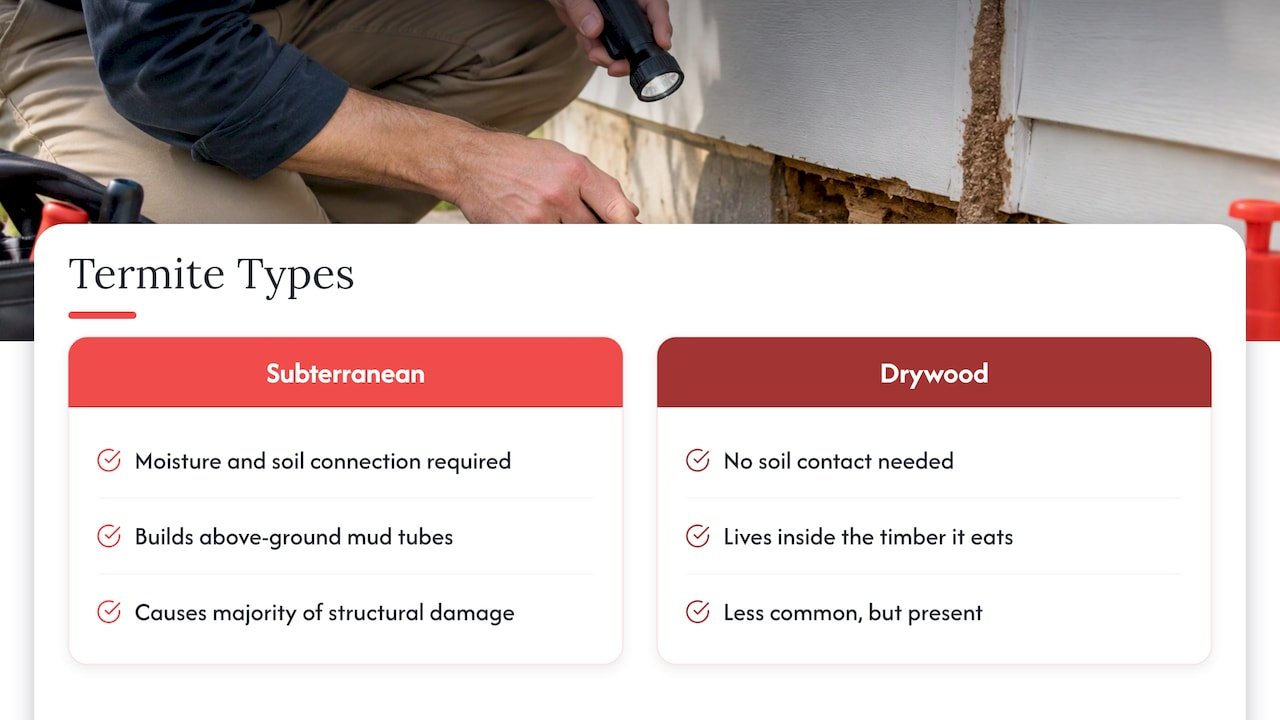
CSIRO’s guide notes that termites can cause extensive damage to buildings when left undetected or not properly managed. It also notes that subterranean termites need constant moisture and a connection to the soil, so they build mud shelter tubes to travel above ground. These species are responsible for the majority of structural damage to Australian homes. Drywood termites are less common but present. They need no soil contact and live entirely in the piece of timber they are eating (CSIRO).
That is the reason we say: when in doubt, treat the situation as a possible termite problem until someone licensed has looked at it.
There is a useful nuance, too. The Australian Museum points out that finding termites in your garden does not automatically mean your house is under attack, since many species are not structural pests. But it also says correct identification is highly specialised, so you should not assume the presence of pests is harmless. A licensed manager should assess the situation before any treatment begins.
What to do the moment you find something
The first hour after a discovery is where homeowners most often make things worse.
- Do not spray. CSIRO’s advice is not to use surface sprays on termite activity. Disturbed termites can abandon the site, regroup and attack another part of the home, which makes professional eradication harder (CSIRO).
- Do not scrape away mud tubes or “clean up”. Leave the area undisturbed until a licensed pest manager arrives. Our guide to termite mud tubes explains what to look at and what to leave alone.
- Do not leave exit holes open to the light, and do not fill them either. A government agriculture publication on termites notes that the insects sense light and will block off exposed tunnels, then continue damaging the structure elsewhere. Professional treatment involves dusting the galleries while the holes stay sealed so the insects keep using the treated paths (DPIRD, Western Australia). The source is an older publication, so treat it as background to why you should not interfere, not as a treatment method for you to try.
- Take photos and note the location. Photograph holes, dust, mud and any insects, with something in frame for scale. Keep a small sample of dust in a sealed bag.
- Call a licensed professional. Ask for an inspection that identifies the pest before any product is applied.
If you think you have termites in a wall or floor and your instinct is to buy something from a hardware shop, read our piece on DIY termite baiting versus a professional service first. The research agrees: poison baits used by homeowners are often ineffective for eradicating a colony compared with professional methods (DPIRD).
What about coffee grounds and other home remedies?
People regularly ask whether coffee grounds repel termites. There is no evidence that they do. Professional termite management in Australia relies on licensed inspection and integrated methods: soil chemical barriers, baiting systems, and physical barriers such as stainless steel mesh or crushed granite. A home remedy will not stop an active infestation, and the time you spend trying it is time the colony keeps feeding (DPIRD).
Can you get rid of borers?
Yes, borer activity can be managed, but the right approach depends on the species, what timber is affected, and whether the infestation is still active. Two points apply to nearly every case.
Surface sprays rarely solve it. Borer larvae spend most of their lives inside the wood, so products that sit on the surface do not reach them. The Western Australian government’s guidance on the polyphagous shot-hole borer is a good example from the tree side: the beetle lives inside the wood, so control there means removing or pruning infested trees, not spraying. That is a plant pest rather than a house pest, but the lesson about wood-dwelling insects carries over.
Confirm it is active before you pay for treatment. Old exit holes can sit in timber for decades after the beetles have gone. Fresh frass, new holes and the sound of activity in a quiet room are what indicate a live problem. We lay this out step by step in our wood borer diagnostic before you spray.
A note on trees and imported timber
If the “borer” is in a tree in your garden rather than in your house, it is a different conversation. The polyphagous shot-hole borer is a tiny beetle that bores into tree trunks, stems and branches and can lead to tree death. It is an agricultural and environmental pest, and it is a matter for biosecurity authorities, not for a general household treatment. If you suspect something like this in a garden tree, report it through the official channel rather than moving or chipping the wood yourself.
The Department of Agriculture also notes that exotic timber pests include both termites and insect borers, which can arrive in timber as eggs or larvae and go unnoticed until frass appears. If you buy imported timber or second-hand furniture, inspect it before it goes inside.
Does treated timber protect you from both?
Not completely. Most softwood used in construction is treated to protect it from fungi and insects, but the NSW EPA notes that how well treated timber performs depends on the hazard level and where it is used, including internal or external, and in-ground or above-ground use.
Treated timber is a first line of defence, not a substitute for inspections. Untreated offcuts, cut ends, old hardwood furniture and cavity framing can all be weak points. If you have renovated, ask whether cut ends were re-treated and whether any untreated timber went into the sub-floor or wall frames.
How termite management really works
The most useful idea in CSIRO’s guidance is one that surprises many homeowners: good termite management is largely about forcing termites into the open. Physical barriers and ant caps do not necessarily stop termites entering. They slow them down and make them build their mud tunnels where an inspector can see them. That makes the frequency and quality of professional inspections the biggest factor in limiting damage (CSIRO).
So the practical program for a Canberra home looks like this:
- A regular licensed inspection. Our article on termite inspection frequency explains why we recommend a minimum of every 12 months.
- A barrier or monitoring system suited to your build. Slab, pier and sub-floor homes need different approaches. We cover this in termite barrier systems in Canberra and in our overview of termite treatment options.
- Moisture and access control. Fix leaking taps and downpipes, keep sub-floor vents clear, and avoid piling timber or mulch against walls.
A borer problem can be fitted into the same routine. A single inspection covers both pests, which is the easiest way to stop guessing.
Our perspective: identify first, treat second
We have been in this industry for more than 10 years and have serviced over 5,000 Canberra homes. The pattern we see most often is not a lack of effort from homeowners. It is effort aimed at the wrong target.
Someone finds small holes in a skirting board, buys an aerosol, and sprays. If it was an old borer problem, the spray achieved nothing. If it was termites, the spray may have pushed the colony to a new feeding point that nobody has found yet. In both cases the homeowner now has less information than before.
That is why we start with identification. Our technicians are licensed and insured, and for termite inspections we use thermal imaging, which can help show temperature differences in walls and other areas that the eye cannot see. It is a detection tool, not a magic answer, so we combine it with a physical inspection and moisture checks. We then tell you plainly what we found: which pest, whether it is active, and what the sensible options are, including doing nothing when nothing is needed.
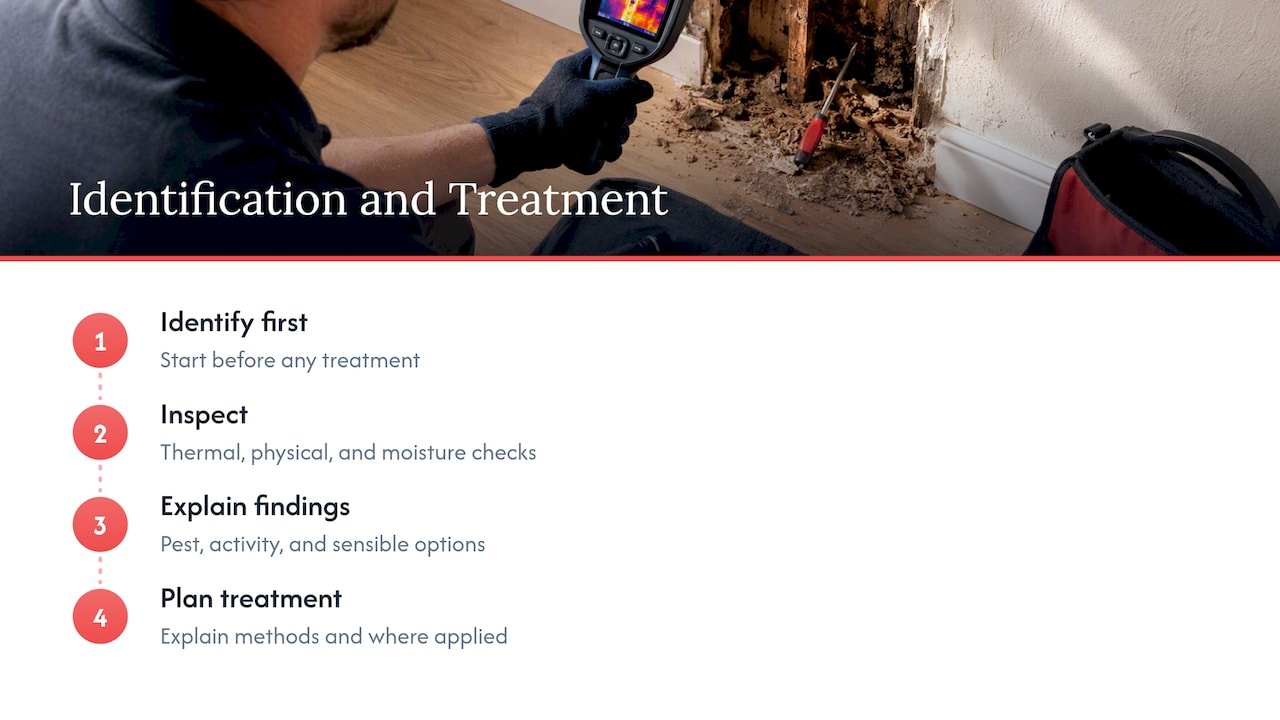
We also think about the household. Many of our customers have children and pets at home, and treatments should reflect that. We aim to use effective and responsible methods and to explain what will be applied and where, before the work begins. And whatever we do is guaranteed for effectiveness.
If we had to give one piece of advice to every Canberra homeowner, it would be this: do not wait for holes. By the time borers show you an exit hole or termites show you a mud tube, the pest has had a long head start. A scheduled inspection is cheaper than any repair.
— navin
Getting it checked in Canberra
If you have found holes, dust, mud or hollow timber, book an inspection before you do anything else. Our termite control service covers inspection and treatment, and our termite specialist page for Canberra explains how we work. We also offer fast pest removal, including same-day emergency service.
If you would rather not think about it every year, our subscription plans spread the cost. Bronze Termite is A$29.98 per month and Bronze General Pest is A$29.98 per month. Silver Combined is A$55.98 per month, and Gold Complete is A$79.98 per month. You can compare them on our plans page. Ask us which one fits your home when you call, since the right cover depends on the building and the risk.
Are you a real estate agent, property manager or body corporate? We also carry out property pest inspections and reports. Contact us through the BugsPatrol website.
FAQ
How can you tell if it’s a termite?
Look for mud shelter tubes on walls, piers or slabs, hollow-sounding timber, and galleries packed with mud or carton. Termites usually stay hidden, so the surface may look fine. Because accurate identification is specialised, have a licensed pest manager confirm it before any treatment.
Are borers or termites worse for a house?
Termites are generally the bigger structural risk, since subterranean species cause the majority of structural damage to Australian homes. Borers can still weaken timber, particularly if left for years. An inspection will tell you which one you have and how far it has progressed.
Can I fill borer holes myself?
We recommend against it until the pest is identified. If the holes are actually from termites, interfering with the tunnels can push the insects to attack elsewhere in the building. Take photos, leave the wood as it is, and have it inspected.
Do coffee grounds repel termites?
There is no evidence that they do, and they will not stop an active infestation. Australian termite management relies on licensed inspection, soil barriers, baiting and physical barriers. A professional inspection is the reliable first step.
What is the difference between subterranean and drywood termites?
Subterranean termites need constant moisture and a link to the soil, so they build mud tubes to travel. Drywood termites live entirely inside the timber and need no soil contact, often leaving gritty, sand-like frass. Subterranean species cause most structural damage in Australian homes.
Sources
- CSIRO: Managing termites
- Australian Museum: Termites
- Australian Museum: Termites as pests
- DPIRD (WA): Termites or white ants
- Outbreak.gov.au: Polyphagous shot-hole borer
- Department of Agriculture: Treatments for timber and timber products
- NSW EPA: Timber pests and fungi
Recommended
- Australian Homeowners: 5 Step Wood Borer Diagnostic Before You Spray
- Borer Holes in Furniture? Check Fresh Frass Before Treating
- Homeowners: Spot Harmless Garden Termites and When to Call an Inspector
- Termite Mud Tubes: How to Identify and What to Do