A white-tail spider bite hurts, often a lot, but it is not medically dangerous. The usual result is sharp pain, a red mark and some itching that settles over a day or a few weeks. It does not cause rotting flesh or ulcers, despite the stories most Australians have heard. This guide covers what a bite looks and feels like, first aid, when to see a doctor, what to do about pets, and how to stop the spiders getting into your bedroom.
TL;DR
- White-tail bites cause local pain, redness and itching. A study of 130 confirmed bites found no necrosis (flesh-rotting) in any of them.
- First aid: wash with soap and water, apply a cold pack, and take simple pain relief if you need it. Do not use a pressure bandage.
- A sore that gets worse, spreads or ulcerates is rarely a spider bite. See a doctor so the real cause is found.
- White-tails hunt at night and hide in bedding, towels and shoes. Shaking things out and sealing gaps does more than spraying.
- Redback spiders, not white-tails, are the spider that worries vets. Call a vet or the Animal Poisons Helpline if a pet seems unwell.
Table of Contents
- What a white-tail spider bite looks and feels like
- First aid for a white-tail spider bite
- Is it really a white-tail? How to identify the spider
- Why white-tails turn up in houses and beds
- How to reduce the chance of being bitten
- Our view on white-tails in Canberra homes
- What about pets?
- Do you need a professional?
- Common myths about white-tail bites
- FAQ
- Sources
What a white-tail spider bite looks and feels like
The best data comes from a prospective Australian study that followed 130 definite white-tail bites. “Definite” means the spider was caught and identified, not just suspected. Here is what those people reported:
| Symptom | Share of bites |
|---|---|
| Local pain | All cases (severe in 27%) |
| Redness | 83% |
| Itchiness | 44% |
| Small lumps or blistering | Occasional |
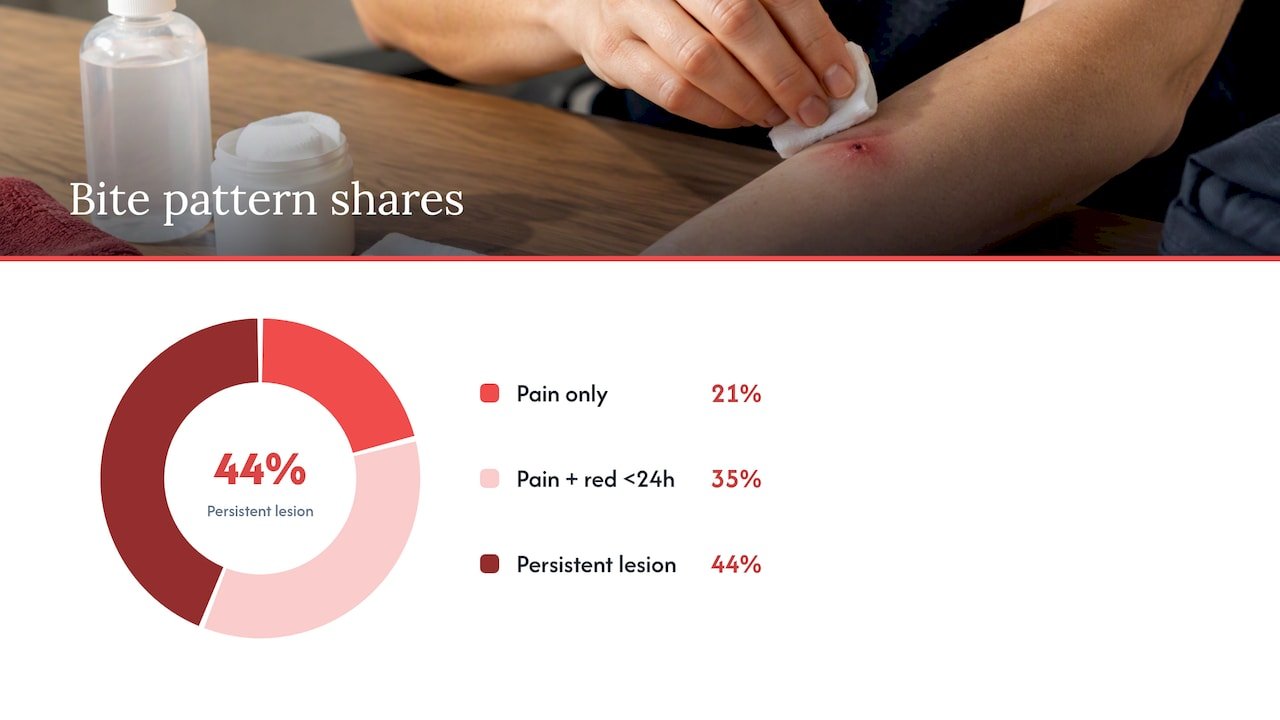
The bites fell into three patterns: pain only (21%), pain with a red mark for under 24 hours (35%), and a persistent red lesion (44%). The median duration of effects was 24 hours, though the range ran from about an hour to a week or more. Some marks linger for a few weeks, and that is normal.
The key finding: none of the 130 bites caused a necrotic ulcer. Healthdirect says white-tail spiders are not considered dangerous to humans.
Why the “flesh-eating” myth refuses to die
The white-tail’s reputation for causing rotting wounds is a myth. The Emergency Care Institute NSW points out that the reputation comes from misdiagnosis, and that doctors should separate a witnessed bite from a skin lesion someone only suspects was a spider bite. A clinical review in Australian Prescriber describes “white-tail spider bite” as an entrenched diagnosis despite a lack of evidence that spider bites cause necrosis or ulcers in Australia.
When a wound turns ugly, the real culprit is often a bacterial infection (such as staph), a diabetic or vascular ulcer, or another skin condition. That matters because the wrong label delays the right treatment. If you wake up with a sore and no spider in sight, do not assume it was a white-tail.
First aid for a white-tail spider bite
Treat it like any painful local bite. The healthdirect guidance is:
- Wash the area with soap and water.
- Apply a cold pack to ease pain and swelling. Wrap it in a cloth rather than putting ice straight on the skin.
- Take paracetamol or ibuprofen if the pain bothers you, following the label.
- Do not apply a pressure immobilisation bandage. That is for funnel-web and snake bites, and it can make a white-tail bite more painful.
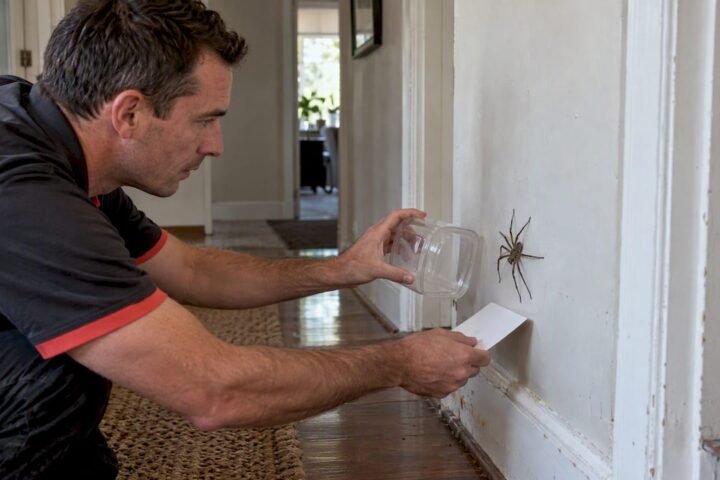
Try to catch the spider if it is safe to do so. A jar and a piece of paper will do. A confirmed identification is useful for a doctor, and it stops a harmless bite being blamed for a different problem later.
When to see a doctor
See a GP or an after-hours service if:
- the pain gets worse after the first day rather than easing
- the redness spreads, the area becomes hot, swollen or leaks pus, or you develop a fever
- a blister or sore is not healing after a couple of weeks
- the person bitten is very young, elderly, or has diabetes or poor circulation
If someone has trouble breathing, swelling of the face or throat, or feels seriously unwell after any bite, call 000. Healthdirect also advises seeking medical advice if symptoms are severe or worsen.
Worried that the wound is something else? The same ECI guidance says an unexplained ulcer needs investigation for underlying causes, not a spider label.
Is it really a white-tail? How to identify the spider
The Australian Museum describes white-tails as having a dark reddish to grey, cigar-shaped body with banded orange-brown legs. The grey abdomen carries faint white spots, and one white spot sits at the tip, which is where the name comes from. Males grow to about 12 mm and females to about 18 mm. The white tip is less obvious on adults.
A few ways to separate them from look-alikes:
- Shape: long and cylindrical, not round or bulbous.
- Behaviour: they wander. The Australian Museum calls them vagrant hunters living under bark, rocks and leaf litter in bush, gardens and houses. You will not find a web.
- Not a redback: redbacks are glossy black with a red stripe and build a tangled web in sheltered corners.
The NSW Environment and Heritage guide lists white-tails among spiders that can bite but are not medically significant, alongside wolf, mouse, huntsman and black house spiders.
Why white-tails turn up in houses and beds
Because they hunt rather than wait in a web, white-tails roam at night looking for other spiders, their main prey. The 130-bite study found that bites happen mostly in the warmer months and disproportionately at night and early morning. Many happened when the spider ended up in bedclothes, towels or shoes left on the floor and got pressed against skin.
That explains the typical bite story: you roll over, feel a sting, and find a long grey spider in the sheets. White-tails are common in homes in eastern and southern Australia, according to the ECI, and Canberra is no exception. The local outlet Region Media has reported white-tails around Canberra and local spider experts saying their reputation is worse than their bite.
How to reduce the chance of being bitten
Most prevention is housekeeping, not chemistry.
- Shake out towels, clothes and shoes before use, especially anything left on the floor.
- Keep bedding off the floor. Tuck sheets in so they do not drape to the ground.
- Seal entry points. The Better Health Channel recommends flyscreens on windows and weather-strips on doors to stop most spiders getting in.
- Reduce hiding spots outside. Stacked timber, leaf litter and clutter against the walls give hunters a base. Move them away from the house.
- Reduce the food supply. Fewer insects indoors means fewer predators. Check light fittings and door gaps.
The NSW environment guidance also notes that broad-spectrum pesticides can kill beneficial insects that prey on spiders, so heavy spraying can backfire. Physical barriers are the more reliable approach, particularly with children and pets in the house.
Our view on white-tails in Canberra homes
We get calls about white-tails every warm season, usually after a bite or after someone finds one in the cot or bed. Our honest advice is that a white-tail alone rarely justifies panic or a heavy chemical treatment.
What we look for instead is why the spiders are there. A steady stream of white-tails usually means there is food (other spiders and insects), gaps around doors and windows, and clutter close to the house. Fixing those does more than a one-off spray. When a treatment is the right answer, we focus on targeted, responsible methods that suit families and pets, and we stand behind our work with a guarantee on effectiveness.
We also try to keep people calm and send them to a doctor when it is the right move. A persistent sore is not something a pest controller can diagnose, and we would rather you have it checked than blame the spider.
— navin
What about pets?
No lethal white-tail bites in pets are documented. The spider that worries vets is the redback. The Animal Poisons Helpline says the main spider associated with envenomation in small animals is the redback, and cats are especially sensitive to the venom, with severe pain, vomiting and paralysis possible.
If your dog or cat suddenly seems distressed, is vomiting, is weak or is acting strangely and you suspect a spider, treat it as urgent. Call your vet. You can also ring the Animal Poisons Helpline on 1300 869 738, which gives expert advice seven days a week from 9am to 5pm AEDT. Outside those hours, go to an emergency vet.
It is worth knowing what a redback looks like and where they hide. Our guide on redback spiders in Australian homes covers the habits and the places to check before reaching in.
Do you need a professional?
Often you do not. A single spider in the bedroom is a housekeeping job. Call a pest controller when:
- you are seeing white-tails or other spiders in large numbers week after week
- redbacks are nesting around play areas, letterboxes, sheds or outdoor furniture
- someone in the household has been bitten more than once
- you want a check of entry points and a treatment plan that is safe for children and pets
We cover this in more depth in our posts on which spiders actually warrant a call to a professional and signs of a spider infestation in Canberra. For a general approach to keeping them out, see keeping spiders out safely.
Our spider service
BugsPatrol is a licensed and insured Canberra pest controller, and we have serviced more than 5,000 homes. Our spider pest control in Canberra service inspects the likely entry points and hiding places, treats where it is needed, and gives you practical steps to keep spiders out. We offer same-day emergency response.
If you would rather have regular cover for spiders and other household pests, our Bronze General Pest plan is A$29.98 per month. The Silver Combined plan is A$55.98 per month, and Gold Complete is A$79.98 per month. Details are on our subscriptions page. You can also see everything we do from our home page.
Common myths about white-tail bites
“A white-tail bite will rot your skin.” No. The confirmed-bite data shows no necrosis, and expert bodies treat the link as a misdiagnosis myth.
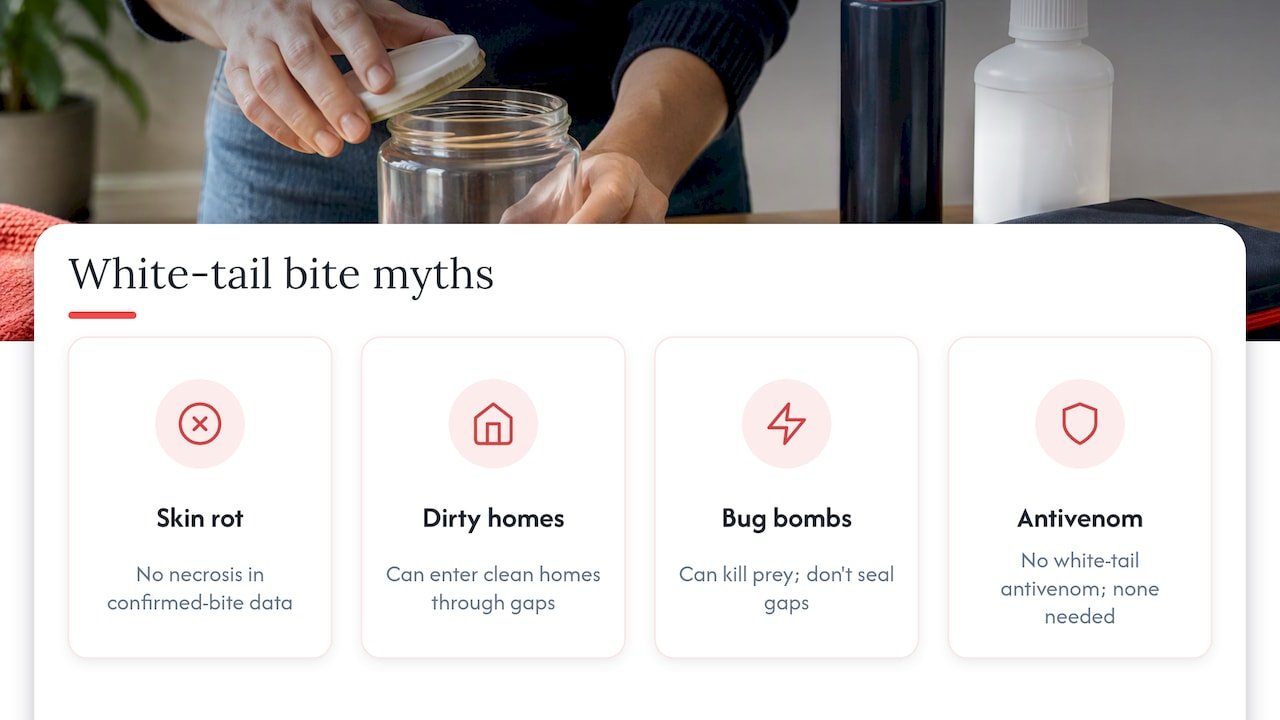
“They only live in dirty houses.” No. They are hunters that wander in from gardens, and a clean house with gaps around the doors can still get them.
“A bug bomb will fix it.” Not reliably. Widespread spraying can kill the insects that feed on spiders and does not fix the entry points.
“Antivenom is the answer to any spider bite.” There is no white-tail antivenom, and none is needed. Even for redbacks, the NSW Poisons Information Centre says antivenom is no longer routinely recommended because trials showed it was often no better than placebo. Cleaning the site and using cold packs is the standard first step for non-emergency bites.
FAQ
Are white-tail spider bites dangerous?
No. They are painful, and the pain was severe in about a quarter of confirmed bites, but they are not considered medically dangerous. They do not cause necrotic ulcers. See a doctor if the pain or redness keeps getting worse.
How long do white-tail spider bite symptoms last?
The median in the 130-bite study was 24 hours, but the range ran from an hour to a week or more. Some people are left with a red, itchy mark for a few weeks. If a sore is not healing after two weeks, get it checked.
What should I put on a white-tail spider bite?
Wash it with soap and water, then apply a cold pack. Use paracetamol or ibuprofen if you need pain relief. Do not use a tight pressure bandage.
How do I get rid of white-tail spiders in my house?
Start with sealing gaps, fitting flyscreens and weather-strips, clearing clutter and shaking out bedding and shoes. If they keep returning, a licensed pest controller can inspect the entry points and treat the problem at the source.
Can my dog or cat die from a white-tail bite?
No lethal white-tail bites in pets have been documented. Redbacks are the real risk, particularly for cats. If your pet suddenly seems unwell, call your vet or the Animal Poisons Helpline straight away.
Sources
- White-tail spider bite: a prospective study of 130 definite bites by Lampona species, Medical Journal of Australia
- Spider bites, treatment, symptoms and first aid, healthdirect
- Bites and stings, Emergency Care Institute NSW
- Spider bite: a current approach to management, Australian Prescriber
- White-tailed Spider, The Australian Museum
- Spiders in Sydney, NSW Environment and Heritage
- Spiders, Better Health Channel
- Spiders, Animal Poisons Helpline
- NSW Poisons Information Centre
- White-tailed spiders in Canberra, Region Media
Recommended
- Check Before Reaching In: Redback Spiders in Australian Homes
- Keep Spiders Out Safely in Australian Homes and When to Call a Pro
- Spider Control in Canberra: Which Species Actually Warrant a Call to a Professional?