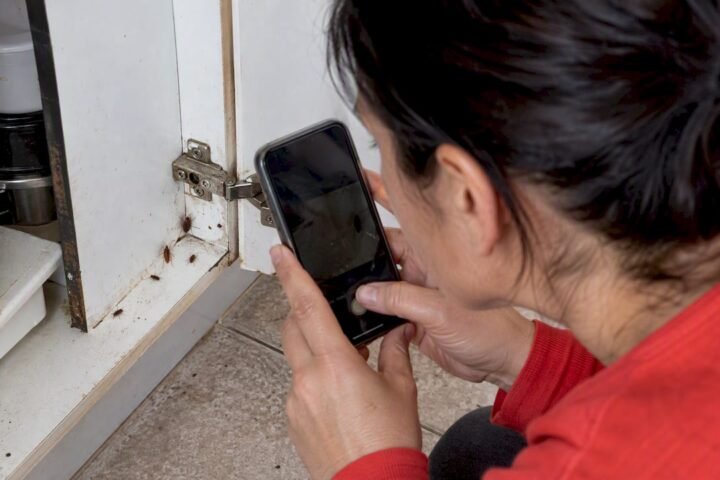
A huntsman in your house is usually best left alone, but seek medical advice if you are bitten or feel unwell. Most huntsmen are not considered dangerous to humans, and they would rather flee than bite. Don’t grab it bare-handed. Watch it from a distance, then guide it outside with a cup and paper, or call a licensed local pest controller if you’d rather not deal with it yourself.
TL;DR:
- Huntsmen have flattened bodies, sideways splayed legs, and no webs; a spider sitting in a web is probably another species.
- Wash a bite with soap and water, apply a cold pack, and monitor it; breathing trouble, fainting, or severe vomiting requires emergency care.
- Health Victoria warns that sprays may increase the activity of spiders on the ground, while huntsmen eat cockroaches and mosquitoes; relocate rather than crush them.
- Seal cracks, repair window screens, add door strips, and reduce insects; call a licensed technician for repeated sightings, inaccessible spiders, or vulnerable household members.
Table of Contents
- How can you tell it’s a huntsman and not another spider?
- Are huntsman spiders dangerous? Venom, symptoms and first aid
- Why do huntsman spiders come into houses?
- How do you remove or relocate a huntsman safely?
- How can you keep huntsmen out of your home?
- When should you call a professional pest controller?
- A calmer way to think about the spider on your wall
- Spider and pest control for Canberra homeowners
- FAQ
- Sources
How can you tell it’s a huntsman and not another spider?
Huntsmen are easy to spot once you know the pattern. They look big and hairy because their legs spread wide, and they move fast, often sideways like a crab. The Better Health Channel notes they can span up to 15 cm across the legs, with front legs longer than the back pair and females larger than males.
Check for these features:
- A flattened body that lets the spider slip into very narrow gaps
- Long legs that splay out sideways, with the front pair noticeably longer
- Brown, gray or mottled coloring, sometimes with banding on the legs
- No web: huntsmen hunt prey rather than trap it, so you’ll find them wandering on walls, ceilings and behind curtains
Common Australian types include the badge huntsman, which lives under loose bark and often turns up behind car sun visors or on dashboards, the banded huntsman, and the social huntsman. Social huntsmen are a species that lives in groups near bark and crevices. A spider that sits in the middle of a web is probably something else.
Are huntsman spiders dangerous? Venom, symptoms and first aid
Huntsmen do have venom, but the risk to healthy people is low. The Australian Museum says no deaths have been recorded from huntsman bites in Australia, and doctors do not group them with medically significant spiders such as the Sydney funnel-web or redback.
No deaths from huntsman spider bites have been recorded in Australia, according to the Australian Museum. Bites can be painful. Seek medical care if you are bitten, especially if symptoms develop.
Because huntsmen are large, a bite can look dramatic. The Emergency Care Institute NSW says bites cause local pain, bleeding and fang marks. Swelling is common too. Some species, such as the badge huntsman, have been linked to sweating, nausea or vomiting, and the University of Melbourne lists the shield huntsman among them.
Huntsmen also have poor eyesight. A frightened one may run toward you by accident, which looks like an attack but isn’t.
If you are bitten:
- Wash the area with soap and water
- Apply a cold pack to ease pain and swelling
- Watch the bite over the next few hours
- Seek immediate emergency care if you are bitten and develop concerning symptoms, such as breathing difficulty, fainting or severe vomiting
- Seek medical care for pain or other symptoms.
Why do huntsman spiders come into houses?
They come in for the same reasons we like being indoors: shelter, food and water. The University of the Sunshine Coast notes they commonly enter homes seeking shelter or prey. Their flat bodies let them squeeze through gaps you’d never notice.
- Food: cockroaches, flies and other insects wander through kitchens and bathrooms, and huntsmen follow them in
- Water: damp bathrooms, laundries and kitchens offer a drink
- Hiding spots: curtains, picture frames, ceiling corners and cars parked outdoors
- Accidental entry: firewood, open windows and gaps around doors let them in, and many are active at night
Don’t assume the visitor leaves quickly. The Australian Museum says most huntsmen live two years or more. One that finds a good hiding spot may stay put for a long time unless you move it along.
How do you remove or relocate a huntsman safely?
The cup-and-paper method is the lowest-risk option, and it’s the one the Australian Museum recommends alongside a broom for wandering spiders.
- Find a clear container big enough to cover the whole spider, legs included, and a sheet of stiff paper or thin cardboard.
- Approach slowly and calmly, then place the container over the spider on the wall or floor.
- Slide the paper between the container and the surface, closing the opening as you go.
- Hold the paper firmly against the rim and carry it outside.
- Release the spider well away from the house, near shrubs or a tree trunk, then step back.
Alternatives include a large tub with a lid, or a broom and cardboard to guide the spider into a container. If the spider sits near an open window, you can sometimes encourage it out gently.
Pro Tip: If the spider is darting around, wait for it to settle on a vertical surface before you trap it. A still huntsman is far easier to catch.
A few things to avoid. Don’t pick one up bare-handed: huntsmen can cling when handled, which raises bite risk. Skip indoor insecticide sprays as a first move too. Health Victoria cautions that spraying ground-dwelling spiders may increase their activity. And don’t crush the spider: it’s unnecessary, and it wastes a useful hunter.
How can you keep huntsmen out of your home?
Prevention comes down to blocking entry and cutting the food supply. Health Victoria’s pest control guidance recommends the basics, and they work.
- Fit flyscreens to windows and repair any holes
- Add weather strips or draft excluders under doors
- Fill cracks around window frames, pipes and doors
- Plant trees and shrubs away from the house, and trim back anything touching walls
- Move woodpiles and compost away from exterior walls
- Control cockroaches and other insects, since they’re the huntsman’s food
- Keep clothes off floors, and check shoes and bedding before use
- Close car windows when parked, as huntsmen like to hide in vehicles
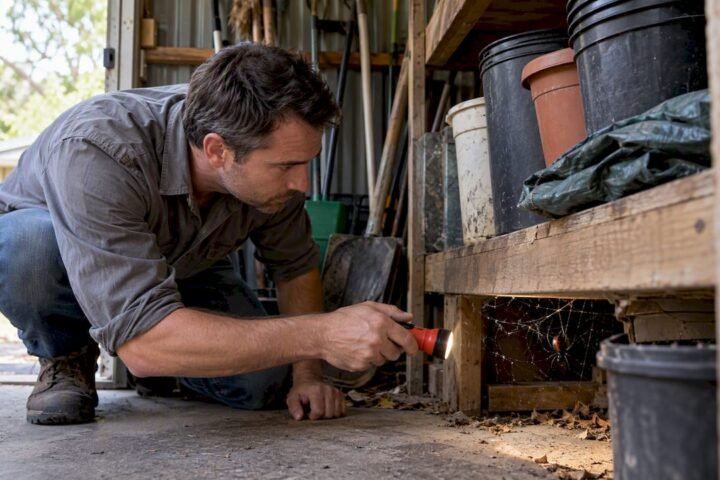
Pro Tip: Do a slow walk around the outside at dusk with a flashlight. Gaps that glow with light from inside are gaps a spider can use.
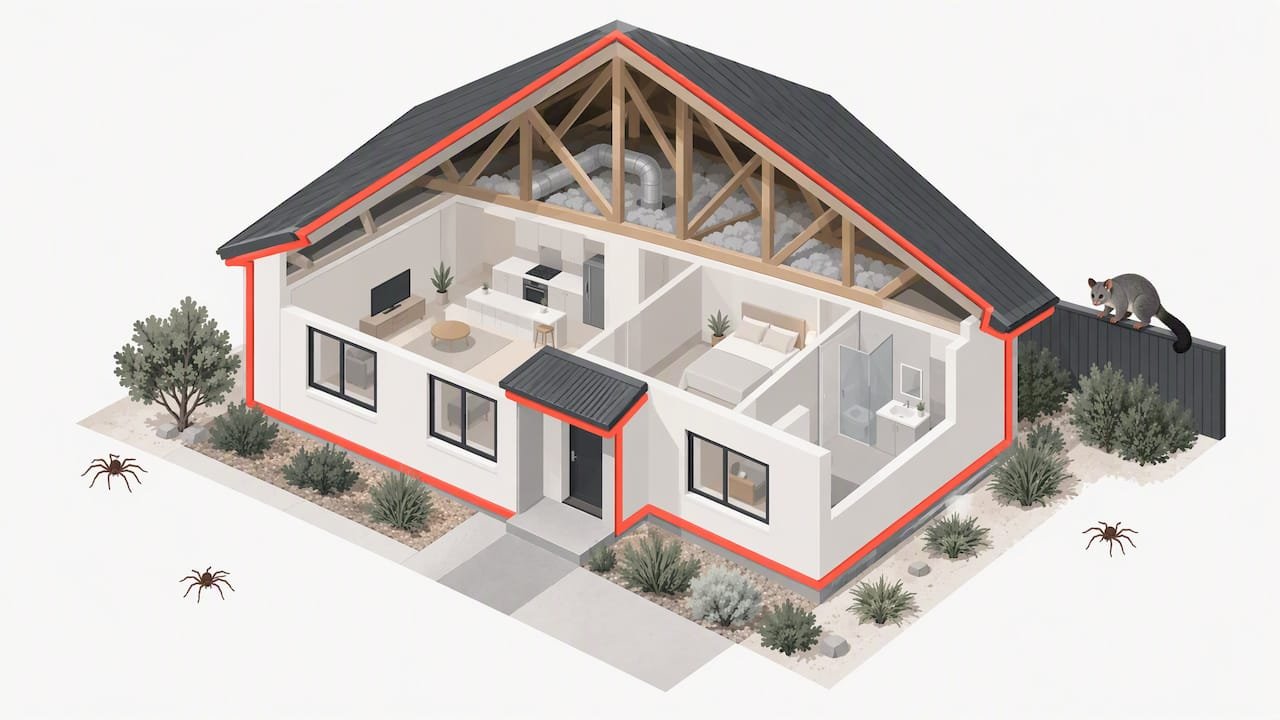
Exclusion works for more than spiders. If possums or other animals are also getting into your roof space, the same sealing mindset applies, and possum guard installation is one example of property-proofing, though that service is based in Sydney. For more on keeping spiders out, see our guide to keeping spiders out safely.
When should you call a professional pest controller?
DIY relocation works well for the odd visitor. Call a licensed technician when it stops being odd.
- You keep finding huntsmen indoors week after week
- The spider is somewhere you can’t safely reach, like a high ceiling or a roof void
- Someone in the household is vulnerable, such as a young child or a person with a health condition
- Your own attempts haven’t solved it
A professional visit typically covers an inspection to find entry points and prey sources, targeted exclusion work, advice on long-term prevention, and follow-up or a maintenance plan. If you’re in Canberra, our licensed technicians cover the city and surrounding suburbs. Our local article on which spider species warrant a call can help you decide.
A calmer way to think about the spider on your wall
We’ve worked in Canberra homes, and huntsmen can frighten people despite generally posing little danger to humans. It eats cockroaches and mosquitoes, so it’s a free helper as long as it stays out of your bedroom. The NSW Environment and Heritage pages describe huntsmen the same way, as live-in pest controllers. Relocate it gently, seal the gaps, and keep the bite advice above in mind. If you develop systemic symptoms, seek immediate emergency care.
— navin
Spider and pest control for Canberra homeowners
If you’d rather not play catch-and-release, we handle it. Our licensed technicians offer spider control and fast pest removal across Canberra, using safe treatments with families and pets in mind. We inspect, find how spiders and their prey are getting in, and fix the cause rather than just the symptom. Our positioning is simple: modern detection methods, a prompt response, and treatments intended to be effective.
If huntsmen keep coming back, ongoing protection can make more sense than repeated one-off visits. Our maintenance plans start at $29.98 per month for Bronze General Pest.
Ready to get rid of the problem for good? Book a spider control visit with us and we’ll get a technician to your door.
FAQ
How poisonous is the giant huntsman spider?
Huntsmen are venomous, but the venom is not considered dangerous to healthy people. Bites usually cause local pain and swelling, and the Australian Museum reports no recorded deaths in Australia.
Are huntsman spiders good to have around the house?
Yes, in many ways. They hunt cockroaches, mosquitoes and other household pests, and the University of the Sunshine Coast describes them as hidden heroes. If one bothers you, relocate it gently rather than killing it.
How long do huntsman spiders live?
Most species live about two years or more, depending on the environment and how many predators they face. The Australian Museum explains that they moult as they grow, which shapes their seasonal patterns.
Do huntsman spiders bite?
They can, but they are reluctant to. A huntsman usually runs away, and bites tend to happen when one is handled, trapped against skin or cornered. Use the cup-and-paper method instead of your hands.
Sources
- Spiders – pest control
- The Huntsman spider – our hidden and hairy heroes | UniSC | University of the Sunshine Coast, Queensland, Australia
- Emergency Care Institute New South Wales
- Spiders commonly found in Australia