If you have searched “what do bed bug bites look like australia”, you might be hoping an image or itch pattern will give you a clear answer. The honest truth is that bites cannot confirm bed bugs on their own. They can look like mosquito or flea bites, eczema, fungal rashes, or hives, and some people do not react at all. Treating a bedroom on suspicion can waste money and delay the real fix, whether that is bed bugs, another pest, or a skin issue.
This guide uses a confirm-before-treat process so you can act on evidence, not anxiety. You will learn why bites are the weakest evidence you have, what bed bug bites look like in Australia and what they mimic, why a wrong ID costs more than treatment, and what to gather for a 15-minute check. Then we walk through four steps: log bites and look for a pattern, inspect mattress seams, bed frames and the rest of the room, weigh the evidence, and get confirmation before booking. Finally, we cover calming bites, when to call a licensed pest manager, and your decision path.
Why Bites Are the Weakest Evidence You Have
The US EPA states plainly that bites on the skin are a poor indicator of a bed bug infestation. They can resemble mosquito or chigger bites, rashes such as eczema or fungal infections, or hives.
Nor can their absence clear you: healthdirect notes about 1 in 5 people do not react to bites at all, so a bite-free household is not evidence of no bed bugs.
Timing compounds the guesswork. The CDC says most people notice bites one to several days after being bitten, and healthdirect says a reaction can take up to 9 days. A bite found this morning may not relate to last night.
Treat bites as a reason to start checking, never a reason to book treatment alone. How to Confirm a Bed Bug Infestation sets out the evidence that actually counts.
What Bed Bug Bites Look Like in Australia and What They Mimic
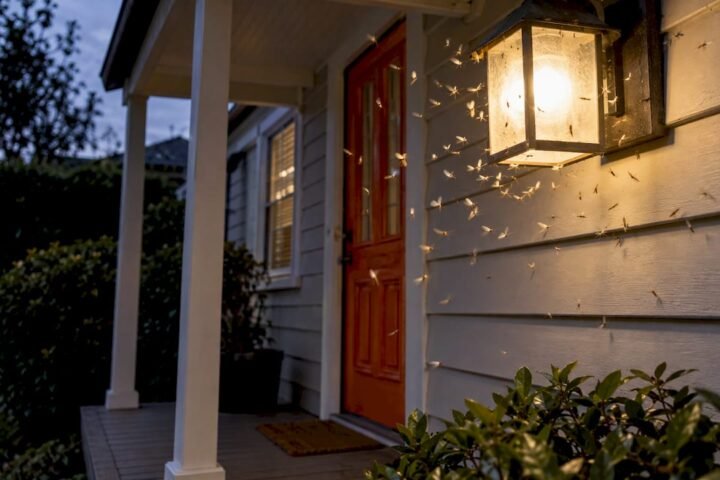
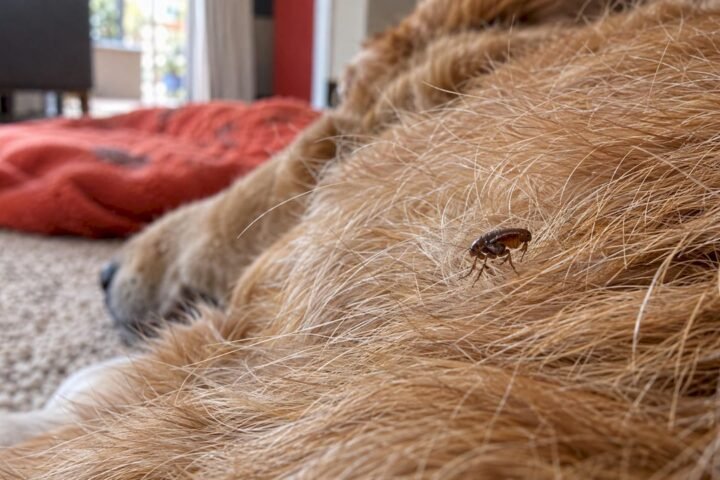
Even with that unreliability, it helps to know the range. Healthdirect describes itchy welts up to 2 cm across, usually on skin exposed while sleeping. The pattern is not diagnostic: the CDC says bites resemble mosquito or flea bites and may appear randomly or in a straight line, so a neat row is a hint only. In warmer months, mosquito bites and flea bites are common explanations worth ruling out first. The EPA also lists chigger bites, eczema, fungal rashes and hives as lookalikes.
Context clues matter. Recent travel or second-hand furniture, a pet with fleas, a new washing powder or a known eczema flare can all explain bites without bed bugs.
Treat this section as a filter for your expectations, not a decision tool. For local likelihood, see Are Bed Bugs Common in Australia? What Canberra Residents Need to Know.
Why a Wrong ID Costs More Than a Treatment
If those lookalikes did not settle the question, this is why it matters. The US EPA warns that carpet beetles are easily mistaken for bed bugs, and a misidentified infestation gives the real insects more time to spread through the house.
Money spent treating a pest you do not have is simply gone, which is why understanding what drives bed bug removal cost in Canberra matters before you book anything.
A wrong call also delays the right fix. If the bites are flea-related, eczema or a fungal rash, that underlying cause keeps going while you chase the wrong pest. Unnecessary pesticide use in a bedroom carries its own risks and is avoidable when identification comes first.
Suspicion runs high for good reason. As a historical figure only, RACGP reported a 4,500% rise in Australian bed bug infestations between 2000 and 2006. That is context, not current conditions.
This section exists to talk you out of a booking you may not need, and the checks ahead are how you decide.
Before You Start: What You Need for a 15 Minute Check
Before you start, gather what you need: a torch, a magnifying glass, a white sheet of paper or light-coloured cloth, gloves, a few sealable bags, and your phone or a notebook for a bite log. If you have travelled recently, the same kit suits a hotel room inspection on your next trip.
Work in daylight with the room quiet. Do not strip or move the bed first, because disturbing bedding can scatter evidence before you have seen it. Seal anything you catch in a bag, or photograph it beside a coin for scale; taping a specimen to card destroys detail.
A second pair of hands helps, since mattress seams and the underside of the frame are far easier to inspect with help.
Set your expectations honestly: this check gathers evidence. It will not confirm bed bugs on the spot. From here, the first task is logging what you have noticed.
Step 1: Log the Bites and Look for a Pattern
With your notebook ready, start the log tonight. For each bite, record the date, the time you noticed it, where on the body it appeared and its approximate size. A dated record beats memory, particularly when reactions run late.
Treat pattern as a clue only. The CDC describes bites appearing randomly or in a straight line, so a neat row of three is a hint, not proof.
Remember: reactions can lag by days and roughly 1 in 5 people show none at all, so the log is a prompt to keep looking, not a final score.
Log competing explanations alongside: new bedding or detergent, pets, time outdoors at dusk, or a known skin condition.
The log tells you whether to keep looking, nothing more. For where to check next, see Where to Look for Bites and Signs in the Home.
Step 2: Inspect Mattress Seams, Bed Frames and the Rest of the Room
With your bite log started, move to the bed itself. Begin at the mattress seams and piping, which healthdirect names as the most common hiding place, then work along the frame and headboard.
Then widen the search. Healthdirect lists bedside tables, picture frames, behind wallpaper, under carpet edges and behind skirting boards as common harbourage points.
What counts as a physical sign:
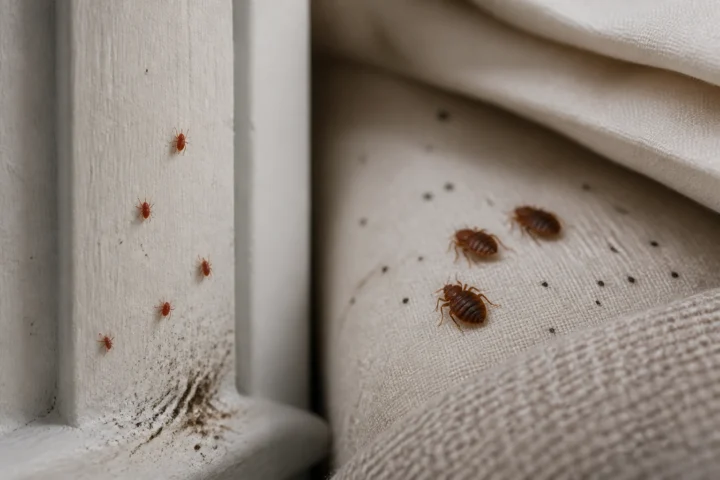
- Live bugs, shed insect skins or eggs
- Brown faecal spotting on the mattress
- Spots of blood on sheets or the mattress
Look for adult bed bugs up to 6 mm long (healthdirect). A sickly sweet odour is a late indicator only: healthdirect links it to large infestations, not early ones.
Extend the check beyond the bedroom. Second-hand furniture, luggage from a recent trip and a shared laundry basket are common arrival routes. Our guide to checking luggage and a room for bed bugs walks through those spots.
Be honest about the result. Finding nothing in one 15-minute pass is not a clearance, because low-level infestations are hard to spot. Recheck later.
Next, weigh what you have found.
Step 3: Weigh the Evidence and Reach a Verdict
As established, bites alone are never enough, what moves the needle is physical evidence.
Add one physical sign, such as faecal spotting or a shed skin in a seam, and you reach strong suspicion.
Two or more physical signs in the sleeping area is the real evidence. That is when waiting and watching stops being sensible.
Nothing found after two weeks of logging plus a second inspection? Recheck, revisit the other causes, and consider a professional inspection rather than a treatment.
One honest gap: no cited health or regulatory source describes a formal home confirmation test, so this is a weight-of-evidence call, not pass or fail. Suspicion-driven bookings waste money, which is why the same confirmation-first logic applies to any pest concern.
Step 4: Get Confirmation Before You Book
Step 3 gave you a verdict, not a diagnosis. There is no approved do-it-yourself test that confirms bed bugs, so confirmation comes from a pest professional who inspects harbourage points and identifies any specimen found. If you have caught something, seal it in a bag, or photograph it clearly beside a coin for scale so an inspector can work from the image.
Reconcile the official advice in this order. The EPA stresses identifying the pest correctly first, while healthdirect advises contacting a licensed pest management company if an infestation is suspected. Confirm the signs, then book. Never book on bites alone, and never wait once physical signs are found. That is the point to get a professional bed bug inspection booked fast.
Bed Bug Bite Treatment: Calming the Bites Themselves
Once confirmation is settled, the bites you already have still need managing. That care is separate from pest control, and no treatment in the room will settle an itch you are carrying now.
Wash the affected skin gently with soap and water, then resist scratching. Intense itching can lead to excessive scratching and possibly a secondary skin infection (CDC). Ask a pharmacist about suitable anti-itch options, and see a GP if bites look infected, keep spreading, or trigger a severe reaction such as enlarged bite marks or painful swelling.
Reassure yourself honestly: bed bugs are not known to spread disease (CDC). The CDC notes the main effects are itching and sleep loss, with allergic reactions rare. Uncomfortable, yes, but not infectious.
Pest products are formulated for surfaces, not skin, if in doubt, ask a pharmacist before applying anything.
Soothing a bite does nothing to an infestation, and treating a bedroom does nothing for the bite you already have. For anything beyond basic itch relief, speak to a pharmacist or GP.
When the Signs Are There: Booking a Licensed Pest Manager
Once bites are soothed, the question turns to the room. Healthdirect advises calling a licensed pest management company if an infestation is suspected.
For ACT readers, BugsPatrol is a locally owned and operated Canberra company based in Throsby, servicing the ACT and surrounding NSW regions for residential and commercial customers. Bed bug elimination sits alongside their termite control, rodent, spider and fly services, so a confirmed problem can be handled in one visit rather than split across providers. BugsPatrol states its plans include year-round protection with 12-month warranties, easy monthly payments, no upfront fees and rolling cover, delivered by fully licensed technicians.
Before booking, ask what the inspection covers, what a follow-up visit involves, and how soon after treatment you can sleep in the room.
Your Confirm-Before-Treat Decision Path
One line to keep: bites open the question, physical signs in the sleeping area answer it, and only confirmation justifies a treatment.
That is why the path runs in a fixed order, as covered in the four steps above.
Both outcomes are legitimate. If bites are your only finding, doing nothing is a reasonable decision that saves you money and an unnecessary pesticide treatment. If physical signs are present, booking treatment is equally reasonable, because delay lets the infestation spread.
Where signs exist, BugsPatrol provides professional bed bug inspection and treatment for homes and businesses across Canberra, the ACT and surrounding NSW.
Start your bite log tonight. Check the mattress seams this week. Everything else follows from what you find there.
Conclusion
Following the four steps above protects your wallet and avoids unnecessary treatment. If physical signs are present, prompt action is reasonable, and BugsPatrol provides professional bed bug inspection and treatment for homes and businesses across Canberra, the ACT and surrounding NSW. Your next step is simple: start your bite log tonight and check the mattress seams this week. Let evidence, not fear, guide your decision.