A well-made snap trap and a good electronic trap can both kill a rodent quickly. What decides the result is whether the trap suits the animal (mouse or rat), where it sits, and how often someone checks it. Snap traps are cheap, reusable and well regarded for welfare when used properly. Electronic traps cost more but offer no-touch disposal and an enclosed chamber. If the problem is more than one or two animals, getting the species and placement right is the real work, and that is where a licensed technician saves you weeks of guessing.
TL;DR
- Snap traps are the low-cost, reusable choice. Electronic traps cost much more but let you dispose of the rodent without touching it.
- Both are recognised as humane when well designed, correctly set and checked regularly. A trap sized for the wrong animal, or placed badly, fails on both welfare and results.
- Identify the pest first: mouse traps will not reliably kill a rat, and rat traps may be too slow for a mouse.
- Open snap traps must be kept away from children, pets and birds. Enclosed stations or electronic units suit kitchens and family areas.
- Glue traps are banned in the ACT, so they are not an option in Canberra.
Table of Contents
- How the two trap types work
- Start with the animal: mouse or rat?
- Welfare: which is more humane?
- Do electronic traps work as well as snap traps?
- Safety around children, pets and wildlife
- Cost and running costs
- Placement, baiting and checking
- Which trap for which situation
- When traps alone are not the answer
- Getting it handled in Canberra
- FAQ
- Sources
How the two trap types work
Snap traps (also called break-back traps) use a spring-loaded bar. When the rodent takes the bait, the bar swings down onto the back of the head or the upper neck. The NSW Department of Primary Industries’ rodent code of practice says these traps are designed to kill rapidly, usually causing irreversible loss of consciousness within one minute. The same document says traps with spikes or serrated jaws should not be used.
Electronic traps lure the rodent into a chamber where it completes a circuit across metal plates and receives a high-voltage shock. Trade press describes them as killing instantly and allowing no-touch disposal, and also as expensive and needing to be kept out of reach of children and pets. They run on batteries, so power is part of the running cost.
The same NSW code classes electrocution traps alongside snap traps among the most humane rodent control methods, provided they are well designed, set and monitored appropriately.
Start with the animal: mouse or rat?
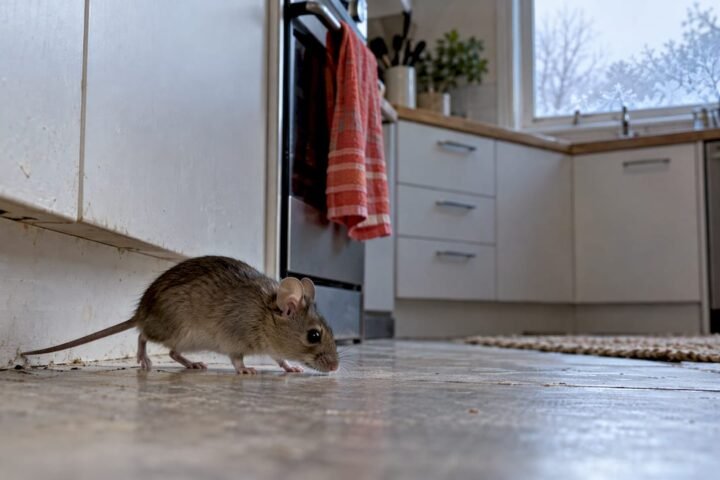
This is the step most people skip, and it is where most trap failures begin. Cornell’s pest management program notes that a rat trap may be too slow to kill a mouse, while a mousetrap won’t deliver enough force to kill a rat. A weak strike on a rat is a welfare problem as well as a pest problem, because the animal may be injured rather than killed.
Australia’s pest management industry code takes the same line. The AEPMA Code of Best Practice for Rodent Management requires professionals to use devices matched to the target species: mouse traps must not be used for rats and the reverse. Rat versions of any trap type need bigger springs, bigger bodies and larger entrances, as Professional Pest Manager points out.
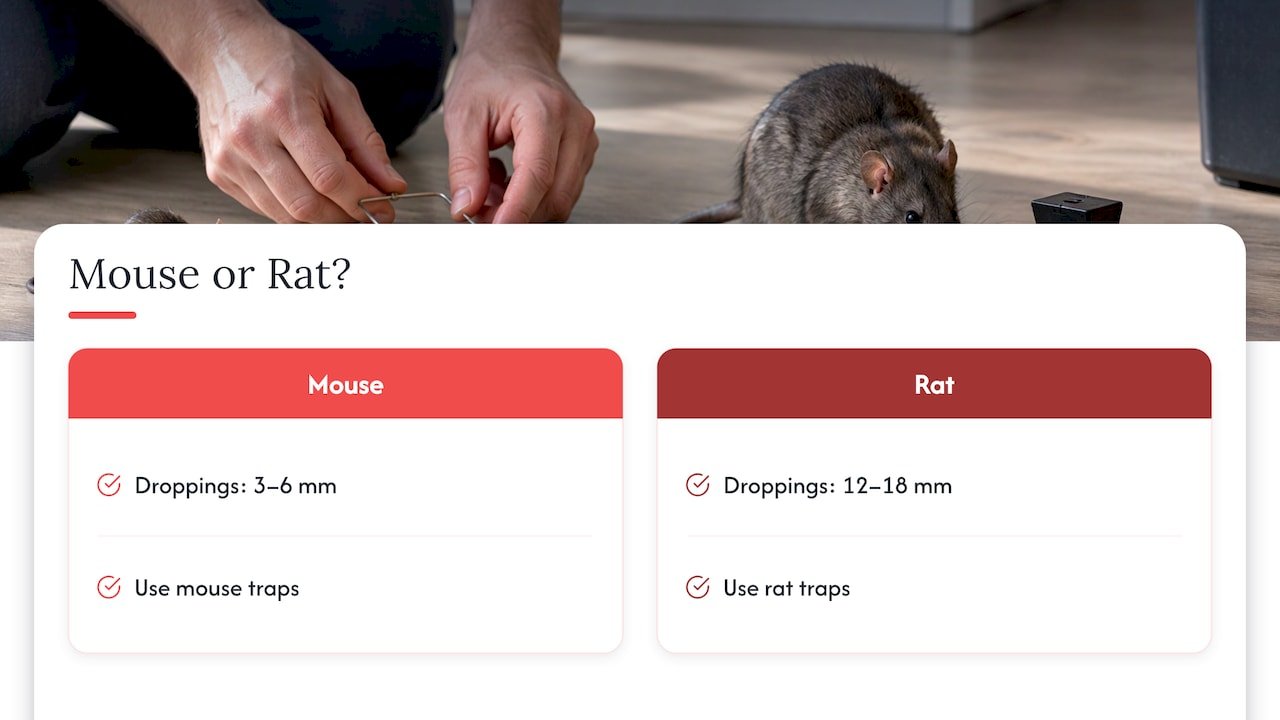
A quick way to tell them apart is the droppings. Rat droppings are roughly 12 to 18 mm, mouse droppings roughly 3 to 6 mm. Our guide to rat versus mouse droppings shows the difference, and how to tell rats from mice before booking covers the other signs: gnaw marks, rub marks, noises and where the activity happens.
Welfare: which is more humane?
Both types can be humane. Neither is humane by default.
The RSPCA’s position is that well-designed snap traps, used properly, consistently ensure a quick death and are more humane than live trapping. The conditions are that the animal’s head is fully inside the trigger area and that the trap is reliably set. A trap that fails should be discarded and replaced with a different design or brand.
Research backs the point that design numbers alone do not tell the story. A 2024 technical assessment in Pest Management Science found that where the strike lands on the skull or cervical spine matters a great deal, so trap quality cannot be ranked from technical parameters alone. A 2023 expert panel assessing welfare impact found that snap-trap welfare scores fall apart if non-professionals place traps incorrectly or use low-quality traps, including mouse traps used on rats.
The practical lesson: with either type, quality of the device and correctness of setup count for more than the category.
Why glue traps are not on the list
Glue boards cause prolonged suffering, the RSPCA opposes them, and they are banned in the ACT as well as Victoria. If a shop or website offers one to a Canberra household, it is not the answer.
Do electronic traps work as well as snap traps?
Both kill effectively when the rodent actually enters and triggers them. The differences are practical rather than about kill power.
- Capture style. A snap trap sits open and the rodent steps on a pedal. An electronic trap is an enclosed tunnel, which some wary animals enter more slowly. Either way, rodents are cautious around new objects, which is why the Western Australian health department advises leaving traps unset for a few days across the runways so the animals get used to them.
- Capacity. A snap trap holds one animal and must be cleared and reset each time. Electronic units generally allow repeated kills before you need to empty them, which suits a continuing indoor problem.
- Power. A battery that is running low weakens the shock, which is bad for both effectiveness and welfare. Replace batteries when the low-battery indicator warns you.
- Size match. Electronic units are usually made for either rats or mice, so the species check applies here too.
The independent evidence compares welfare and design more than it compares catch rates head to head. So choose on the practical points above, not on a claim that one type always catches more.
Safety around children, pets and wildlife
An open snap trap is a hazard to a toddler’s fingers, a curious dog or a bird. The AEPMA code asks professionals to put break-back traps in lockable, tamper-resistant stations where possible to protect children and non-target animals. At home, the same logic means open traps belong only where nothing but rodents can reach, such as roof voids and sub-floors. Kitchens, hallways and anywhere pets roam call for an enclosed station or an electronic unit.
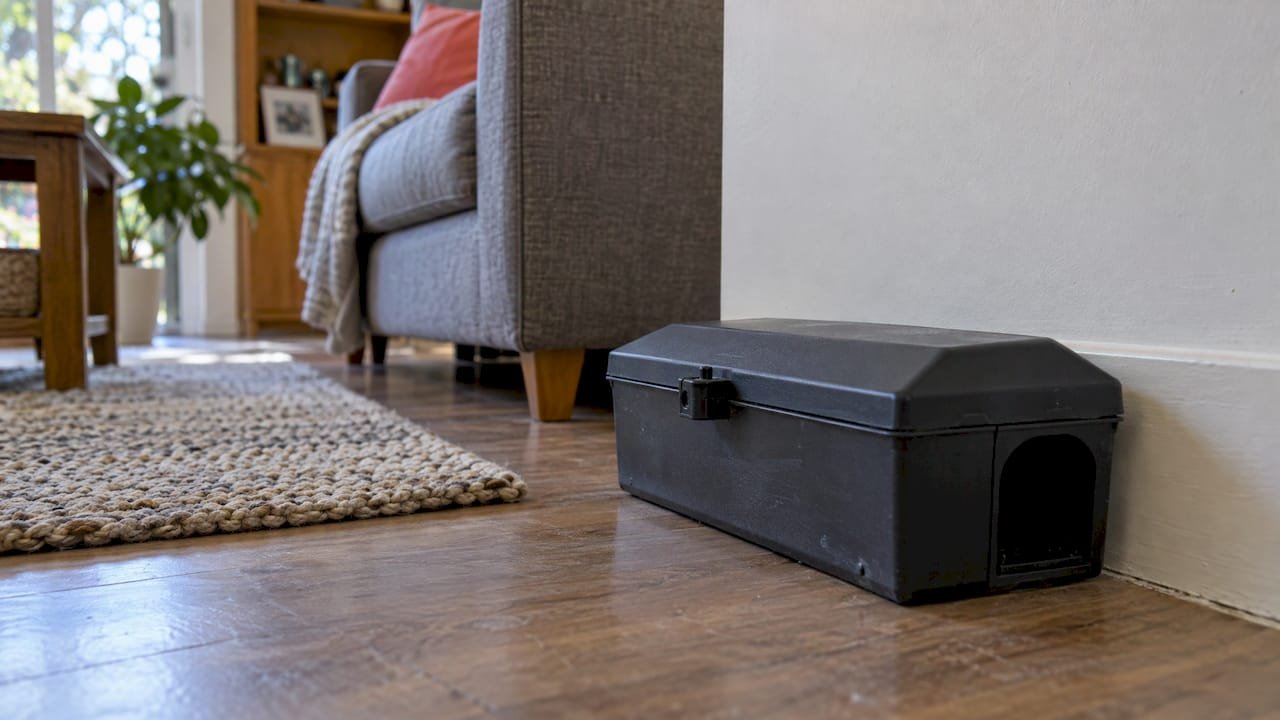
Electronic traps are not a free pass. Because they deliver a high-voltage shock, trade guidance says to keep them out of reach of children and pets. Place them so the entrance faces a wall and the unit cannot be knocked over or pulled out.
For any trap, keep it away from food preparation areas, and wear gloves when handling it or the catch.
Cost and running costs
Snap traps are among the cheapest pest devices you can buy, often a few dollars each, and you reuse them. The catch is time: you will handle, clean and reset each one. Electronic traps cost many times more up front, and you add battery replacements. Trade press calls them expensive but the most humane option for instant kills and no-touch disposal. For a single mouse in a laundry, the low price of a snap trap usually wins. For a recurring indoor problem where you do not want to handle carcasses, an electronic unit earns its price.
Placement, baiting and checking
The trap you pick matters less than how you use it. The RSPCA and state health guidance agree on the essentials:
- Use several traps, not one. Rodents rarely live alone, and a single trap shows only one animal’s habits.
- Set them along walls. Place snap traps parallel to and touching the wall, the route rodents follow. The RSPCA recommends a trigger area where the head ends up fully inside.
- Bait lightly. Fresh peanut butter, dried fruit or bread works; bacon, fish and chocolate are also suggested by Healthy WA. Put bait only in the marked bait area.
- Check every day. The NSW code says traps should be checked at least once a day, preferably twice, between sunrise and sunset. Any injured animal must be killed humanely and quickly.
- Clean and reset. Wash snap traps in warm soapy water rather than strong-smelling disinfectant, brush out electronic chambers and keep the plates dry.
- Keep going until activity stops. The NSW code says traps are reset until rodent activity ceases.
Placement height matters too. Roof rats travel along beams and fence tops, while Norway rats stay low and burrow, so the trap has to be where the animal actually runs. Our post on signs of rats around Australian homes lists the places to check before you place anything.
Which trap for which situation
| Situation | Better fit | Why |
|---|---|---|
| One or two mice in a laundry or garage | Snap trap (mouse size) | Low cost, reusable, quick kill when placed along the wall |
| Rats in a roof void or sub-floor | Rat-size snap trap in a tamper-resistant station | Strong enough strike, out of reach of children and pets |
| Ongoing indoor activity, you do not want to touch carcasses | Electronic trap of the right size | No-touch disposal, enclosed chamber |
| Home with young children, dogs or chickens | Enclosed station or electronic unit | Keeps the mechanism out of reach |
| Café, shop or warehouse needing a record of control | Professional program | Documented, repeatable and matched to the species |
If you are weighing every option, our overview of rat control methods covering baits, traps and proofing sets traps next to the other tools.
When traps alone are not the answer
Traps remove animals that are already inside. They do not explain how those animals got in. A mouse can pass through a gap of about the width of a pen, and rats can gnaw through softer materials, so a trapped-out home with open entry points fills up again. That is why professional programs pair trapping with sealing and proofing. Our notes on rodent proofing in Canberra and rodent prevention tips explain the entry points we look for.
If you manage a food business, the stakes are higher, because evidence of rodents can cost you an audit. See our guide to audit-ready rodent control for Canberra food warehouses.
Getting it handled in Canberra
If you are seeing droppings daily, hearing movement in the ceiling, or run a business where a rodent sighting is a risk, you do not want to spend a fortnight swapping traps. BugsPatrol provides rodent removal for homes and businesses across Canberra. Our technicians are licensed and insured, we focus on treatments that are responsible around families, children and pets, and all our treatments come with a guarantee of effectiveness. We also offer same-day emergency service, and we have serviced more than 5,000 Canberra homes over 10+ years.

To book, start from our rodent pest removal page or the BugsPatrol home page.
Our view
Most people who ask us about snap traps versus electronic traps are really asking a different question: how do I make this stop? The trap type is the smaller part of the answer. What decides the outcome is identifying whether you have mice or rats, finding where they travel, and closing the way in.
That is why our technicians start with the animal and the property, not the device. A trap that is right for a mouse in a pantry is wrong for a rat in a roof void, and a trap that is right in an empty roof void is wrong in a family home with a dog. Getting those calls right the first time is the difference between a problem that ends and one that returns in a month.
For families and for businesses, we want rodent control that is effective and responsible around children and pets. If you are already seeing signs, call us early. Early action means fewer animals, less damage and a quicker fix.
navin
FAQ
Are electronic rat traps any good?
Yes, when they are the right size for the target animal and the batteries are fresh. Official guidance in NSW places electrocution traps among the most humane rodent control methods when well designed and monitored. They suit indoor spots where you want no-touch disposal, and they should be kept away from children and pets.
Are snap traps humane?
Well-designed snap traps are designed to kill rapidly, and the RSPCA regards them as more humane than live trapping when used properly. The head must be fully inside the trigger area, the trap must be matched to the species, and you should check it every day. A trap that fails should be replaced with a different design.
Can I use a mouse trap on a rat?
No. A mousetrap does not deliver enough force to kill a rat, which causes suffering and leaves the problem in place. Australian professional guidelines require rat-sized devices for rats, with bigger springs, bodies and entrances.
Can I use glue traps in Canberra?
No. Glue traps are banned in the ACT, and the RSPCA opposes them because of the severe suffering they cause. Snap or electronic traps, or professional rodent control, are the options.
Sources
- NSW DPI rodent code of practice and SOP3: trapping of rodents
- AEPMA Industry Code of Best Practice for Rodent Management
- Professional Pest Manager: mouse traps and rat traps
- Cornell CALS: managing mice and rats
- RSPCA Australia knowledge base: most humane way to kill pest rats and mice
- Pest Management Science: technical assessment of mechanical and electronic traps
- Animal welfare impact of fourteen rodent control methods
- Healthy WA: keeping rats and mice under control