The fastest reliable fix for birds under solar panels is a professionally fitted exclusion system, either mesh or custom guards installed without drilling into the panel frames. If you already hear movement or see droppings, don’t pull anything out yourself. Active nests can involve eggs or chicks that come with legal protections, and disturbing them the wrong way creates a bigger mess than the one you started with.
Until a professional gets there, keep the situation from getting worse.
- Stay off the roof and keep kids and pets away from the area under the array.
- Take photos from the ground of gaps, droppings, or nesting material poking out from the panel edges.
- Book an inspection rather than poking a broom or hose up there yourself.
- Note the time of day you hear activity. It helps a technician judge whether the nest is active.
Pro Tip: If you can hear chirping or scratching at dawn but not in the evening, you’re likely dealing with an active nest with young inside. That timing detail alone can change how a technician plans the job.
Table of Contents
- Signs You Have Birds Under Solar Panels
- Why Do Birds Nest Under Solar Panels?
- Risks and Damage Birds Can Cause Under Panels
- Legal and Animal Welfare Rules Before Removing a Nest
- Prevention and Exclusion Methods Compared
- DIY vs. Professional Bird Proofing: When to Call a Pro
- Costs and Timeline for Solar Panel Bird Proofing
- How a Licensed Pest Team Approaches Solar Panel Bird Proofing
- Where to Check Rules and Technical Guidance
- The Real Problem Isn’t the Birds, It’s the Gap
- Get Your Solar Panels Professionally Bird Proofed
- Sources
Signs You Have Birds Under Solar Panels
A single pigeon landing on your roof for a snack isn’t a crisis. A settled nesting problem looks and sounds different, and catching it early saves you from a bigger cleanup later.
- Dawn and dusk noise. Cooing, scratching, or fluttering coming from under the panels at consistent times of day usually means birds are roosting there overnight, not just passing through.
- Repeated traffic patterns. Watch for the same birds flying to and from one specific corner of the array over several days. One or two visits is exploration. Daily visits to the same gap is settlement.
- Droppings and debris. Check gutters, downpipes, and the ground beneath the panels for droppings, feathers, or twigs and grass poking out from the panel edges. This is a strong indicator of an active or previous nest.
- Visible gaps. From the ground, look for daylight showing through the frame supports where mesh or flashing has come loose. Pigeons need surprisingly little clearance to squeeze underneath.
Photograph anything you find, especially droppings and gaps, before booking a professional. It shortens the inspection and gives the technician a head start on locating repeat entry points before they climb up.
Why Do Birds Nest Under Solar Panels?
The gap between a panel and the roof creates a sheltered, weatherproof cavity with a stable temperature, which is close to ideal shelter from a pigeon’s point of view. That combination of shelter, warmth, and protection from predators is exactly what makes rooftop arrays so attractive to pigeons and other bird species, and why one successful nesting season tends to repeat itself year after year in the same spot. Once a nest succeeds, the same birds and often their offspring come back to that gap the following season, which is why the problem tends to compound rather than resolve on its own.
Risks and Damage Birds Can Cause Under Panels
Bird activity under panels isn’t just a cosmetic nuisance. Left alone, it can turn into a genuine safety and financial problem.
- Fire and electrical hazards. Dry nesting material sitting close to cabling and connectors, combined with reduced airflow under the panel, raises the risk of overheating and fire in ways that aren’t obvious from the ground.
- Performance loss. Droppings and feather debris accumulate on cells and connectors, and a soiled, poorly ventilated array produces less electricity than a clean one.
- Structural and gutter damage. Nesting material and droppings wash into gutters during rain, causing blockages, staining, and, over time, corrosion on fixtures and roof sheeting.
- Parasites and secondary pests. Bird mites and other parasites can hitch a ride into roof cavities, and an established nest often attracts other pests looking for the same easy shelter.
- Warranty and insurance exposure. Some solar warranties specify how the system must be maintained and accessed, and unresolved bird damage or unapproved repair attempts can complicate a claim if the array is damaged.
A single nesting season rarely causes catastrophic damage on its own. It’s the repeat cycle, nest after nest, gutter after gutter, that turns a minor nuisance into a real repair bill.
Legal and Animal Welfare Rules Before Removing a Nest
Active nests, eggs, and dependent chicks are frequently protected under wildlife regulations, which means the timing of removal matters as much as the method. Rip out an active nest at the wrong time and you risk both a welfare problem and a compliance issue.
- Watch before you act. Observe from the ground for a day or two. Consistent movement in and out at regular intervals usually signals an active nest with young inside.
- Check with the right authority. Local wildlife or environment offices can clarify species-specific protections, and government pages on species behavior and local guidance are a useful starting point if you’re unsure what you’re dealing with.
- Prep without disturbing. Arrange your professional inspection now, but leave the actual gap alone until a technician confirms whether the nest is active or empty.
- Avoid the “quick clean” temptation. Removing an inactive nest is one thing. Guessing wrong about an active one is where people get into trouble, both ethically and legally.
Nesting under panels can also be genuinely bad for the birds themselves. The heat buildup and poor airflow in that gap make it a risky spot for chicks to survive, which is part of why preventing access before nesting season starts is usually the kinder option for the birds, not just the more convenient one for you.
Prevention and Exclusion Methods Compared
Once you’ve dealt with whatever is currently under the panels, the real work is making sure it doesn’t happen again. Not every exclusion method is created equal, and the cheap options tend to be the ones that fail first.
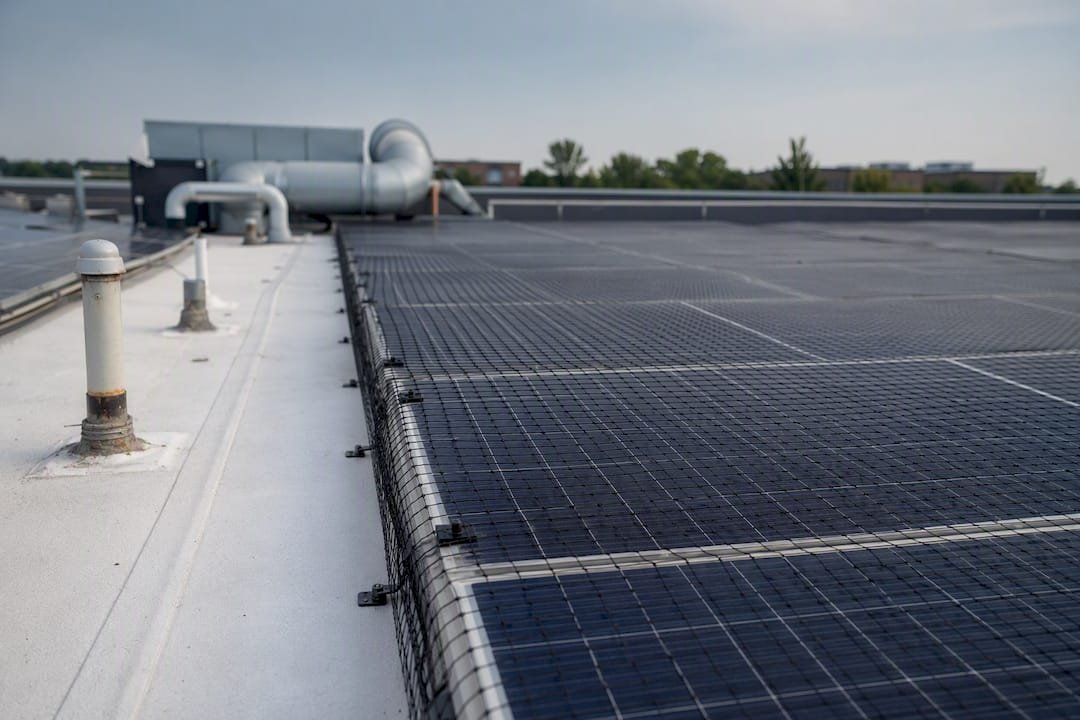
Fitted mesh and solar guards
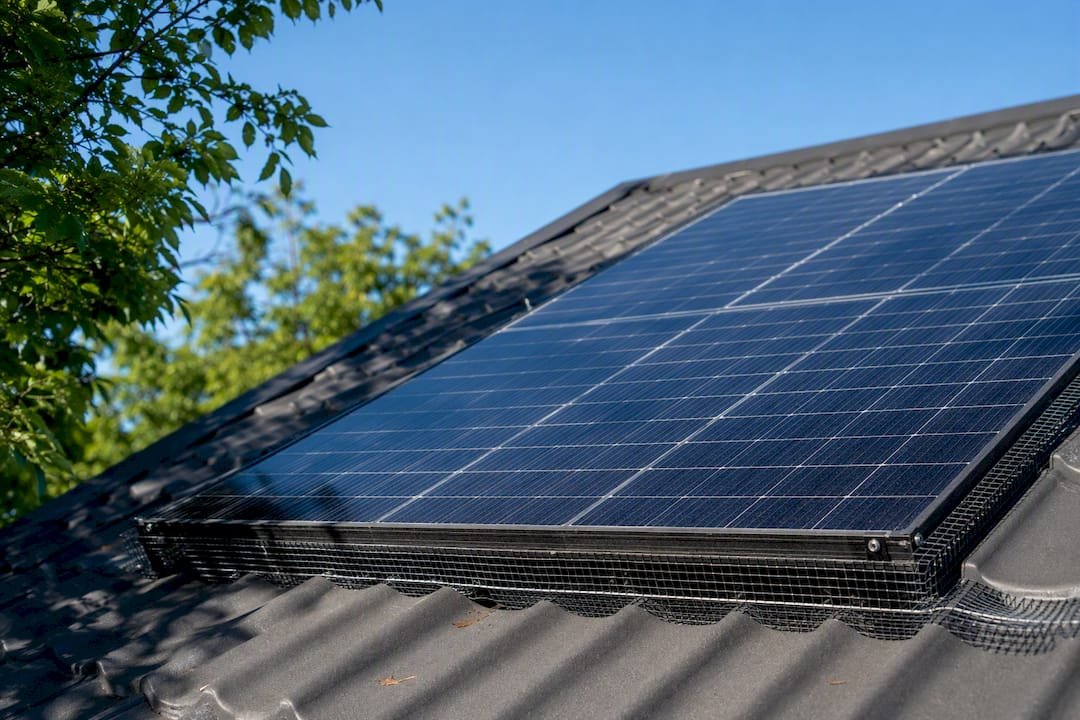
Professionally fitted bird mesh, sometimes called a solar guard, is the option that holds up over time and is detailed in commercial bird-proofing solutions for solar arrays. It’s cut and shaped to the specific array, clipped or clamped into place with corrosion-resistant fittings, and installed without drilling into the panel frame itself. That last detail matters more than most homeowners realize. Preventive exclusion that preserves ventilation and skips drilling into the panels is the setup most likely to keep manufacturer warranties intact, and it tends to be cheaper over a few years than repeated cleanup callouts.
Netting
Netting can work on larger commercial arrays or unusual roof shapes where fitted mesh isn’t practical. It’s more exposed to wind load, though, and needs regular checks for sagging, tears, or gaps that birds exploit within weeks of installation. Expect more maintenance than a rigid mesh system.
Spikes and ledge deterrents
Anti-roosting spikes are useful on ledges, beams, and flat perching spots near the array. They do almost nothing for the actual gap underneath the panels, since that space isn’t a perch, it’s a cavity. Spikes solve a different problem than the one most homeowners are asking about.
Visual and sound deterrents
Reflective tape, fake predators, and ultrasonic devices can disrupt bird behavior for a week or two before the birds figure out nothing is actually going to hurt them. Treat these as a stopgap while you wait for a proper installation, not a long-term answer.
Why DIY fixes tend to fail
A lot of homeowners try stapling chicken wire or zip-tying a cheap mesh roll around the edges. The gaps left at corners and joins are exactly where birds get back in, and loose fittings can flap against panels, damage cabling, or scratch cells during wind. Adding hardware directly onto solar equipment without the right process can also void the panel warranty outright.
Pro Tip: Check the actual gap size before buying any mesh online. Pigeons can squeeze through openings as small as 4 to 5 centimeters, so a mesh with the wrong aperture size gives you a false sense of security.
DIY vs. Professional Bird Proofing: When to Call a Pro
Some light maintenance, like clearing debris from a gutter you can safely reach with a ladder from ground level, is reasonable to handle yourself. Anything involving roof access, active nests, or working near live electrical connections is where professional help stops being optional.
- Roof access safety. Working around a solar array on a pitched or high roof carries real fall risk, and it’s not a job to improvise with a borrowed ladder.
- Warranty-preserving installation. A licensed technician knows how to fix mesh or guards without drilling or damaging panel frames, which keeps your manufacturer warranty intact.
- Correct materials. Professionals use corrosion-resistant, UV-stable mesh and fittings rated for years outdoors, not hardware-store mesh that degrades in a season.
- Safe handling of active nests. A trained technician knows how to confirm nest activity and time the work correctly instead of guessing.
- Decontamination. Droppings and old nesting material carry health risks, and proper cleanup requires more than a garden hose.
A good professional service should walk through inspection, safe removal where legally permitted, full cleaning, and non-invasive mesh fitting, in that order. If a quote skips straight to “we’ll install mesh” without an inspection step, that’s a red flag.
Costs and Timeline for Solar Panel Bird Proofing
Costs vary based on a handful of practical factors: the size of the array, how easy the roof is to access, whether scaffolding is needed, and whether there’s an active nest that requires careful handling rather than a straightforward clean and fit.
- Array size and access. A single-story home with easy roof access costs less to proof than a two-story property needing scaffolding or specialized lift equipment.
- Nest status. An inactive nest with no eggs or chicks is a same-visit clean and fit. An active nest may mean scheduling the mesh installation for after the young have left, with interim monitoring in between.
- Cleaning and decontamination. Heavily soiled areas with accumulated droppings and old nesting material take longer to clean and disinfect properly than a lightly used gap.
- Timeline. Most jobs run from a same-day inspection to a follow-up install within one to two weeks, longer if the job has to wait out an active nest.
Paying for proofing once tends to cost less over two or three years than paying for repeat cleanups every nesting season, since the underlying access point never gets closed off with cleaning alone.
How a Licensed Pest Team Approaches Solar Panel Bird Proofing
A proper job follows a consistent sequence, and skipping steps is usually where DIY attempts and rushed jobs fall apart.
- Inspection first. Technicians check every edge of the array for gaps, look at cable runs for exposure to nesting material, and identify which corners show signs of repeat entry.
- Nest assessment. If a nest is found, the technician confirms whether it’s active before touching anything, consistent with the reality that cleaning alone doesn’t solve the access problem if birds can still get back in afterward.
- Safe removal and decontamination. Inactive nests and droppings get removed and the area disinfected before any mesh goes on, since fitting guards over old debris just traps the problem underneath.
- Warranty-safe fitting. Preferred materials are stainless or galvanized mesh secured with metal clips, never drilled into the panel frame or racking.
A gap under a panel that looks empty on a Tuesday can have three chicks in it by the following week. That’s the single biggest reason inspection has to come before any hardware goes on, not after.
Homeowners who’ve gone through this with an active infestation often describe the same pattern: one cleanup that looked like a fix, followed by the same noise returning a season later because the actual entry point was never closed. Case examples from bird proofing jobs across Canberra show the difference a proper mesh fit makes compared to a quick clean with no exclusion work behind it.
Key claim to take away from all of this: closing off physical access with a professionally fitted, no-drill mesh system stops the cycle that cleaning alone cannot.
| Point | Details |
|---|---|
| Don’t remove active nests yourself | Eggs and chicks are often protected, and disturbing them can create legal and welfare problems. |
| Cleaning without exclusion doesn’t last | Birds return to the same gap unless the physical access point is closed off. |
| Fitted mesh beats DIY netting | Corrosion-resistant, no-drill mesh preserves solar warranties and holds up longer than loose netting or wire. |
| Spikes solve a different problem | Anti-roosting spikes work on ledges but do nothing for the cavity underneath panels. |
| Bugspatrol handles the full workflow | Bugspatrol’s technicians inspect, safely clear inactive nests, and fit warranty-safe mesh without drilling panels. |
Where to Check Rules and Technical Guidance
For species-specific protections, check your local wildlife guidance resources before attempting any removal. For fire and electrical risk background, roof-safety organizations also publish advisories on designed exclusion systems and professional removal worth reading if you want the technical case for hiring a pro rather than improvising.
The Real Problem Isn’t the Birds, It’s the Gap
Most advice on this topic focuses on which deterrent scares birds away fastest, and that’s the wrong question. Birds aren’t the problem. The unguarded gap under the panel is the problem, and it will keep attracting new birds every season until someone closes it properly.
What gets underestimated is how often a homeowner’s “quick fix” actually makes the warranty situation worse than the birds ever did. Drilling a bracket into a panel frame to hang cheap mesh voids protections that took years to build in, over a problem that a proper no-drill fitting would have solved permanently. The instinct to save money on a DIY kit usually costs more once you factor in a failed warranty claim or a second cleanup a year later.
If you take one thing from this: prioritize the inspection before you buy anything. Knowing whether you’re dealing with an empty gap, an inactive nest, or active chicks changes every decision that follows, and guessing wrong is how good intentions turn into bigger repair bills.
— navin
Get Your Solar Panels Professionally Bird Proofed
If you’re staring at droppings in the gutter and dreading another season of the same noise at dawn, Bugspatrol handles the entire job, inspection through installation, so you don’t have to weigh DIY mesh kits against the risk of voiding your solar warranty.
Bugspatrol’s licensed technicians check for active nests, safely clear and decontaminate inactive ones, and fit corrosion-resistant mesh without drilling into your panels, work that’s built to hold up through multiple nesting seasons rather than one. That’s the difference between paying for a cleanup every year and paying once for a fix that actually closes the access point. If your roof is already showing signs of bird activity, or you’d rather get ahead of it before nesting season starts, book an inspection through Bugspatrol’s general pest control services and get a technician out to assess the array before the problem repeats itself.
Sources
- Why Birds Nest Under Solar Panels (And How to Stop Them) – Aussie Gutter Protection
- Pigeons under solar panels: prevent nests without harming birds
Recommended
- Bugs Patrol Canberra – Professional Pest Control Services
- Bugs Patrol Canberra – Professional Pest Control Services
- Bugs Patrol Canberra – Professional Pest Control Services
- Bugs Patrol Canberra – Professional Pest Control Services