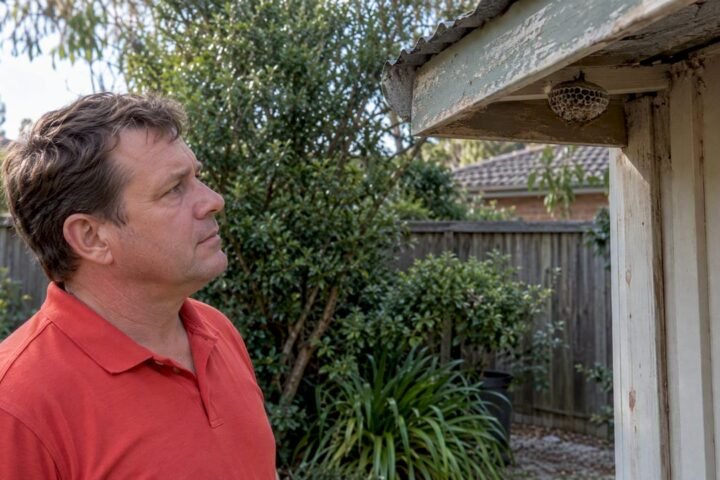
Polistes humilis, the common Australian paper wasp, is a native, slender wasp that builds small exposed papery combs and will vigorously defend them. You should keep a safe distance, avoid handling or spraying nests yourself, and call a licensed controller when a nest sits near a doorway, window or play area.
TL;DR:
- Native paper wasps have orange-brown antennae that dangle in flight, build open hexagonal nests usually attached to eaves or shrubs, and are generally less aggressive.
- Nests are small to medium, often not exceeding a side plate’s size, and are typically found under eaves, roof lines, or in dense vegetation around Australian homes.
- Call a licensed pest controller when a nest is near doorways, windows, or play areas, especially if multiple nests are present or the nest is in an accessible location.
- Most stings cause minor symptoms, but urgent medical attention is needed if there are signs of allergic reactions, bites inside the mouth or near the eye, or multiple stings.
- Sealing small gaps along the roofline, checking eaves in spring, and removing standing water or exposed pet food can prevent new nests from forming.
Table of Contents
- How to identify native paper wasps (Polistes humilis)
- Where paper wasps live and nest around Australian properties
- Colony cycle, diet and defensive behavior
- Telling native wasps apart from European and exotic species
- Sting risks and first aid steps for Australians
- When to call a licensed pest controller
- A local look at nest patterns and prevention
- Get a free inspection or book wasp removal
- FAQ
- Sources
How to identify native paper wasps (Polistes humilis)
Native paper wasps have a slim, narrow-waisted body shape and measure 10 to 15 millimeters long, with a reddish-brown base color broken up by yellow bands across the abdomen, according to NSW Department of Primary Industries. Their antennae are orange-yellow, and when they fly, their long rear legs hang down rather than tuck against the body, a cue that separates them from several introduced species. Their nests are just as distinctive as the wasps themselves: a single layer of open hexagonal cells, never covered by an outer paper shell, usually attached to eaves, fence capping, window frames or low shrubs by a short stalk.
Before approaching any nest, a quick visual check from a few meters away tells you most of what you need to know:
- Note the body color and whether the legs dangle in flight.
- Check whether the nest is an open comb or fully enclosed.
- Estimate the nest size, typically small to medium, generally not exceeding a size similar to a side plate.
- Look at where it is attached: eaves, capping or vegetation are typical.
Our wasp species identification guide for Canberra includes local photo examples if you want to compare before deciding on next steps.
Where paper wasps live and nest around Australian properties
Polistes humilis occurs across southern Queensland, New South Wales, Victoria, South Australia and southern Western Australia, making it one of the most familiar wasps homeowners in these regions encounter, per NSW DPI. Around the home, nests turn up in predictable spots:
- Under eaves, roof overhangs and along gutter lines.
- On fence capping, pergolas and outdoor furniture frames.
- Tucked into dense shrubs, hedges or climbing plants.
Activity builds through spring as new queens found colonies, peaks over summer as workers forage and feed growing brood, then tapers off by late autumn. A seasonal walk around the eaves, fence lines and garden edges each spring catches new nests while they are still small and easier to manage safely.
Colony cycle, diet and defensive behavior
A paper wasp colony starts each spring when a mated queen builds a small comb and lays her first eggs alone. As workers emerge, they take over foraging and nest-building, and the colony grows through summer into a cluster of a few dozen cells tended by multiple adults. Adult wasps feed mostly on nectar, while larvae are provisioned with caterpillars and other soft-bodied insects, which makes established colonies useful allies against garden pests, a point NSW DPI also notes.
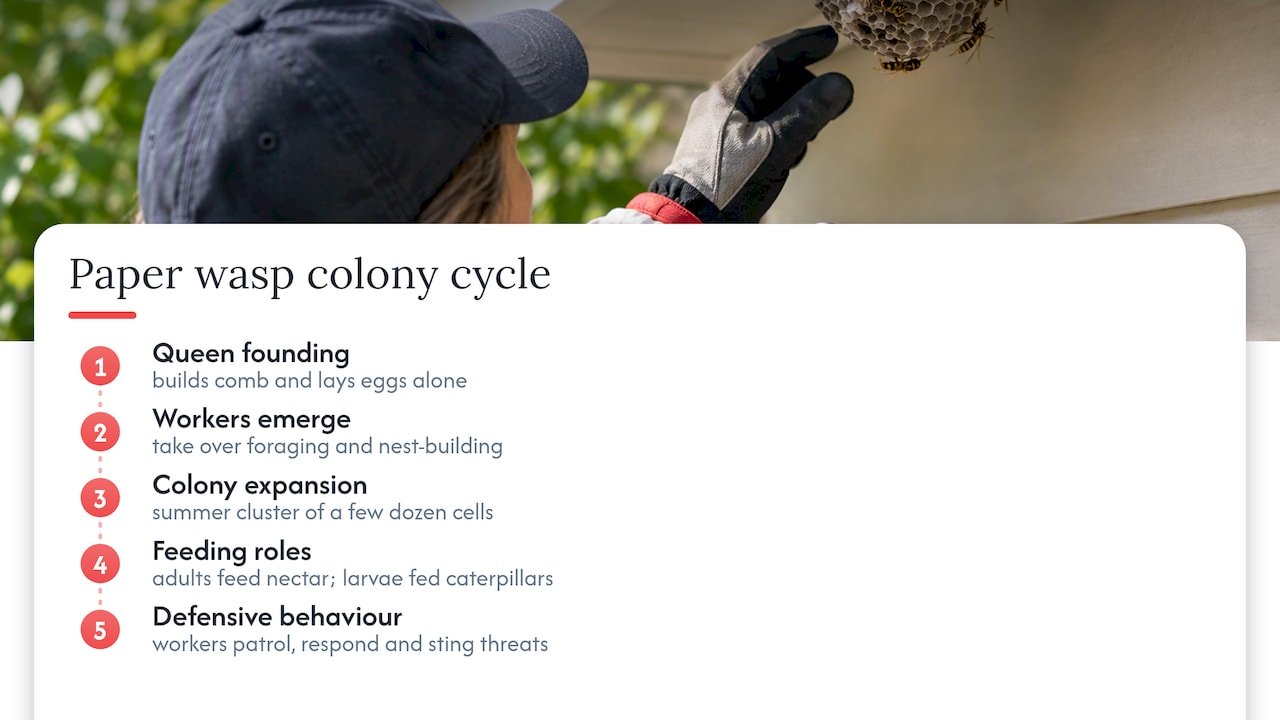
That benefit comes with a defensive streak. Workers patrol the nest surface and respond quickly to vibration, shadow or direct contact, often stinging in numbers when they sense a threat to the brood. Lawn mowing, hedge trimming or simply brushing past a hidden nest are common triggers. Research from Macquarie University on Polistes humilis found that colony size interacts with the wasps’ antimicrobial defenses, with genetic diversity improving effectiveness while larger colonies see some of those defenses decline, a reminder that bigger nests are not simply “more of the same” biologically.
Telling native wasps apart from European and exotic species
Confusing a native paper wasp with an introduced species such as the European wasp is easy at a glance, but a few details sort them out quickly:
- Check antenna color: native paper wasps show orange-brown antennae, while European wasps have darker, almost black antennae.
- Watch leg position in flight: native wasps dangle their legs, European wasps hold them tucked against the body during fast, direct flight.
- Look at the nest: native nests are a single exposed comb, while European wasp nests are fully enclosed in a papery envelope and often hidden underground or in wall cavities, as described in a Victorian technical note on European wasps.
- Note feeding behavior: heavy scavenging around meat, sugary drinks or pet food bowls points toward European wasps rather than the native species, a pattern confirmed for Western Australia by DPIRD WA.
Native Polistes humilis does not need to be reported to biosecurity authorities. A nest that is growing fast, scavenging aggressively or hidden underground is a different story in some states, and a quick check with your state’s biosecurity agency clears up the uncertainty before you act.
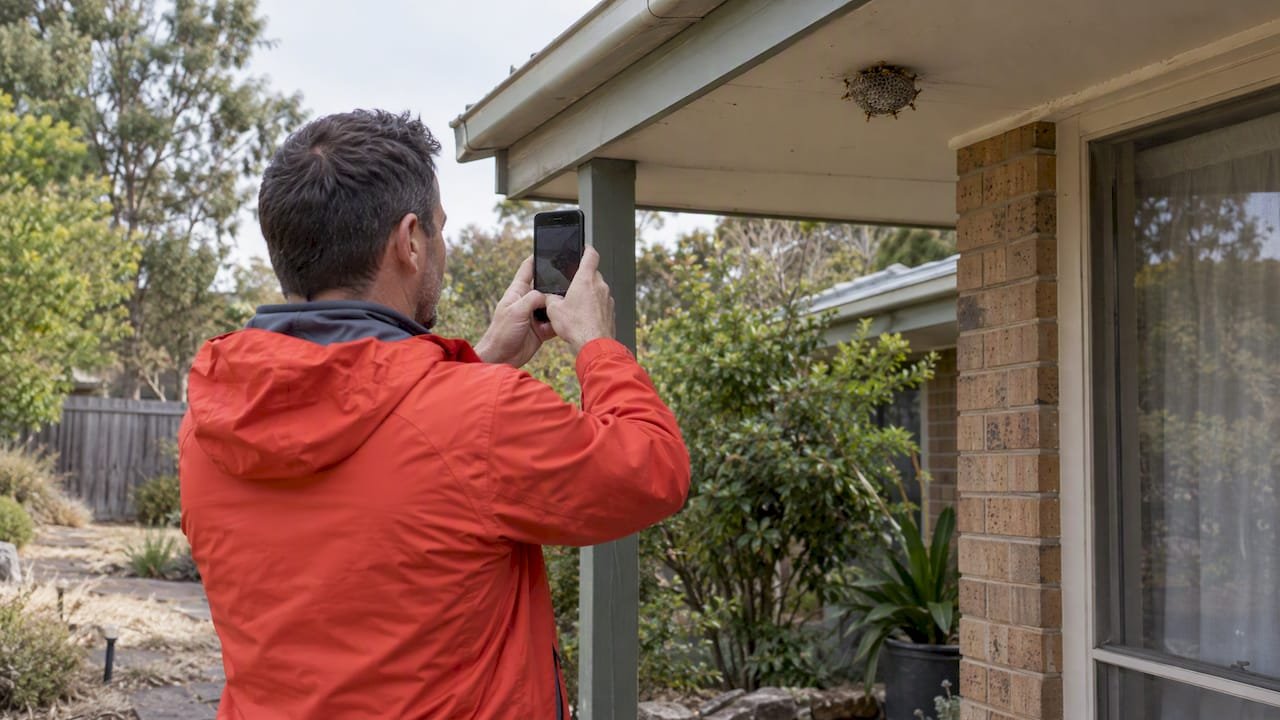
Pro Tip: Photograph any suspect nest from a safe distance rather than approaching for a closer look, then send the image to a licensed operator or your state biosecurity line for a fast identification.
Sting risks and first aid steps for Australians
A paper wasp sting usually causes sharp, localized pain, redness and swelling that settles within a few hours. Healthdirect recommends washing the sting site with soap and water, then applying an ice pack to reduce pain and swelling, since wasps rarely leave a stinger behind the way honeybees do.
Some reactions need urgent care:
- Stings inside the mouth, throat or near the eye.
- Difficulty breathing, swelling of the face or a spreading rash.
- Ten or more stings in an adult, or five or more in a child, both thresholds that Healthdirect flags as reasons to seek medical attention.
Keep an eye on the sting site for a day or two; worsening swelling, spreading redness or fever are signs to see a doctor rather than wait it out.
When to call a licensed pest controller
DIY removal is where most sting incidents happen, since disturbing a nest triggers a coordinated group defense rather than a single sting. ACT City Services advises against attempting nest removal yourself for exactly this reason.
Call a professional when you notice any of the following:
- A nest built into the roofline, gutter or eave cavity.
- A nest within reach of a doorway, path or play area.
- Multiple active nests on one property.
- Anyone on site with a known wasp allergy.
A licensed technician inspects the site, chooses safe removal or treatment, and advises on exclusion so new queens cannot rebuild in the same spot. Our wasp control service and wasp nest removal guide walk through what that process involves in more detail.
Pro Tip: Before a technician arrives, close nearby windows, keep children and pets indoors, and avoid mowing or trimming hedges near the nest.
A local look at nest patterns and prevention
Around Canberra, nests show up most often tucked under eaves and inside gutter returns where gaps go unnoticed for months. Sealing small gaps along the roofline, checking eaves each spring, and clearing standing water and exposed pet food bowls go a long way toward keeping new queens from settling in.
— navin
Get a free inspection or book wasp removal
We handle wasp nests with technicians who focus on safe, eco-aware treatments for homes with kids and pets. Booking starts with a free inspection, followed by a straightforward quote and a safe removal or treatment visit with aftercare advice so the nest does not return.

What a typical booking includes:
- A property inspection to confirm the wasp species and nest location.
- A clear quote before any work begins.
- Safe removal or treatment using appropriate protective equipment.
- Aftercare advice to stop nests rebuilding in the same spot.
If a nest near your home needs attention now, book a wasp control inspection and we will take it from there.
FAQ
Are Australian paper wasps aggressive?
Native paper wasps are not naturally aggressive and mostly focus on foraging, but they defend their nest vigorously once they sense a threat, often stinging in numbers. Keeping distance from an active nest avoids the defensive response entirely.
What’s the difference between a paper wasp and a regular wasp?
Native paper wasps build a single exposed comb and have orange-brown antennae with legs that dangle in flight, while introduced species like the European wasp build fully enclosed nests and hold their legs tucked in flight, according to a Victorian technical note. European wasps also scavenge heavily around food and meat, a behavior native paper wasps rarely show.
What should I do if I get stung by a paper wasp in Australia?
Wash the sting with soap and water, then apply an ice pack to ease pain and swelling, following Healthdirect guidance. Seek urgent medical care for stings in the mouth or near the eye, breathing difficulty, or if an adult receives ten or more stings or a child receives five or more.
Are paper wasps toxic?
Paper wasp venom causes localized pain and swelling rather than broad toxicity, and most people recover within hours with basic first aid. The exception is anyone with a known wasp allergy or anyone who receives multiple stings, both situations that call for prompt medical attention.
Sources
- Bee and wasp stings – treatment | healthdirect
- Pest control technical note – European wasps (Victoria)
- European wasps: declared pests in Western Australia — DPIRD WA