
If you find silverfish in a wardrobe, treat it as a moisture and harbourage problem: isolate affected clothing in sealed bags, run a dehumidifier or open a window to cut humidity, set sticky traps, and vacuum every seam and corner. This combination, part of what pest professionals call Integrated Pest Management, works faster than a single spray and protects your clothes while you fix the underlying cause. If damage keeps appearing or you spot activity in wall voids, it’s time to call a professional like BugsPatrol Pest Management.
TL;DR:
- Silverfish are attracted to high humidity and undisturbed dark spaces, making moisture control the most effective long-term prevention method.
- Using sticky traps, vacuuming, and freezing textiles can manage early infestations without relying on chemical sprays that are often ineffective.
- Persistent or widespread infestations, especially with damage in multiple rooms or wall cavities, require professional pest control involving moisture assessment and targeted treatments.
- Regularly monitoring humidity levels and inspecting storage spaces with traps is essential to catch and control silverfish before they cause significant damage.
- DIY methods have limitations, and rechecking traps and dust placements after four to six weeks will help determine if an infestation surpasses household treatment capabilities.
Table of Contents
- How to confirm silverfish in a wardrobe and assess severity
- What to do today: isolate, clean, trap, and lower humidity
- A practical prevention checklist for wardrobes and storage areas
- Safe DIY treatment options, how they work, and their limitations
- Signs a professional pest controller is needed
- Why humidity control beats one-off sprays
- Get a professional silverfish inspection
- FAQ
- Sources
How to confirm silverfish in a wardrobe and assess severity
Adult silverfish are silvery grey, carrot shaped, and grow to a typical size around 15 millimeters, with two long antennae and three tail bristles at the rear. They are nocturnal and favor dark, undisturbed spaces exactly like the back of a wardrobe, where they can live for several years, according to the Western Australian Museum’s conservation manual.
Damage shows up as irregular holes and notched edges on cotton, linen, and paper, different from the rounder holes clothes moths leave or the scattered pinholes from carpet beetles. To gauge how bad things are, check for:
- A single sighting with no visible damage, which usually means low-level activity worth monitoring.
- Repeated sightings over several nights, suggesting an established population nearby.
- Visible holes, yellow staining, or frass on stored textiles or paper.
- More than a few insects caught on a sticky trap checked weekly.
What to do today: isolate, clean, trap, and lower humidity
- Remove every item from the wardrobe and inspect it under good light for holes, stains, or frass.
- Wash washable items on a normal cycle, or freeze small delicate pieces in sealed bags.
- Seal any suspect textiles in airtight bags for two to three weeks before returning them to storage, a method museums use to kill pests without chemicals, per NFSA pest control guidance.
- Vacuum the wardrobe thoroughly, including corners, seams, and door tracks, to remove skin flakes, dust, and food residue that attract silverfish.
- Place sticky traps flat against the back wall and floor of the wardrobe, and check them weekly.
- Dust diatomaceous earth or silica gel lightly into cracks and the base of the wardrobe, keeping it away from direct contact with clothing, skin, or pets.
- Run a dehumidifier nearby or crack a window to bring humidity down toward a comfortable range.
Pro Tip: Skip the aerosol can. Spraying the inside of a wardrobe rarely reaches where silverfish actually hide, and one application almost never solves a recurring problem.
A practical prevention checklist for wardrobes and storage areas
A cheap hygrometer placed inside a closet will tell you where you stand in minutes.
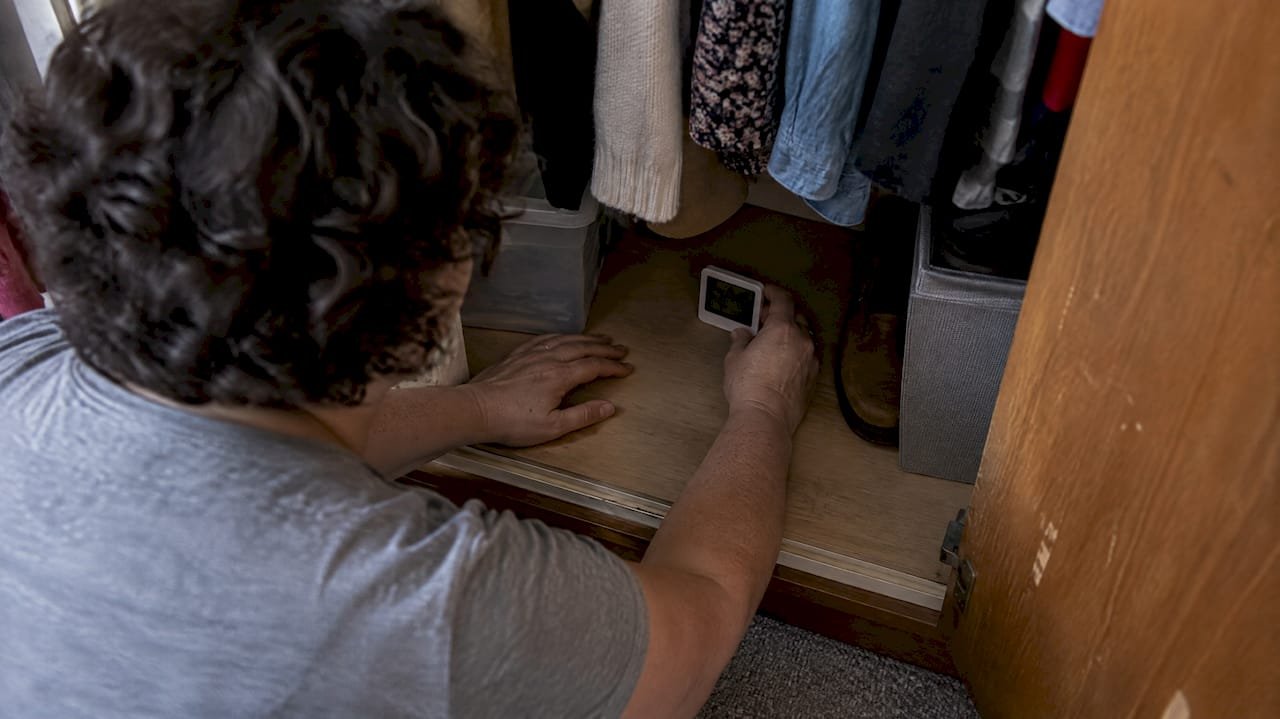
Higher humidity significantly increases the risk of both mould and insect problems in stored textiles, according to museum storage guidance, which is exactly the kind of damp, still air silverfish thrive in.
Beyond humidity, a few habits keep wardrobes inhospitable to them:
- Use breathable fabric covers or acid-free boxes instead of sealed plastic, which traps condensation.
- Avoid pushing storage boxes directly against exterior walls or sitting them on bare floors where damp collects.
- Launder clothing before long-term storage since body oils, food residue, and skin cells are a food source.
- Seal cracks and gaps around skirting boards, door frames, and the back panels of built-in wardrobes.
- Fix any slow leaks, condensation on windows, or roof and attic moisture promptly, since these feed the humidity problem at its source.
- Add door sweeps or weatherstripping to built-in units that back onto damp exterior walls.
- Do a visual check monthly and review sticky traps every two to four weeks to catch new activity early.
This kind of environmental control, prioritized over broadcast pesticides, is the backbone of Integrated Pest Management, and it’s the reason monitoring traps matter as much as any treatment: repeated catches tell you when it’s time to escalate.
Safe DIY treatment options, how they work, and their limitations
Several low-toxicity methods work well for small or early infestations, provided you’re patient and consistent.
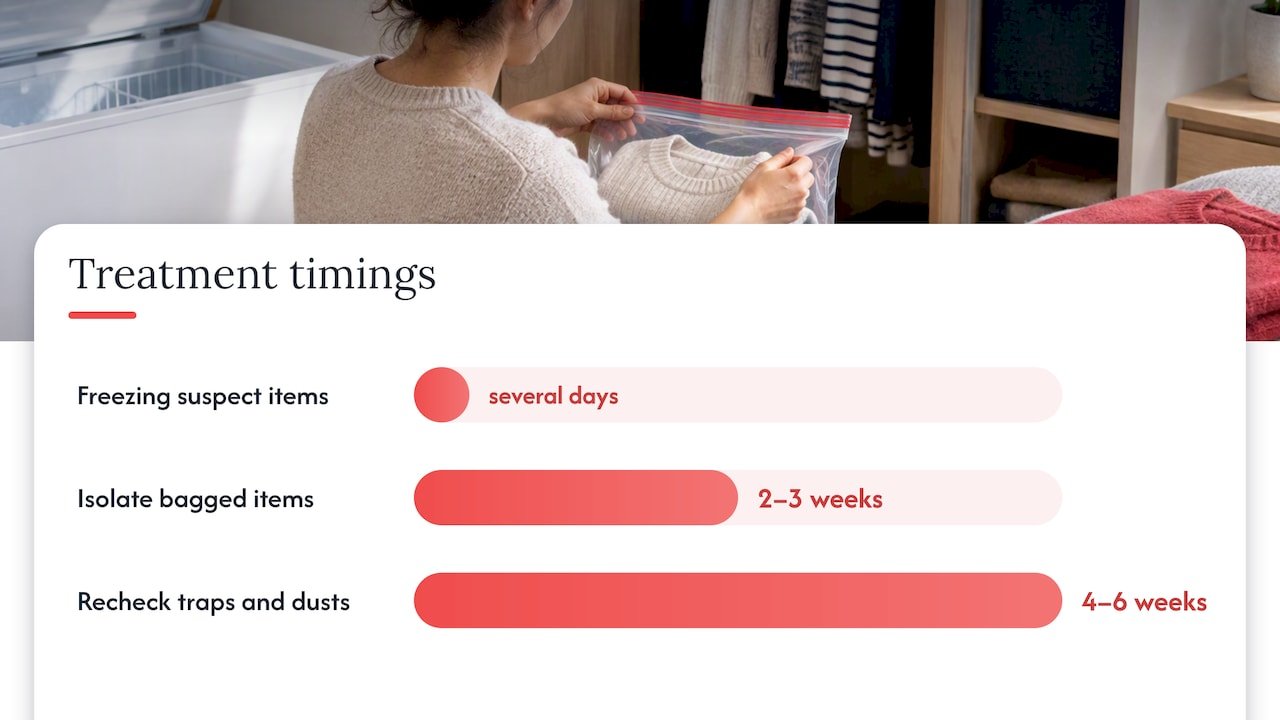
- Freezing suspect items at a standard freezer temperature for several days kills silverfish and eggs without chemicals, a technique collection-care professionals favor for delicate materials.
- Vacuuming and laundering removes food sources and visible insects, and should happen before anything goes back into storage.
- Isolating bagged items for two to three weeks lets you confirm nothing survived before reintroducing clothing to the wardrobe.
- Diatomaceous earth or silica aerogel dust, placed in cracks and voids rather than on fabric, desiccates silverfish on contact.
- Boric acid baits work as a stomach poison and are commonly recommended alongside desiccant dusts for longer-lasting control, per EDIS integrated pest management guidance.
Surface sprays often disappoint because silverfish retreat into wall voids, skirting gaps, and other harbourage a spray never reaches, and their eggs are notably resistant to casual contact treatments. Desiccant dusts placed directly into those hiding spots do a better job of reaching the insects where they actually live.
Pro Tip: Recheck your traps and dust placements after four to six weeks. If catches haven’t dropped, the infestation is bigger than a DIY approach can handle.
Signs a professional pest controller is needed
Some situations call for more than household measures. Consider booking a professional when:
- Sticky traps keep catching silverfish weeks after you’ve treated and dried out the wardrobe.
- Multiple items across different rooms show feeding damage.
- You find silverfish or droppings in roof voids, subfloors, or wall cavities.
- Large numbers appear repeatedly rather than the occasional single insect.
A professional visit typically starts with a moisture assessment, since pest management guidance consistently points to unresolved leaks or condensation as the reason infestations keep coming back. From there, technicians apply targeted dusting into voids and, where appropriate, insect growth regulators that interrupt breeding, rather than relying on a single surface spray. Ask about licensing, safety data sheets for any product used, and whether methods are safe around children and pets. Technicians use modern detection methods, including thermal imaging for related moisture and termite checks, and bring experience servicing homes.
Why humidity control beats one-off sprays
The biggest mistake I see in wardrobe pest advice is treating silverfish as a spray problem instead of a moisture problem. A can of insecticide might kill what you can see today, but it does nothing about the damp air or hidden food sources that brought silverfish there in the first place, and they’ll be back within weeks. The approach that actually works is boring: check humidity, fix leaks, vacuum regularly, and keep a sticky trap in the corner so you catch a new problem before it becomes an expensive one. Set a recurring monthly reminder to glance at your traps and your hygrometer. That five-minute habit prevents far more damage than any single treatment ever will.
— navin
Get a professional silverfish inspection
When DIY measures aren’t keeping up, our general pest control service covers inspection, targeted treatment, and follow-up monitoring so silverfish don’t just disappear for a week and come back.

We check moisture sources, dust the voids a spray can’t reach, and leave you with a clear picture of what’s driving the activity in your home. For ongoing protection instead of a one-off visit, our subscription plans including Gold Complete, Silver Combined, and Bronze General Pest build regular checks into your routine. Book an inspection and get ahead of the problem before it reaches your clothes.
FAQ
Why are there silverfish in my closet?
Silverfish are drawn to closets because they’re dark, quiet, and often more humid than the rest of the room, with starchy materials like cotton, paper, and book glue nearby to feed on. Their presence is almost always a moisture signal rather than random bad luck.
Should I be worried if I find a silverfish?
One sighting isn’t an emergency, but it’s worth starting to monitor with a sticky trap and checking humidity, since silverfish can cause lasting damage to books, photographs, and textiles if the population grows. Repeated sightings or visible holes in clothing mean it’s time to act.
How do I get rid of silverfish in my cupboards?
Empty and vacuum the cupboard, isolate suspect items in sealed bags for two to three weeks, set sticky traps, and dust diatomaceous earth into cracks and voids rather than on fabric.
Is my house dirty if I have silverfish?
No. Their presence is typically an indicator of moisture problems rather than a lack of cleanliness, so even well-kept homes can get them if a closet or wall cavity stays damp.
Sources
- Appendix 4: Insect Pests | Development Services
- Pest control technical note – Silverfish (Health Victoria)
- National Film and Sound Archive (NFSA) guidance on pest control