Every year, thousands of Australian homeowners discover termite damage that could have been prevented with one simple step: a professional termite inspection. In Canberra, where the climate and surrounding bushland create ideal conditions for termite activity, this step is not just recommended, it is essential.
If you have never organised a termite inspection before, the process can feel unfamiliar and even a little overwhelming. What does an inspector actually look for? How long does it take? And what happens if they find something? These are all completely valid questions, and this guide is here to answer them.
In this tutorial, you will learn exactly what a termite inspection involves, why it matters for Canberra homeowners specifically, and what you can expect from start to finish. Whether you are buying a new property, maintaining an existing home, or simply want peace of mind, understanding this process puts you in a much stronger position to protect one of your most valuable assets. Let us walk you through everything you need to know.
Why Termite Inspections Matter in Canberra and the ACT
Canberra and the ACT sit firmly within Australia’s highest-risk zones for termite activity, and the threat is more complex than most homeowners realise. Two species in particular demand serious attention. Coptotermes acinaciformis is the single most destructive subterranean termite species on the continent, and it is well established across Canberra and the surrounding NSW regions. This species builds underground tunnel networks stretching up to 100 metres from the nest, allowing colonies to infiltrate timber framing, flooring, and structural supports entirely out of sight. Alongside it, Nasutitermes exitiosus, commonly known as the mound-building termite, is also active in the ACT and is capable of silently compromising timber structures before any visible sign of damage appears.
Canberra’s inland continental climate creates conditions that directly fuel termite pressure throughout the year. Hot, dry summers promote drywood termite activity by accelerating colony growth cycles, while the region’s seasonal shifts in soil moisture drive subterranean species to extend their foraging ranges into nearby buildings in search of new food sources. A single active colony can consume approximately 7kg of timber per week, meaning the damage accumulates rapidly once termites establish themselves inside a structure. The AEPMA estimates that repair costs for affected homes commonly exceed $7,000, with severe infestations reaching $10,000 or more, and critically, most Australian home insurance policies exclude termite damage entirely.
Climate change is compounding these risks further. Rising average temperatures are expanding termite infestation zones into previously low-risk inland areas, including the ACT and Southern NSW, with colony activity and swarming seasons expected to intensify from 2026 onwards. Canberra’s rapidly growing housing market adds another layer of vulnerability. New builds and ongoing renovations disturb soil, expose untreated timber, and create fresh entry points that termites exploit quickly. Australian homes built with timber framing and subfloor spaces are particularly susceptible, as these construction features give subterranean species direct, concealed access to load-bearing structural elements.
Together, these factors make professional termite inspections not just advisable for Canberra homeowners but genuinely essential for protecting one of their most significant financial assets.
What Australian Standards Say About Termite Inspections
Termite inspections in Australia are not a matter of professional discretion; they are governed by a formal national standard that sets the minimum requirements every compliant inspection must meet. That standard is AS 3660.2-2017, titled Termite Management Part 2: In and Around Existing Buildings and Structures. Developed by Standards Australia with input from the Australian Building Codes Board, CSIRO Entomology, the Housing Industry Association, and the Insurance Council of Australia, it represents the benchmark against which every legitimate termite inspection is assessed. Understanding what this standard requires helps you, as a homeowner, verify that the inspection you receive is thorough, documented, and legally defensible.
How Often Should Your Property Be Inspected?
AS 3660.2-2017 specifies that termite inspections be conducted at intervals of no more than 12 months for most residential properties. This annual baseline reflects the speed at which termite colonies can establish and cause serious structural damage; research indicates that undetected activity can compromise structural timbers within as little as three months. Properties carrying higher risk factors, including those with timber subfloors, dense garden beds close to the building, or a documented history of previous infestation, benefit from more frequent assessments. Scheduling inspections every six months for these properties is a widely accepted industry practice, aligned with the standard’s intent to match inspection frequency to actual risk level.
What a Compliant Inspection Must Include
A valid inspection under AS 3660.2-2017 must be carried out by a licensed pest management technician and must result in a structured written report. That report needs to document all accessible areas inspected, any conditions conducive to termite activity such as excessive moisture, decaying timber, or poor subfloor ventilation, and any evidence of current or past infestation. The inspection zone extends up to 50 metres from the main structure and includes subfloor spaces, roof voids, internal rooms, the external perimeter, and any outbuildings or fencing within scope. For a deeper understanding of reporting obligations, the AS 3660.2-2017 reporting requirements outlined by Professional Pest Manager provide practical industry-level guidance, and this comprehensive guide to termite inspections explains what homeowners should expect during the process.
The Practical Consequences of Skipping Inspections
Most Australian home insurance policies do not cover termite damage, which makes a documented inspection history one of your most important financial safeguards. If damage is later discovered and no inspection record exists, demonstrating that reasonable preventative action was taken becomes extremely difficult. Beyond insurance, a clear history of regular, compliant inspections strengthens your position during a property sale, providing prospective buyers with confidence in the building’s structural integrity. Conversely, gaps in that record can raise concerns that reduce buyer confidence and affect negotiated price. Treating annual termite inspections as a non-negotiable part of property maintenance is not overcaution; it is the minimum the standard demands and the minimum your investment deserves.
Termite Inspection vs. Termite Treatment: Understanding the Difference
A termite inspection is a diagnostic service, nothing more and nothing less. Its sole purpose is to assess whether termites are present, identify conditions that make a property vulnerable, and determine the extent of any existing activity or structural damage. When a licensed technician completes an inspection, they produce a detailed report that becomes the foundation of any management decisions. That report does not include treatment; it informs treatment. These are two entirely separate services, and understanding that distinction is one of the most important things a homeowner can do before spending a dollar on termite management.
Treatment only becomes relevant after a qualified professional has reviewed the inspection findings and identified the appropriate response. The recommendation depends on several factors: the species involved, the level of active termite activity, and the specific entry points identified during the assessment. In Australia, two primary treatment pathways exist. Liquid chemical barriers involve creating a continuous treated zone in the soil surrounding a building’s foundation, using trenching, drilling, and rod injection under concrete paths. This method prevents termite ingress but does not eliminate an existing colony. Baiting systems take a different approach; bait stations placed around the property perimeter attract foraging termites, which carry the bait back to the colony and gradually eliminate the population over time. Each method suits different conditions, and only an inspection can determine which is appropriate for a given property.
Skipping the inspection and proceeding directly to treatment is both wasteful and potentially ineffective. Without an accurate diagnosis, there is no basis for targeting treatment correctly. As one industry source notes, choosing the wrong treatment for your situation can mean wasted money or incomplete protection. The most vulnerable areas of a structure may go unaddressed entirely.
The sequence matters: inspect first, then treat. The inspection is the starting point of all responsible termite management, not an optional preliminary step before purchasing a product.
What a Professional Termite Inspection Involves: A Step-by-Step Walkthrough
Booking and Preparation
Before the inspector sets foot on your property, your role as a homeowner directly influences how thorough the inspection can be. You will need to arrange clear access to every area of the property, including the subfloor entry hatch, roof void manhole, garage, garden sheds, and boundary fencing. Restricted access is not a minor inconvenience; it becomes a formal limitation documented in the inspection report, meaning those areas cannot be assessed and any termite activity within them goes undetected. Take time to move stored items away from walls in the garage and spare rooms, clear any boxes or furniture blocking access hatches, and unlock outbuildings before the technician arrives. The more accessible your property is, the more comprehensive and reliable your inspection result will be.
Perimeter Assessment
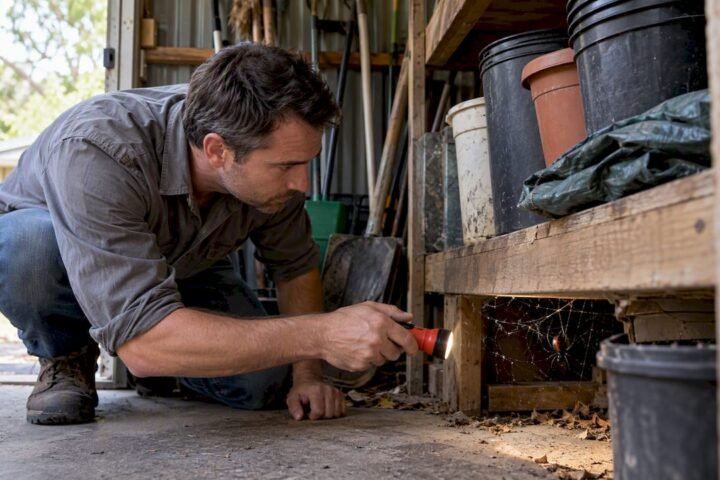
The inspection begins outside. Your technician will conduct a full external walkthrough of the property, systematically examining the foundation walls, weep holes, expansion joints, garden beds, mulch layers, timber retaining walls, old stumps, and any point where wood makes direct contact with soil. These wood-to-soil contact points are particularly significant because subterranean termites travel through the ground and exploit any direct timber pathway into the structure. Moisture-retaining garden beds placed too close to the foundation, or decorative timber sleepers sitting on bare earth, are classic examples of conditions that invite concealed termite entry. The perimeter assessment sets the foundation for everything that follows, flagging high-risk zones before the inspector moves inside.
Internal Inspection
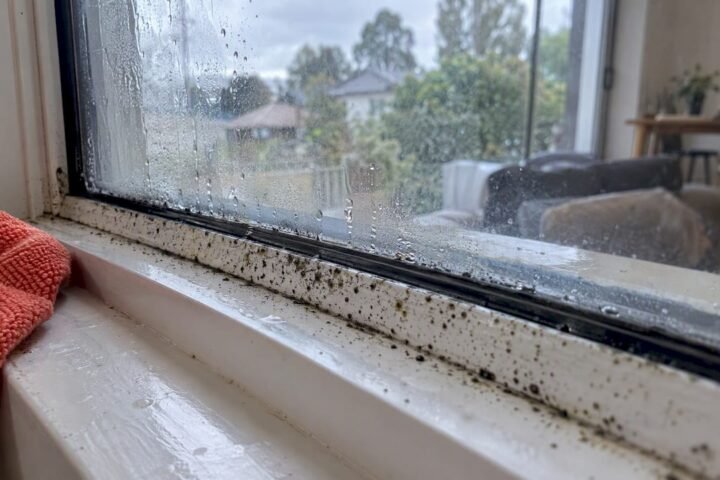
Inside the property, the technician works through every room methodically. They are looking for hollow-sounding or damaged timber, which is identified by tapping surfaces with a sounding tool. Mud leads, which are thin tunnels of compacted soil and termite secretions running along skirting boards or wall bases, are a reliable indicator of active subterranean termite movement. Stained or bubbling paint can signal moisture damage beneath the surface, often caused by termite workings inside a wall cavity. Every room, hallway, and built-in cupboard is assessed as part of this process, with particular attention paid to areas near bathrooms, laundries, and kitchens where moisture levels tend to be higher and termite attraction is elevated.
Subfloor and Roof Void Inspection
The subfloor and roof void are the two highest-risk zones in a typical Canberra home, and both require physical entry where accessible. In the subfloor, the technician uses a sounding tool to test the structural integrity of bearer and joist timbers and a moisture metre to measure moisture levels in the timber and surrounding soil. Elevated moisture readings are a strong indicator of either active termite presence or conditions that will attract termites in the near future. In the roof void, the same process applies to roof framing timbers. A Canberra property inspected in Kambah in May 2025 was formally rated HIGH susceptibility, reflecting how seriously these zones are weighted in the overall risk assessment.
Thermal Imaging and Detection Tools
Advanced termite inspections incorporate thermal imaging cameras alongside standard equipment. These cameras detect subtle heat differentials behind walls and ceilings that can indicate termite activity, moisture accumulation, or both, without requiring any drilling or physical opening of wall cavities. This non-invasive approach is one of the most significant developments in modern inspection practice, allowing technicians to investigate suspect areas that would otherwise remain unexamined. Other tools used during a professional inspection include microwave detection devices and Termatrac sensors, each designed to identify movement or moisture within concealed spaces. According to a homeowner’s step-by-step guide to termite inspections, these specialised tools allow inspectors to identify activity that is simply not visible to the naked eye.
The Inspection Report
Once the site visit is complete, the technician produces a written report compliant with AS 3660.2-2017, the Australian Standard governing termite management inspections. This document details every area inspected, any conducive conditions identified, evidence of active or past termite activity, findings related to fungal decay, and recommended next steps. If termites are found or high-risk conditions are noted, the report will outline treatment options such as liquid chemical barriers or baiting systems. One important detail: inspection reports should not be relied upon if they are more than 30 days old, as conditions can change quickly. Australian Standards also recommend a minimum of one inspection per year, though properties in high-risk areas or with a prior history of termite activity may warrant inspections every three to six months.
Typical Inspection Duration
A thorough residential termite inspection in Canberra generally takes between 60 and 90 minutes, depending on the size of the property, its construction type, and how accessible all areas are. Single-storey slab-on-ground homes with no subfloor are typically faster to assess than older elevated homes with a full subfloor cavity and a complex roof framing structure. Larger properties or those with multiple outbuildings, extensive landscaping, or restricted access points will often require additional time. For professional pest management tips on maximising the value of your inspection, preparation and access remain the two factors most within a homeowner’s direct control.
When Should You Book a Termite Inspection?
Timing your termite inspection strategically is one of the most effective ways to stay ahead of potential damage. In Canberra, termite swarming activity typically peaks between October and January, when warmer spring temperatures combine with post-rain soil moisture to trigger colony expansion and alate (winged reproductive) flights. This is the period when new colonies are most likely to establish themselves in or near your home. Booking an inspection in late winter or early spring, before this window opens, gives you the best chance of identifying conditions before they become active infestations.
That said, restricting your vigilance to spring alone is not sufficient protection. Canberra’s drywood termite species can remain active well into summer and autumn, quietly consuming structural timbers without any visible surface signs. Australian Standard AS 3660.2 reflects this reality by recommending inspections at least once every 12 months for most properties. Annual inspections, regardless of season, are the minimum benchmark, not an optional extra.
Certain situations also call for an inspection immediately, regardless of the time of year. If you notice mud tubes or shelter leads running along walls, foundations, or stumps, that is a direct signal of subterranean termite movement. Timbers that sound hollow when tapped, or feel unexpectedly soft or spongy underfoot, suggest internal damage already in progress. Evidence of a past swarm near your property, such as discarded wings near window sills or light fittings, is equally serious. Any recent renovation or landscaping that disturbed soil adjacent to your home’s structure can also disrupt existing termite management systems, warranting a prompt professional assessment.
For property buyers in the ACT, a pre-purchase termite inspection is non-negotiable. This should be arranged independently of the standard building inspection and completed before contracts are exchanged, so you receive a current, unbiased picture of termite activity and structural risk at that specific property.
Finally, if your property has previously undergone termite treatment, a follow-up inspection within 12 months is essential. Treatment effectiveness needs to be verified, and new entry points can emerge at locations the original barrier did not cover. Properties with existing liquid barriers or baiting systems should be treated as ongoing monitoring commitments, not one-time solutions. How often you need a termite inspection depends on your property’s risk profile, but annual reinspection after treatment is the consistent industry recommendation for maintaining reliable protection.
Termite Inspections for Property Buyers and Sellers in the ACT
Whether you are buying or selling property in the ACT, a termite inspection is not simply a precaution. It is a standard, professionally expected step in the conveyancing process that carries real financial and legal weight.
For Buyers: Know What You Are Purchasing
In Australian property conveyancing, a combined building and pest inspection is strongly recommended by solicitors and conveyancers before a buyer proceeds to unconditional exchange. The pest component of that inspection specifically addresses timber pest activity, including termites, borers, and wood decay fungi, and must comply with AS 4349.3 to be considered a credible, professional document. Skipping this step means signing a contract without an accurate picture of what lies beneath the surface. Termite damage costs Australian property owners an estimated $1.5 billion per year, and affected properties can appear flawless at an open home while structural timber inside tells a very different story.
The pre-purchase report provides a formal, written assessment covering current termite activity, evidence of past damage, and conditions that place the property at elevated risk. This information creates genuine leverage. Buyers can use confirmed findings to renegotiate the purchase price, request that repairs be completed before settlement, or withdraw from the contract entirely within the applicable conditions. A clean report is equally valuable; it confirms the property is sound and allows the buyer to proceed with confidence rather than assumption.
For Sellers: Transparency That Protects the Sale
Sellers who commission a pre-listing inspection before going to market remove one of the most common reasons a property sale falls through. Presenting a current, compliant report demonstrates transparency, builds buyer confidence, and reduces the likelihood of a renegotiation surprise arising from the buyer’s own independent inspection.
Why Local Expertise Matters in the ACT
Canberra’s property market regularly attracts interstate buyers and investors who may be unfamiliar with local termite species and the specific risk conditions found across ACT suburbs. An inspection report prepared by a locally licensed technician carries greater credibility in this context, because it reflects genuine knowledge of regional conditions rather than a generic national template.
One practical timing consideration applies to both buyers and sellers: a termite inspection report has a limited useful life. Most conveyancers regard reports older than three months as outdated and insufficient for reliance at exchange. Timing the inspection close to the contract date ensures the report reflects current conditions and remains valid through settlement.
How Much Does a Termite Inspection Cost in Canberra?
Residential termite inspections in Canberra typically cost between $200 and $400, making them one of the most accessible professional property assessments available to homeowners. The final price depends on several factors, including the size of your property, the construction type (a suspended subfloor home requires significantly more inspection time than a concrete slab), and the detection equipment used during the assessment. Properties with difficult access points, large subfloor areas, or multiple outbuildings should expect fees toward the upper end of this range, as inspectors need additional time to meet the thoroughness required under AS 3660.2.
What the Standard Fee Covers
At the baseline price, a professional termite inspection should include a complete internal and external assessment of your property. The inspector will use calibrated detection equipment including moisture metres and sounding tools to identify concealed activity, and you will receive a written AS 3660.2-compliant report detailing all findings, risk conditions, and recommended next steps. It is worth noting that a verbal summary at the door does not constitute a compliant report; you are entitled to a formal written document you can reference, act on, and present to insurers or conveyancers if needed.
Thermal Imaging as an Optional Upgrade
Thermal imaging cameras are available as a paid add-on with many providers and can significantly improve detection accuracy in wall cavities and ceiling spaces where visual access is impossible without causing damage. For older Canberra homes, properties with complex roof structures, or any building where termite entry points are concealed, this upgrade is worth serious consideration. It is not typically included in a base-price inspection, so ask about it specifically when booking.
The Cost Versus Consequence Equation
At $200 to $400, a professional inspection is genuinely one of the most cost-effective decisions a homeowner can make. Real Canberra homeowners have received treatment quotes of $5,000 to $7,000 once active termites are confirmed, and repair bills from structural damage can exceed $10,000 in more severe cases. Spending $300 annually to rule out that risk is, by any reasonable measure, exceptional value. BugsPatrol supports this kind of consistent, proactive approach through flexible payment options including no upfront fees and affordable monthly payment plans, so the cost of year-round protection never becomes a barrier to staying covered.
Signs You May Need a Termite Inspection Right Now
Knowing what to look for between scheduled inspections can mean the difference between catching a problem early and facing a costly structural repair. These five warning signs should prompt you to book a professional termite inspection without delay.
Mud Tubes on Walls or Foundations
Mud tubes, sometimes called shelter tubes, are narrow brown tunnels built from soil, wood particles, and termite saliva. Subterranean termites construct them along walls, foundations, skirting boards, and pier stumps to travel safely between their underground colony and above-ground timber. Spotting even a single mud tube on your property is sufficient reason to call a licensed inspector immediately. Importantly, inactive or broken tubes still warrant investigation, as they can indicate either a prior infestation or an active colony that has simply shifted its route.
Hollow or Damaged Timber
Termites consume wood from the inside out, eating along the grain while leaving the outer surface visually intact. Tap door frames, skirting boards, and floorboards with a screwdriver handle or your knuckle; a hollow, papery sound or a soft texture when pressed suggests significant internal damage has already occurred. This sign is particularly deceptive because a surface can appear completely undamaged while the timber beneath has been largely consumed.
Frass Near Timber Surfaces
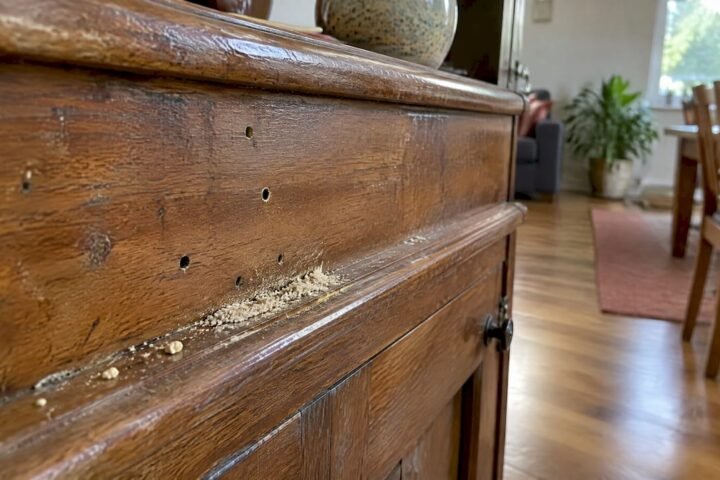
Small pellets of compacted droppings near window frames or exposed timber are associated with drywood termite activity. Unlike subterranean species, drywood termites push frass out through small kick-out holes, leaving granular residue resembling fine sawdust. This sign is increasingly relevant in the ACT during drier summer months as conditions favour drywood species.
Sagging Floors or Sticking Doors
When termites hollow out structural joists and framing, load distribution shifts, causing floors to feel spongy underfoot and door or window frames to fall out of alignment. This is frequently misattributed to moisture or normal settling. If multiple doors or windows suddenly stick without a clear explanation, the EPA’s termite identification guidance recommends treating structural movement as a potential termite indicator until proven otherwise.
Swarms or Discarded Wings
A sudden emergence of winged termites (alates) near your home in spring is a strong signal that a mature colony is nearby and actively expanding. Swarms are brief; if you miss the event itself, small piles of discarded wings near windowsills or doorways confirm it occurred. Either observation warrants an immediate inspection booking, regardless of whether live insects are still visible.
Why Canberra Homeowners Choose BugsPatrol for Termite Inspections
Choosing the right provider for a termite inspection is just as important as choosing to book one in the first place. For Canberra homeowners, BugsPatrol offers a combination of local expertise, professional credentials, and practical affordability that makes it a standout choice in the ACT market.
BugsPatrol is locally owned and operated from Throsby in the ACT, which means its technicians work within Canberra’s suburbs every day. That ground-level familiarity with local termite species, seasonal activity windows, and the specific construction styles common across Canberra’s housing stock is something no remotely managed national operation can genuinely replicate. When a technician has inspected properties across Braddon, Deakin, Yarralumla, and Griffith regularly, they bring contextual knowledge that meaningfully improves inspection accuracy.
All inspections are carried out by ACT-licensed pest technicians, and BugsPatrol is fully insured with public liability coverage. Inspection reports are produced in accordance with AS 3660.2, the Australian Standard governing termite inspections for existing buildings, ensuring every report meets the formal requirements that insurers, solicitors, and lenders recognise for both residential and commercial properties.
As a local operator, BugsPatrol can offer same-day emergency attendance and shorter booking lead times. Flexible appointment scheduling means inspections fit around homeowner availability rather than the other way around.
The monthly subscription model removes the barrier of large one-off costs. With no upfront fees, easy monthly payments, and 12-month warranty-backed protection plans, maintaining a consistent inspection cycle becomes genuinely manageable.
Critically, if an inspection identifies active termites or elevated risk conditions, BugsPatrol delivers end-to-end management through tailored treatments including liquid chemical barriers and baiting systems, removing the need to source a separate treatment provider.
Protecting Your Property Starts with a Professional Inspection
Termites cause an estimated $1.5 billion in damage to Australian homes every year, and standard home insurance policies almost never cover it. That financial exposure falls entirely on the homeowner, making proactive termite management one of the most important investments a Canberra property owner can make. A professional termite inspection is the clearest, most reliable starting point for that protection, giving you an accurate picture of your property’s current risk before damage has a chance to take hold.
Annual inspections aligned with Australian Standard AS 3660.2 do more than identify active termites. They create a documented record of your property’s risk status over time, protect the warranties attached to any existing chemical barriers or baiting systems, and ensure that any change in conditions is caught early. Whether you are a homeowner seeking ongoing peace of mind, a buyer completing pre-purchase due diligence, or a seller wanting to present a clean, credible property report, a current inspection from a licensed local technician is genuinely essential.
BugsPatrol provides thorough, AS 3660.2-compliant termite inspections to Canberra homeowners and commercial properties across the ACT and surrounding NSW regions. As a locally owned team, they bring targeted knowledge of Canberra’s specific risk conditions and back their service with flexible payment options and no upfront fees. If your inspection identifies active termite activity or elevated risk, termite damage costs Australian homeowners an estimated $1.5 billion every year, and BugsPatrol’s treatment options, including liquid barriers and baiting systems, are ready to respond immediately.
Conclusion
A termite inspection is one of the smartest investments a Canberra homeowner can make. You now understand what inspectors look for, how the process works from start to finish, and why Canberra’s unique environment makes regular inspections especially important. You also know what to do if termites are found, so there is no need to feel caught off guard.
The key takeaways are simple: inspections are thorough but non-invasive, they typically take one to two hours, and catching problems early saves thousands in repair costs. Most importantly, prevention is always easier than a cure.
Do not wait until you spot visible damage. Book a licensed termite inspector in Canberra today and give yourself the confidence that your home is protected. Your property is worth defending, and it all starts with one straightforward inspection.