Killing the flies you see does nothing if the maggots stay behind. Find the breeding source, whether it’s an overflowing bin, a dead rodent in the roof, or a neglected compost pile, and remove it today. Bait a few sticky traps while you clean, and if the source stays hidden or the flies keep multiplying, call a licensed pest controller before the problem compounds.
TL;DR:
- Flies breed in moist organic material like trash, compost, and drains, and eggs can hatch into larvae within 8 to 24 hours under warm, moist conditions.
- Identifying breeding sites involves inspecting kitchen bins, compost piles, pet areas, and hidden spaces like roof voids where dead animals may decompose.
- Rapid reproduction during heatwaves allows fly populations to double or triple in just a week, making quick source removal critical for control.
- DIY methods focus on sanitation, exclusion, and traps; chemical treatments are less effective without prior source elimination and carry the risk of resistance.
- Professional exterminators are recommended when maggots persist, fly swarms return quickly, or suspected carcasses are hidden in walls or roof cavities.
Table of Contents
- What To Do in the First 24 to 48 Hours of a House Fly Infestation
- How Do You Identify House Flies and Signs of a Breeding Site?
- Where Do Flies Breed, and How Do You Find the Source?
- How Fast Do Fly Eggs Turn Into a Full Infestation?
- What Are the Best DIY Methods for House Fly Removal?
- How Do You Stop Flies From Coming Back?
- When Should You Call a Professional Pest Controller?
- A Local Pest Professional’s Take on Sudden Fly Swarms
- Get a Fast, Family-Safe Fly Inspection
- Sources
What To Do in the First 24 to 48 Hours of a House Fly Infestation
A sudden swarm feels chaotic, but the response is a checklist, not a scramble. Work through it in order.
- Contain first. Cover food, move pet bowls off the floor, and keep kids away from any bin or drain you’re about to inspect.
- Hunt for the source. Lift bin lids, turn over compost, check drains for a slimy film, and look for small white grains that move. Those are maggots.
- Knock down adults fast. Sticky traps and a UV zapper in a safe, out-of-reach spot cut numbers while you work. A cordless electric swatter handles stragglers.
- Kill what you find. Boiling water or a bleach flush deals with maggots in bin liners or slow drains.
- Air it out and recheck. Ventilate treated areas and inspect again within 24 hours. If flies are back at full strength, the source wasn’t fully removed.
Pro Tip: If a single fly won’t leave, dim every light in the room except one near an open window. Flies fly toward light. That one bulb usually walks it right out the door within a few minutes.
How Do You Identify House Flies and Signs of a Breeding Site?
The common house fly (Musca domestica) runs about 4 to 8 millimeters long, gray bodied, with four faint dark stripes down its thorax. That’s different from a blow fly, which has a shiny metallic blue or green sheen, or the tiny fuzzy drain and fruit flies that hover around sinks and overripe produce instead of swarming in open air.
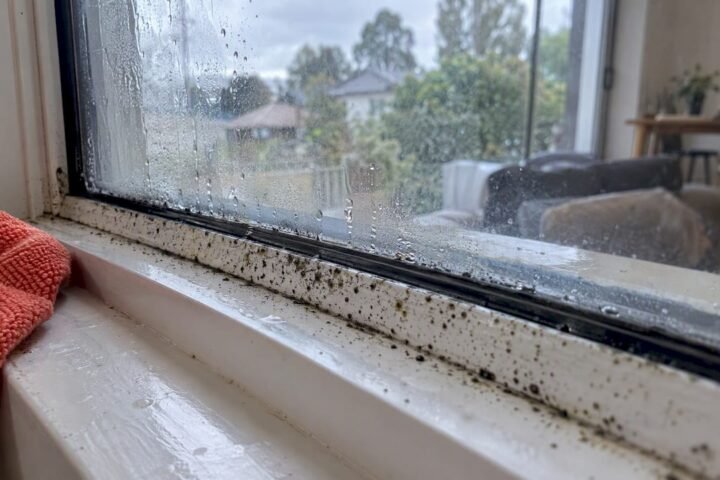
Behavior tells you almost as much as appearance. A cluster of flies circling one spot on the ceiling, or landing repeatedly on the same wall, usually marks the general direction of the breeding source. Small dark speckles on windowsills or light fixtures are fly droppings, and they concentrate near resting spots.
- Rice-grain-sized white eggs in moist organic material
- Squirming white or cream maggots in bins, drains, or soil
- Darker, harder pupal cases near the larval feeding site
The house fly is the most common indoor fly species, and a single female can lay several hundred eggs across multiple batches in her lifetime. That’s why a handful of flies today can be dozens by the weekend.
Where Do Flies Breed, and How Do You Find the Source?
Work through your property in the same order every time, because flies breed in predictable spots and skipping steps means missing the source.
- Kitchen bins first. Lift the lid, check under the liner, and smell for anything sour.
- Compost second. Turn it. Fresh maggots hate light and will burrow instantly.
- Pet areas third. Old food bowls and litter trays are prime egg-laying sites.
- Drains and sink overflows fourth. Run a finger inside the overflow hole. A greasy film means biofilm, which flies love.
- Behind and under appliances. Food scraps collect where you never look.
- Outdoor bin enclosures. Check for spills on the ground beneath the bin.
- Roof voids and wall cavities last. A sudden, unexplained swarm inside the house, especially clustered near one ceiling point, often means a dead rodent or bird decomposing above the ceiling.
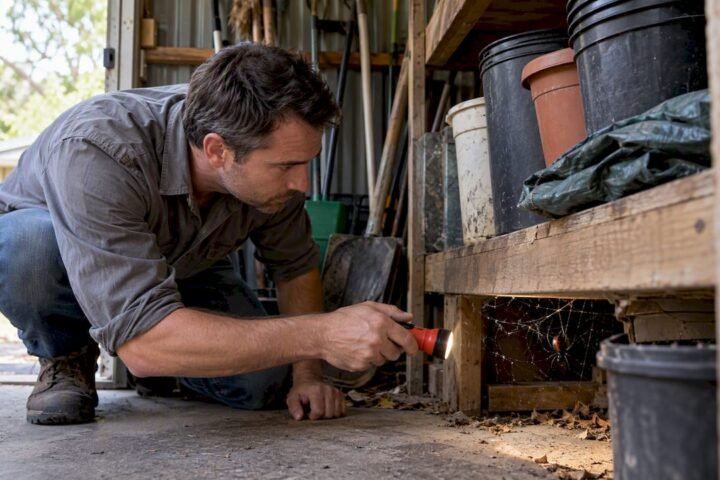
Watch where flies gather at different times of day. Consistent clustering near one wall or vent is a strong clue. Use a torch and a small mirror to check roof access points, and never probe a roof void alone if access is unsafe. That’s a job for a professional with the right equipment.
How Fast Do Fly Eggs Turn Into a Full Infestation?
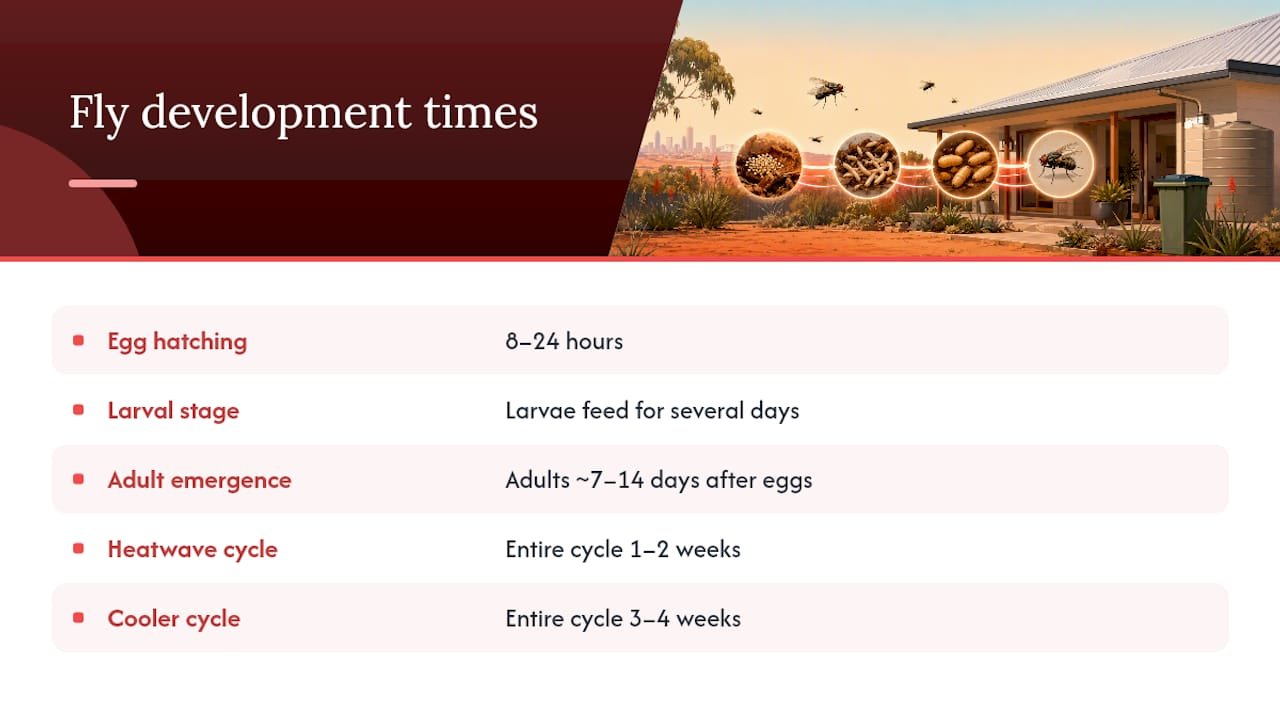
Fly eggs hatch into larvae in as little as 8 to 24 hours once conditions are warm and moist. Those larvae feed for several days before pupating, then emerge as adults roughly 7 to 14 days after the eggs were laid, depending on temperature.
Heat changes the math. During a heatwave, the entire cycle from egg to flying adult can compress to just 1 to 2 weeks, down from the 3 to 4 weeks a cooler spell allows. Multiple generations can overlap in a single bin or compost pile within a month.
That’s the biology behind the “it appeared overnight” complaint. Heat accelerates both reproduction and adult activity, so a mild fly problem on Monday can look like a full infestation by Thursday. It also means killing the adults you can see buys you nothing if eggs and maggots are still developing in a source you haven’t found.
What Are the Best DIY Methods for House Fly Removal?
Sanitation beats every spray on the market, but the right nonchemical tools speed things up while you clean.
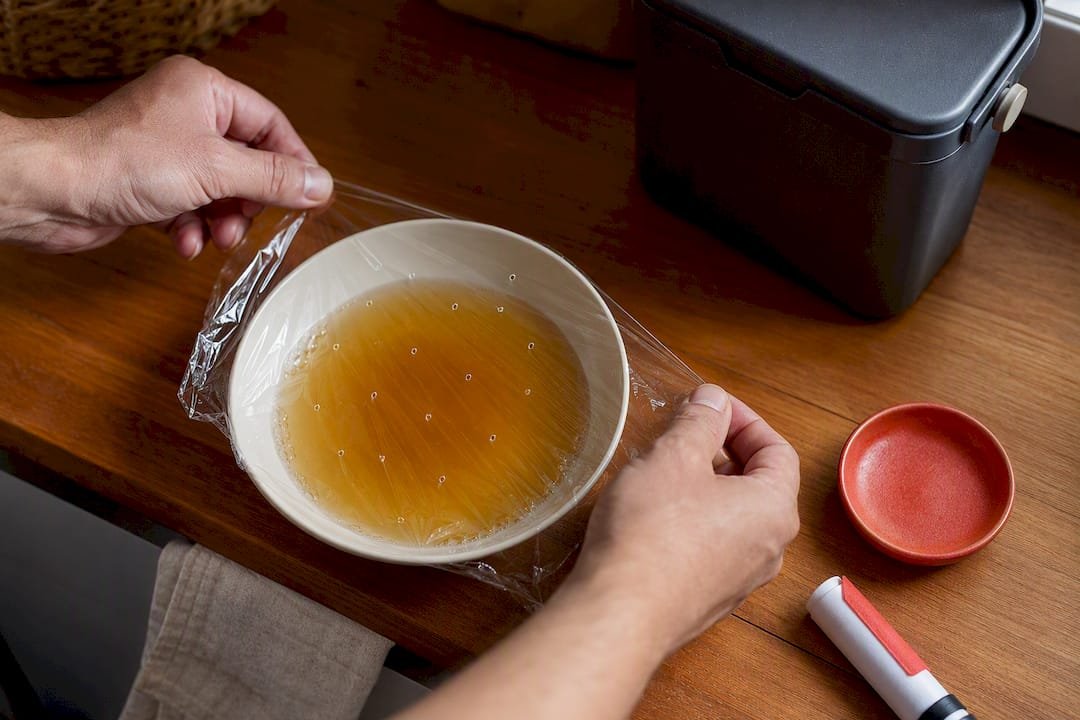
Nonchemical tactics come first. A shallow dish of apple cider vinegar with a drop of dish soap and plastic wrap poked with holes traps adults by the dozen. Sticky strips work well hung in low-traffic corners, not over the kitchen table. Electric swatters handle the fast fliers your hand can’t catch.
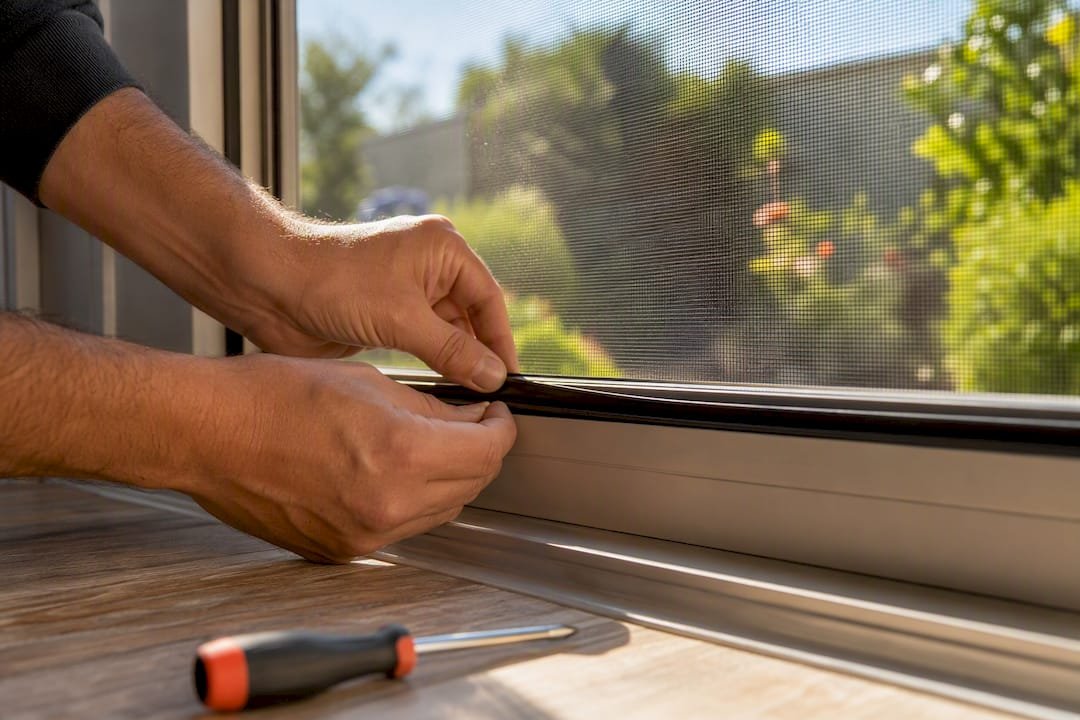
Mechanical exclusion matters more than most homeowners think. Check window and door screens for tears, add a door seal if daylight shows underneath, and run a ceiling fan in eating areas. Flies avoid strong air movement.
Chemical options exist, but use them with care. Contact sprays kill on direct hit and work fastest around active swarms. Baits draw flies away from food-prep zones. Space sprays clear a room quickly but require you to move food, dishes, and pets out first, then follow the label instructions exactly. Some Australian house fly populations have documented resistance to certain insecticide classes, which is one reason the same spray that worked last summer might barely dent this year’s population.
Placement decides whether any of this works. Put traps near the bin or compost, never beside food prep surfaces, and pair every trap with the sanitation step that removes the reason flies showed up in the first place. Sprays without source removal only buy a few days.
Pro Tip: Skip the spray-first instinct. A trap near an unwashed bin will catch flies for weeks; a spray in a clean kitchen barely lasts a day.
How Do You Stop Flies From Coming Back?
Prevention is mostly bin discipline and a few small fixes around the house.
- Rinse food containers before they go in the bin, use liner bags every time, and check that lids seal tight, not just close.
- Store outdoor bins in shade, away from doors and windows, since heat speeds up decomposition inside them.
- Clean drains regularly and keep compost covered with a lid or a layer of dry material rather than leaving it exposed and wet.
- Fit flyscreens on windows that stay open, add weather strips or door closers, and check both after any storm that might have warped a frame.
- Skip decaying mulch right next to entry doors. It holds moisture and attracts flies looking for a place to lay eggs.
Covering food and keeping bins clean are repeatedly named the most durable fixes for keeping flies out long term, and they cost nothing beyond a bit of routine. Step up the vigilance during summer heatwaves and for a week or two after any major storm, since both conditions create fresh breeding material fast.
When Should You Call a Professional Pest Controller?
Some situations are worth handing over immediately rather than spending another weekend chasing the source yourself.
- Maggots keep appearing inside the house after you’ve cleaned every obvious spot.
- You suspect a dead animal in the roof, wall, or under the floor.
- You’re dealing with hundreds of flies, not dozens.
- Flies rebound within days of a DIY treatment that seemed to work.
A professional visit typically follows a set sequence: inspection of the property, correct species identification, locating and removing the actual source, a targeted residual treatment around confirmed hot spots, then a follow-up check to confirm the population has actually collapsed rather than just scattered.
Getting the species right matters more than most homeowners assume. Effective control depends on matching the treatment to the species and removing the source, because the wrong insecticide on the wrong species wastes money and accelerates resistance. A trained technician also finds carcasses in roof voids and wall cavities that most people never think to check.
Pro Tip: If you’ve cleaned everything visible and flies are still showing up daily, stop guessing and get an inspection. A hidden source in a wall cavity can keep producing flies for months.
A Local Pest Professional’s Take on Sudden Fly Swarms
Most fly calls we receive follow the same pattern: a homeowner cleaned the kitchen thoroughly, sprayed everything in sight, and still has flies three days later. Nine times out of ten, the source was never in the kitchen. One recent case turned out to be a possum that had died in a roof void two rooms away. The client’s spraying was never going to fix that.
Treatments around family homes should never require you to choose between pest control and pet safety. Done right, they don’t.
— navin
Get a Fast, Family-Safe Fly Inspection
Professional pest control services give you what a DIY weekend can’t: a technician who finds the hidden source, not just the visible flies. Our process runs inspection, species identification, targeted treatment, then a follow-up check to confirm the population is actually gone, not just scattered for a few days.

Technicians handle every job with treatments chosen to be safe around children and pets, and response times are suited for situations where flies have gone from a few annoying visitors to a real problem in under a week. If you’re still finding maggots after cleaning, or the swarm keeps rebounding, stop guessing at the cause. Book a general pest control inspection and let a technician trace the source before it multiplies further.
Sources
- Australian Museum — House fly
- AEPMA — House Flies
- PoultryHub — Pest management: flies
- ABC News — How to reduce flies and maggots at home
- NSW DPI — Controlling flies on intensive livestock farms