To control flies in your home, do three things in order: remove what draws them in and lets them breed (food scraps, bins, pet waste, moisture), block their way inside with screens and sealed gaps, then knock down the flies already indoors with a swat, a trap or a targeted spray. If they keep coming back after that, there is usually a breeding site you have not found, and that is when a licensed pest manager earns their fee.
This guide walks through each step the way we would explain it to a Canberra homeowner standing in a kitchen full of flies.
TL;DR
- House flies come in for odors and food, and they breed in damp organic matter such as food scraps, compost, garbage and manure. Find and remove that source first.
- Screens on windows, doors and balconies, plus tight-lidded bins, do more than any home remedy.
- Peppermint oil, cinnamon and similar botanicals rarely give a high level of protection. Do not rely on them.
- Use sprays and traps as a short-term knockdown, and follow the label: clear food, toys and clothing first, then ventilate and wipe benchtops.
- A repeat or heavy infestation means a hidden breeding site. Book an inspection rather than spraying blindly.
Table of Contents
- What attracts flies into your home
- Why a few flies matter
- Step 1: Remove what feeds and breeds them
- Step 2: Block the entry points
- Step 3: Deal with the flies already inside
- What about peppermint oil, cinnamon and other home remedies?
- A seasonal view for Canberra homes
- Our perspective: why flies are a symptom
- When to call a professional
- How BugsPatrol can help
- FAQ
- Sources
What attracts flies into your home
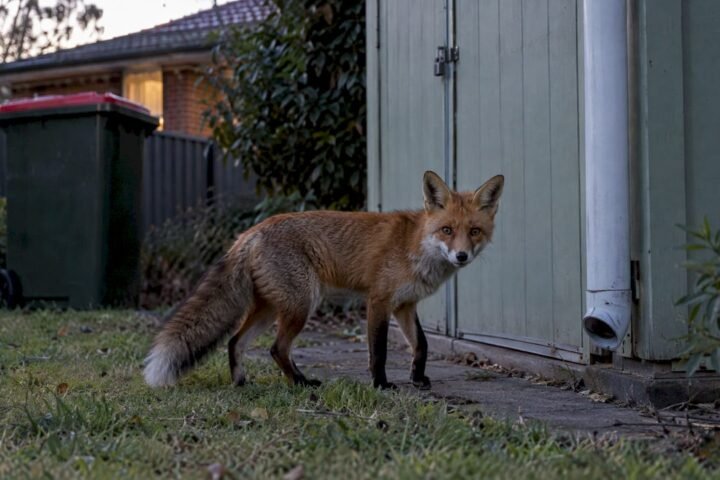
The common house fly (Musca domestica) is small, 4 to 8 mm long, grey, with four dark stripes on the thorax, according to enHealth’s guidance on arthropod pests in Australia. That same guidance says they are drawn indoors by odors and potential food, and that they breed in moist organic matter: manure, food scraps, compost and garbage.
In practice, that means the flies in your kitchen usually started life somewhere close. The usual suspects are:
- A kitchen bin with a loose lid or a split bag at the bottom
- Pet waste left in the yard
- A compost heap or green waste bin that is not turned or sealed
- Rotting fruit under a tree, or food waste in an outdoor bin
- Dirty drains, or damp organic build-up around a pet feeding area
A single fly that wanders in through an open door is a nuisance. A steady stream of them, every day, is a signal that something nearby is feeding a population.
Are they house flies at all?
Not every fly in an Australian house is a house fly. Researchers at the University of Queensland’s Institute for Molecular Bioscience point out that in Australia it is bush flies, not house flies, that are mostly drawn to people for the proteins, salts and sugars on our skin. If flies are crowding your face and back on the deck but ignoring your kitchen, you are probably dealing with bush flies, and no amount of kitchen hygiene will change that. Screens and staying indoors are your friend.
Cluster flies are another look-alike that turn up indoors in clusters around windows, often in autumn and spring. They behave differently from house flies, and the treatment is different too. Our guide to cluster flies in Australia explains how to tell them apart.
A quick field guide:
| What you see | Likely culprit | Where to look first |
|---|---|---|
| Grey, striped, 4 to 8 mm, buzzing around food and bins | House fly | Bins, pet waste, compost, food scraps |
| Flies mobbing you outdoors, landing on your face and back | Bush fly | Not an indoor problem; use screens and cover up |
| Slow flies bunching at sunny windows in autumn or spring | Cluster fly | Wall voids and roof spaces |
| Tiny flies hovering over drains or fruit | Small breeding-site flies | Drains, fruit bowl, damp organic build-up |
If you cannot name the fly, do not spray yet. The enHealth guidance says a thorough inspection should come before any insecticide treatment, and that no treatment should be carried out unless the pest has been identified.
Why a few flies matter
House flies do not bite, but they are a health concern. Both enHealth and the University of Sydney note that they can carry pathogens such as Salmonella and E. coli on their bodies and in their digestive tracts, moving them mechanically from waste to your food.
The Sydney researchers add a useful reality check. A single touchdown on food is unlikely to make a healthy person ill. The risk climbs with extended contact, when a fly walks around, vomits or defecates on the food. So you do not need to bin every sandwich a fly visited for a second, but you should cover food, and you should treat a fly that has been lingering on a plate differently. If anyone in your household is very young, elderly or has a weakened immune system, be stricter.
Step 1: Remove what feeds and breeds them
This is the step most quick-fix articles skip, and it is the one that decides whether your fly problem comes back in a week.
- Bins. Use tight-fitting lids and bag your food waste. Wash the inside of the bin regularly, because residue at the bottom is a breeding medium. Take kitchen waste out daily during warm weather.
- Pet waste. Pick it up from the yard often. Manure is one of the breeding materials enHealth lists.
- Compost and green waste. Keep it covered and away from doors and windows where you can.
- Fallen fruit and spills. Clear windfall from under fruit trees and wipe up sticky spills, including under appliances.
- Pet bowls. Do not leave wet food out for hours.
- Drains and damp spots. Clean kitchen and laundry drains, and fix leaks that keep organic matter wet.
Do this for a week before you decide whether you need anything stronger. In many homes the fly numbers drop sharply once the breeding source is gone.
Step 2: Block the entry points
EnHealth’s guidance is plain: screened windows, doorways and balconies protect against flying insects. It is the most reliable prevention step because it works every day without chemicals.
- Check fly screens for tears and gaps at the frame, and repair or replace them.
- Fit a flyscreen or security screen door on the doors you open most, especially to the kitchen and patio.
- Keep doors closed when you are carrying food in and out, and avoid propping the back door open during barbecues.
- Seal gaps around pipe penetrations, vents and window frames.
- Fit door seals if you can see daylight under an external door.
If you rent, a renter in a Reddit thread on the topic suggested asking the landlord to install a screen door or fly screens, and offering to install one yourself if they decline. That is sensible, since the property owner is generally responsible for the fixtures.
For wider seasonal prevention, the sealing advice in our cluster fly guide applies to most flying insects.
Step 3: Deal with the flies already inside
The University of Sydney’s advice is refreshingly low-tech: knockdown sprays can keep numbers down, and an old-school fly swat works too. Here is how the main options compare.
| Method | Good for | Limits |
|---|---|---|
| Fly swat | A handful of flies, no chemicals | Slow when there are many |
| Sticky traps or fly paper | Catching flies near windows and in sheds | Do not remove the source |
| Knockdown aerosol spray | Fast reduction of flying insects indoors | Short-term, needs safe handling |
| Automatic diffuser | Ongoing low-level coverage in a room | Still a chemical product; follow the label |
| Professional treatment | Heavy or recurring infestations | Needs an inspection first |
On traps, enHealth says they may be useful for monitoring and as part of integrated pest management, but few offer complete protection or long-term population control. Use them to see where flies gather and how bad the problem is, not as your whole plan.
Using sprays safely around kids, pets and food
Insecticides used in Australia must be registered with the Australian Pesticides and Veterinary Medicines Authority (APVMA), and the product label is the rule. Check that the product is registered for the use you have in mind and for indoor use.
The Victorian Department of Health’s pesticide safety technical note sets out sensible habits that apply to anything you spray at home or have sprayed for you:
- Before treatment, remove food, clothes and toys from the area being treated.
- Ask about the re-entry period, meaning how long before people and pets go back in.
- On return, ventilate the space if you can smell a chemical.
- Clean kitchen benchtops and utensils before preparing food.
Keep children and pets out of the room while you spray, and never spray over food, bowls or fish tanks. If a child or pet has a reaction, or you are unsure about a product, call the Poisons Information Centre on 13 11 26 or your doctor.
What about peppermint oil, cinnamon and other home remedies?
People ask this constantly, and the honest answer is: not much. EnHealth says botanicals rarely provide a high level of protection, and that some personal repellents that claim to repel flies may not work against house flies. Strongly scented plants may help a little, but physical barriers and hygiene are significantly more effective, according to the same guidance and the University of Queensland.
If you like a bowl of herbs on the patio table, go ahead. Just do not let it replace fly screens and a clean bin. A remedy that smells nice is not evidence of a fly-free kitchen.
A seasonal view for Canberra homes
Fly pressure tends to rise as the weather warms. Our article on stopping a house fly infestation during a heatwave covers why hot spells make problems escalate. Spring is a good time to check screens, empty out old waste and sort the bins so you are ready before the heat arrives, and autumn is when cluster flies often show up. For more practical tips, see our fly control tips.
If you are also treating other pests, keep the household routine consistent. For example, if you are dealing with bed bugs as well and wondering about replacing a mattress after bed bugs, the same principle applies: understand the problem and follow treatment steps before making expensive changes.
Our perspective: why flies are a symptom
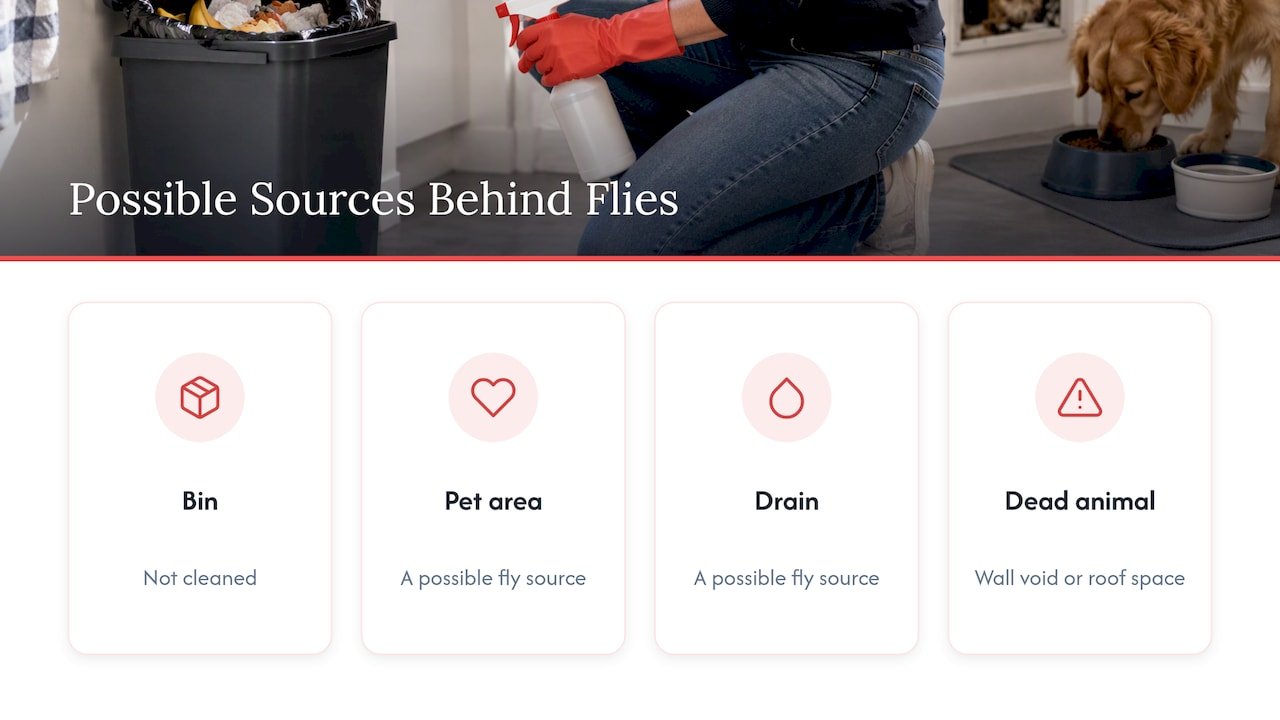
After more than ten years servicing Canberra homes, we have seen a clear pattern: customers call about flies, but the flies are rarely the real problem. They are the visible end of something else, a bin that has not been cleaned, a pet area, a drain, or sometimes a dead animal in a wall void or roof space that nobody knew about. Spraying the flies without finding that source gives you a week of relief and then the same phone call.
That is why we start with an inspection, not a spray. We identify the fly, look for where it is breeding, and then recommend the lightest treatment that will work. Where treatment is needed we choose responsible products and explain re-entry times, because many of the homes we visit have young children and pets. And we put our guarantee behind the result: all treatments are guaranteed for effectiveness.
Our honest advice is to try the hygiene and screening steps above first. They cost little and often fix the problem entirely. If they do not, you have also gathered useful information, such as where the flies gather and when, which makes our inspection faster and cheaper for you.
— navin
When to call a professional
EnHealth says a professional pest manager may be needed for serious infestations, and the Victorian Department of Health describes pest control operators as a knowledgeable resource for homeowners who feel uneasy about using pesticides in living spaces. Consider calling when:
- You have cleaned up and screened up, and flies keep appearing in numbers.
- You find lots of larvae (maggots) anywhere you cannot trace to a bin or food scrap.
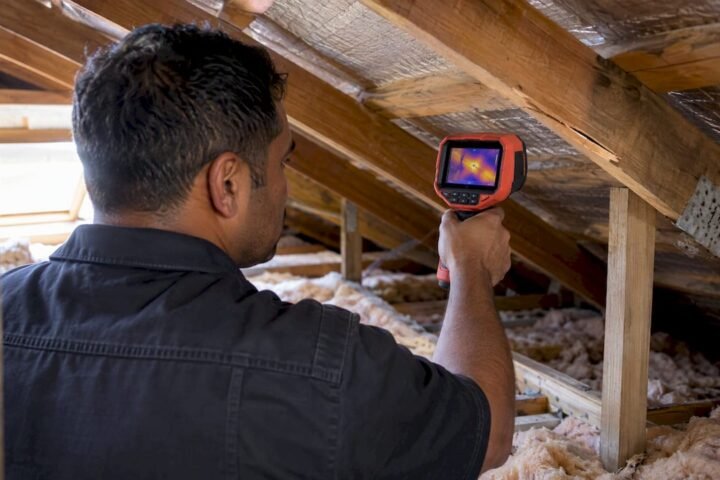
- Flies are coming from a wall, ceiling or roof space.
- You run a business, rental or body-corporate property where hygiene standards apply.
- Anyone at home is vulnerable and you do not want to handle insecticides yourself.
- You cannot identify the fly.
A good technician will identify the fly first, find the source, and only then treat. Be wary of anyone who offers to spray without looking.
How BugsPatrol can help
BugsPatrol Pest Management is a Canberra business with licensed, insured technicians and more than 5,000 Canberra homes serviced. We handle fly control as part of our everyday pest work, along with spiders, wasps, bed bugs and more, and we offer same-day emergency service when a problem cannot wait. Our focus is on safe, eco-friendly treatments for families and pets.

If you would like flies and other pests handled on a schedule, our maintenance plans are published at $29.98 per month for Bronze General Pest, $55.98 per month for Silver Combined and $79.98 per month for Gold Complete. Ask us what each plan covers for flies before you choose. For a one-off visit, see our general pest control service or contact us through our home page.
FAQ
How do I get rid of flies in my house fast?
Clear the food and waste they are feeding on, close doors and windows, and use a fly swat or a knockdown spray on the flies already inside. Follow the label, remove food, toys and clothes from the area first, and ventilate afterward. If they return within days, there is a breeding site you have not found.
Does peppermint oil or cinnamon repel flies?
The evidence is weak. EnHealth says botanicals rarely provide a high level of protection, and that screens and hygiene work significantly better. A scented plant near a doorway will not replace either.
Are house flies dangerous?
They do not bite, but they can carry bacteria such as Salmonella and E. coli from waste to food. One brief landing on your food is unlikely to make a healthy person sick. Flies that linger, walk over, or defecate on food are a greater risk, so cover food and discard anything heavily contaminated.
Do fly traps work?
They help you monitor where flies gather and can reduce numbers, but few give complete protection or long-term control. Use them alongside bin hygiene and screens rather than instead of them.
When should I call a pest controller for flies?
Call when flies persist after you have cleaned and screened, when you see larvae you cannot trace, or when they seem to come from a wall or roof space. A professional should identify the fly and inspect before treating.
Sources
- enHealth guidance: Arthropod pests of public health significance in Australia
- Buzz, buzz, slap! Why flies can be so annoying, Institute for Molecular Bioscience, University of Queensland
- Should I throw away food once a fly has landed on it? University of Sydney
- Pesticide Safety Technical Note, Victoria Department of Health
Recommended
- Heatwaves: Australian Homeowners, Stop House Fly Infestation in 48 Hours
- Homeowners: Stop Bathroom Drain Flies in a Week by Scrubbing Biofilm
- Late Summer Treatment Stops Cluster Flies in Australia for Homeowners