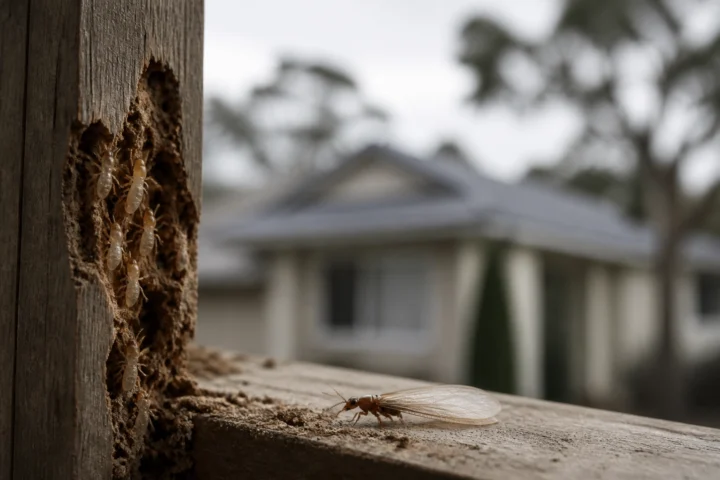
If your home was treated for termites five or ten years ago and you cannot find the paperwork, the question you are really asking is simple: do I need to pay for this again? The honest answer is that you may. A termite chemical barrier is not a permanent installation. The liquid termiticide applied to your soil breaks down over time, and its lifespan depends on the product used, the soil it was applied to, and how well that soil has drained since. Baiting systems work differently, but they still rely on regular servicing to stay effective.
This guide is written for owners in exactly your position. It explains whether barriers actually expire, what changes when you have no records at all, and which conditions shorten or extend a barrier’s working life. You will also read how liquid barriers and baiting systems differ, what re-treatment involves in Canberra, what drives cost, and why a documented record beats guesswork. By the end, you will know how to turn an unknown barrier into a documented plan.
Do Termite Barriers Actually Expire? The Short Answer
Yes, in practice. No liquid chemical barrier or baiting program is sold as indefinite protection. A liquid barrier is a treated zone of soil around and under the building, and that treated layer is often only the top 20 mm or so of soil. What you are relying on is thin, shallow and easy to disturb through digging, paving or landscaping.
Baiting systems work differently but end the same way. They are a monitoring and servicing program, so protection lasts only while the stations are checked and refreshed on schedule. A lapsed program, or a store-bought DIY baiting kit that never gets maintained, is effectively no program at all.
Risk context matters in Canberra. CSIRO guidance places most Australian states and territories in the moderate to very high risk categories for termite attack, and subterranean termites cause most structural damage in Australia.
So the useful question is not whether your barrier passed a set expiry date, but whether an effective, continuous and documented protection system still exists here.
Your Treatment Was Five or Ten Years Ago and You Have No Paperwork
With no treatment certificate or termite management plan, you cannot tell what was installed, which product was used, where the treated zone runs, or whether it has since been cut through. You also cannot assume the work met standard, or that it covered later additions such as extensions, decks, garages, retaining walls and garden beds.
What you can reasonably assume is that subterranean termites usually forage within 30 m of the nest and occasionally 100 m or more, so gaps, additions and soil bridges matter as much as the original installation. Feeding typically takes several years to structurally weaken a building. That gives you time to act calmly, but it also means damage can be underway before anything is obvious.
The fastest way to replace guesswork with facts is a current inspection producing a written report on your property’s termite risk and the status of its protection. To understand what that protection could involve, see our guide to termite treatment options for Canberra homeowners.
What Shortens or Extends a Chemical Barrier’s Life
An inspection tells you what you have, not its remaining life.
Chemistry and climate. Durability depends on the active ingredient and formulation. A 1988 CSIRO study called persistent soil insecticide the most important technique for protecting Australian buildings, and found organophosphorus durability was far lower in tropical than temperate Australia. That is history, not a lifespan figure.
Installation conditions. Labels prohibit application into saturated or frozen soil, and moisture at application shapes the treated zone. Canberra’s cold winters and clay soils make timing critical.
Soil and drainage. Once dry, termiticides are quite insoluble, so leaching is limited. Water movement, erosion and altered levels and drainage pose bigger threats.
Mechanical disturbance. Digging, trenching, new paving, retaining walls, garden beds, irrigation trenches and slab movement break the continuity of the treated zone. Continuity is what stops termites.
Site change. Plant growth, mulch piled against the slab, raised beds and soil bridges create pathways that did not exist when the barrier went in. Compare physical barriers versus chemical treatments before rebuilding.
Numbers worth doubting. No source publishes a reliable lifespan in years. A fixed number quoted without an inspection is a guess.
Liquid Barriers vs Baiting Systems: Different Jobs, Same Need for Servicing
Knowing what is plausible is not the same as knowing what you have. The two main systems work differently, so identify yours first.
A liquid barrier is a treated soil zone around the perimeter and, where required, under the slab. It is chemical defence that sits quietly until site conditions change.
A baiting system is in-ground and above-ground stations checked on a schedule. It protects only while someone monitors and maintains it.
This distinction shapes re-treatment. With no paperwork, confirm the system before comparing quotes; an inspection report will state what is present and what it means, and how to read a termite inspection report explains each section.
Some properties run both: a liquid barrier for the structure plus baiting for ongoing monitoring, useful where subfloor or slab access is limited.
That access matters. The 1988 CSIRO observation that less durable chemicals depended on techniques allowing re-treatment under a building still holds: designing for future access is part of good protection.
What Re-Treatment Involves in Canberra
Once you know which system you have, re-treatment follows a defined sequence.
Inspection first. A licensed technician checks for active termites, evidence of earlier treatment, soil levels, moisture, drainage and access points, then records the findings in writing.
A written termite management plan sets out what protection is proposed, where it will go, and the maintenance it needs. If pipework may already sit under your slab, it is worth reading Termite Reticulation Systems for Canberra Homes: What They Are and When to Choose One before work starts.
Site preparation comes next: soil, mulch and stored materials moved away from the slab, and drainage or level problems corrected so they do not undermine new work.
Liquid barrier work means re-treating the perimeter, drilling and injecting where a slab needs treatment, and tying new work into the existing treated zone so no gaps remain.
Baiting involves re-establishing or taking over stations, with a monitoring schedule and defined visit intervals.
Handover gives you a certificate, plan, product details and a maintenance schedule to keep on file properly. With the scope defined, cost becomes far easier to judge.
What Drives Termite Barrier Treatment Cost
Once scope is set, cost follows the site. Perimeter length and the number of drill points set the base of any job, because every linear metre of treated zone and each injection point is labour and product.
Access and construction drive the rest: slab on ground, suspended floors, extensions, decks, garages, retaining walls and concrete paths all change the equipment and hours needed. A liquid barrier treatment costs differently from a baiting system, and some properties need both.
Extent matters too. Perimeter re-treatment only is one job; treating under a slab, plus correcting drainage, soil levels or landscaping, is another. Active termites, moisture problems or a history of disturbance add scope before protection work begins.
Ongoing program: monitoring visits and warranty terms are part of total termite control treatment cost, not extras. BugsPatrol’s year-round protection plans include a 12-month warranty, rolling cover, easy monthly payments and no upfront fees, spreading protection across the year.
That is why there is no price list. Termite barrier treatment cost is site specific, no current source publishes reliable Canberra figures, and any flat online quote is a starting point only. To weigh DIY against professional work, read our head-to-head comparison of DIY and professional pest control.
Why a Documented Record Beats Guesswork
Cost is only half the equation. What protects you over the next decade is the paperwork.
Keep the treatment certificate, termite management plan, product and active ingredient details, a site diagram showing treated zones and bait stations, plus every service date and technician note. At each visit, ask for a written report covering termite activity, moisture and drainage findings, work performed, what to watch, and the next service date.
Inspection and maintenance recommendations are recognised as part of termite protection in National Association of Forest Industries guidance listed by the Australian Pest Control Association, so a maintenance schedule is standard practice, not an upsell.
Records also support your position at sale, with insurers, and with any future warranty claim. Starting from zero? Your first termite inspection in Canberra report becomes the baseline everything after it is measured against. With that baseline on file, any new sign can be judged against what was known before.
Signs Around a Canberra Home That the Old Barrier May Be Failing
A written record gives you something to measure against. Until the inspection happens, these are the clues worth noting.
- Mud tubes or shelter tubes on foundations, piers, retaining walls and fence lines. Termites build these over concrete and brickwork to stay out of the light. Also watch for timber that sounds hollow or shows damage.
- Drill holes or injection caps in paths and slabs with no paperwork explaining when or why they were made. Someone treated something, and you cannot tell whether it tied into the original zone.
- Soil, mulch or garden beds built up above the damp-proof course, or against weatherboards and cladding. Where Belconnen’s higher termite pressure meets mature tree cover and older housing stock, this is more than cosmetic.
- New paving, retaining walls, irrigation, landscaping or a renovated wet area added since treatment. Each one disturbs the treated zone or redirects water across it.
- Persistent moisture: leaking taps, poor drainage, blocked subfloor ventilation, air conditioning condensate. All of it keeps soil attractive to termites.
- Timber, firewood or cardboard stored against the house. That is an invitation, not a barrier fault.
And remember: no visible signs is not proof of protection. Subterranean termites forage mostly within 30 m of the nest, occasionally 100 m or more, and they work out of sight. Photograph anything on this list before a technician arrives.
Choosing a Provider and What Good Protection Looks Like
If those signs are absent, don’t assume you’re covered. Provider choice determines whether your next system is documented and maintainable.
Confirm the business is licensed for termite work in the ACT, and ask what training or accreditation its technicians hold. The Australian Pest Control Association promotes accreditation based on a TAFE or APCA certificate plus extensive field experience, and advises consumers to contact APCA before acting.
Ask what sits in the written plan, not just what gets sprayed. The scope should reflect your property, not a phone estimate.
Check warranty and program terms in writing. BugsPatrol, a locally owned Canberra company based in Throsby, services the ACT and surrounding NSW with liquid barriers and baiting systems, and offers year-round protection plans including a 12-month warranty, rolling cover, easy monthly payments and no upfront fees.
Ask which product is proposed and confirm its current APVMA registration rather than accepting an older chemical name. Get the inspection report before comparing quotes, so every quote prices the same scope. That brief makes provider comparison meaningful.
Next Steps: Turn an Unknown Barrier into a Documented Plan
With a provider chosen, the final step is replacing guesswork with paperwork. Book a termite inspection that produces a written report and a site diagram, even when you have no history to hand the technician; that report becomes your baseline. From it, ask for a termite management plan and a quote covering liquid barrier and baiting options where they apply, priced against the same scope.
Then fix what shortens barrier life: reduce soil and mulch levels against the slab, correct drainage, improve subfloor ventilation and move stored timber away from the building. Keep every report, certificate and service record, and diary the next service date so the program never lapses.
Finally, compare ongoing protection on warranty length and what each visit includes, not the first invoice alone. Protection is a maintained system, not a one-off purchase, and a documented plan is what keeps it working.
Frequently Asked Questions
Here are the answers that matter.
How long does a termite chemical barrier last? No current source gives a reliable figure in years. It depends on product, soil, drainage, installation quality and disturbance to the treated zone; only a site inspection gives a straight answer.
Do baiting systems expire? Not chemically, but they stop protecting if not monitored and serviced on schedule. A lapsed program is effectively no program.
How much does termite barrier treatment cost in Canberra? No reliable published figures exist. Cost is driven by perimeter length, access, barrier type, extent of work, and the attached monitoring or warranty program.
Can I just book a cheap perimeter spray? A partial treatment that does not connect to a full treated zone or monitored baiting system leaves gaps, and gaps are where termites get through.
Should I re-treat if I cannot see any termites? Treat it as a decision to make with information, not ignore, especially with no paperwork. An inspection report shows what you are protected by.
Conclusion
Termite protection is not a set-and-forget purchase. A chemical barrier has no universal expiry date, because product, soil, drainage, installation quality and disturbance all affect how long it lasts. Baiting systems do not expire chemically, but they stop protecting when monitoring lapses. Paperwork matters: a documented record beats guesswork, and a maintained plan keeps the program working. When comparing options, look beyond the first invoice and assess warranty length plus what each service visit includes. Your next step is to book a professional inspection with a qualified Canberra termite provider, turn an unknown barrier into a documented plan, and diary the next service date. Good protection is ongoing, and clarity today is what safeguards your home tomorrow.