
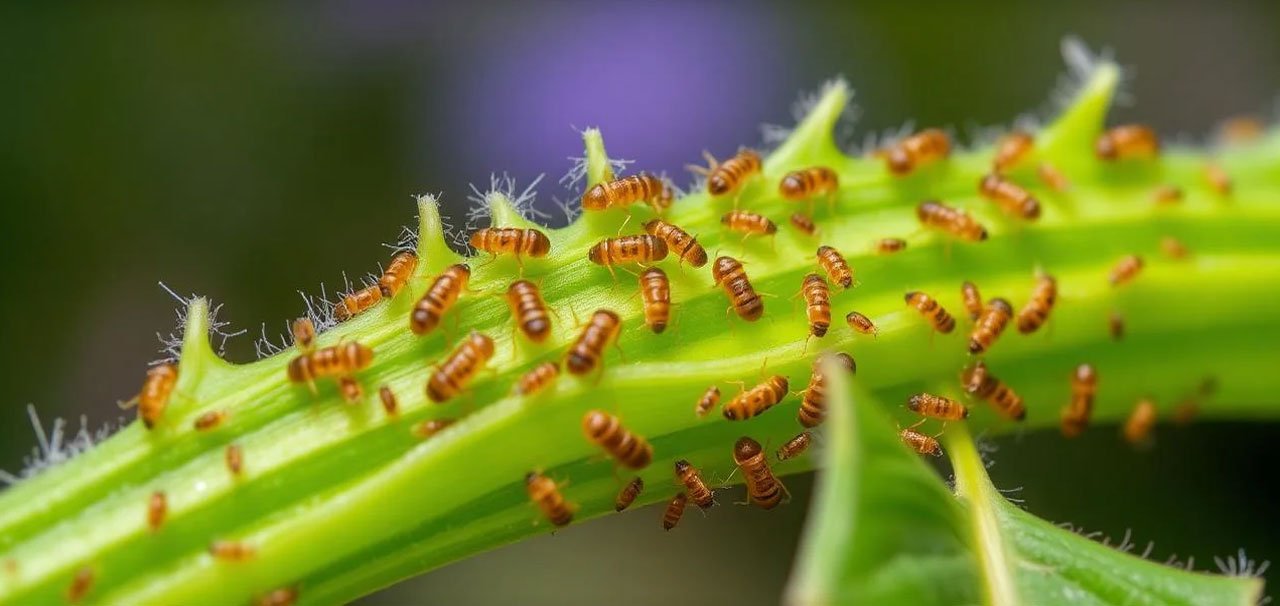
Aphids are among the most destructive garden pests in the Canberra region. These tiny sap-sucking insects can appear seemingly overnight, multiplying rapidly on roses, vegetables, fruit trees, and ornamental plants. A single aphid can produce up to 80 offspring in a week — which means a small cluster on Monday becomes a full-blown infestation by Friday. Understanding how aphids operate and knowing your control options is essential for every Canberra gardener.
How to Identify Aphids in Your Garden
Aphids are small (1-3mm), soft-bodied insects that cluster on new growth, leaf undersides, and flower buds. They come in multiple colours — green, black, brown, pink, and yellow — depending on the species and host plant. Here’s what to look for:
House Flies
Curling or Distorted Leaves
Sooty Mould
Ant Trails on Plants
Yellowing Leaves
Stunted Growth
Plants Most Vulnerable to Aphids in Canberra
While aphids can attack almost any plant, certain species in Canberra gardens are particularly susceptible:
| Plant Type | Common Aphid Species | Peak Risk Period |
|---|---|---|
| Roses | Rose aphid (green/pink) | Sep–Dec |
| Citrus Trees | Black citrus aphid | Oct–Mar |
| Brassicas | Cabbage aphid (grey-green) | Mar–May, Sep–Nov |
| Stone Fruit | Green peach aphid | Sep–Nov |
| Beans & Peas | Black bean aphid | Oct–Jan |
| Lettuce & Herbs | Lettuce aphid (green) | Year-round in mild weather |
Natural Aphid Control Methods
For mild to moderate infestations, natural methods can be effective — especially if you act early:
- Strong water spray — a firm blast from the hose knocks aphids off plants. Most won’t climb back. Repeat every 2-3 days for two weeks.
- Insecticidal soap — commercially available or homemade (1 tablespoon pure soap per litre of water). Spray directly onto aphids; it works on contact by dissolving their waxy coating.
- Neem oil — disrupts aphid feeding and reproduction. Apply as a foliar spray in the evening to avoid leaf burn. Reapply weekly.
- Encourage predators — ladybirds, lacewings, hoverflies, and parasitic wasps are natural aphid predators. Plant dill, fennel, and yarrow to attract them to your garden.
- Companion planting — nasturtiums act as trap crops, drawing aphids away from valuable plants. Marigolds repel certain aphid species.
The Ant-Aphid Connection
One of the most overlooked aspects of aphid control is the relationship between ants and aphids. Ants actively farm aphid colonies, protecting them from predators and even moving them to fresh plant growth. In return, ants harvest the sweet honeydew aphids produce.
This means that controlling ants is often essential to successful aphid management. If you treat the aphids but leave the ants, the ants will simply introduce new aphid colonies from elsewhere. A professional pest controller addresses both populations simultaneously for lasting results.
When Natural Methods Aren’t Enough
Professional aphid treatment becomes necessary when infestations are severe and spread across multiple plants, when sooty mould has developed extensively, when ant colonies are maintaining aphid populations despite treatment, when valuable plants or food crops are at risk, or when natural methods have been tried for 2-3 weeks without improvement.
Professional treatments use targeted, low-toxicity insecticides that control aphids without harming beneficial insects when applied correctly. Systemic treatments absorbed through the root system provide weeks of protection for high-value plants.
Aphids Taking Over Your Garden?
Bugs Patrol provides targeted aphid and ant control for Canberra gardens. We protect your roses, vegetables, and ornamentals with safe, effective treatments.
Still have questions?
The best pest control company will solve your issue for a long time. Bugs Patrol is Canberra’s trusted choice for professional aphid control with lasting results.
Frequently Asked Questions
Aphid infestations are triggered by warm spring weather, over-fertilisation with nitrogen (which produces the soft new growth aphids prefer), lack of natural predators like ladybirds, and stressed or water-deprived plants. Canberra’s warm, dry springs create ideal conditions for rapid aphid population growth.
Natural aphid control includes strong water sprays to dislodge them, introducing or encouraging ladybirds and lacewings, companion planting with nasturtiums and marigolds, neem oil sprays, and insecticidal soap solutions. These methods work best for mild infestations caught early.
In Canberra gardens, aphids most commonly target roses, citrus trees, stone fruit, brassicas (broccoli, cabbage, kale), beans, lettuce, and new growth on ornamental plants. They’re particularly attracted to soft, nitrogen-rich new growth in spring and early summer.
Call a professional when aphid infestations are severe and widespread across multiple plants, when natural methods haven’t worked after 2-3 weeks, when sooty mould is developing on leaves, when ants are farming aphid colonies, or when valuable plants or crops are at risk. Professional treatments target both the aphids and the ant colonies that protect them.