If the droppings look like grains of dark rice with pointed ends scattered in a line, you’re dealing with mice. If they’re tiny pepper-like specks or short cylinders with fine ridges running lengthwise, that’s a cockroach problem. Pattern confirms it: mice leave trails along runways, roaches cluster near moisture and heat. When you can’t tell, treat it as an active infestation, clean up safely, and get a professional look before it spreads.
TL;DR:
- Droppings with pointed ends and uniform size suggest mice, while blunt, ridged, or granular droppings indicate cockroach presence, especially behind appliances or in warm, moist areas.
- Fresh mouse droppings are shiny and black, resisting smearing, whereas old droppings fade to gray and crumble; cockroach droppings are dry and granular from the start, streaking if moisture is present.
- Location helps distinguish pests: mice leave trails along walls and inside storage, while roaches cluster near heat and moisture sources such as under sinks, appliances, or ceiling corners.
- A professional inspection is essential if droppings reappear after cleanup, are near food preparation areas, or are accompanied by egg cases or nests, since DIY measures may only control symptoms.
- Proper cleanup involves ventilation, disinfectant, gloves, and photographic documentation; persistent signs within 48 hours suggest ongoing activity requiring expert treatment.
Table of Contents
- Mouse Droppings vs Roach Droppings: Size, Shape, and Texture
- Where You Find Them Tells You Almost as Much as Size
- Fresh or Old? A Simple Smear Test Settles It
- Droppings That Aren’t Droppings: Common False Alarms
- Health Risks and What to Do in the First Ten Minutes
- What a Licensed Pest Technician Actually Checks For
- Cleaning Up Droppings Without Making Things Worse
- Photographing Droppings for a Fast Remote Diagnosis
- Behavior Patterns That Confirm What the Droppings Are Telling You
- Why Time of Year Changes What You’re Finding
- When and Why to Choose DIY Pest Control Measures Versus Hiring a Professional Pest Control Service
- What I’ve Learned Reviewing Dropping Cases That Went Wrong
- Book a Professional Inspection Before Guessing Costs You More
- Sources
Mouse Droppings vs Roach Droppings: Size, Shape, and Texture
Grab a coin or a ruler before you do anything else. Size is the first tell, but shape closes the case.
Mouse pellets run 3 to 6 mm long, roughly 1/8 to 1/4 inch, and they taper to a point on one or both ends. They also tend to look remarkably uniform, like someone dropped a handful of dark grains of rice. Roach droppings are messier to pin down because the size swings by species. German cockroaches, the ones most likely to show up in a kitchen or bathroom, leave specks around 1 to 2 mm, easy to mistake for ground pepper or coffee grounds. Larger roach species produce blunt, cylindrical pellets with fine ridges running down the sides, a texture detail that comes from ridges on the insect’s own anatomy and holds up as a reliable clue even when the size overlaps with a mouse pellet.
The fastest way to check: look at the ends. Pointed and tapered points to a mouse. Blunt, ridged, or almost powdery points to a roach.
Quick reference: A single mouse can leave 50 to 75 droppings a day, so a heavy scattering along one path usually means one or two rodents are actively using that route, not a dozen.
Use a magnifier or your phone’s zoom before touching anything. Never handle droppings with bare hands, and don’t lean in close to smell them. Ends and surface texture, together with size, are the fastest diagnostic combination you have.
Where You Find Them Tells You Almost as Much as Size
Location narrows the diagnosis faster than measuring a single pellet. Mice and roaches use completely different travel habits, and their droppings follow those habits.
Mice are runway animals. They memorize a path from nest to food and back, and they mark it as they go. Look for:
- Straight or slightly curved trails along baseboards and wall edges
- Pellets inside drawers, cupboards, and stored cardboard boxes
- Scattered droppings in attic insulation or along rafters
- Consistent spacing between pellets, showing a repeated route
Roaches gravitate toward warmth, moisture, and tight hiding spots rather than open runways. Expect clustering, not lines:
- Behind and underneath refrigerators, near the compressor
- Inside cabinets under sinks and around plumbing
- Around dishwasher and washing machine motors
- Speckling on upper shelves or in ceiling corners near warm pipes
Dense clustering usually signals a reproductive hotspot for roaches, since droppings pile up wherever the colony is hiding, not just where they happen to walk through.
Fresh or Old? A Simple Smear Test Settles It
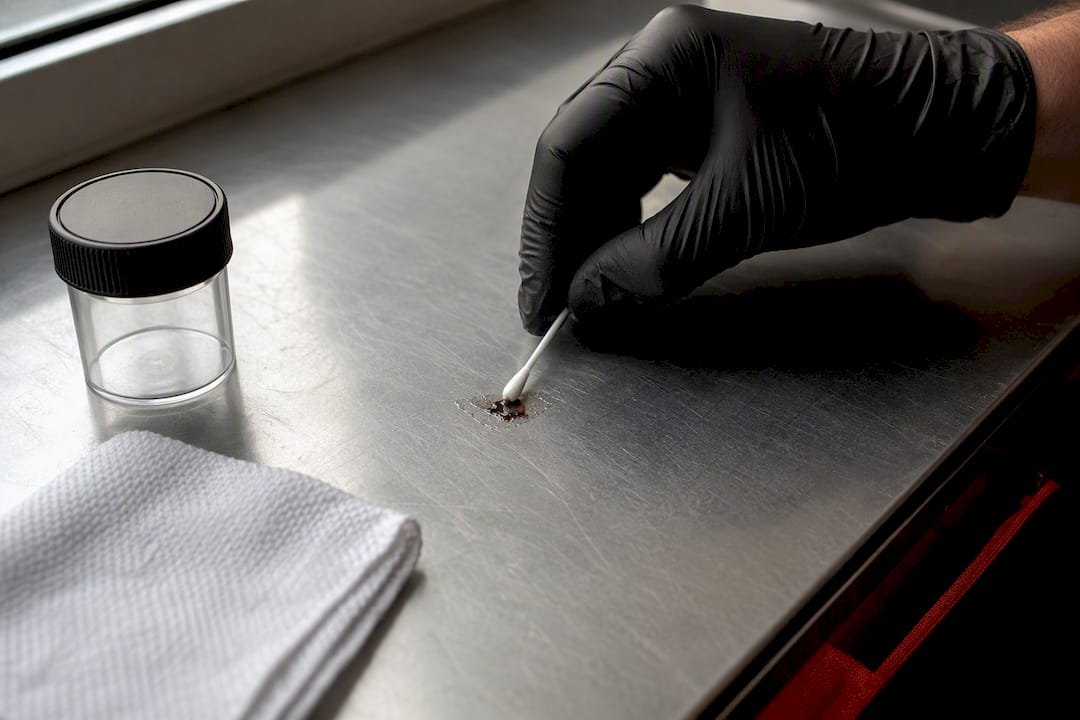
Age matters almost as much as species, because fresh droppings mean the pest is still active right now, not last month.
Fresh mouse pellets are shiny and nearly black, and they hold their shape when nudged. As they dry out over days to weeks, they fade to a dull gray-brown and start to crumble at the edges. Roach droppings never really have a shiny phase. They’re dry and granular from day one, but in a heavy, ongoing infestation, moisture in the area can cause them to smear into dark streaks on surfaces instead of sitting as separate pellets.
Here’s a fast way to check both:
- Put on disposable gloves and, if you have one, an N95-style mask.
- Open a window or run a fan. Never do this in a sealed room.
- Touch a pellet gently with a damp paper towel, not your finger.
- Fresh mouse droppings resist smearing and hold together; old ones flake apart.
- Roach droppings stay granular unless the infestation is heavy, in which case they streak.
Pro Tip: Photograph the dropping before you touch it at all. If the smear test destroys the sample, you’ll still have a record to show a technician later.
Droppings That Aren’t Droppings: Common False Alarms
Not everything that looks like pest evidence actually is. Misreading a lookalike sends people into panic mode over nothing, or worse, makes them dismiss a real infestation as harmless debris.
- Cockroach egg cases (oothecae) are hard, capsule-shaped, and roughly 4 to 8 mm long, nothing like the loose, crumbly texture of droppings.
- Dirt clumps and soil crumbs tracked in from shoes or plant pots tend to be lighter in color and fall apart into powder rather than holding a pellet shape.
- Seeds, especially poppy or mustard seed spilled from pantry items, are perfectly round and hard, and they won’t smear at all under the damp paper towel test.
- Old coffee grounds or dried herbs near a kitchen counter can fool a quick glance, but they lack the tapered ends of mouse pellets or the ridged surface of larger roach droppings.
If a sample still puzzles you after the smear and shape checks, a clear photo sent to a pest professional is worth more than another five minutes of guessing.
Health Risks and What to Do in the First Ten Minutes
Both types of droppings carry real health risks, and neither should sit around while you decide what to do. Rodent droppings can harbor bacteria and parasites, while cockroach droppings are a documented trigger for allergies and asthma and can contaminate any food surface they touch. Roach droppings carry an extra wrinkle: they contain aggregation pheromones that signal other roaches to gather in the same spot, so a small cluster you ignore tends to grow into a bigger one.
Fresh droppings clustered in one area, especially near where food is prepared, are one of the strongest signs of an active infestation that public health guidance treats as worth acting on immediately.
Do this in the first ten minutes after you find droppings:
- Don’t sweep or vacuum them dry. That aerosolizes particles you’ll end up breathing.
- Open a window and let the room ventilate before you clean.
- Put on gloves and a mask if you have one.
- Disinfect the area once you’ve documented it, using a household disinfectant, not just water.
- Write down the date, location, and rough count so you can track whether activity is increasing.
Call a professional if you’re finding droppings daily, if they’re near food prep surfaces, if you spot egg cases or a nest, or honestly, if handling them makes you uneasy at all. That last one isn’t a weak reason. It’s a fine reason.
What a Licensed Pest Technician Actually Checks For
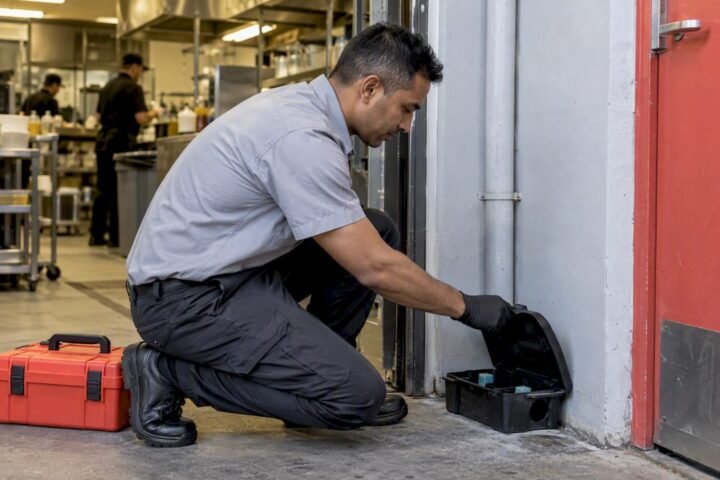
A technician walking into your kitchen isn’t just confirming what you already suspect. They’re mapping the whole problem.
A proper inspection covers entry points around pipes, vents, and foundation gaps, plus a physical search for live sightings, nests, and harborage spots you’d never think to check, like the gap behind a dishwasher or inside a wall void. Technicians use torches and inspection mirrors to see into voids and behind appliances, and they map where droppings cluster to figure out which direction the activity is spreading from. That mapping matters because mice follow the same runways repeatedly, so a trail of pellets often leads straight back to the entry gap.
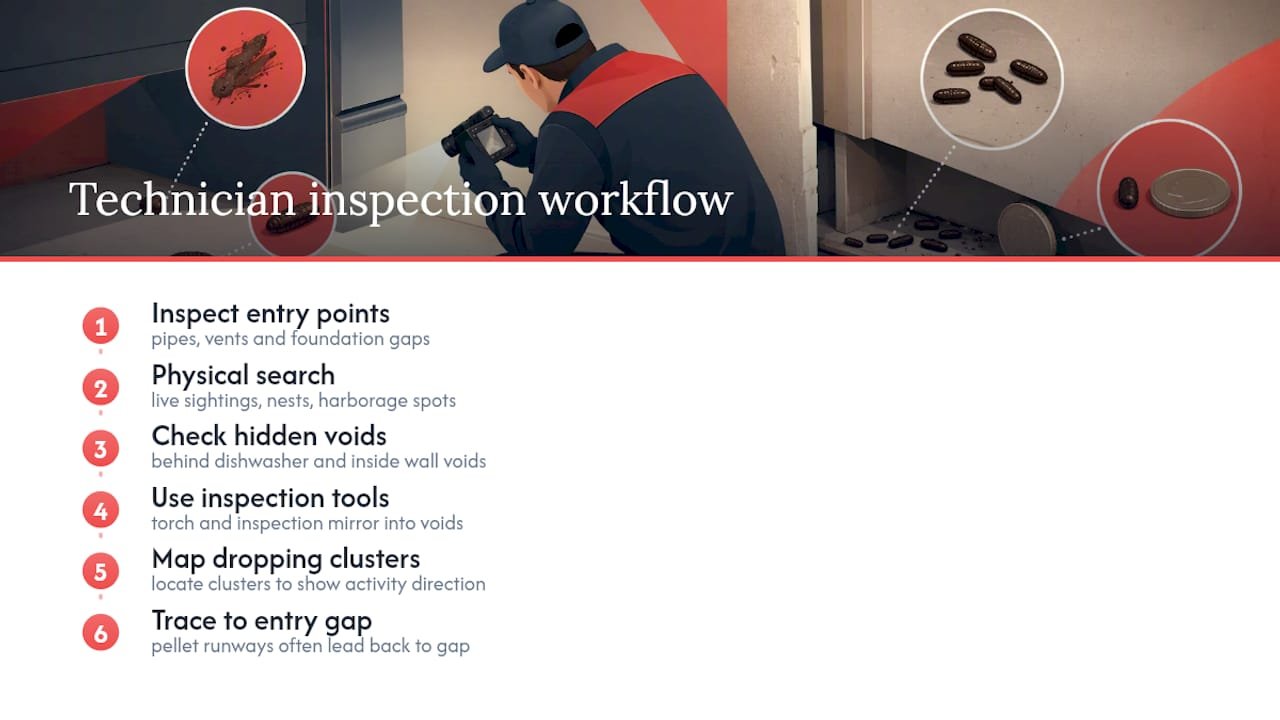
A finished report typically lists confirmed pest type, severity, entry points, and a recommended treatment plan, since rodent exclusion work and roach baiting are completely different jobs. This process has been run across many Canberra homes over the past decade, with licensed technicians handling both rodent and cockroach cases.
Cleaning Up Droppings Without Making Things Worse
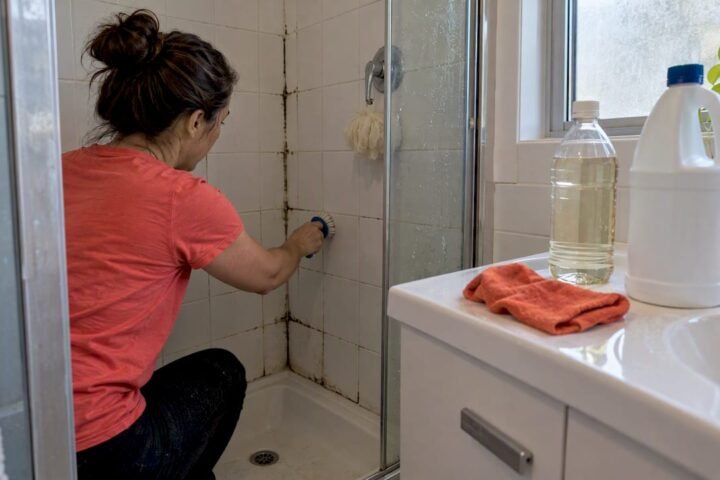
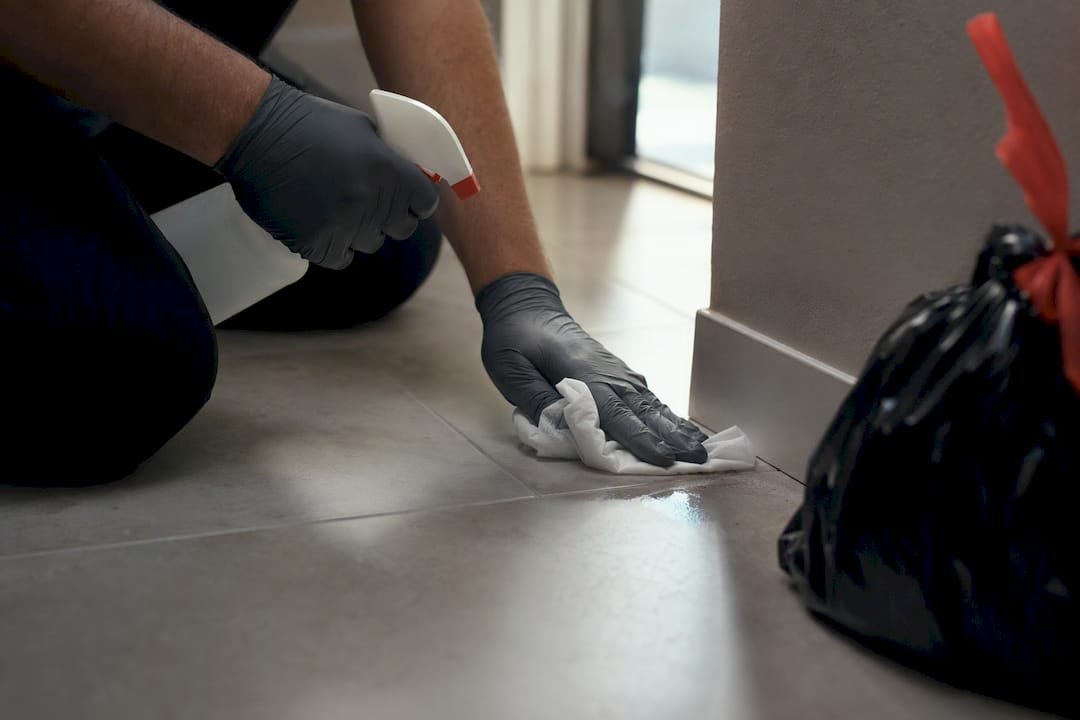
Cleanup order matters. Do it wrong and you spread contaminated dust through the air you’re breathing.
- Put on rubber gloves, and add a mask if the area is dusty or poorly ventilated.
- Open windows and let the space air out for at least ten minutes before you start.
- Soak the droppings and surrounding surface with a household disinfectant. Let it sit for several minutes rather than wiping immediately.
- Pick up the softened droppings with paper towels, never a dry cloth or your fingers.
- Double bag the paper towels and dispose of them in an outdoor bin right away.
- Wipe the whole area again with fresh disinfectant, then wash your gloved hands before removing the gloves.
Pro Tip: Recheck the same spot in 48 hours. If new droppings appear in the exact same location, the pest is still actively using that route, and it’s time to escalate beyond a one-time cleanup.
Never vacuum or dry-sweep droppings, since that’s the fastest way to send bacteria and allergens into the air. If cleaning the same corner becomes a weekly chore, that’s your sign to look at rodent prevention tips or sealing entry points rather than just cleaning around the problem indefinitely.
Photographing Droppings for a Fast Remote Diagnosis
A blurry photo with no sense of scale wastes everyone’s time, including yours. Technicians rely on clear images to triage severity before they even arrive, so a few minutes of careful photography can save a whole visit.
- Place a coin or a ruler next to the droppings before you shoot.
- Take one wide shot showing the location, cabinet, or wall section, then a tight close-up.
- Capture any nearby clues too, like grease smears, gnaw marks, or an egg case.
- Note roughly how many pellets you’re seeing and whether the spot is new or has reappeared.
If the droppings are inside a wall void, near an electrical panel, or somewhere you’d have to disturb insulation to reach, skip the photo and just call for an inspection instead.
Behavior Patterns That Confirm What the Droppings Are Telling You
Droppings tell you where a pest has been. Behavior tells you what it’s doing right now, and the two pests behave almost nothing alike.
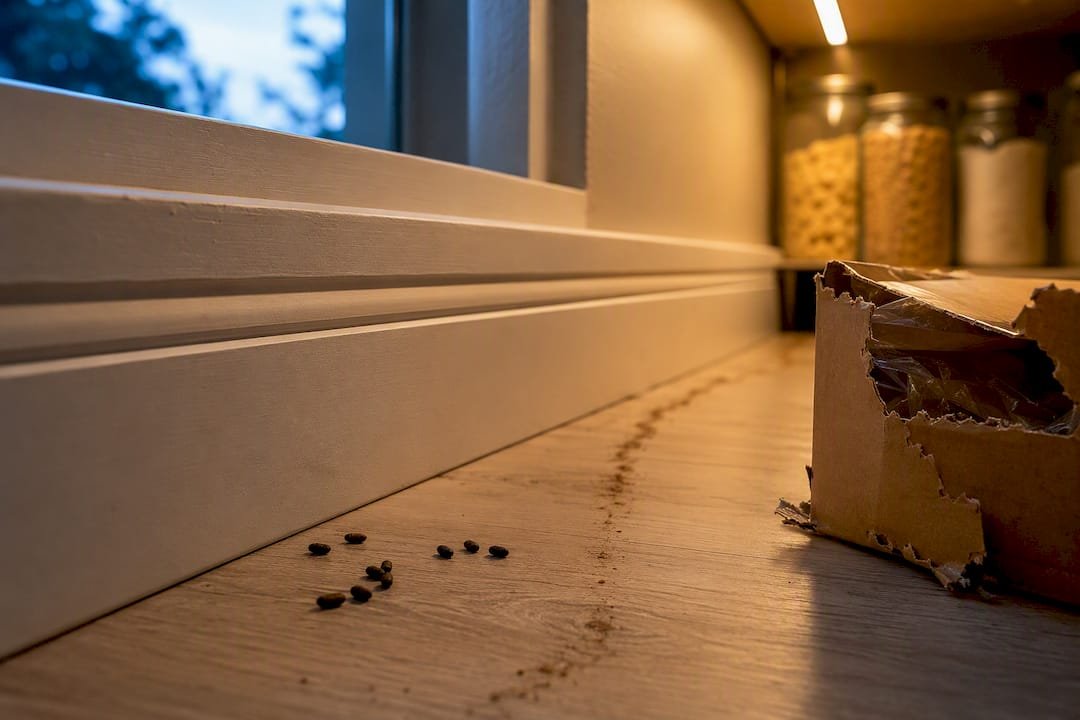
Mice are overwhelmingly nocturnal, so if you’re hearing scratching in the walls after dark, or you notice pet food bowls disturbed overnight, that lines up with a dropping trail found the next morning. Mice also gnaw as they go, so chewed cardboard corners, frayed wire insulation, or small holes in pantry bags near a dropping trail all point the same direction. They’re cautious animals that hug walls and stick to the same paths night after night, which is exactly why their droppings form such consistent lines.
Roaches split their behavior by species and by light. German cockroaches, the small, fast ones most common indoors, are also mostly nocturnal and will scatter the instant a light flips on in a dark kitchen. That scatter reaction, more than anything else, is a strong live-sighting confirmation to pair with a speck-covered cabinet. American cockroaches, the larger outdoor-leaning species, show up more during the day, especially in damp basements or around drains, and they fly short distances when disturbed, something mice never do. If you’re seeing movement during daylight hours near drains or laundry areas, factor that into the identification alongside the droppings themselves, since it usually points toward a larger roach species rather than a German cockroach or a mouse.
Why Time of Year Changes What You’re Finding
Pest activity isn’t steady all year, and droppings tend to spike right when the outdoor environment gets uncomfortable for the pest in question.
Mice push indoors hardest as outdoor temperatures drop in fall and early winter, chasing warmth and stored food. That’s when you’ll notice more droppings turning up in attics, garages, and along interior walls that share space with the outdoors, because nesting activity ramps up right before cold weather locks in. Roaches follow a different calendar. Warm, humid months tend to bring more roach activity indoors, partly because populations breed faster in heat and partly because they’re drawn inside by air conditioning and kitchen moisture during the hottest stretches.
Environment inside the home matters just as much as the season outside it. A leaking pipe under a sink, a poorly ventilated bathroom, or a cluttered garage creates a microclimate that either pest can exploit regardless of what month it is. If you’re finding fresh droppings in an area with no obvious food source, check for a moisture problem first. Roaches in particular will set up shop anywhere water collects, even in a spot that seems otherwise clean.
Knowing the season helps you set expectations, but it shouldn’t delay action. A dropping trail found in July is exactly as urgent as one found in January.
When and Why to Choose DIY Pest Control Measures Versus Hiring a Professional Pest Control Service
A small, contained find is a reasonable place to try handling things yourself. If you’ve spotted a handful of droppings in one spot, cleaned them up, and nothing new appears after a week of checking, a few snap traps for mice or a store-bought gel bait for roaches placed along the travel path is often enough to close out an isolated issue.
The calculation changes once droppings keep reappearing, spread to a second or third location, or show up near food prep areas no matter how often you clean. At that point you’re not managing an isolated incident anymore, you’re managing a colony or a breeding population, and DIY traps and sprays typically only knock back what you can see while leaving the nest or harborage untouched. Roach infestations are especially deceptive here, since the pheromone signal in their droppings keeps drawing in more roaches even as you’re removing the ones you find.
Cost and time are part of the decision too. A few traps and a bottle of spray are cheap upfront, but repeated purchases over months of recurring sightings add up fast, and they rarely address the entry point that’s letting the pest in over and over. A professional inspection identifies that entry point once, which is usually the difference between a problem that ends and one that just keeps costing you weekend afternoons.
What I’ve Learned Reviewing Dropping Cases That Went Wrong
The most common mistake isn’t misreading size, it’s ignoring pattern. People fixate on measuring one pellet and skip the fact that droppings scattered in a line versus clustered in a corner tells you almost as much as the pellet itself. I’ve also seen people mistake old, crumbled mouse droppings for dirt and dismiss real activity for weeks.
Confirming quickly matters more than being right on the first guess. Bugspatrol Pest Management has walked through this exact identification process across thousands of Canberra homes, and the pattern holds: uncertainty is cheap to resolve with a photo, expensive to ignore with a delay.
— navin
Book a Professional Inspection Before Guessing Costs You More
Bugspatrol Pest Management gives you a straight answer instead of another round of internet photo comparisons. A booked inspection includes a full walk-through mapping where droppings and activity are concentrated, identification of entry points specific to rodents or roaches, and a treatment plan matched to whichever pest is actually present, since baiting a roach colony and sealing out mice call for entirely different approaches.

Licensed technicians typically respond fast, and treatments are chosen with families, kids, and pets in mind rather than a blanket chemical approach. If the droppings you found are spreading, reappearing after cleanup, or turning up near food prep areas, that’s the threshold where a DIY trap stops being enough. Book a pest inspection or check out rodent removal options to get a technician looking at the actual problem instead of another photo.
Sources
Public health guidance from Victoria’s environmental health department covers cockroach risks and cleanup safety. Species-specific dropping measurements come from Cockroach Care and Connors Pest Pros. For prevention steps once you’ve confirmed rodent activity, see mouse infestation signs and cockroach prevention guidance.
- Cockroach Poop vs Mouse Poop: How to Identify Which Pest You Have – Cockroach Care
- Cockroaches – Environmental health guidance, Victoria State Government
- Mice vs Roach Droppings: Pictures & How to Tell the Difference – Connors Pest Pros
- Understanding Pest Droppings | Identification and Risks – Safe Pest Control