A restaurant pest control plan is a written program that shows how you keep pests out, deny them food and shelter, and deal with any activity, backed by records an inspector can read on the spot. In Australia, a plan from a licensed provider typically costs between $150 and $400 per month, and the paperwork matters as much as the treatment.
This guide covers what the rules say, the parts of a plan that hold up in an inspection, what you should pay, and how to avoid the mistakes that cause audit failures. We write from Canberra, so the local examples are ACT ones, but the national rules apply everywhere.
TL;DR
- Under Standard 3.2.2 of the Food Standards Code, you must take all practicable steps to keep pests out of your food premises and get rid of any that get in.
- Hiring a professional is not compulsory, but you must keep records of pest activity, controls used and actions taken. A licensed provider makes that paperwork far easier.
- A solid plan has a site map of devices, visit logs, chemical records and safety data sheets, and a named person on your side who watches for signs between visits.
- Budget roughly $150 to $400 per month for a scheduled program, plus $200 to $600 for a one-off clean-out if you already have activity.
- Prevention beats reaction: one-off sprays leave no audit trail and tend to cost more over time.
Table of Contents
- What the law actually requires
- The three pillars behind a good plan
- What goes into a restaurant pest control plan
- Device placement: a common audit failure
- Which pests to plan for
- What a restaurant pest control plan costs
- Why a program beats a one-off spray
- Setting up your plan: a step-by-step
- Our perspective: where kitchens go wrong
- Work with a Canberra team
- FAQ
- Sources
What the law actually requires
The national rule sits in Standard 3.2.2 of the Food Standards Code. Food Standards Australia New Zealand explains that your business must do everything it reasonably can to stop pests entering or living in your premises, and to eradicate them from the premises and from vehicles that carry food.
The standard does not say you must hire a pest controller. It does expect you to prove you are managing the risk. FSANZ advises keeping reports of pest inspections and treatments, with dates, the type of pest activity, the chemicals or controls used and recommended actions. Its Appendix 7 on pest management describes a good plan as one that protects food and food contact surfaces and helps you show you have taken all practicable measures.
In the ACT, the government’s guidance on controlling pests in food businesses says you must ensure your premises are free from pests, and lists employing a pest control company as one way to eradicate them. If you are opening a venue, the ACT’s start a food business page lists the other steps, including appointing a food safety supervisor and preparing food safety management documents. Pest management belongs in that same documentation set.
The three pillars behind a good plan
FSANZ frames pest control as integrated pest management rather than extermination alone. Three layers work together:
- Exclusion. Stop pests getting in. Seal gaps around pipes and doors, fit door sweeps, repair damaged screens and keep delivery doors closed when not in use.
- Restriction. Deny food, water and shelter. Store food off the floor in sealed containers, fix leaks, clean under equipment and remove waste promptly.
- Destruction. Eradicate what remains using safe, approved methods such as baits, traps and targeted treatments.
The common mistake is treating the third step as the whole strategy. If the first two fail, treatment becomes a never-ending, expensive cycle. A good provider will spend as much time on your building and your habits as on products. For a deeper look at how this works on commercial sites, see our piece on integrated pest management for ACT commercial properties.
What goes into a restaurant pest control plan
The FSANZ guidance says a good plan covers the types of pests and treatments to be used, and the areas that need inspection and treatment. In practice, inspectors and auditors want to see a folder, digital or paper, that holds the following.
A site map of every device
Mark every bait station, trap and insect light on a floor plan, numbered to match the stations on site. This lets an auditor walk the premises and check each device against the map. It also proves nothing has been moved or removed without record.
Visit and treatment logs
Each visit should produce a report with the date, the technician, the pests or signs found, the devices checked, products applied and any follow-up actions. Cost guides for commercial pest control note that for food premises this means station maps, visit logs and chemical registers an auditor can review.
Chemical records and safety data sheets
Keep a register of every product used on site, and a safety data sheet for each. If a product is not on the register, you cannot show it was used safely near food.
Technician licence details
Your file should show who treated the premises and that they were licensed. Ask for this up front rather than chasing it before an inspection.
Your own monitoring routine
This is the part owners miss. ACT guidance lists signs to check for yourself: live or dead pests, eggs and larvae, droppings from cockroaches, rats and mice, damage to packaging, wires, woodwork or cardboard, footprints in spilt flour, musty odours and customer complaints. Responsibility for hygiene stays with you whoever you hire, so the business owner or food safety supervisor should stay engaged and not rely on a monthly visit to catch everything. A simple staff logbook, where closing staff note anything unusual, bridges the gap.
A response procedure
Write down what happens when someone spots a pest: who is told, how fast the provider is called, what gets thrown out or cleaned, and where it is recorded. Same-day response matters in a kitchen, so check what your provider commits to.
Device placement: a common audit failure
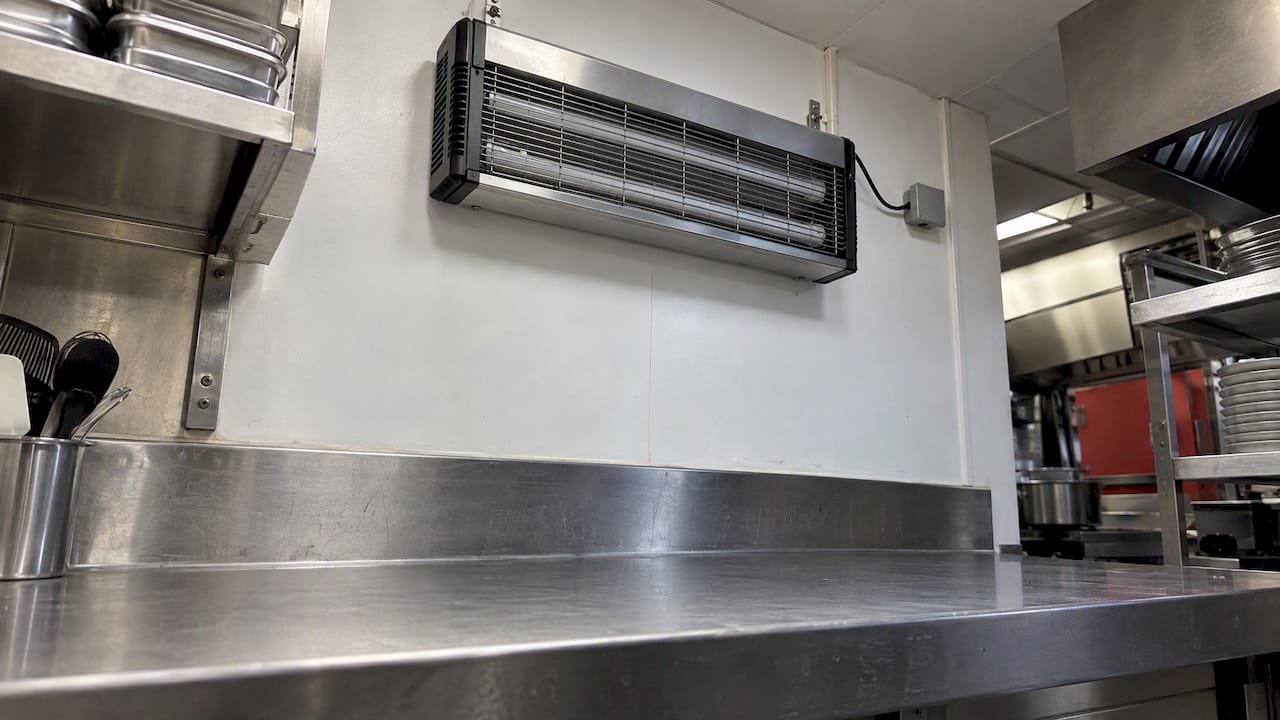
Pest devices must never sit above food preparation or storage areas. A classic pitfall is mounting an ultraviolet insect killer over a prep bench, where dead insects and fragments can fall onto food. The ACT guidance warns about this kind of placement, and it is a frequent reason for failing an audit. Put insect lights near entry points and away from open food, and make sure your site map shows exactly where each one is.
Which pests to plan for
Most restaurant plans centre on the same handful of pests, and each has its own prevention logic.
| Pest | Where it shows up | Main prevention |
|---|---|---|
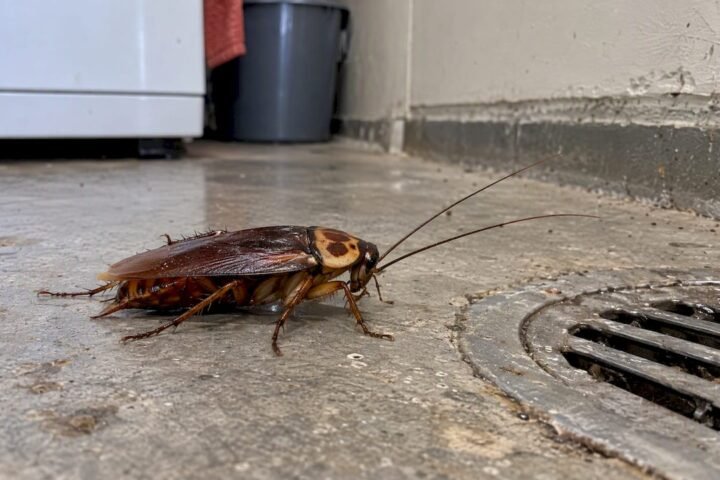
| Cockroaches | Warm, damp areas behind equipment, drains, storerooms | Remove food and moisture, seal harbourage, regular monitoring |
| Rats and mice | Storerooms, ceiling voids, bin areas, delivery doors | Proof entry points, secure waste, bait stations and traps mapped on site |
| Flies | Bins, back doors, drains, kitchen | Waste management, screens, drain cleaning, fly control |
| Ants | Sweet or greasy spills, gaps in walls | Clean spills, seal trails, targeted treatment |
| Birds | Outdoor dining, awnings, rooftops | Deterrents and proofing so droppings stay off seating |
For Canberra venues with outdoor seating, birds are easy to overlook. We cover this in bird control for Canberra restaurants. Flies get their own treatment in our guide to commercial fly control in Canberra. If you want to understand where cockroaches hide before you walk your own kitchen, our cockroach hiding places guide is a good checklist, even though it is written for homes.
What a restaurant pest control plan costs
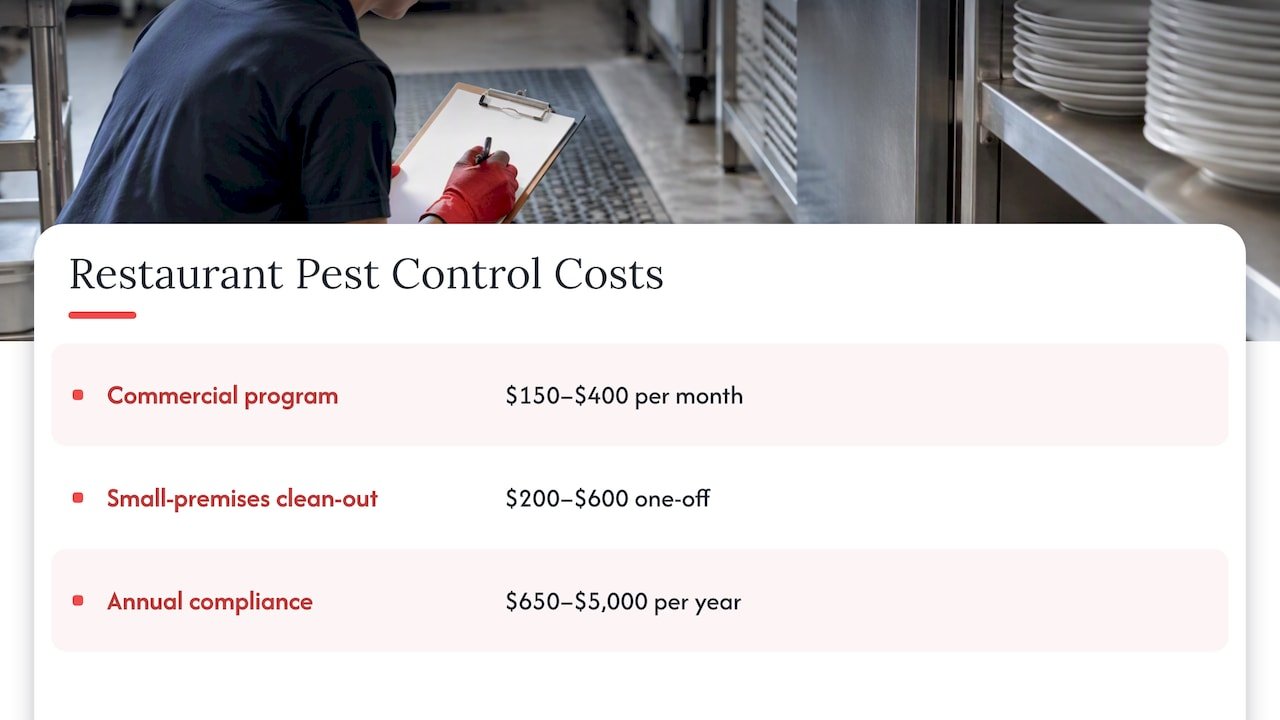
Costs vary with the size of the premises, the number of devices and visit frequency. According to a 2026 Australian cost guide, commercial restaurant programs typically run $150 to $400 per month. That generally covers a monthly or fortnightly visit, monitoring, bait station maintenance and the documentation council inspectors expect. The same guide puts one-off clean-out treatments for small commercial premises at $200 to $600, depending on infestation level, and annual compliance programs for food businesses at $650 to $5,000 depending on site complexity and visit frequency.
These are market ranges, not our prices. We do not publish a price for commercial programs because the right scope depends on your site, so we quote after we understand the premises. Our blog explains the factors in pest control costs in Canberra.
How to compare quotes
Two quotes at the same monthly figure can cover very different things. Before comparing, line them up on:
- visit frequency (fortnightly, monthly or quarterly)
- which pests are covered, and which are extra
- the number of stations or devices
- exactly what reporting is included: station maps, visit logs, chemical registers
- call-out terms between scheduled visits, and whether emergency response costs extra
- contract length and exit terms
Our article on commercial pest control contracts in Canberra goes through the fine print in more detail.
Why a program beats a one-off spray
Industry analysts point out that the biggest misconception among restaurant owners is that pest control is a fix-it job. Successful food business programs are preventive service contracts. A reactive spray after you spot a cockroach might clear what you saw, but it does not create the consistent audit trail a health inspector looks for, and repeat call-outs tend to cost more than a scheduled program.
There is a practical side too. Scheduled visits catch early signs, such as a few droppings in a storeroom, before a customer or an inspector does. In a busy kitchen, nobody has time to hunt for them.
Setting up your plan: a step-by-step
- Walk the premises with a checklist. Include storerooms, bin areas, loading doors, ceiling voids and outdoor dining areas. Use the ACT list of pest signs above.
- Fix the building first. Seal gaps, repair screens, clear clutter and sort leaks. These are exclusion and restriction jobs that make every later step cheaper.
- Book a licensed inspection. Ask for a written risk assessment and a proposed scope: pests, devices, visit frequency.
- Agree the paperwork. Confirm you will receive a site map, visit reports, a chemical register, SDS sheets and technician licence details.
- Name your internal owner. The food safety supervisor or owner checks for signs weekly and keeps the staff logbook.
- Store everything in one place. Keep the folder where it can be handed to an inspector immediately.
- Review twice a year. Menus, layouts and seasons change, and so should the plan.
To see how inspection timing fits around your licence, read our guide to the inspection cycle for Canberra hospitality businesses. For visit frequency questions, see how often to book pest control in Canberra.
Our perspective: where kitchens go wrong
We have spent more than 10 years in pest control and have serviced over 5,000 Canberra homes, and the same pattern turns up in commercial work: pest problems are rarely about the product. They come from gaps in the building, waste handling and routine.
We think a plan only works when three things happen together. The technician uses proper detection, not just spraying. The owner keeps watching between visits. And the records are good enough that anyone can read them cold. That is why we put effort into inspection and reporting, and why we choose treatments with families, children and pets in mind, which in a restaurant means thinking about staff and customers too.
If we could change one habit, it would be waiting. A single droppings sighting is the cheapest moment to act. A week later it is a bigger job, and a month later it may be a notification.
— navin
Work with a Canberra team
If you run a café, restaurant or catering kitchen in Canberra, we can inspect the site, advise on proofing and set up ongoing pest management. Our licensed technicians handle rodents, cockroaches, flies, ants and more. Start with our general pest control service, look at rodent removal if you have noise or droppings, or get in touch through our main site to book an inspection or ask about emergency response.
FAQ
Do I have to hire a professional pest controller for my restaurant?
No. The Food Standards Code requires you to prevent and eradicate pests, but it does not require a professional. You do need records showing what you found, what you used and what you did. A licensed provider usually makes those records more consistent than a busy kitchen can manage alone.
How much does restaurant pest control cost in Australia?
A 2026 cost guide puts typical scheduled programs at $150 to $400 per month, with one-off clean-outs for small premises at $200 to $600. Actual cost depends on the size of the site, the number of devices and visit frequency. Compare quotes on scope and reporting, not on the headline figure alone.
What is the 2-hour/4-hour rule?
It is a food safety rule for potentially hazardous food held between 5°C and 60°C. The NSW Food Authority guidance explains that this temperature range lets food poisoning bacteria grow rapidly, which is why time in it must be minimised. It is not a pest control rule, but it sits in the same food safety documentation as your pest plan.
What records should be in my pest control folder?
Keep a site map of devices, visit and treatment reports, a chemical register, safety data sheets, and the technician’s licence details. Add your own staff logbook of sightings. FSANZ advises that reports include dates, type of pest activity, controls used and recommended actions.
Where should insect killers go in a kitchen?
Never above food preparation or storage areas, because falling insect debris can contaminate food. ACT guidance on pests in food businesses covers prevention, and your site map should show every device location.
Sources
- Controlling pests, Food Standards Australia New Zealand
- Appendix 7: Pest management, FSANZ
- Controlling pests in food businesses, ACT Government
- Start a food business, ACT Government
- Commercial Pest Control Cost Australia 2026
Recommended
- Pest Control for Canberra Hospitality Businesses: The Inspection Cycle That Protects Your Food Licence
- Commercial Pest Control Contracts in Canberra: What to Look for Before You Sign
- What to Do About Cleaning After Pest Control
- Inspect Cockroach Hiding Places for Homeowners and When to Call a Pro