For most household mould, white vinegar diluted in water is the better first choice, and bleach is a fallback for hard, non-porous surfaces. Neither is a cure. Mould is a moisture problem, so whichever product you pick, the mould returns until you fix the damp that feeds it.
That is the short version. The rest of this guide covers where each product works, where it fails, the exact dilutions Australian health authorities publish, and the point where wiping stops being the right answer.
TL;DR
- Vinegar (4 parts white vinegar to 1 part water) is the dilution Australian health authorities give for routine cleaning of mould-prone surfaces. Detergent and water also work.
- Bleach is for stubborn mould on non-porous surfaces only, at 250 ml per 4 litres of water. It does not suit timber, plasterboard or other porous materials.
- Never mix bleach with vinegar or any other acid. The mix releases toxic chlorine gas.
- Fix the moisture, or the mould comes back whatever you used. Large or recurring patches need a professional look.
Table of Contents
- Why the internet gives you contradictory answers
- What Australian health authorities actually say
- Vinegar vs bleach side by side
- How to clean mould safely, step by step
- The part that decides whether mould returns: moisture
- A quick guide by room and surface
- Our perspective: where wiping stops being enough
- When to call a professional
- How we can help
- FAQ
- Sources
Why the internet gives you contradictory answers
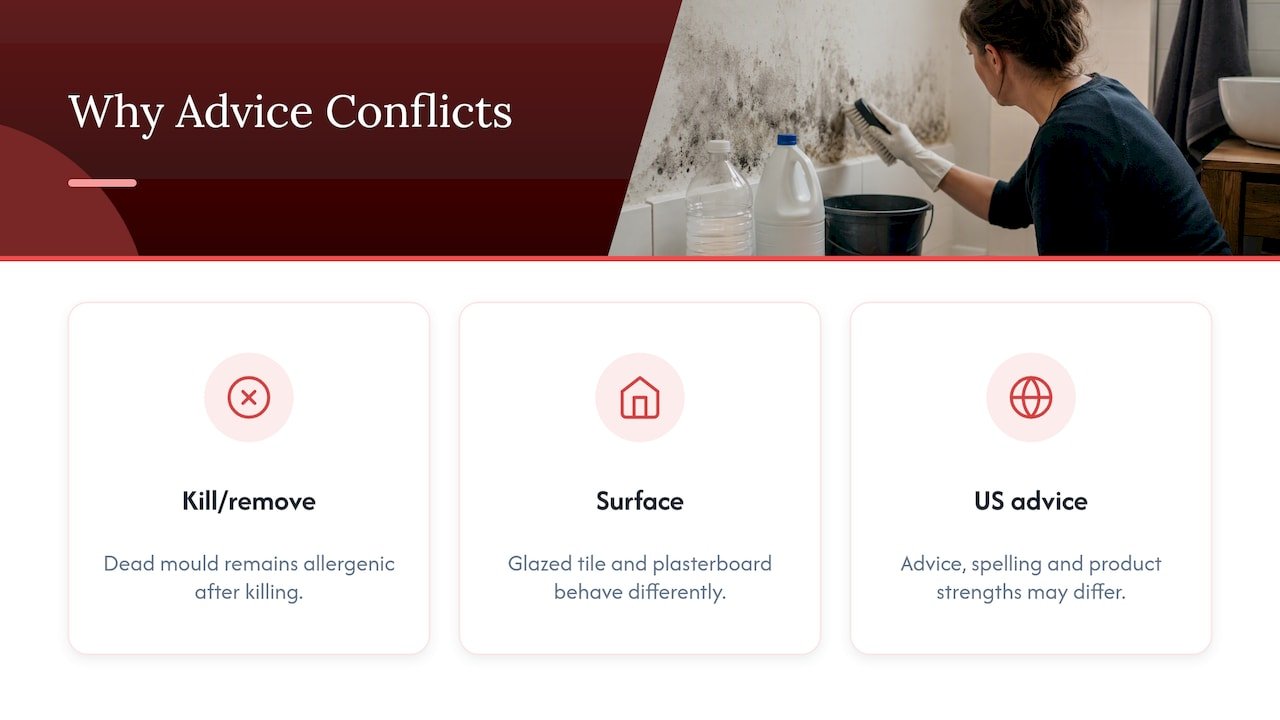
Search this question and you will find pages claiming vinegar kills 82% of mould species, pages claiming bleach “doesn’t work at all”, and forum threads where nobody agrees. Three things cause the confusion.
First, “kill” and “remove” are different jobs. A product can discolour or kill mould on the surface without removing it. Dead mould can still trigger reactions. The Oregon OSHA fact sheet puts it plainly: you must clean up and remove mould contamination, not just kill it, because dead mould is still allergenic.
Second, the surface matters. A glazed bathroom tile and a plasterboard ceiling behave very differently.
Third, many articles come from US sites. Their advice, spelling and product strengths do not always match what is sold in Australian supermarkets. We stick to Australian government and research sources here.
What Australian health authorities actually say
The Australian Centre for Disease Control advises cleaning mould-prone surfaces regularly with household detergent or white vinegar diluted in water, 4 parts vinegar to 1 part water. The ACT Government mould page gives the same routine advice and says to use diluted bleach only if the mould is not readily removed and the item cannot be discarded.
The NSW Health factsheet gives the bleach dilution as 250 ml of bleach to 4 litres of water, and notes bleach is not recommended for porous materials.
So the official order of preference is:
- Detergent and water, or diluted vinegar, for routine cleaning.
- Diluted bleach, on hard non-porous surfaces, when the mould will not shift.
- Throwing the item out, or professional help, when the material is porous and heavily affected.
The US EPA agrees on the principle. Its page on bleach says using a biocide such as chlorine bleach is not recommended as a routine practice during mould cleanup.
Vinegar vs bleach side by side
| White vinegar (4:1 with water) | Household bleach (250 ml in 4 L water) | |
|---|---|---|
| Official status in Australia | Recommended for routine cleaning | Reserved for hard-to-remove mould |
| Best surfaces | Tiles, glass, sealed surfaces, shower screens, window frames | Non-porous surfaces only, such as glazed tile and grout |
| Porous surfaces (timber, plasterboard, grout that crumbles) | Limited, surface only | Not recommended |
| Main drawback | Acetic acid can be a food source for some moulds if left behind | Discolours mould without necessarily removing it; fumes |
| Safety | Mild smell, can irritate eyes and skin | Needs gloves, goggles and ventilation |
| Never combine with | Bleach, or other cleaners | Vinegar, ammonia, other acids |
Where vinegar wins
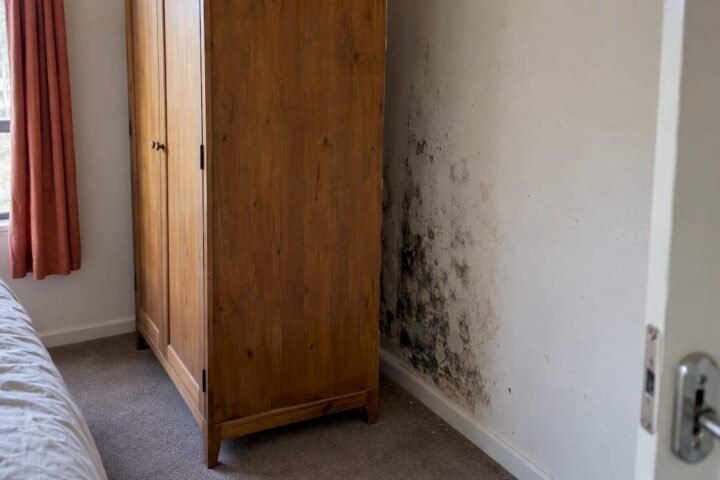
Vinegar is cheap, low-risk for most people and recommended by health bodies. It suits the everyday jobs: shower corners, window sills, silicone seals, the back of a wardrobe where a spot has appeared.
There is a catch. CSIRO’s guidance notes that vinegar is a food source for some moulds. That is why the practical method is to wipe, not soak: use the diluted solution, remove the mould physically, then dry the surface thoroughly so nothing sugary or acidic stays damp.
Where bleach has a place
On hard glazed surfaces with stubborn black spotting, diluted bleach can be the option the ACT and NSW pages describe. The same CSIRO article warns that bleach discolours mould without necessarily removing it. A white-looking grout line is not proof the problem is gone.
Bleach also has a strength problem in the other direction. Household products vary, and the guidance on domestic bleach use notes that neat bleach demands strict safety gear: gloves, goggles and ventilation.
Where neither works
Bleach is largely ineffective on porous surfaces like timber or plasterboard because it treats only the surface. The mould’s roots (hyphae) stay inside the material, so the growth returns unless the moisture is fixed and the material is replaced or professionally remediated. Vinegar is no magic fix there either. A soaked ceiling lining or a damp carpet underlay needs removal, not a spray bottle.
How to clean mould safely, step by step
Wiping method matters more than the product. The mechanical removal of mould is more important than the chemical used, and even dead spores can set off allergies in sensitive people.
- Check who should not do it. Pregnant women, children, older people and anyone with a weakened immune system or chronic lung condition should stay out of mould cleanup, according to Victoria’s Better Health Channel. Ask someone else to do it.
- Gear up. Gloves, eye protection and a mask suited to dust and spores. Open windows and doors.
- Do not dry brush. Brushing dry mould can flick spores into the air and spread them to other rooms.
- Apply and wipe. Use a cloth dampened with detergent and water, or the 4:1 vinegar solution. Wipe in one direction, folding the cloth to a clean face often.
- Bin the cloths. Seal them in a bag. Wash fabrics that can be washed on a hot cycle, as the Better Health Channel advises. Items such as mattresses and cardboard boxes that are mouldy should be disposed of.
- Dry the area completely. A fan, an open window or a dehumidifier. Moisture left behind is the start of the next patch.
- Only then consider bleach, and only on a hard non-porous surface where the first pass failed.
Never mix cleaners
This is the one safety rule worth repeating. Bleach plus vinegar, ammonia or other acids creates toxic chlorine gas. If you tried vinegar first and want to try bleach, rinse the surface well with water and ventilate before you start. Better still, pick one product per session.
The part that decides whether mould returns: moisture
CSIRO’s Anthony Wright says to treat mould as soon as you see it, and to find the underlying moisture problem. Any product, he says in the same piece, is a stop-gap if the damp stays. Common sources in Canberra homes include:
- Condensation on windows and walls. Canberra’s cold winters mean warm indoor air meets cold glass and plasterboard. Our guide on why wiping alone won’t stop window mould covers the cause and the habits that help.
- Poor ventilation in bathrooms, laundries and closed-up wardrobes.
- Leaks from roofs, gutters, plumbing and window flashings.
- Blocked gutters and downpipes that push water into eaves and wall cavities.
- Roof and ceiling moisture, which shows up as stains and spotting. We explain how to size up the problem in our piece on the 1 square metre rule for ceiling mould.
Once you know the source, fix it before refinishing anything. Where the answer involves storage, wardrobes or joinery in humid spaces, humidity control cabinets show one way designers deal with damp-prone built-ins. A fan, a vented rangehood, a dehumidifier and keeping furniture a few centimetres off external walls cost far less than repeated cleaning.
A quick guide by room and surface
Bathroom tiles and shower screens. Vinegar 4:1 or detergent, wipe, rinse, dry. If grout stays black after two rounds, diluted bleach on sealed grout is the official next step.
Silicone seals. Mould often grows into the silicone. Wipe first. If the staining runs through, cut out the silicone and reseal after the substrate is dry.
Window frames and sills. Vinegar solution, then dry the frame. Fix the condensation problem or you will do this again in a month.
Painted walls and ceilings. Light surface spotting can be wiped with detergent or vinegar solution. Large patches, or any staining that returns after painting, points to moisture behind the lining. Painting over it hides the issue.
Timber, plasterboard, carpet and underlay. Heavily affected material usually cannot be cleaned deeply enough. Removal and replacement is the reliable path, once the leak is fixed.
Fabrics and soft toys. Hot wash where the label allows. Items that stay stained or smelly after washing are better discarded.
Our perspective: where wiping stops being enough
We work in Canberra homes every week, and the pattern is consistent. People reach for bleach because it looks decisive: the black turns white and the job feels done. Then the spots return in a few weeks, usually in the same corner, because the cause was never touched.
Our view, built on the pest and property protection work we do across Canberra and surrounding suburbs:
- Treat the cleaning product as the smallest decision. Detergent or diluted vinegar covers most surface jobs, and the health authorities back that.
- Look for the water. Mould on a ceiling or wall frequently travels with leaks, blocked gutters, poor roof drainage or cold-bridged walls. Our gutter guard installation helps reduce one common cause: debris-blocked gutters that overflow near eaves.
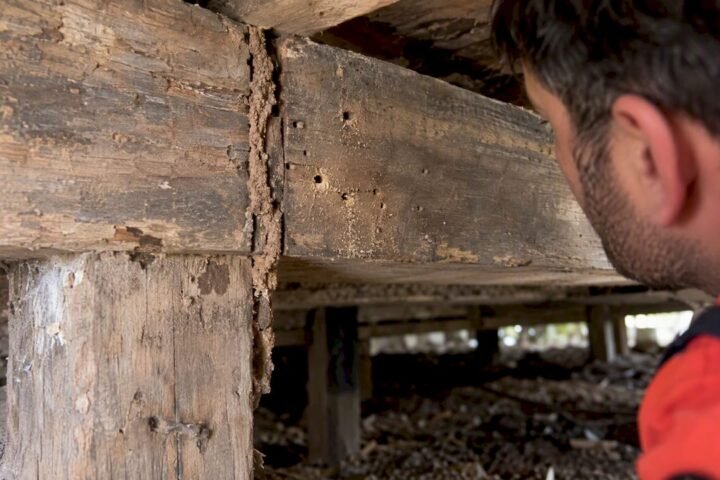
- Look for neighbours. Damp timber attracts more than mould. Moisture-affected wood is also a place where borers, termites and other pests take hold, which is why our inspectors look at the whole picture, including thermal imaging for termite inspections, rather than a single stain.
- Be honest about limits. A patch bigger than a small area, mould that keeps returning, or anyone in the house with asthma or lowered immunity is a case for professional help, not another bottle.
We offer mould treatment alongside our pest services for homes and businesses in Canberra, with a focus on treatments that are responsible around families, children and pets.
— navin
When to call a professional
Bring someone in when any of these apply:
- The mould covers a large area or keeps returning after cleaning.
- You can smell mustiness but cannot see the source, which can mean moisture inside walls or the roof space.
- Materials are soft, swollen or stained, such as plasterboard, carpet or timber.
- Someone at home is pregnant, elderly, very young, or has a chronic lung condition or weakened immunity.
- You are a landlord, property manager or agent dealing with a handover, sale or tenant complaint.
- You see signs of pests as well, such as mud tubes, frass or droppings, since damp conditions and pests often overlap. Our pest inspection checklist for Australian buyers shows what an inspection should cover.
How we can help
If you are in Canberra and the mould sits alongside pest concerns, or you want a licensed technician to look at the property rather than guess, start with a free home pest inspection. We can look at conditions that invite termites and other pests and talk through mould treatment options.
For ongoing protection, our maintenance plans start at 29.98 AUD per month for Bronze Termite or Bronze General Pest, with Silver Combined at 55.98 AUD per month and Gold Complete at 79.98 AUD per month. See the plan page for exactly what each one covers. All our treatments are guaranteed for effectiveness, and we offer same-day emergency service.
FAQ
Is vinegar or bleach better for mould?
For routine cleaning, vinegar diluted 4 parts to 1 part water is the better choice, and the ACT Government lists it first. Bleach is for hard-to-remove mould on non-porous surfaces. Neither fixes the moisture that caused it.
Can I mix vinegar and bleach for stronger results?
No. Mixing bleach with vinegar, ammonia or other acids creates toxic chlorine gas. Use one product at a time, rinse the surface with water in between, and keep the room ventilated.
Why does mould come back after I clean it?
Because the moisture source is still there. CSIRO describes cleaning products as temporary measures if damp from leaks, condensation or poor ventilation continues. On porous materials, the roots stay inside the material as well.
Does bleach kill mould roots on walls and ceilings?
Not reliably. On porous surfaces like plasterboard and timber, bleach treats the surface and the roots remain, according to CSIRO. Heavily affected material usually needs replacing once the moisture is fixed.
Is it safe to clean mould if I have asthma or I’m pregnant?
It is better not to. Victoria’s health guidance says pregnant women, children, older people and those with weakened immunity or chronic lung conditions should avoid taking part in remediation. Ask someone else, or book a professional.
Sources
- Preventing mould exposure, Australian Centre for Disease Control
- Mould, NSW Health
- Mould, ACT Government
- Unfriendly fungi: Dealing with a mouldy house, CSIRO
- Mould removal at home, Better Health Channel
- Mould, Queensland Government
- Should I use bleach to clean up mold?, US EPA
- Cleaning a domestic property that has become mouldy, guidelines on bleach use
- Mold fact sheet, Oregon OSHA
Recommended
- Wiping Alone Won’t Stop Window Mould in Australia
- 1 Square Metre Rule for Ceiling Mould in Australian Homes