The American cockroach is one of the largest pest cockroaches found in Australian homes, and it is an introduced species, not a native one. Adults grow to about 35 to 40 mm, are reddish-brown with a pale band behind the head, and usually live in warm, damp spots like subfloors, wall voids, roof cavities and sewer access points. Spraying the kitchen rarely fixes it. Finding and treating where they breed does.
This guide covers how to identify them, how they differ from the Australian cockroach, what attracts them, what actually works, and when to call a licensed technician.
TL;DR
- American cockroaches are about 35 to 40 mm long, reddish-brown with a pale band behind the head, and can fly short distances in warm weather.
- Many large cockroaches in Australian homes are native species or the very similar Australian cockroach. Confirm what you have before treating.
- They live in wall voids, subfloors, roof cavities and drains. Treating only the room where you see one rarely works.
- No scent or essential oil eradicates them. Removing water, food and entry points, then using targeted baits, gels or dusts, does.
- Nymphs take months to mature, so a single spray is rarely enough. Ask for follow-up monitoring.
Table of Contents
- What an American cockroach looks like
- American vs Australian cockroach: how to tell them apart
- Where they live and why they come inside
- Signs you have an infestation
- How fast they breed
- Health risks, kept in proportion
- What works: the integrated approach
- What does not work
- When to call a licensed pest controller
- Our view on American cockroaches in Canberra
- Ongoing protection with a BugsPatrol plan
- FAQ
- Sources
What an American cockroach looks like
The Victorian Department of Health describes the American cockroach (Periplaneta americana) as the largest common pest cockroach in Australia, at 35 to 40 mm. Adults are reddish-brown with a pale yellow border around the section behind the head (the pronotum). That pale band is the feature most people remember.
Other details help:
- Wings: males have wings longer than the body and females have shorter ones, according to Professional Pest Manager.
- Flight: adults are capable of short flights, but only in warmer weather, per the same source.
- Nymphs: young nymphs are dark brown to black and older ones turn reddish-brown, ranging from 6 to 30 mm.
- Droppings: small and dark, usually found near harbourage and along travel routes. Our guide to what cockroach droppings look like shows what to check first.
The enHealth guidance on arthropod pests of public health significance lists the German, American and smoky brown cockroach as the most common pest cockroach species in Australia. The smoky brown is closely related to the American and is often confused with it.
American vs Australian cockroach: how to tell them apart
This is the question we hear most. The Australian cockroach looks very similar to the American one, and it is slightly smaller. One of the clearest differences is where the pale marking sits. On the Australian cockroach, a pale band runs along the outer edge of the wing covers, as Professional Pest Manager notes. The American cockroach’s pale marking is mainly around the pronotum.
| Feature | American cockroach | Australian cockroach |
|---|---|---|
| Size | About 35 to 40 mm | Slightly smaller |
| Pale marking | Band around the pronotum | Pale band along the outer edge of the wing covers |
| Typical habitat | Warm, moist voids, drains, subfloors | Similar: outdoors, roof voids, around the perimeter |
| Origin | Introduced | Often treated as a pest too, and easily mistaken for the American |
A caution on identification: Australia has over 400 native cockroach species according to enHealth, and most are not pests. The Australian Museum has a useful overview of native species. A single large cockroach in the garden does not mean an infestation. Photograph it, note where you found it, and get it identified before spending money on treatment. Our article on baby cockroaches explains which photos help most.
Where they live and why they come inside
American cockroaches are peri-domestic: they live around the edges of your property and move inside when conditions suit them. The Victorian guidance lists wall voids, subfloors, sewers and garbage areas as typical harbourage, rather than the living areas themselves.
What draws them in:
- Moisture. Leaking taps and pipes, damp subfloors, and grease traps. The health guidance links detections to poor plumbing.
- Food and organic matter. They are scavengers. Professional Pest Manager says they eat any organic matter. The Victorian guidance adds that they are strongly attracted to fermented liquids such as beer.
- Shelter. Dark, secluded cavities in roofs, walls and subfloors.
A dirty kitchen is not the only explanation. The enHealth material makes the point that cleanliness helps, but structural moisture and sewer or subfloor access can bring them in even to well-kept homes. Older buildings with ageing plumbing are often the harder cases. Our posts on what attracts cockroaches and cockroach hiding places go through the checks room by room.
Signs you have an infestation
Cockroaches are nocturnal, so the evidence is usually more telling than the insect. According to the Victorian health guidance, look for:
- Live cockroaches at night, especially when you switch on a light in a kitchen, laundry or bathroom.
- Egg cases (oothecae), usually tucked into hidden spots.
- Droppings and smear marks on surfaces.
- A musty smell in enclosed spaces, where numbers are high.
- Activity near leaking plumbing or grease traps.
One adult wandering in after rain is often a stray. Several adults, or nymphs of different sizes, point to a breeding population nearby. We list more indicators in our cockroach infestation signs guide.
How fast they breed
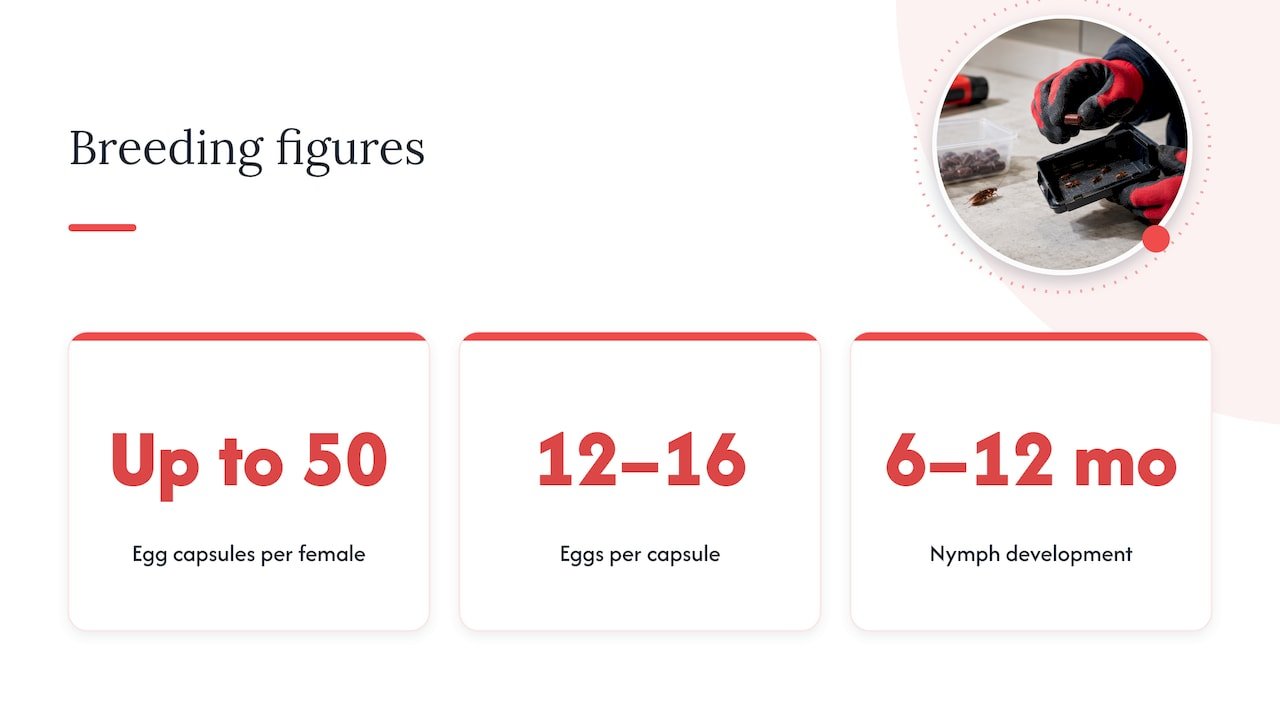
The Victorian health guidance gives the numbers that explain why a quick spray fails. Females can produce up to 50 egg capsules, each holding 12 to 16 eggs. Nymphs take 6 to 12 months to develop. Egg cases are tough, and treatments aimed at adults do not reach everything in a hidden harbourage. That slow life cycle is why monitoring after the first visit matters as much as the first visit.
Health risks, kept in proportion
The Victorian health guidance notes that cockroaches have been isolated with more than 30 types of bacteria and can trigger asthma. The main practical risk is contamination of food, utensils and food-storage areas. The City of Ryde makes the same point about droppings contaminating surfaces and utensils.
For most households, stress is the bigger impact. If someone in the home has asthma, or you run a food business, treat sightings sooner rather than later. In those settings a licensed pest manager is the right call, and in sensitive environments such as schools or aged care the health guidance says pesticides must be used by licensed professionals and strictly to label directions.
What works: the integrated approach
Effective control in Australia follows Integrated Pest Management (IPM), as set out in the Victorian guidance. The NSW EPA also explains IPM and notes that only registered pesticides may be used in that state. In practice it has three parts.
1. Remove what keeps them there
- Fix leaking taps, pipes and drains, and clear standing water.
- Store food, including pet food, in airtight containers.
- Keep food-handling areas clean, and clean grease traps on schedule.
- Reduce clutter and leaf litter against the house.
The Western Australian agriculture department calls hygiene the single most important factor in managing cockroach problems, because limiting access to food and water holds back their normally high population growth. It also notes that older buildings can be troublesome.
2. Seal the entry points
Close cracks and crevices, gaps around pipes, and damaged vents and screens. Sewer access points and subfloor vents deserve a look. This is the step that homeowners skip, and it is often why a problem returns after treatment.
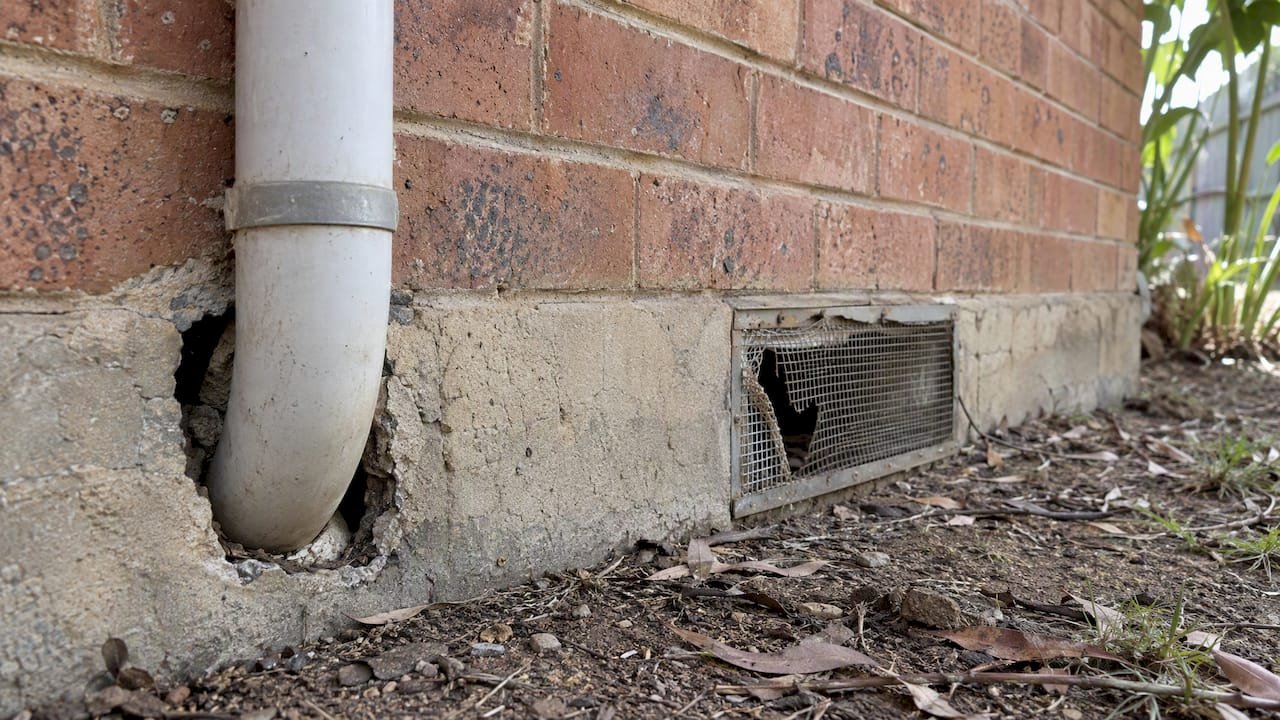
3. Targeted treatment in the harbourage
The goal is to put baits, gels or dusts where the insects actually live, rather than spraying open surfaces. A common mistake is treating the room where you saw the cockroach rather than the wall void, roof cavity or subfloor where it breeds. Space sprays often fail to reach these deep sites. BASF Pest Control Solutions stresses following label instructions, including re-entry periods, and using products approved for food-contact areas such as kitchens. Contained baits also keep airborne pesticide to a minimum, which matters in homes with children and pets.
What does not work
Smells and essential oils. People often ask which smell cockroaches hate. We are not aware of good evidence that any scent eradicates American cockroaches. Removing water, food and shelter does more than any repellent. Strong scents may displace a few insects for a night, but they do nothing about the breeding population in the walls.
Foggers and surface sprays alone. These tend to push cockroaches deeper into cavities and miss egg cases.
Treating once and walking away. With nymphs taking 6 to 12 months to mature, a single treatment can leave a new generation behind.
When to call a licensed pest controller
DIY baits are fine for a stray or two. Call a professional when:
- you see cockroaches in daylight or in large numbers, which usually means the harbourage is crowded;
- sightings keep coming back after you have cleaned and baited;
- you suspect a sewer, subfloor or wall void source you cannot reach;
- you prepare food commercially, or someone in the home has asthma;
- you are buying, selling or managing a property and need an inspection report. Our pest inspection checklist covers what to expect.
A good provider starts with an inspection to find the cause of entry and harbourage, not just a spray. Ask these questions:
- Do you identify the species first?
- Where will you treat, and with what: baits, gels, dusts or sprays?
- How do you find hidden harbourage in wall voids and roof cavities? Thermal imaging can help pinpoint inaccessible zones in older buildings with complex plumbing.
- Is follow-up monitoring included, and what happens if activity continues?
- What are the re-entry and pet and child precautions?
You can also check how providers present themselves online. Searches for emergency pest help are heavily local, which is why businesses pay attention to tracking their visibility in Google Maps results. Still, ranking well is no substitute for a current licence and insurance, so ask to see both.
Our view on American cockroaches in Canberra
We work in Canberra, where the winters are cold, so we treat American cockroach calls as a question of the building rather than the weather. In our experience, a persistent problem usually traces back to moisture, a gap or a hidden void, not to how tidy the kitchen is. That is why we start with inspection and identification. Applying chemicals to a harmless native insect helps nobody.
Our licensed technicians use modern detection methods, including thermal imaging in termite inspections, and we focus on treatments that suit families, children and pets. Where we can, we prefer targeted baits and dusts in the harbourage over broad spraying. We have serviced more than 5,000 Canberra homes over 10+ years, and the pattern holds: a one-off spray gives short relief, while a plan with follow-up visits breaks the life cycle. All our treatments are guaranteed for effectiveness, and we offer same-day emergency service.
— navin
Ongoing protection with a BugsPatrol plan
If you have had cockroaches once, a maintenance plan keeps new nymphs from maturing. We offer subscription plans: Bronze General Pest at $29.98 per month, Silver Combined at $55.98 per month and Gold Complete at $79.98 per month. Termite cover is available as Bronze Termite at $29.98 per month. For a one-off visit, see our general pest control service, or for urgent help book a technician.
FAQ
How do I get rid of American cockroaches in Australia?
Fix moisture problems, seal entry points, store food airtight, then place baits, gels or dusts in the harbourage areas. Established infestations usually need a licensed technician and follow-up visits, because nymphs take 6 to 12 months to mature.
What is the difference between an Australian and an American cockroach?
The two look alike, but the Australian cockroach is slightly smaller. It has a pale band along the outer edge of the wing covers, while the American cockroach’s pale marking sits around the section behind the head. If you are unsure, photograph it and ask a pest professional to identify it.
Can American cockroaches fly?
Adults can make short flights, but only in warmer weather. They more often run, and you are most likely to see them at night.
How do I know if I have an American cockroach infestation?
Look for night-time activity, egg cases, droppings and smear marks, especially near leaking plumbing, drains and grease traps. Seeing several sizes of nymph, or adults in daylight, points to a breeding population nearby.
Sources
- Cockroaches – pest control, Victorian Department of Health
- enHealth guidance: Arthropod pests of public health significance in Australia
- American cockroach (Periplaneta americana) in Australia, Professional Pest Manager
- Native cockroaches, The Australian Museum
- Cockroaches, City of Ryde
- Integrated pest management, NSW EPA
- P.R.O.P.E.R Use, BASF Pest Control Solutions Australia
Recommended
- Baby Cockroaches in Australia: Take 5 Photos Before Treating
- 24–72 Hour German Cockroach Control for Australian Homeowners
- Inspect Cockroach Hiding Places for Homeowners and When to Call a Pro
- Cockroach Infestation Signs: What to Look for at Home