Surface sprays rarely solve ants in walls because they only reach the ants you can see, not the nest hiding behind your drywall. Your first move should be removing food sources and setting sealed bait stations near active trails, never mass spraying. Call a licensed technician immediately if you notice frass, soft or hollow timber, ants around electrical outlets, audible movement in the wall, or activity that keeps returning after DIY attempts.
TL;DR:
- Visible ant trails and sounds inside walls often indicate an established nest, requiring professional identification and targeted treatment.
- Non-repellent baiting takes 7 to 21 days to eliminate colonies, with DIY sprays risking colony splitting and food contamination.
- Signs like frass, soft timber, and ants around electrical outlets strongly suggest a nest, and homeowners should call a professional if these appear.
- Sealing entry points, fixing leaks, and removing moisture sources are crucial to prevent ants from returning after treatment.
- Professional pest control offers more reliable long-term solutions than repeated DIY spraying or avoidance of inspection-based treatments.
Table of Contents
- How to Spot Ants Nesting Inside Wall Cavities
- Why Ants Move Into Wall Voids in the First Place
- What DIY Methods Actually Work, and Which Make Things Worse
- When to Call a Professional (and What Happens Next)
- Prevention and Repairs That Keep Ants From Coming Back
- How Licensed Technicians Actually Diagnose Ants in Walls
- What Actually Happens on the First Technician Visit
- How Bugspatrol Pest Management Handles Ants in Walls
- Why Most Ant Advice Online Gets the Order Backward
- Sources
How to Spot Ants Nesting Inside Wall Cavities
Confirming an actual nest, not just a few foraging ants, changes everything about how you respond. The clearest signs show up in two categories: what you can see and what you can hear.
- A steady trail of ants entering the same crack, gap, or power point at roughly the same times each day
- Faint rustling, ticking, or tapping sounds inside the wall, especially at night when the house is quiet
- Small piles of frass, a fine sawdust-like debris, collecting near skirting boards or window frames
- Electrical outlets that flicker or trip for no obvious reason near an active trail
Run a few quick checks before deciding your next step. Follow a trail backward toward its entry point rather than just wiping it away. Press your ear against suspect wall sections after dark, when carpenter ants and other wall-nesting species are most active. Check skirting boards and gaps around appliances, and pay attention if your dog or cat keeps sniffing or pawing at one spot on a baseboard.
Pro Tip: If you find frass, hear movement, or spot ants near an outlet, stop investigating and call a professional. Those three signs point to an established nest, not a random scouting party.
Why Ants Move Into Wall Voids in the First Place
Wall cavities offer ants three things they can’t easily get outside: warmth, shelter from predators, and often, moisture. A slow leak behind a shower wall or damp insulation around a pipe penetration creates the exact humidity many species need to establish a colony. Cable runs and plumbing penetrations give them easy access points that homeowners rarely think to seal.
Not every ant species poses the same risk, which is why identification matters before treatment:
- Carpenter ants and other wood-excavating species tunnel through damp or damaged timber to build galleries, creating real structural risk over time
- Sugar-seeking house ants are mostly a nuisance and contamination issue, since they move between garbage, food prep surfaces, and your pantry
- Species that build satellite nests can spread from one wall cavity into several parts of the house, making them harder to fully eliminate
Ants and termites cause very different problems, and mistaking one for the other is a common homeowner error. Getting the species right at the start is the single biggest factor in whether treatment actually works, according to pest control specialists.
What DIY Methods Actually Work, and Which Make Things Worse
Some DIY steps genuinely help. Others quietly make the infestation harder to fix. Here’s the difference:
- Remove food sources first. Wipe down counters, seal pantry containers, and take out garbage nightly. Ants won’t commit to a wall cavity that’s nowhere near a reliable food supply.
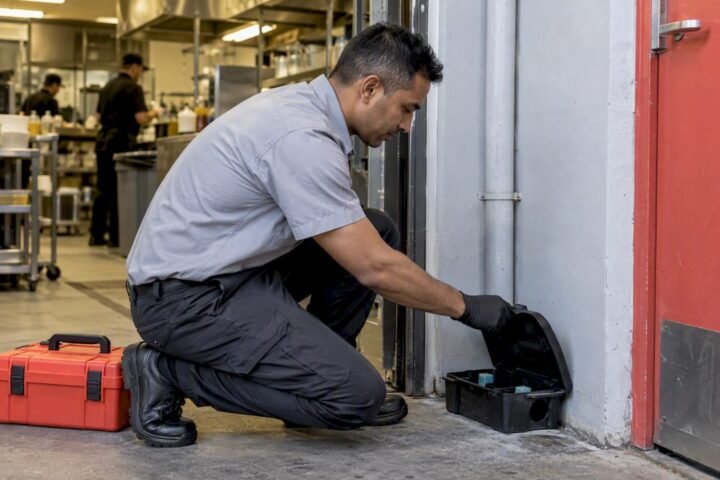
- Use slow-acting bait stations or gel baits, not sprays. Place them directly on the trail, away from cleaning chemicals that repel ants before they can carry bait back to the nest.
- Keep bait uncontaminated. Don’t spray near a bait station. Repellent chemicals nearby will make ants avoid the exact trap you’re relying on.
- Fix minor leaks where it’s safe to do so. Cutting off the moisture source can push a colony to relocate on its own.
The mistake most homeowners make is reaching for a contact spray the moment they see ants. Contact and repellent sprays kill the foragers you can see, but they rarely touch the nest itself. Worse, research on DIY ant treatments shows these sprays often trigger “budding,” where a stressed colony splits into multiple smaller nests that are harder to find and treat. Sprays applied near kitchens can also contaminate food-prep surfaces if you’re not careful with placement.
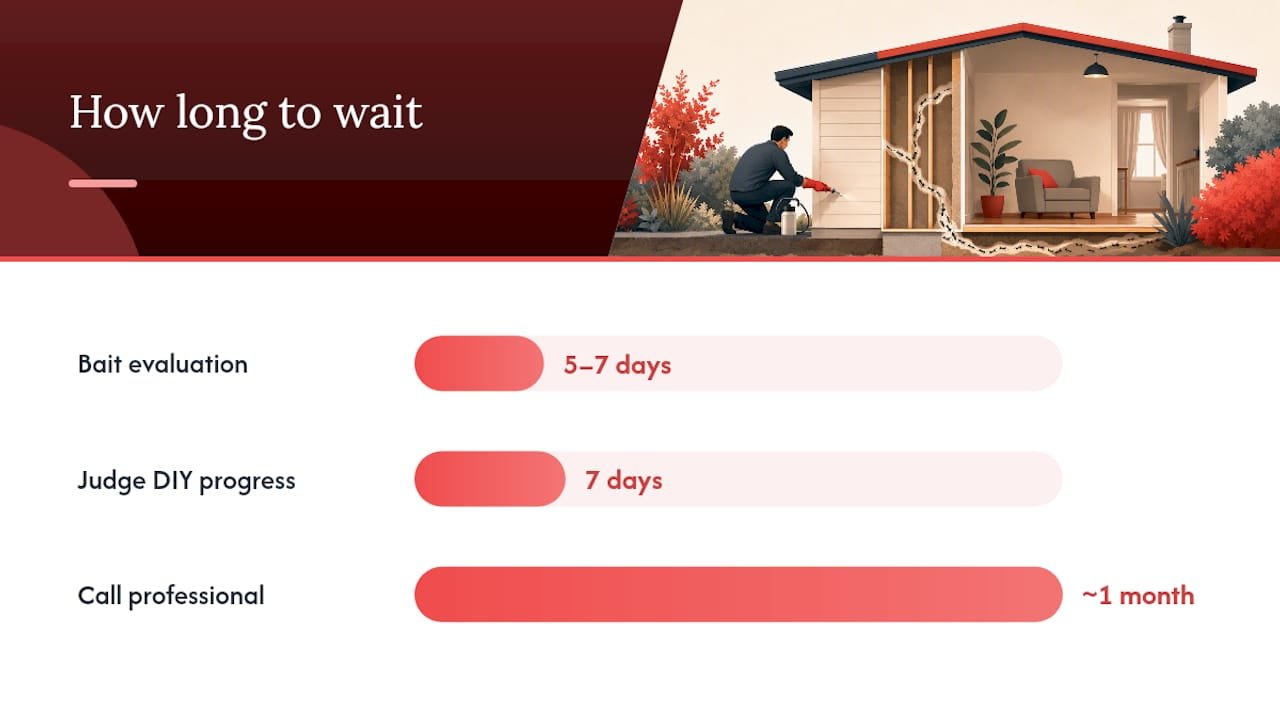
Pro Tip: Give bait stations 5 to 7 days before judging whether they’re working. Ants recruit slowly, and pulling baits too early is one of the most common reasons DIY treatment stalls out.
If activity hasn’t dropped noticeably after a week, or it comes back within a month, that’s your signal to stop DIY and call in a professional.
When to Call a Professional (and What Happens Next)
A few signs mean you should skip further DIY entirely and book an inspection:
- Frass or sawdust-like debris appearing repeatedly near the same section of wall
- Timber that sounds hollow or feels soft when tapped or pressed
- Ants seen inside or around electrical outlets or fittings
- Audible rustling or movement inside the wall itself
- Activity that returns again and again after home treatment
A professional visit starts with species identification, since the correct bait and placement depend entirely on which ant you’re dealing with. From there, licensed technicians typically use non-repellent baits, sometimes called transfer technology, that ants carry back to the nest without detecting them as a threat. For nests deeper in a void, technicians may apply targeted dusts or foams directly into the cavity rather than spraying exposed surfaces. Limited inspection access, like a small drilled hole in a low-visibility spot, is sometimes needed to confirm nest location.
Full colony control through non-repellent baiting typically takes 7 to 21 days, depending on species and colony size. That timeline surprises a lot of homeowners expecting instant results, but it’s actually a good sign. Slow-acting baits work precisely because they’re slow.
Before booking, ask the provider what treatment method they plan to use, how they protect children and pets during application, what timeline to expect, and whether follow-up visits are included.
Prevention and Repairs That Keep Ants From Coming Back
Treatment only solves half the problem. The other half is closing off whatever drew ants to your walls in the first place.
- Fix leaks and damp spots. Moisture is the number one reason ants pick a specific wall cavity over another, so any plumbing leak or condensation issue needs attention first.
- Seal cable and pipe penetrations. These small gaps are the easiest entry points into a wall void, and caulk or expanding foam closes them permanently.
- Repair damaged skirting boards. Gaps at floor level are a favorite entry route, especially for ground-nesting species working their way up.
- Trim vegetation and clear mulch away from exterior walls. Branches touching the house and mulch piled against the foundation give ants a direct bridge indoors, a point echoed by household ant prevention guidance.
- Maintain drainage around the foundation so water doesn’t pool against exterior walls and keep them damp.
- Store firewood away from the house, and schedule seasonal checks if you live in an area with a history of ant or termite pressure.
Small fixes like these do more long-term work than any single treatment, because they remove the conditions ants need to move back in.
How Licensed Technicians Actually Diagnose Ants in Walls
A proper inspection starts with a visual sweep, following visible trails back toward their source rather than just noting where ants are seen. Technicians check power points, roof voids, and skirting gaps, and will open a small inspection point if a wall cavity needs closer confirmation. Species identification comes before any treatment decision, since the wrong bait wastes time and money.
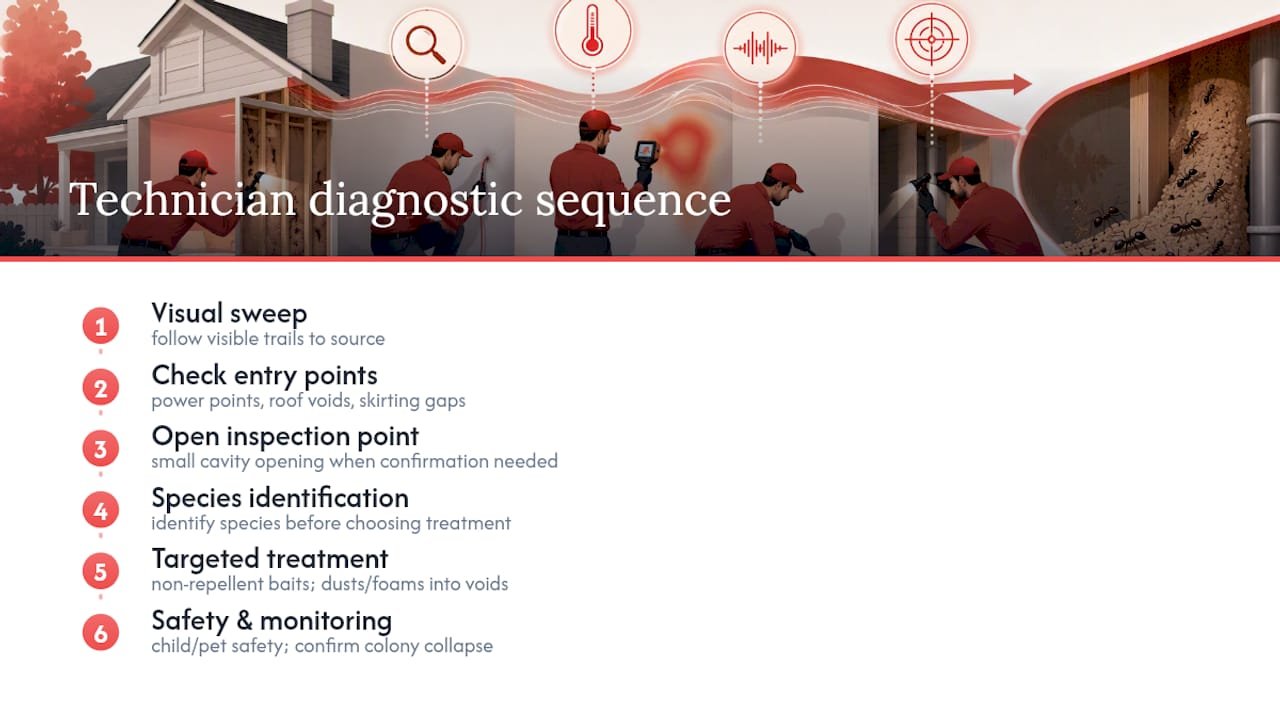
From there, the preferred approach is usually non-repellent baiting for colony transfer, paired with targeted dusts or foams pushed directly into voids rather than sprayed on visible surfaces. Every step follows safety protocols designed around children and pets in the home. Follow-up monitoring confirms the colony has actually collapsed rather than just gone quiet for a few days. Experienced pest control technicians bring this process to many homes serviced over several years, which tends to show in how quickly they spot which species they’re dealing with.
What Actually Happens on the First Technician Visit
On a typical first call, a technician asks you to clear access to the affected wall and to move pets or cover pet bowls away from the treatment area. Pointing out exactly where you’ve seen activity, even minor details like the time of day, helps narrow down the nest location fast.
Baits are slow-acting on purpose. Expect surface activity to drop within a few days, with full control usually settling in somewhere between one and three weeks. The biggest thing to avoid during this window is reaching for a spray can yourself. A well-meaning DIY spray applied mid-treatment can disrupt the very trail the bait is designed to exploit, undoing progress that’s already underway.
How Bugspatrol Pest Management Handles Ants in Walls
Professional pest management services can provide a faster, more reliable path to actual colony elimination than repeated trips to the hardware store for sprays that only push the problem deeper into your walls. A typical visit starts with an inspection to confirm species and locate the nest, followed by targeted baiting and, where needed, dusts or foams applied directly into the void rather than sprayed across visible surfaces. Treatments follow safety protocols built around households with kids and pets, and technicians schedule follow-up monitoring to confirm the colony is actually gone.

If you’re seeing trails, hearing movement, or spotting frass near a wall, book an inspection through Bugspatrol Pest Management’s general pest control service rather than waiting to see if another round of spray finally works. For a deeper look at how professional and DIY approaches compare over time, this DIY vs professional pest control breakdown is worth a read before you decide which route fits your situation.
Why Most Ant Advice Online Gets the Order Backward
Most articles on ants in walls lead with prevention tips and treat professional treatment as a last resort. That order is backward. The real question isn’t whether you can eventually solve the problem yourself. It’s whether you’re willing to spend weeks fighting a colony that keeps splitting into new nests every time a spray disturbs it.
The uncomfortable truth is that a spray can feels productive precisely because it kills ants you can see, which creates the illusion of progress while the actual nest, often behind three layers of drywall, keeps growing. Homeowners who eventually call a technician usually do it after months of dead-end spraying, not before. That delay costs more in repeated purchases and, in the case of wood-excavating species, potential structural damage than an early inspection ever would.
Prevention still matters, and every sealed gap and fixed leak reduces the odds of a repeat problem. But treat it as what it is: maintenance that follows a real fix, not a substitute for one.
— navin
Sources
Victoria’s health department outlines species-specific ant control methods homeowners can reference for treatment basics. For a closer look at nest behavior and why hidden colonies are hard to reach, see this guide on finding and removing ant nests. For the property and safety risks nests can create, this overview on ants in walls covers the details.
- How to Find and Remove an Ant Nest in Your House