Before a technician sets foot in your home, strip and wash bedding and clothes on hot, declutter every room so treatment can actually reach hiding bugs, vacate the property for the recommended window, and leave treated surfaces alone afterward. Skip any one of those four and you risk paying for a treatment that only knocks the infestation back instead of ending it.
TL;DR:
- Proper preparation requires decluttering, heat-washing fabrics at 60°C, and sealing items in sturdy bags to prevent bug spread during treatment.
- Vacuums should be used thoroughly in all rooms, especially along seams and skirting boards, with contents immediately sealed and taken outdoors for disposal.
- Homes must be vacated for two to four hours after treatment, with special caution needed for pregnant women, pets, fish tanks, and individuals with respiratory issues.
- Refrain from cleaning or applying home sprays for 7 to 14 days post-treatment to ensure residual products remain effective against bugs and eggs.
- Licensed technicians perform targeted inspections, combining methods like vacuuming, steaming, and precise product application, with follow-up visits to address any hatchlings.
Table of Contents
- Room-by-Room Bed Bug Prep Checklist
- What Happens on the Day of Treatment
- What to Expect After Treatment
- Common Mistakes That Undermine Treatment
- Why Licensed Technicians Handle What DIY Can’t
- Preparing Food and Dishes Before Treatment
- The Checklist Matters More Than the Chemical
- Book a Bed Bug Treatment with Bugspatrol Pest Management
- Sources
Room-by-Room Bed Bug Prep Checklist
Bed bugs squeeze into gaps as thin as a business card, which means a cluttered nightstand or a pile of clothes on the floor is basically a bunker your technician can’t reach with a sprayer or steamer. Health Victoria lists decluttering as a core requirement of effective treatment, not a nice-to-have. Every room where bugs might be hiding needs to open up before the appointment.
Work through these steps in order, room by room:
- Strip every bed. Pull sheets, pillowcases, mattress protectors, and any bed skirts.
- Gather washable fabrics from the room, including curtains, throw pillows, and clothing stored in dresser drawers or closets nearby.
- Wash everything on the hottest setting your fabric allows, at least 60°C, then dry on high heat for 30 minutes or more. Heat kills bed bugs at every life stage, including eggs, according to SA Health.
- Bag cleaned items immediately in new, sturdy plastic bags and seal them tightly, per HealthyWA guidance. Don’t reuse old bags that may already carry bugs or eggs.
- Remove mattresses and box springs from their frames. Stand them on edge and move them 30 to 60 centimeters away from the wall so technicians can treat seams and edges directly.
- Empty dresser and nightstand drawers. Leave them open or pulled out if your technician has asked for that access.
- Vacuum the room thoroughly, working the nozzle into mattress seams, tufts, and along skirting boards where bugs cluster.
- Seal the vacuum bag or canister contents in a plastic bag immediately and take it outside for disposal, since live bugs can crawl back out of an open bin.
Pro Tip: Grab two colors of permanent marker and label every bag “CLEAN” or “TO WASH” before you seal it. Confusing the two piles is one of the easiest ways to spread bugs from an infested room into one that was already clear.
A few items need special handling. Small rugs that can’t go in a washing machine should be bagged and set aside for a later heat treatment rather than left loose on the floor. Aquariums and electronics should be covered or disconnected only if your technician specifically asks, since some products interact poorly with tanks and wiring. Delicate fabrics, like dry-clean-only drapes or antique linens, are worth a quick call to the technician before you do anything with them.
Bedrooms: strip beds, isolate mattresses, empty drawers, bag fabrics
Living areas: clear couch cushions and throws, vacuum upholstery seams
Closets: remove floor clutter, bag clothing not currently being worn
Soft furnishings: bag anything washable, isolate anything that isn’t
If you need to move bagged items between rooms, carry sealed bags directly to the washer or the door. Don’t set a “to wash” bag down in a clean room, even for a minute.
What Happens on the Day of Treatment
Most treatments require the home to sit empty for two to four hours after application, giving the product time to work and the space time to air out before anyone breathes it in. Your technician will confirm the exact window for the products used in your home, and that number can shift depending on the treatment method.
A few groups need extra caution around that vacate window:
- Pregnant women, infants, and anyone with asthma or another respiratory condition should stay away longer than the minimum window if possible.
- Pets need to leave the property too, or be secured in a room the technician isn’t treating, with food and water dishes removed beforehand.
- Fish tanks should be covered and, in many cases, have their air pumps unplugged. Ask your technician for specific guidance, since this varies by product.
- Anyone with open wounds or sensitive skin should avoid direct contact with treated surfaces until they’re fully dry.
On the access side, leave a clear path for the technician’s equipment. That means furniture pulled away from walls, closet doors open, and hallways free of anything that could block a hose or a sprayer’s reach. If you won’t be home for the appointment, arrange key access or a lockbox in advance so the visit doesn’t get pushed back.
Resist the urge to deep-clean the house or spray your own pesticide before the visit. Mixing products can be dangerous, and a fresh coat of your own bug spray can actually make it harder for the professional treatment to work as intended.
What to Expect After Treatment
Most homes can be reoccupied within two to four hours, but always follow your technician’s specific instructions over any general rule. The bigger mistake homeowners make is cleaning too soon. Avoid washing or wiping down treated surfaces for 7 to 14 days after treatment unless your technician tells you otherwise, since scrubbing removes the residual product still doing its job.
Seeing a bug or two after treatment doesn’t necessarily mean it failed. Eggs that were already laid before the visit can still hatch afterward, and some products take days to fully knock down surviving adults. Report it if bites continue well past the first follow-up, but don’t panic over one bug spotted a few days in.
Between visits, keep an eye on:
- Mattress seams and tags for live bugs or shed skins
- Behind headboards and along bed frame joints
- Any new bites appearing on skin overnight
- Small rust colored spots on sheets, which can be bug droppings
Follow-up visits exist specifically to catch what hatches after the first treatment, so don’t skip them even if things look clear.
Common Mistakes That Undermine Treatment
The single biggest way homeowners accidentally reinfest a clean room is carrying an unsealed “to wash” bag through the house. A loose bag bumping against a hallway wall or a stairway carpet can drop bugs exactly where you don’t want them. Keep every infested item sealed until it reaches the washer.
Avoid these mistakes too:
- Mixing your own store-bought sprays with a professional treatment, which can be dangerous and can actually reduce how well the professional product works
- Throwing out infested mattresses or furniture on your own without asking the technician first, since dragging them through the house or curb can spread bugs to neighbors
- Assuming one treatment ends the problem when a persistent infestation usually needs a follow-up visit or two
Pro Tip: If bites continue for weeks despite treatment, or you spot bugs in multiple rooms after your follow-up, contact your local environmental health office or a licensed operator rather than trying another round of DIY spray. SA Health specifically recommends escalating to a professional when self-treatment isn’t holding.
Why Licensed Technicians Handle What DIY Can’t
A licensed technician doesn’t just spray a room and leave. The visit starts with an inspection to map where bugs are actually hiding, followed by a targeted Integrated Pest Management approach that combines vacuuming, steaming, laundering guidance, and precise product application. Pesticide alone rarely finishes the job. That’s the whole point of combining methods instead of relying on one.
Standing a mattress on edge isn’t just about floor space. It lets a technician treat the seams and piping where bugs hide and where a spray from above never reaches. Skipping that step is one of the most common reasons a first treatment underperforms.
A local pest management company has serviced many Canberra homes over 10-plus years, with licensed technicians using modern detection methods and a family and pet-safe approach to every job. DIY effort has its place for minor sightings, but it’s time to call a professional once you see bugs in multiple rooms, bites keep appearing despite your own treatment attempts, or an infestation has clearly spread beyond a single mattress. A reputable operator hands you a written prep checklist, a clear re-entry time, and a scheduled follow-up, not just a one-time spray and a goodbye.
- Inspection to locate hiding spots before any product is applied
- Combined treatment methods rather than a single spray
- A written checklist and re-entry time given directly to you
- A scheduled follow-up to catch eggs that hatch later
Preparing Food and Dishes Before Treatment
Bed bugs don’t infest pantries the way cockroaches or pantry moths do, but treatment products still need to stay away from anything you eat off of or cook with. Clear countertops and kitchen tables of loose dishes before the technician arrives, especially in bedrooms that double as living spaces or studio apartments where a hot plate or mini fridge sits near the bed.
Pack dishes, cutlery, and food items into cabinets with doors that close, or cover open shelving with a sheet if cabinets aren’t an option. Anything left exposed on a nightstand or dresser, like a coffee mug or snack bag, should get moved into a sealed container or a different room entirely.
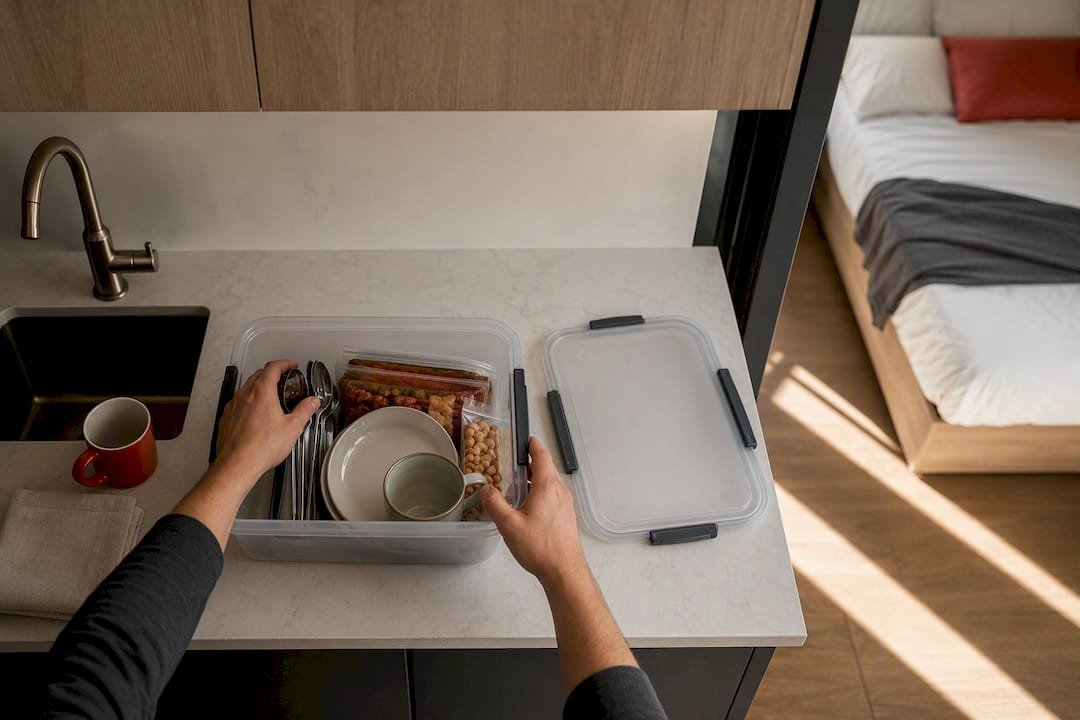
If your bedroom includes a mini kitchen setup, ask your technician directly whether that area needs covering or whether it falls outside the treatment zone. Most residential bed bug treatments target bedding, mattress seams, baseboards, and furniture joints rather than kitchen surfaces, but it costs nothing to confirm before the visit rather than find out afterward that a spray landed somewhere it shouldn’t have.
Once treatment is done, wash any dishes or food containers that were left exposed in the treated room before using them again, even if they look untouched. That small step matters more in a studio or one-room rental than in a house with a separate kitchen, but it’s worth doing everywhere.
The Checklist Matters More Than the Chemical
Most advice about bed bugs focuses on which product kills them fastest. That’s the wrong question. A technician can apply the strongest treatment available, but if a mattress is still flush against the wall or a pile of laundry is sitting untouched in the corner, the product simply can’t reach half the bugs it needs to.
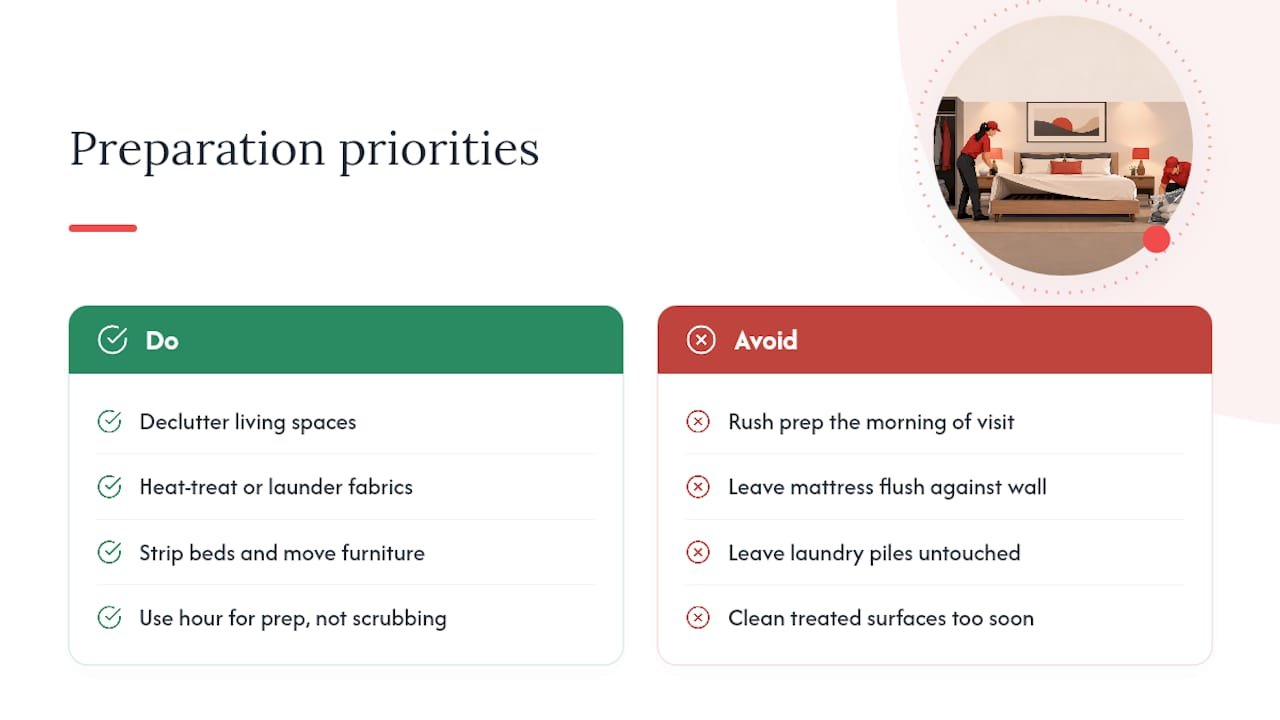
The conventional wisdom treats prep as an afterthought, something you rush through the morning of the appointment. The evidence points the other way. Decluttering and heat-treating fabrics are the steps that actually determine whether one visit solves the problem or three visits barely dent it. If you only have an hour before the technician shows up, spend it stripping beds and moving furniture, not scrubbing the kitchen.
The other place homeowners go wrong is patience after the visit. Cleaning too soon strips out the residual protection that’s still working. Give the treated surfaces the full window your technician recommends before you touch them again, and treat any early bug sighting as normal rather than a sign of failure.
— navin
Book a Bed Bug Treatment with Bugspatrol Pest Management
Preparing your home the right way puts you halfway to solving the problem. The other half is having someone who treats bed bugs for a living finish the job. This pest management provider offers licensed technicians who use an Integrated Pest Management approach instead of a single spray-and-hope visit, with extensive experience servicing Canberra homes.

If you’ve followed this checklist and you’re still finding bugs, or you’d rather skip the DIY laundering and furniture-moving entirely and hand the whole thing to a professional, Bugspatrol’s bed bug treatment service covers the inspection, the treatment plan, and the follow-up visit that catches whatever hatches after round one. Reach out to schedule an inspection and get a written prep checklist tailored to your home before the technician’s first visit.
Sources
- Bedbugs – pest control | Health.vic
- Bed bugs – prevention and treatment | SA Health
- Bed bugs | HealthyWA
- Pest Control Instructions – Bed Bug Removal Brisbane