Treat every pet in the house with a vet-approved flea product or keep untreated animals out of the areas you’re working on. Vacuum every carpet, rug, and piece of upholstery, wash all bedding on a hot cycle, and apply a residual insecticide with an insect growth regulator, or book a licensed treatment. Expect to keep vacuuming and watching for stragglers for several weeks, since flea pupae can keep hatching long after the visible fleas are gone.
TL;DR:
- Home treatments require consistent vacuuming, washing, and application of IGRs for at least eight weeks to fully break the flea breeding cycle.
- Visiting fleas often hide in shaded outdoor spots, subfloor gaps, and furniture, which most DIY sprays and products fail to reach effectively.
- If fleas persist after one week of DIY methods, or if multiple rooms are infested, professional treatment with an IGR and full coverage is strongly recommended.
- Flea pupae can remain dormant for up to a year and hatch only in response to vibration or heat, making eradication complex without targeted insecticides.
- Regular follow-up, humidity control, and sealing entry points are crucial to prevent re-infestation during and after treatment efforts.
Table of Contents
- Quick 10-Step Checklist You Can Follow Today
- How Do You Know If Fleas Are in Your Carpet?
- Breaking the Flea Life Cycle at Every Stage
- DIY or Call a Pro? How to Decide
- Your 8-Week Follow-Up Plan After Treatment
- What a Licensed Technician Actually Checks First
- Why the “One Spray and Done” Mindset Keeps Failing Homeowners
- Book a professional flea treatment that actually finishes the job
- Sources
- FAQ
Quick 10-Step Checklist You Can Follow Today
Before you touch a spray bottle or a vacuum cleaner, clear the room. Move kids and pets out of the treatment area, cover fish tanks and pet food bowls, and open a window if you’re using any chemical product.
From there, work through the basics in order:
- Remove pets, children, and covered food/water bowls from the room you’re treating.
- Cover or turn off aquariums, since insecticide drift can kill fish.
- Vacuum every carpet edge, rug seam, and gap under furniture, not just the open floor.
- Empty the vacuum into a sealed bag immediately and take it outside to the bin.
- Strip and wash all pet bedding, human bedding, and throw blankets in hot water.
- Bag soft toys and cushions that can’t be washed, and leave them in direct sun for a few hours.
- Isolate any pet showing signs of fleas until it’s been treated with a vet-approved product.
- Wipe down hard floors and skirting boards where flea dirt tends to collect.
- Apply a labeled residual spray or IGR product to carpets and pet resting areas, following the directions exactly.
- Call a licensed pest technician if you’ve already tried steps 1 through 9 once and the fleas are still active a week later.
That last step matters more than people think. A single round of vacuuming and spraying knocks down the visible population, but it rarely finishes the job on its own.
How Do You Know If Fleas Are in Your Carpet?
Fleas leave a fairly obvious paper trail once you know what to check. On people, bites usually show up as small red, itchy welts, often clustered around the ankles and lower legs. On pets, the giveaway is a dog or cat that scratches, bites at its own skin, or grooms obsessively around the tail base and neck.
The most reliable home test costs nothing. Pull on a pair of white socks and walk slowly across the carpet, especially near baseboards and under furniture, for a minute or two. Fleas jump onto the fabric and stand out instantly against white cotton.
A second confirmation test: comb through your pet’s fur over a damp white paper towel or tissue. Dark specks that fall out and turn reddish brown when wetted are flea dirt, digested blood the fleas have excreted, not ordinary debris.
- Bite clusters on ankles or waistlines, especially after sitting on a couch or carpet
- Pets scratching, chewing at fur, or developing bald patches near the tail
- Small dark specks (“flea dirt”) in pet bedding or on light-colored carpet
- Live fleas visible when parting fur at the neck or belly
- Itchy bumps appearing indoors even without recent pet contact
Immature fleas hide in carpets, under furniture, in subfloor gaps, and in shaded, humid spots outside, since larvae need humidity above roughly 45% and temperatures above 15°C to keep developing.
Quick gauge: if you’re finding a handful of fleas after one vacuum session, DIY steps will likely work within a couple of weeks. If you’re seeing fleas daily across multiple rooms, or bites are appearing on people who don’t own pets, you’re past the point where home treatment alone reliably solves it.
Breaking the Flea Life Cycle at Every Stage
Fleas move through four stages: egg, larva, pupa, and adult. Depending on temperature and humidity, that full cycle can take anywhere from two weeks to eight months, which is exactly why a single spray or one round of pet flea drops rarely finishes an infestation. A female flea can lay around 100 eggs in her lifetime, and most of those eggs, larvae, and pupae are living in your carpet and furniture, not on your pet.
The pupal stage is the real obstacle. Pupae sit inside a protective cocoon that’s largely resistant to insecticides, and adult fleas inside can stay dormant for up to a year until vibration, heat, or pressure signals that a host is nearby. That’s why fleas sometimes seem to vanish, then reappear a week or two after you thought the job was done.
A treatment plan has to hit all three fronts at once:
- Pets: talk to your veterinarian about a product suited to the animal’s age, weight, and health, and treat every pet in the house on the same day, even ones that seem unaffected.
- Indoors: vacuum aggressively and often, since thorough vacuuming can remove more than 90% of eggs, larvae, and adults from treated surfaces, and the mechanical agitation helps trigger pupae to hatch early so they contact residual insecticide instead of hiding out.
- Outdoors: mow the lawn, clear leaf litter and debris from shaded areas under decks and sheds, and treat spots where pets nap outside, since larvae and pupae thrive in shaded, moist outdoor pockets just as readily as they do indoors.
An insect growth regulator added to a residual spray is what actually stops the cycle rather than just killing what’s visible today. Residual sprays typically hold up for three to six months, but they mainly target adult fleas; IGRs interrupt the immature stages so this generation doesn’t become the next one.
Pro Tip: Run the vacuum over problem areas again the day before you apply any spray or IGR. Fresh vibration and pressure coax hiding pupae to hatch right into the treated zone instead of waiting it out in the cocoon.
Set expectations before you start: a coordinated plan usually knocks visible activity down within a week, but full elimination, accounting for pupae that hatch later, tends to take three to four weeks of follow-up.
DIY or Call a Pro? How to Decide
Supermarket foggers and one-off sprays fail more often than people expect, mostly because they don’t reach deep into carpet fibers or subfloor gaps, and most don’t include an IGR at all. That combination leaves the pupae and eggs completely untouched while the can gets thrown in the recycling.
A licensed technician works differently. Treatment typically pairs an IGR with a residual insecticide applied across full horizontal surfaces, including under furniture and along skirting boards, plus subfloor and outdoor perimeter zones where DIY sprays rarely go. Technicians also run a risk assessment on product choice based on the household, factoring in kids, pets, and any sensitivities before selecting what goes down.
A few situations point straight to a professional rather than another round of DIY:
- Fleas are still active a week or more after vacuuming, washing, and one spray application.
- Someone in the house is pregnant, an infant, elderly, or has a compromised immune system.
- The infestation keeps returning every few months despite regular pet treatment.
- You’re preparing a rental for end-of-lease inspection and need documented, guaranteed treatment.
If you do call one, ask what product they’re using, whether it includes an IGR, how long you need to stay out of treated rooms, and whether a follow-up visit is included. Before they arrive, vacuum thoroughly and clear the floor so the treatment reaches every surface instead of getting blocked by clutter.
Your 8-Week Follow-Up Plan After Treatment
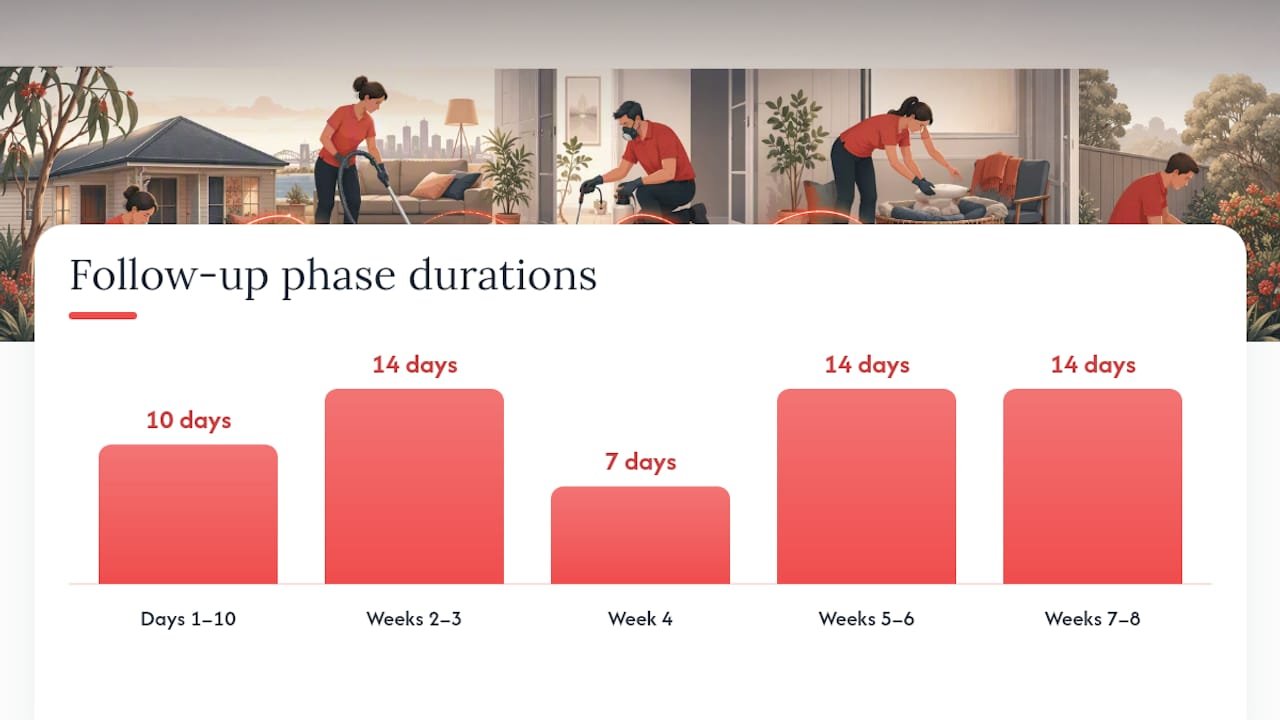
Treatment day is the start, not the finish. The first two weeks decide whether the infestation actually ends or quietly restarts.
- Days 1 to 10: Vacuum daily, focusing on carpet edges, under beds, and pet resting spots, to catch newly hatched fleas before they mature and breed.
- Weeks 2 to 3: Taper to vacuuming every two to three days, and recheck with the white sock test in high traffic rooms.
- Week 4: Confirm with your veterinarian that all pets are current on their flea prevention, and repeat any product that’s reached its expiry window.
- Weeks 5 to 6: Inspect outdoor pet areas and shaded yard corners again, since warm, humid patches restart larval development faster than dry, sunlit ones.
- Weeks 7 to 8: Do a final full-house check. If activity is genuinely at zero, shift to routine monthly pet prevention and seasonal vigilance.
Humidity control matters more than most homeowners realize. Keeping indoor humidity below that 45% threshold makes it far harder for any surviving larvae to complete development, so a dehumidifier in damp rooms does real work here, not just comfort.
Seal obvious gaps around skirting boards and subfloor vents, since these double as pathways for stray cats, rodents, and the fleas riding along with them. If you notice droppings or gnaw marks anywhere near flea hotspots, rodent activity may be feeding the reinfestation and needs its own separate treatment. Local seasonal shifts, particularly warmer, humid stretches, tend to bring renewed flea activity indoors even in homes that seemed clear for months.
What a Licensed Technician Actually Checks First
A proper inspection starts before any spray comes out. Technicians look for hidden reservoirs, pet bedding, under furniture, subfloor spaces, and check for rodent activity that could be reintroducing fleas. IGRs and residual products get applied with full coverage across floors, skirting, and outdoor perimeter zones, following label directions closely to protect kids and pets in the home.
Homeowners are usually asked to wash bedding, vacuum beforehand, and keep pets and children out of treated rooms for a set period. Most professional plans include a follow-up recommendation, since pupae hatching weeks later is normal, not a sign the first treatment failed.
Why the “One Spray and Done” Mindset Keeps Failing Homeowners
Most flea advice online treats this as a single event: spray once, problem solved. That framing ignores the biology entirely. Pupae can sit dormant for months, which means the household that declares victory after one clean-looking week is often just watching the calm before the next hatch.
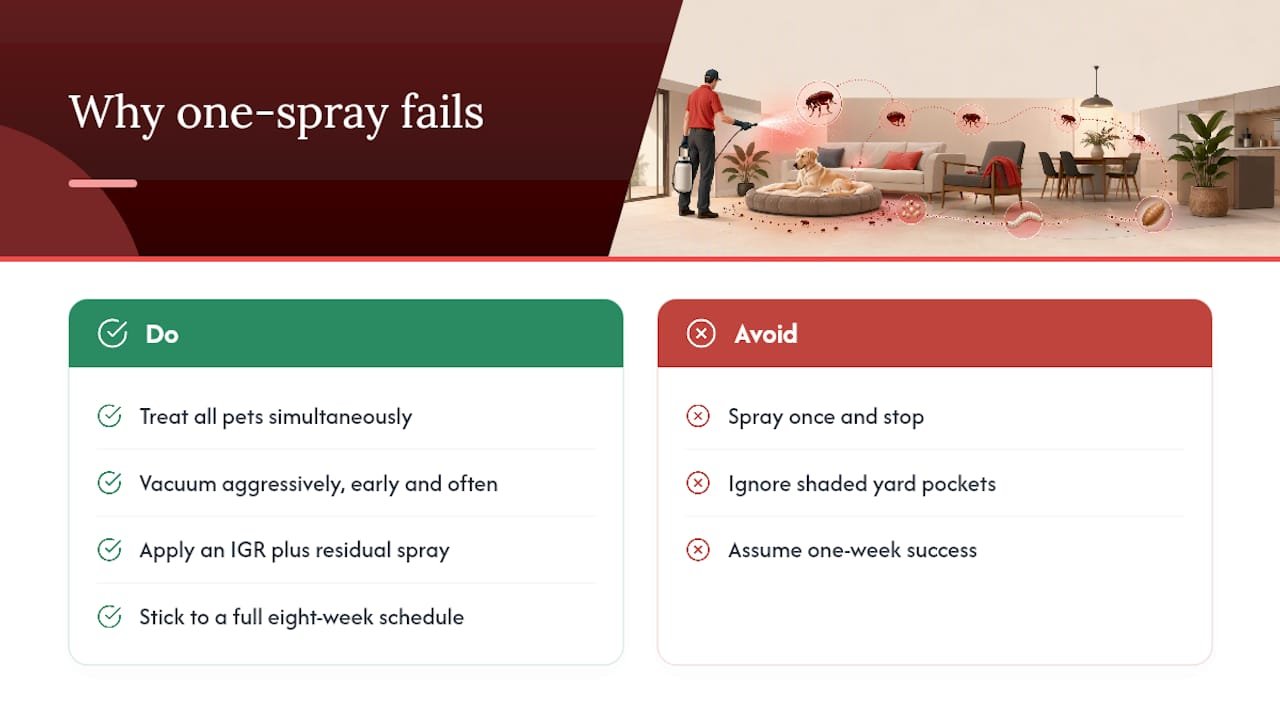
The bigger mistake I see in typical guidance is treating the yard as optional. Shaded, humid outdoor pockets under decks and sheds are just as capable of sustaining a flea population as your living room carpet, and skipping that step is why so many “successful” indoor treatments get reinfested within a month.
What actually works is unglamorous: coordinated pet treatment, aggressive early vacuuming, an IGR paired with a residual spray, and a follow-up schedule you actually stick to for a full eight weeks. Homeowners who treat this as a short project rather than a one-day fix get it right the first time. Everyone else ends up doing it twice.
— navin
Book a professional flea treatment that actually finishes the job
A DIY spray from the hardware store skips the two things that stop fleas from coming back: an insect growth regulator and full coverage of hidden harbourages. A professional pest management company builds both into every flea treatment, starting with an inspection that maps where eggs, larvae, and pupae are actually hiding, not just where the fleas happen to be visible today.

A technician-applied plan pairs an IGR with a residual spray across indoor surfaces and outdoor pet resting zones, using products selected with families, kids, and pets in mind. You handle the simple prep, vacuuming and washing bedding beforehand, and we handle the rest, including a follow-up plan that accounts for pupae hatching weeks after the initial visit. If you’re in Canberra and fleas keep coming back despite your best efforts, book a professional flea and pest control service with Bugspatrol Pest Management and get a technician out to inspect the property properly.
Sources
- Fleas – pest control | Health.vic
- In focus: Fleas and flea treatments | Professional Pest Manager
- Successful flea treatment requires destruction of the entire life-cycle | AEPMA
- Insects journal article on flea ecology (PMC)
FAQ
What kills fleas instantly in your house?
Nothing kills every stage of a flea infestation instantly, since eggs and pupae are protected from most sprays. A properly applied residual insecticide kills adult fleas on contact within minutes, but eggs and cocooned pupae need vacuuming, IGR treatment, and time to clear fully.
How do you get rid of a severe flea infestation in the house?
Treat every pet with a vet-approved product, vacuum daily for the first one to two weeks, wash all bedding in hot water, and apply a residual spray with an IGR to carpets, furniture, and pet areas. Severe or repeated infestations usually respond faster to a licensed treatment, since technicians reach subfloor and outdoor zones that home sprays typically miss.
Why is my house suddenly infested with fleas?
A sudden flea infestation is often the result of pupae that were already present hatching once conditions turned favorable, such as a warm, humid stretch of weather or a pet bringing fleas in from outside. Stray animals, rodent activity, or a new pet can also introduce fleas that then breed indoors.
How serious is a flea infestation?
A flea infestation is mostly a comfort and hygiene problem for people, causing itchy bites, but it can seriously affect pets through skin irritation, allergic reactions, and in heavy cases, anemia in young or small animals. Left untreated, an infestation tends to grow rather than resolve on its own, since a single female flea can lay around 100 eggs over her lifetime.