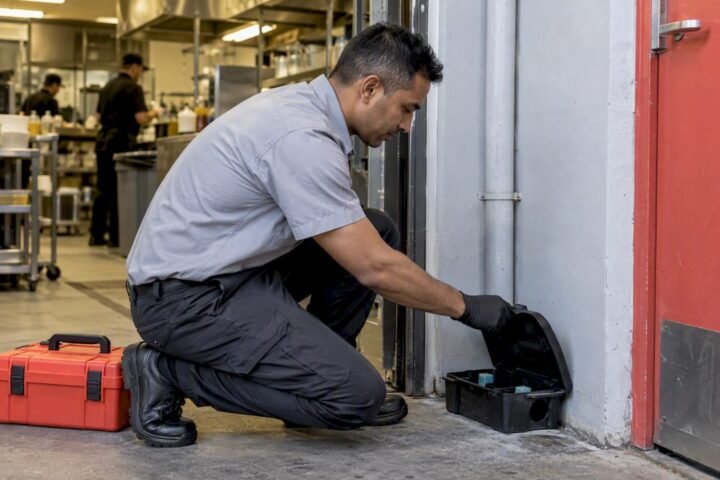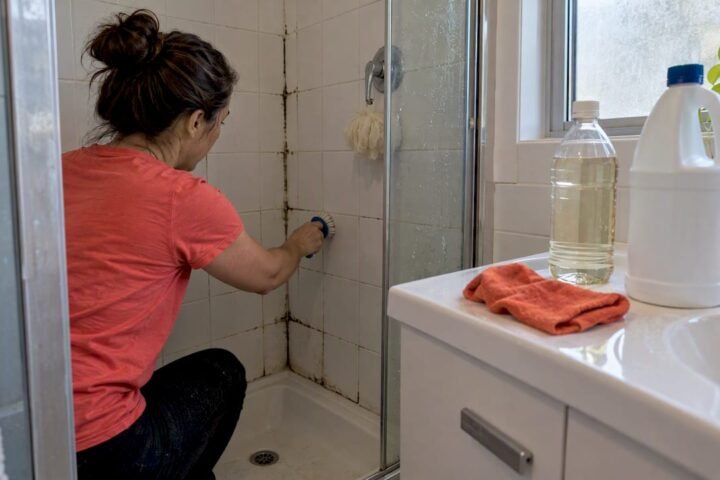
Wipe down every counter and crumb with soapy water, dry the sink and any damp spots under appliances, and put out a small amount of bait along the trail instead of reaching for a spray can. Sprays scatter the colony and often make things worse. Bait takes about a week to show real results, and a heavy infestation may take a couple of months to fully clear, so patience matters as much as the product you pick.
TL;DR:
- Using bait instead of sprays can take about one to two months to fully eliminate a heavy ant infestation, requiring patience and persistence.
- Proper identification of the ant species and nesting location is crucial, as bait effectiveness depends on matching the species’ dietary preferences.
- Immediate actions like cleaning surfaces, drying damp areas, and blocking trails with vinegar can significantly reduce ant activity and improve bait success.
- Bait placement should be in cracks, crevices, or stations and never on open, regularly cleaned surfaces to avoid waste and improve colony control.
- Persistent or widespread infestations across multiple rooms, especially with winged ants indoors, should be addressed by licensed professionals for targeted treatment.
Table of Contents
- Why Are Ants in My Kitchen in the First Place?
- Quick Actions to Reduce Ant Activity Today
- How Does Ant Bait Actually Work?
- When Should You Call a Professional Instead?
- How to Keep Ants From Coming Back
- Safety Rules to Follow Around Food and Pets
- Navin’s Approach to Solving an Ant Problem
- Get Professional Help for a Persistent Ant Problem
- Sources
Why Are Ants in My Kitchen in the First Place?
Ants show up in kitchens for three reasons: food, water, and shelter. A kitchen offers all three within a few square feet, which is why it’s usually the first room affected once ants find their way indoors. Pet food bowls left out overnight, a dusting of sugar near the toaster, or aphid honeydew tracked in from a nearby plant can all trigger a scouting trail that turns into a highway within days.
Species matter more than most people realize. Sugar ants go after sweet residue and crumbs, while other species target grease, meat scraps, or other pet food entirely. Some nest indoors in wall voids or under slabs; others live outside and just forage in through gaps. Victorian health guidance notes that treatment should be chosen based on species and nest location, not guesswork, because hygiene alone rarely solves an established colony.
Misidentifying the species is the single most common reason a DIY bait fails. If you put out a sugar-based gel for a protein-feeding species, the ants will walk right past it.
- Crumbs, spills, and pet food bowls left out overnight
- Standing water near sinks, drains, or leaky appliances
- Gaps around pipes, skirting boards, or door frames offering shelter
- Honeydew from aphids on nearby plants, which some species farm actively
Quick Actions to Reduce Ant Activity Today
- Clean every surface. Wipe benches, stovetops, and floors with warm soapy water to remove food residue and scent trails.
- Clear the clutter. Empty crumb trays, seal open cereal boxes, and take out recycling that still smells like food.
- Dry out damp zones. Check under the sink, behind the fridge, and around the dishwasher for standing water and dry it thoroughly.
- Break the trail. Ants navigate by pheromone scent. A vinegar-water wipe along the path they’re using erases that signal fast, and it won’t scatter the colony the way a repellent spray does.
- Lock down food. Move pet bowls after feeding time, store dry goods in sealed containers, and rinse jars before they go in the recycling bin.
- Use a temporary barrier if needed. A line of sticky tape or a strip of petroleum jelly across an entry point can slow the trail while you plan the next step.
These steps won’t eliminate a colony on their own, but they cut visible activity fast and make any bait you place afterward far more effective, since the ants aren’t distracted by easier food sources sitting on the counter.
How Does Ant Bait Actually Work?
Bait works because it’s slow, not despite it. Worker ants carry the toxic bait back to the nest and feed it to the queen and larvae, which is how the whole colony collapses rather than just the ants you can see. A contact spray kills whatever it touches on the counter that day, but it leaves the nest untouched, and repellent sprays can even fragment a colony into multiple satellite nests, making the problem worse.
The Optigard Ant Bait label recommends placing small amounts at intervals of roughly 1.5 to 2.5 meters along active trails and directly into cracks and crevices rather than on open surfaces. Keep it away from anywhere that gets wiped down regularly, and always out of reach of kids and pets.
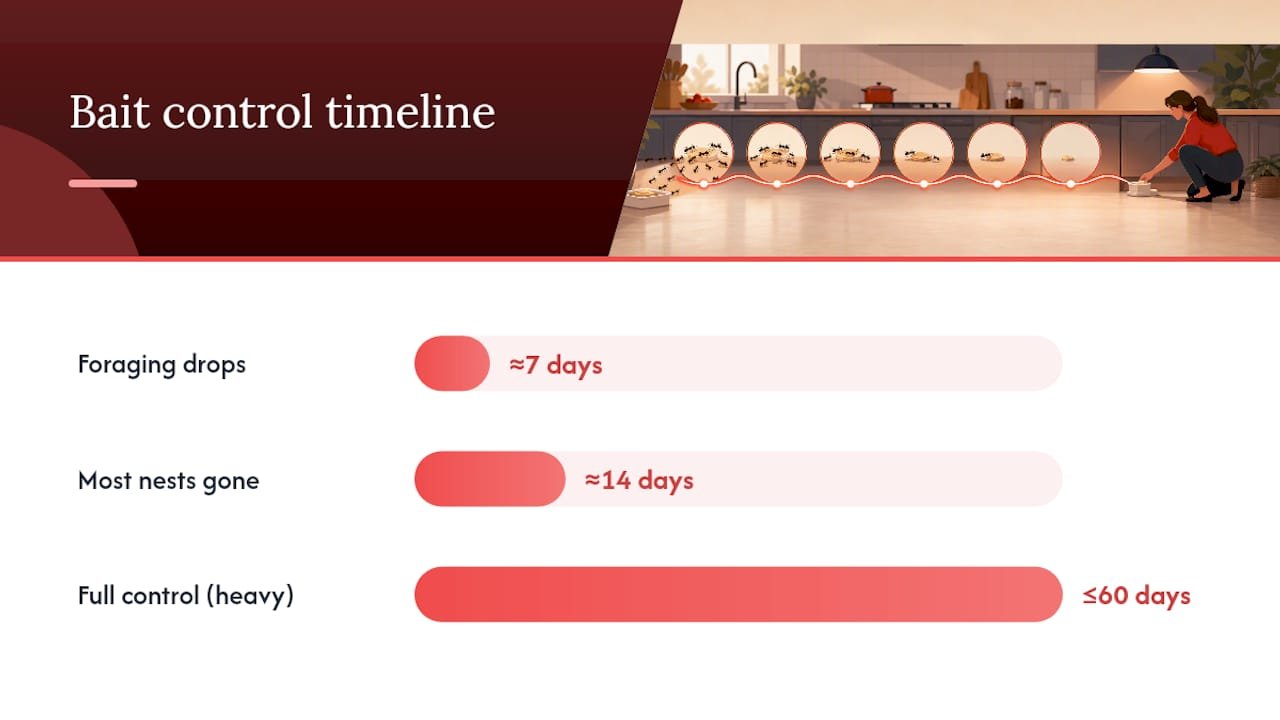
Bait timeline you can actually expect: foraging activity typically drops within about 7 days, and most nests are eliminated within 14, though the Maxforce Quantum label notes full control can take up to 2 months for heavy infestations or where re-invasion keeps happening from outside.
- Place bait in cracks, crevices, or dedicated stations, never in the open
- Never place bait on food-prep surfaces or anywhere regularly cleaned
- If ants stop feeding, switch bait type (protein versus sugar) rather than assuming the job’s done
- Give it time before judging it a failure; baiting is a slow burn, not an instant fix
When Should You Call a Professional Instead?
Some infestations just aren’t a weekend project. If ants keep coming back after a thorough clean and a bait cycle, if you’re seeing them in multiple rooms rather than just the kitchen, or if you spot winged ants indoors, that’s usually a sign of an established or maturing nest that needs more than a store-bought gel.
Other red flags worth acting on fast: ants getting into sealed food storage, a household with young kids, elderly residents, or pets sensitive to chemical exposure, or a colony you simply can’t trace back to an entry point no matter how long you watch the trail.
A licensed technician approaches the job differently than a homeowner with a bait tube, often performing a thorough building and pest Brisbane inspection to accurately identify infestation sources. Expect species identification first, then trail and nest tracing, targeted non-repellent baiting placed exactly where it counts, crack-and-crevice treatment, and perimeter work outside to stop the next wave before it starts. Follow-up visits confirm the colony’s actually gone rather than just quiet for a week.
A professional pest control company has spent many years handling exactly this kind of job across thousands of homes in the area, using licensed technicians and modern detection methods with a deliberate focus on treatments that are safe around families and pets.
Pro Tip: If you’ve already tried two different bait types without success, stop experimenting. Repeated failed attempts usually mean the nest is somewhere you can’t reach, and that’s a job for an ant control inspection, not a third product.
How to Keep Ants From Coming Back
Getting rid of the current trail is only half the job. Ants that found your kitchen once will keep sending scouts back unless the entry points and attractants are gone for good.
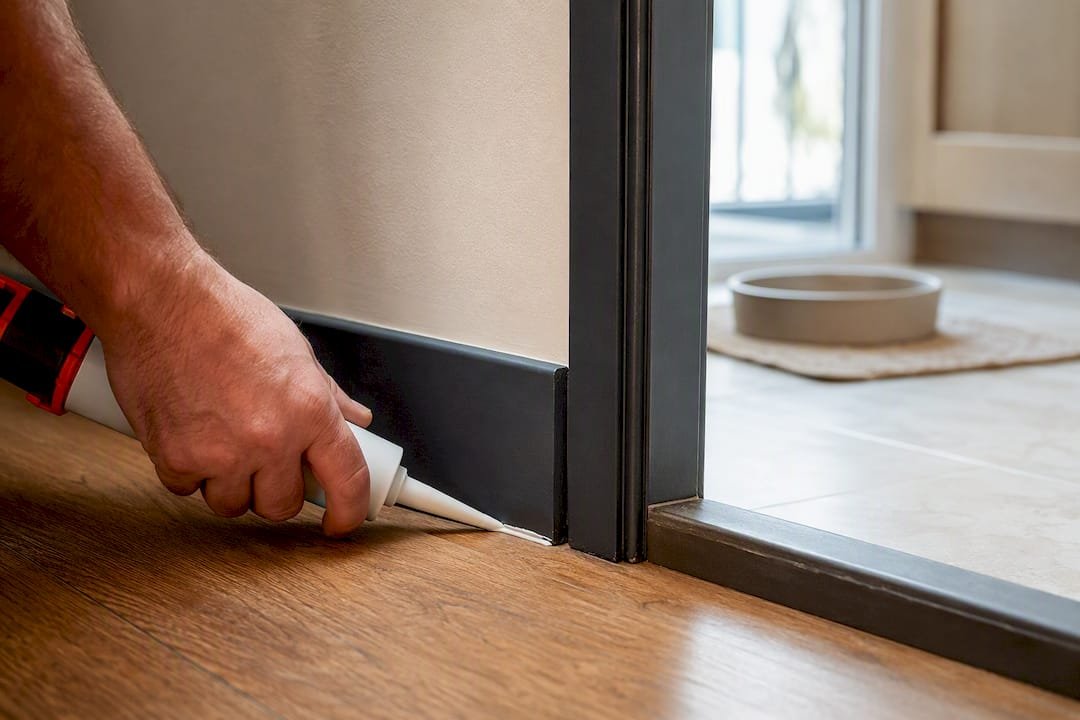
Start outside the house, not in it. Trim branches and shrubs so they don’t touch the walls, move mulch and firewood piles away from the foundation, and keep outdoor bins sealed and away from the exterior wall nearest the kitchen. Inside, seal gaps around pipe penetrations, skirting boards, and door frames with a proper sealant, since these are the exact gaps foragers use to slip in unnoticed.
Moisture control matters just as much as sealing. Fix dripping taps, improve drainage under the sink, and never leave water sitting in a pet dish overnight.
- Seal cracks around plumbing, skirting, and door frames with caulk or expanding foam
- Fix leaks and improve drainage anywhere water can pool
- Store pantry goods in airtight containers and check shelves weekly
- Empty kitchen bins regularly and rinse recyclables before storage
Readers dealing with a local infestation can find more detail in this ant removal case breakdown, which walks through what a technician actually checks room by room.
Safety Rules to Follow Around Food and Pets
Every bait product on the market carries label restrictions for a reason, and kitchens are the room where they matter most. The Advion Ant Gel label is explicit: never apply gel to food-contact surfaces or anywhere that gets washed regularly, and remove unpackaged food from the room entirely before treating.
- Keep bait out of reach of children and pets at all times, no exceptions
- Avoid placing gel near stovetops, dishwashers, or anything that gets hot
- Follow label directions exactly, including quantity and placement
- When in doubt, clear the food and call a licensed technician instead of guessing
Navin’s Approach to Solving an Ant Problem
My process is always the same order: identify the species and find the entry point, bait correctly for that species, seal what’s letting them in, then monitor. Skipping a step is why most DIY attempts stall out around week two.
Give bait its full timeline before judging it. If you’ve got kids, pets, or elderly residents in the house, or the trail keeps reappearing in a new spot, that’s the moment to hand it to someone licensed rather than keep experimenting.
— navin
Get Professional Help for a Persistent Ant Problem
If you’ve cleaned, baited, and sealed everything you can reach and the ants keep showing up, or you’re dealing with activity across multiple rooms, it’s time for a technician rather than another trip to the hardware store. A professional pest control service is recommended for exactly that situation: licensed technicians who identify the species first, then apply targeted non-repellent treatments instead of guesswork, with follow-up visits to confirm the colony’s actually gone.
Every job includes proper species identification, crack-and-crevice and perimeter treatment, and a family and pet-safe approach throughout, backed by extensive experience in the local area. If you’re not sure whether your infestation needs a professional, the pest control preparation guide walks through what to expect before a visit. When you’re ready, book an inspection through the general pest control service page and get a technician looking at the actual nest, not just the ants you can see on the counter.