Earwigs are one of Canberra’s most common nuisance pests. While they look intimidating with their rear pincers, they’re harmless to humans — but large numbers invading your bathroom, kitchen, or laundry is unpleasant and indicates conditions that attract other pests too.
The European earwig (Forficula auricularia) is the species most commonly found in Canberra homes. Originally from Europe, it’s now well-established across southeastern Australia and thrives in Canberra’s temperate climate. Earwigs are nocturnal, hiding during the day in dark, moist crevices — under bark, in mulch, beneath rocks, and inside rolled newspapers or garden hoses. At night they emerge to feed on decaying organic matter, small insects, and unfortunately, garden seedlings, flower petals, and soft fruit.
Earwig populations in Canberra typically peak in late spring and summer when breeding activity is highest. A single female lays 30-60 eggs in a soil burrow and unusually for insects, provides maternal care — guarding the eggs and feeding the nymphs until they’re self-sufficient. This parental investment results in high survival rates and rapid population growth. By midsummer, properties with heavy mulching, dense ground cover, and moisture issues can harbour thousands of earwigs.
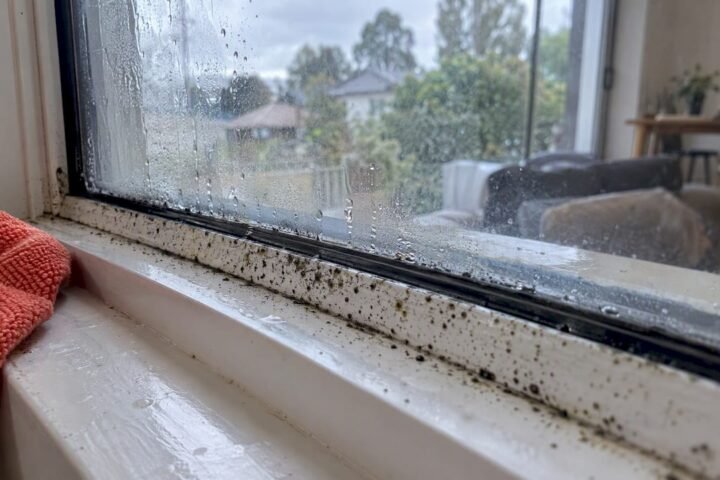
The primary driver of indoor earwig invasions is moisture. Earwigs have a high water requirement and are strongly attracted to damp environments. Leaking taps, condensation from air conditioners, poor bathroom ventilation, and ground-level moisture problems all draw earwigs indoors. In Canberra’s hot summers, when outdoor conditions become too dry, earwigs migrate towards any available moisture source — which often means your bathroom, laundry, or kitchen. Addressing moisture issues is the single most effective step in earwig management, often reducing indoor numbers by 70-80% without any chemical treatment.
How to Prevent Earwig Invasions
Indoor Fixes
- Fix leaking taps and pipes
- Improve bathroom ventilation
- Install door sweeps on all external doors
- Seal gaps around pipes and cables
- Reduce indoor humidity with dehumidifiers
- Use yellow outdoor lights (attract fewer insects)
Outdoor Fixes
- Pull mulch 30cm back from house walls
- Remove leaf litter and debris from foundations
- Fix drainage so water flows away from house
- Reduce dense ground cover near the house
- Clean gutters to prevent moisture buildup
- Store firewood and garden items away from walls
For properties with persistent earwig problems, professional perimeter treatment provides effective, long-lasting control. The treatment involves applying a residual insecticide around the building’s perimeter — door thresholds, weep holes, window frames, and garden edges — creating a chemical barrier that kills earwigs before they enter. Combined with habitat modification (reducing mulch, fixing moisture, sealing entry points), professional treatment typically eliminates indoor earwig problems within 1-2 weeks and provides 3-6 months of ongoing protection. The treatment also reduces other crawling insects like silverfish, cockroaches, and slaters that are attracted to the same conditions.
Earwig Barrier Treatment
Our perimeter treatment creates a barrier that stops earwigs and other crawling pests. Effective for 3-6 months.
Still have questions?
The best pest control company will solve your issue for a long time. Bugs Patrol is Canberra’s trusted choice for professional earwig control with lasting results.
Earwigs Taking Over?
Professional perimeter treatment stops earwigs and other crawling pests. One treatment, months of protection.
Frequently Asked Questions
No. Despite their pincers, they rarely pinch and can’t break skin. They don’t transmit diseases but can damage garden seedlings.
They seek moisture, shelter, and warmth. Damp bathrooms, leaky pipes, and gaps under doors attract them indoors.
Fix moisture issues, seal entry points, reduce mulch near the house. Professional perimeter treatment costs $150-$300.
No. This is a myth. They have no interest in ears and are no more likely to enter one than any other small insect.