If you find termites in your garden, do not spray or disturb them. Photograph the activity, mark the spot, and check whether it sits close to a wall or foundation. If you see mud tubes touching the structure or damaged timber nearby, call a licensed inspector before doing anything else.
TL;DR:
- Most visible signs of garden termites, such as mud tubes and frass, indicate activity that may or may not threaten your home, depending on proximity to structures.
- If mud tubes or damaged timber are within approximately 400 millimeters of your foundation, you should contact a licensed inspector for evaluation and potential treatment.
- Broad chemical sprays are ineffective and risky; targeted baiting, nest treatment, and barriers are the recommended management methods, all requiring professional application.
- Regular inspections, soil moisture management, removal of deadwood, and clearing soil contact with structures can prevent infestations and reduce risks to your property.
- Immediate actions include photographing activity, marking the site, removing nearby timber or firewood, and avoiding disturbance until inspection is performed.
Table of Contents
- How to recognize termite signs in garden areas
- Immediate do’s and don’ts after finding termites in garden soil or beds
- Garden-appropriate treatments: baiting, targeted nest treatment, and barriers
- Prevention and garden maintenance that make your property less attractive to termites
- When to call a licensed pest professional and what an inspection covers
- How termites affect garden plants and landscaping
- Seasonal behavior and life cycle of garden termites
- Natural or organic termite control methods for gardens
- Long-term monitoring strategies for garden termite activity
- A pest manager’s quick perspective: common mistakes and realistic timing for control
- How BugsPatrol can help with garden termite protection
- Sources
- FAQ
How to recognize termite signs in garden areas
Termites leave physical clues long before you see the insects themselves. Learning to read these signs tells you whether you are looking at harmless garden activity or something that could reach your house.
- Mud tubes or shelter tubes: pencil-width tunnels of soil running up tree trunks, stumps, fences or foundation walls.
- Frass: small pellets of termite droppings that look like sawdust or coffee grounds near wood piles or garden beds.
- Hollow-sounding timber: fence posts, sleepers or stumps that sound papery or hollow when tapped.
- Mound-like structures: raised soil formations in lawns or garden beds, though many species in gardens nest without visible mounds.
- Alate flights: swarms of winged termites, usually after rain, that shed their wings near light sources.
- Galleries in stumps or logs: honeycombed tunnels visible when old wood is split or lifted.
Not every sign points to a building risk. A nest inside a dead tree stump or a damp log at the back of the yard is often a self-contained colony feeding on that wood, and some termite activity in gardens can even be ecologically useful because these insects help break down dead timber. The picture changes when mud tubes run toward a foundation, a subfloor vent or a wall junction. That trail suggests the colony is foraging toward your house rather than staying put in the yard.
When you inspect, work outward from the building rather than starting at the far end of the property. Check foundation lines, deck posts, retaining walls and any spot where soil or mulch touches timber. CSIRO’s guidance on termite behavior notes that colonies commonly forage across a wide radius from the nest, so activity near a stump at the back fence does not rule out a connection to structural timber. Take clear photos of any tubes, damaged wood or swarms, note the date and location, and keep the area undisturbed so a technician can assess it accurately.
Immediate do’s and don’ts after finding termites in garden soil or beds
What you do in the first day or two matters more than people expect. The right moves preserve evidence for an inspector; the wrong ones can scatter a colony or push it toward your house.
- Leave the nest or tube alone. Disturbing it does not solve the problem and can scatter workers into new feeding areas.
- Photograph and mark the location with a stake, flag or chalk so it is easy to find again.
- Move stored timber, firewood or garden stakes away from the affected area and off the bare soil.
- Measure the distance to your home’s foundation. Anything inside roughly 400 millimeters warrants a closer look.
- Call a licensed inspector if you see mud tubes touching the structure, damaged structural timber, or activity within that clearance zone.
Avoid spraying the area with household insecticide. Retail sprays rarely reach the nest and often just kill the visible workers, which can mask the colony’s real location from a technician. Do not move infested wood into a shed or against the house, and do not burn or dig out a nest yourself. Guidance on public land termite management points out that removing an affected tree or nest without a plan can push foraging termites toward new food sources, including nearby buildings.
Pro Tip: Keep a simple log with the date, photo and location of any activity you find. It saves an inspector time and helps confirm whether the situation is changing.
Garden-appropriate treatments: baiting, targeted nest treatment, and barriers
Broad spraying of garden soil is rarely the right answer, and in many cases it is not even legal for a homeowner to attempt. Professional termite management in garden settings usually falls into three categories.
- Bait stations: placed in the soil around the perimeter, these deliver a slow-acting insect growth regulator that foraging termites carry back and share with the colony, gradually suppressing it.
- Targeted nest treatment: when a nest is found in a stump, tree or isolated garden feature, a technician may drill or inject it directly rather than relying on baiting alone.
- Chemical soil barriers: a continuous treated zone around the foundation that termites cannot cross undetected, installed to meet the requirements of AS 3660, the governing standard for termite management.
- Physical barriers: stainless mesh or graded stone installed during construction or retrofitted around vulnerable entry points.
Bait stations are often preferred in garden settings because they target the colony rather than just the individuals near the surface, and they avoid saturating garden beds with chemical treatment. Industry association guidance supports this shift toward monitoring and targeted control rather than broad-spectrum spraying, partly because blanket applications carry ecological risk for soil life, garden plants and nearby waterways.
Termite management in gardens now leans heavily on detection and targeted response rather than saturation spraying, a shift documented in industry guidance, and it means fewer chemicals reach non-target parts of your yard while still addressing the colony.
Barrier installation and most termiticide applications are restricted to licensed operators, and for good reason: product label requirements specify exact application depths, volumes and retreatment schedules that are difficult to get right without training. A poorly installed barrier can create gaps that termites exploit, and some products are restricted-use chemicals that homeowners cannot legally apply themselves.
Prevention and garden maintenance that make your property less attractive to termites
Most termite prevention in the garden comes down to removing what they need: moisture, timber contact and hidden pathways to your walls.
- Keep a clear inspection zone. Maintain a visible clearance between soil or mulch and external walls, and keep garden beds from creeping up over slab or brick lines.
- Remove old stumps and deadwood. Grind out tree stumps rather than leaving them to rot in place, and raise firewood stacks off bare ground on a rack or pallet.
- Avoid untreated timber near walls. Garden sleepers, retaining walls and edging built from untreated timber sitting against the house are a common entry point; gravel, pebbles or termite-resistant materials are safer choices near foundations.
- Fix leaks and improve drainage. Termites are drawn to damp soil, so repair dripping taps and irrigation lines, and regrade garden beds so water runs away from the building rather than pooling against it.
- Watch your irrigation setup. Sprinkler heads that spray directly onto walls or subfloor vents keep timber and soil damp in exactly the spots you want to stay dry.
Government building guidance recommends keeping garden mulch and timber away from walls and maintaining good drainage as basic, low-cost prevention steps that any homeowner can carry out without a technician. If drainage problems are the root cause, persistent damp patches near foundations may need more than a garden fix. A plumbing and waterproofing service can address grading and moisture issues at the source rather than leaving you to manage the symptoms season after season.
Pro Tip: Walk the perimeter of your house twice a year with a flashlight and a screwdriver, checking for soft timber and tapping fence posts near the foundation. It takes fifteen minutes and often catches problems before they reach the walls.
When to call a licensed pest professional and what an inspection covers
Certain signs move a garden situation from “keep watching” to “call today.” Mud tubes touching the structure, damaged or hollow-sounding structural timber, or any activity found close to your foundation are all reasons to bring in a licensed inspector rather than wait for the next seasonal check.
A proper termite inspection typically includes:
- A perimeter check of the building and surrounding garden beds, fences and outbuildings.
- Probing of accessible timber to check for soft or hollow sections.
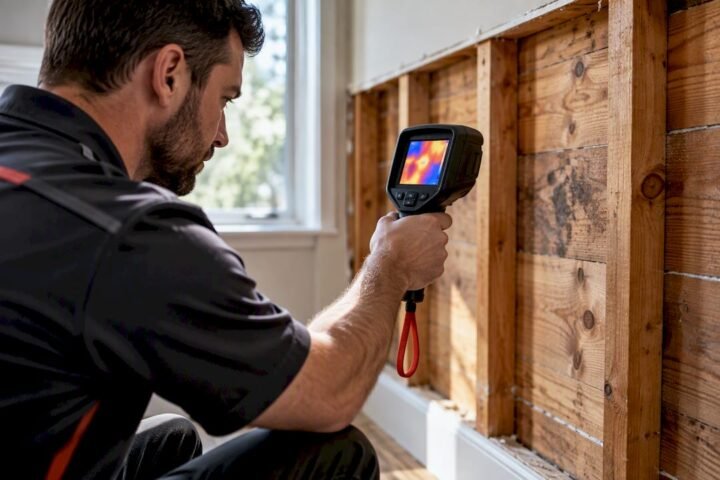
- Thermal imaging to detect temperature differences that can indicate hidden termite activity inside walls.
- A review of any existing bait stations and their activity levels.
- A written report outlining findings and recommended management options, aligned with AS 3660 requirements.
Industry guidance recommends inspections at least once a year, and more often in high-risk areas where moisture, timber construction or previous termite history raise the stakes. Effective termite management is not a one-time event. It works as an ongoing partnership between monitoring, targeted treatment, and the maintenance steps covered above, an approach CSIRO documents as combining detection tools like probes and bait station reviews with follow-up visits over time.
Preserving undisturbed evidence around a termite find gives a licensed technician the clearest possible picture, and that improves the odds of a targeted, effective response rather than a guessing game.
BugsPatrol technicians use thermal imaging and bait station monitoring as part of routine termite inspections, with a focus on treatments that stay safe around children and pets. You can find more detail on what a visit involves in this guide to termite inspection signs.
How termites affect garden plants and landscaping
Termites are wood feeders, not leaf or root feeders, so they rarely touch living, healthy plant tissue directly. Their damage in the garden shows up in timber: fence posts, retaining walls, garden sleepers, arbors, pergola footings and dead or dying tree material. A tree that is already stressed, rotting at the base or has significant deadwood is far more attractive to a colony than a healthy, vigorous specimen.
Landscaping features built from untreated softwood are the most common casualties. Raised garden beds framed with plain timber, wooden edging along pathways and old sleeper retaining walls can lose structural integrity from the inside out, often with no visible warning until the wood gives way under weight. Mulch beds pushed up against these features add moisture and cover, which speeds up the process.
The bigger landscaping risk is indirect: a termite colony established in a stump, dead tree or timber garden structure close to the house has a foraging path that can extend toward the building. That is why removing dead stumps and choosing termite-resistant or treated materials for structural garden features protects both your plants and your foundation, rather than one or the other.
Seasonal behavior and life cycle of garden termites
Termite colonies are active year round underground, but visible activity in the garden tends to follow seasonal patterns. Warm, humid conditions, often after rain in the warmer months, trigger alate flights: winged reproductive termites swarming from a mature colony to establish new nests nearby. Finding shed wings near outdoor lighting or on windowsills after a warm, damp evening is one of the more obvious seasonal signs.
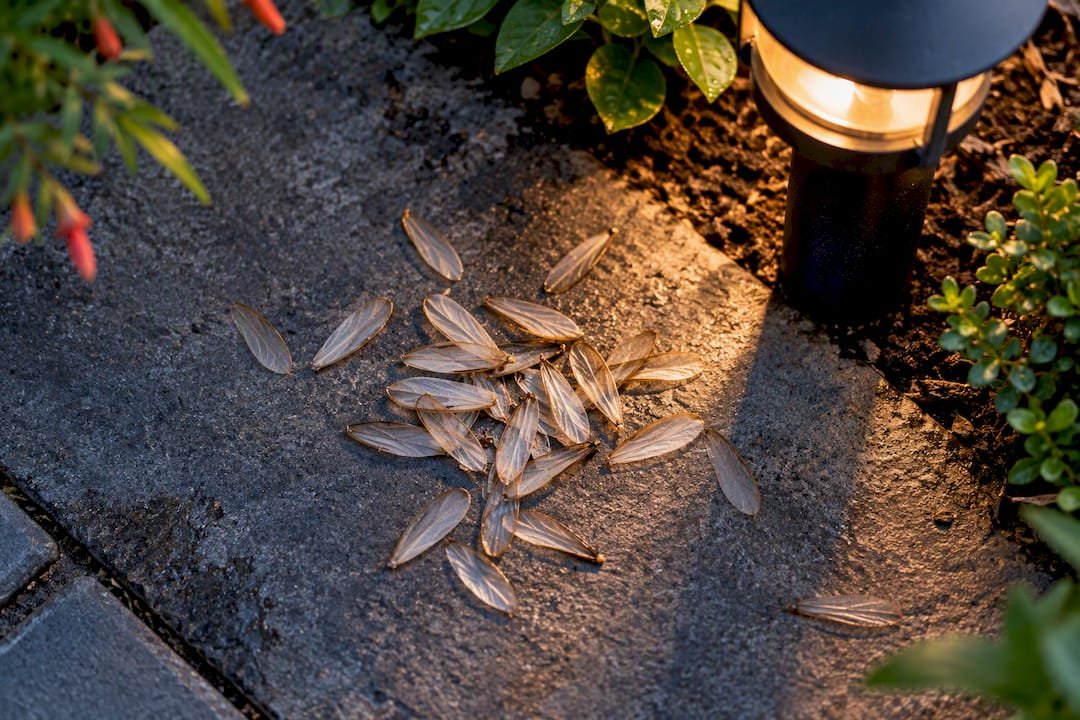
Foraging activity in soil and mud tubes tends to track moisture and temperature as well. Colonies forage more visibly during mild, wet periods when soil stays workable, and retreat deeper during extreme heat or cold to protect humidity levels within the nest. This is why routine checks in spring and after heavy rain tend to catch more visible evidence than a midwinter walk around the yard.
A mature subterranean colony can take years to establish before it produces the large swarms homeowners notice, which is part of why a young, small colony in a garden stump can go undetected for a long stretch before symptoms become obvious. Regular seasonal inspection, rather than a one-time check, is what catches a colony while it is still small and manageable.
Natural or organic termite control methods for gardens
Homeowners often ask about non-chemical options, and a few genuinely help reduce termite pressure, though none replace professional treatment once an active colony is confirmed near a structure. Removing food sources and moisture is the most reliable non-chemical lever available: clearing dead stumps, raising firewood off the ground and fixing drainage issues all make a garden less hospitable without introducing any product at all.
Some gardeners use physical barriers like sand or crushed granite of a specific particle size, which termites struggle to tunnel through, as a supplementary deterrent around vulnerable timber. Nematodes, a type of microscopic worm that preys on soft-bodied insects, are sometimes applied to soil as a biological control, though their effectiveness against established subterranean colonies is inconsistent and they are not a substitute for a monitored bait system.
What does not work is folk remedies like pouring boiling water, vinegar or essential oils onto a nest. These treatments may kill visible workers on contact but rarely reach the queen or the bulk of the colony, and disturbing a nest this way can scatter termites into new areas of the garden, including toward your house. Non-chemical prevention is worth doing routinely; non-chemical elimination of an established colony is not realistic once the colony is confirmed active.
Long-term monitoring strategies for garden termite activity
A single inspection tells you what is happening on one day. Long-term protection comes from a monitoring routine that catches change over time. Bait stations installed around the perimeter serve this purpose well: technicians check them on a schedule, and a jump in activity at one station can flag a colony’s location before it reaches structural timber.
Homeowners can support this with their own simple routine: a seasonal walk around the property checking known trouble spots, a look at any garden features made of untreated timber, and a note of any new mud tubes or swarms. Keeping a basic record, even just photos with dates, makes it far easier for a technician to see whether activity is new, growing or stable across visits.
Combining professional bait station monitoring with a homeowner’s own seasonal checks and maintaining the inspection clearance zone around the house is what keeps a garden termite issue from becoming a structural one. Annual professional inspections remain the backbone of this approach, with more frequent checks warranted in gardens with a known history of activity or in properties with a lot of established deadwood and timber landscaping.
A pest manager’s quick perspective: common mistakes and realistic timing for control
The most common mistake homeowners make is reaching for a spray can, which scatters the problem instead of solving it. Second most common: waiting months to book an inspection after finding the first mud tube. Realistic termite control is not instant. Assessment, a tailored treatment plan and a baiting or monitoring cycle can take weeks to months before a colony is fully suppressed, and follow-up visits matter as much as the first treatment. Working with a licensed provider and keeping up simple garden maintenance in between visits gives that process the best chance of working.
— navin
How BugsPatrol can help with garden termite protection
Finding termite activity in your garden does not have to mean guessing about next steps. BugsPatrol’s licensed technicians carry out termite inspections using thermal imaging and bait station assessment, then set out a treatment plan built around your property rather than a one-size approach.

Depending on what an inspection finds, that might mean:
- A targeted termite inspection and treatment covering your garden, foundation and subfloor.
- Ongoing protection through the Bronze Termite plan at 29.98 AUD per month, or the broader Gold Complete plan at 79.98 AUD per month for wider pest coverage. Both are available through BugsPatrol’s subscription plans.
- Follow-up visits and bait station monitoring to track activity over time rather than a single one-off treatment.
All work uses methods chosen with families, children and pets in mind, and technicians aim for a prompt response once you book. If you have found signs of termites near your home, book a termite inspection and get a clear answer on what is happening and what it will take to fix it.
Sources
For deeper detail beyond this guide, Department of Health Victoria’s termite guidance covers termite species and risk. AEPMA publishes industry inspection standards, and CSIRO’s termite management research details detection methods and colony behavior. AS 3660 governs barrier and treatment standards; always confirm chemical use with product labels and a licensed professional.
- Pest control: termites — Department of Health Victoria
- AEPMA — Australian Environmental Pest Managers Association
- Managing termites — CSIRO (2024)
FAQ
What should I do if I find termites in my garden?
Leave the nest or mud tubes undisturbed, photograph the activity, and check the distance to your home’s foundation. If signs sit within about 400 millimeters of a wall or touch the structure, contact a licensed inspector rather than treating it yourself.
Should I be worried if I see termites outside?
Not always: garden termite activity can be a normal part of decomposition and does not automatically mean your house is at risk. Concern rises when mud tubes lead toward the building or when activity is found inside the recommended clearance zone around the foundation.
How can I get rid of termites in my garden beds?
Garden bed infestations are best handled with professional bait stations or targeted nest treatment rather than household spray, since baiting reaches the colony instead of just the visible workers. A licensed technician can also advise on removing stumps or timber that may be feeding the colony.
How can I treat termites in my garden?
Treatment options include bait stations that suppress the colony over weeks to months, direct nest treatment for isolated stumps or logs, and chemical or physical barriers installed to AS 3660 standards near structures. Most of these methods require a licensed operator, so a professional inspection is the practical starting point.
Recommended
- Termite Damage Identification
- Termite Prevention for New Homes in Canberra
- Termite Inspection Signs
- White Ants vs Termites