Thermal imaging flags likely termite activity fast, but it is not definitive proof of an infestation. It works best as a non-invasive screening step performed by a trained inspector, paired with follow-up checks like moisture readings or a borescope. Under AS 4349.3, it is an additional technique, never a substitute for the standard’s required visual inspection.
TL;DR:
- Thermal imaging is a useful screening tool that can detect surface temperature anomalies associated with termite activity but cannot provide definitive proof of an infestation.
- The method is faster than manual probing, but false positives from sun exposure, plumbing, electrical wiring, or shading are common and must be confirmed with follow-up checks.
- Proper inspections incorporate visual, moisture, and invasive tests like borescopes, with thermal imaging serving as an initial step rather than a standalone solution.
- Licensed technicians should have documented thermography training and use standards like AS 4349.3 to ensure reliable, compliant inspections.
- Costs vary depending on property size and complexity, but thermal imaging is especially beneficial for pre-purchase screenings, post-treatment verification, and large or multi-story structures.
Table of Contents
- How infrared cameras detect termite signs
- Practical limits and common false positives to expect
- What happens during a thermal-assisted termite inspection
- Standards, licenses and training worth asking about
- How much it costs and when it actually helps
- How a licensed provider applies thermal imaging in practice
- When it makes sense to ask for a thermal scan
- Booking a thermal-assisted inspection through BugsPatrol
- Sources
- FAQ
How infrared cameras detect termite signs
Infrared cameras read surface temperature differences, not termites themselves. Termite galleries change how heat moves through timber, and the moisture termites bring into their tunnels alters how a wall or stud radiates heat. Depending on the season and the time of day, a colony can show up as a warmer patch or a cooler one, since the insects manage humidity inside the nest to survive.
What the camera actually picks up depends on its specifications. A higher resolution sensor and better thermal sensitivity make it easier to separate a genuine anomaly from background noise, and a technician who understands emissivity (how different surfaces radiate heat) avoids misreading a shiny or reflective material as a hot or cold spot. FLIR reports that trained operators can scan an entire home faster than tapping or probing every wall, and often catch low-level activity earlier than conventional methods alone.
During a scan, technicians look for specific patterns that warrant a closer look:
- Irregular warm or cool patches along skirting boards, architraves, or wall cavities with no obvious cause like a heater vent or pipe.
- Streaking or blotchy patterns on a wall surface that don’t follow the shape of studs or known building elements.
- Localized moisture-linked signatures near timber that align with damp readings elsewhere in the room.
A trained operator using a quality thermal camera can scan a house in far less time than manual tapping and probing alone, according to FLIR’s building diagnostics team, which is why speed of screening is the technology’s real strength.
Practical limits and common false positives to expect
Thermal cameras see surface heat, nothing else. They cannot look through a wall the way an X-ray looks through skin, and every reading is a proxy for what might be happening underneath, not a direct view of it.
Several everyday conditions can mimic a termite signature:
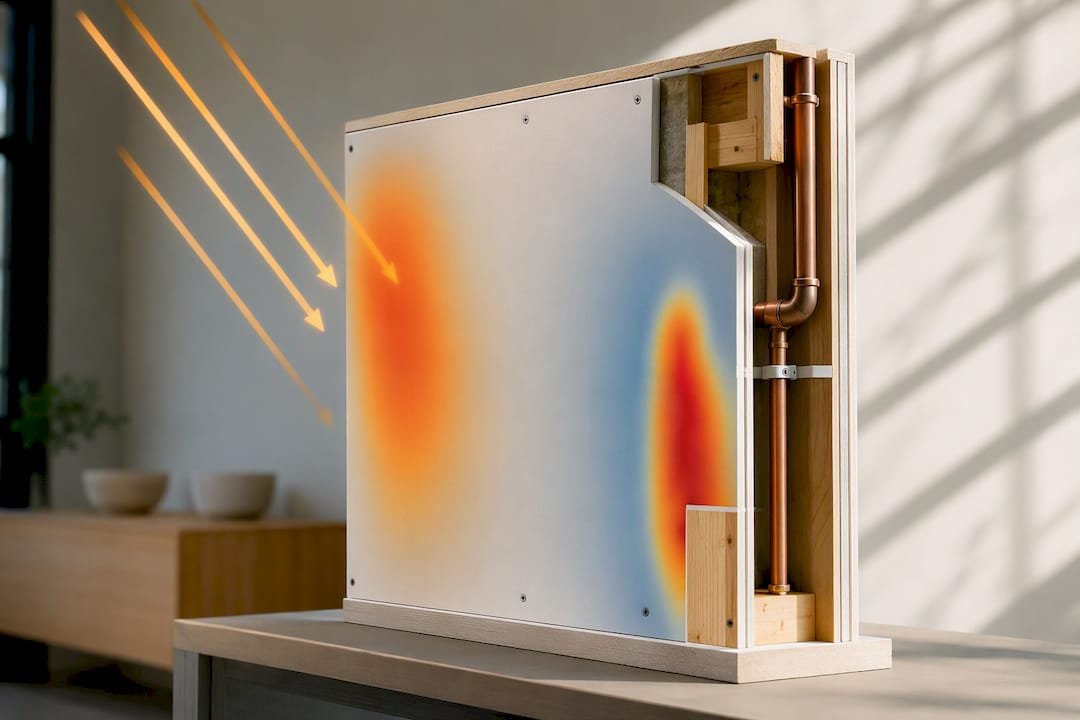
- Direct sun exposure on an external wall can leave a warm patch for hours after the sun moves on.
- Wind and shading change surface temperature unevenly across a single wall.
- Plumbing and electrical wiring inside a cavity generate their own heat patterns that look similar to gallery activity.
- Small or deep colonies sometimes produce no detectable surface signal at all, especially in thick timber or masonry veneer.
Because of these blind spots, a competent inspection never stops at the thermal image. Technicians confirm suspicious readings with a moisture meter, sounding (tapping timber to listen for hollow sections), and a borescope inserted through a small drilled hole when the anomaly persists.
Pro Tip: Ask your inspector to explain what caused each flagged hot or cool spot before assuming it means termites: sun angle and plumbing runs explain a large share of the false alarms technicians investigate.
What happens during a thermal-assisted termite inspection
A thermal-assisted inspection follows a fairly consistent sequence, whether it’s for a routine check or a pre-purchase report.
- Visual inspection first. The technician completes the standard AS 4349.3 walkthrough, checking accessible timber, subfloor areas, and the perimeter within reach.
- Thermal scan of accessible surfaces. The camera passes over walls, skirting, ceilings, and subfloor timber to flag temperature anomalies worth a second look.
- Spot checks on flagged areas. Moisture meter readings and sounding narrow down whether an anomaly matches a known false-positive pattern or deserves further investigation.
- Targeted invasive checks if needed. A borescope inserted through a small hole confirms or rules out activity inside a wall cavity that thermal and moisture readings alone can’t settle.
Alongside the camera, most inspectors carry a short kit of supporting tools:
- A moisture meter for damp timber readings.
- A sounding tool or screwdriver handle for tapping timber.
- A borescope for a physical look inside a cavity.
- A torch for subfloor and roof void access.
A proper written report includes annotated thermal images showing exactly what was flagged, a clear statement of the inspection’s limitations, and recommended next steps, along with an estimate for any invasive checks or treatment the findings suggest. Training units like CPPUPM3008 list thermal cameras and borescopes among the standard tools for this kind of inspection, and specify that further checks follow when a thermal anomaly can’t be explained.
Standards, licenses and training worth asking about
AS 4349.3 sets the minimum requirements for non-invasive timber pest inspections in Australia, covering the building and the area within 30 meters of it. The standard treats thermal imaging as an additional tool, not a mandated one, and inspections remain limited to what’s visually and physically accessible on the day.
Separate guidance covers what happens after the inspection. QBCC’s termite management guidance recommends inspections at least every 12 months, more often in high-risk areas, and notes that thermal imaging equipment is valuable for confirming eradication after treatment.
Before booking, it’s worth asking about the technician’s background:
- Documented thermography training, sometimes described as Level 1 thermography, rather than a camera bought without formal instruction.
- The CPPUPM3008 unit or equivalent, which covers timber pest inspection skills including further inspection methods like thermal imaging.
- Sample annotated reports showing how a previous thermal finding was investigated and resolved.
How much it costs and when it actually helps
Pricing for a thermal-assisted inspection depends on the inspector’s hourly rate, travel to the property, the capability of the camera being used, and how much time goes into correlating thermal findings with moisture readings or a borescope check. Follow-up invasive checks add to the total if anomalies need confirming.
Thermal imaging tends to earn its cost in specific situations:
- Pre-purchase inspections, where a buyer wants the fastest possible screen of a large property.
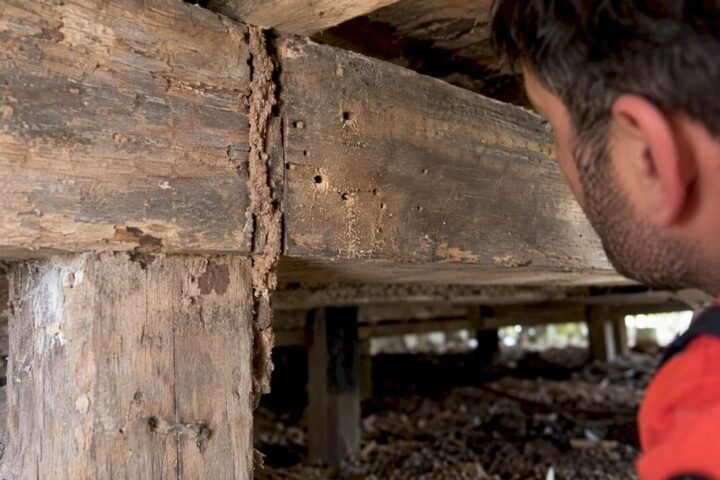
- Properties with no visible damage but other warning signs, like discarded wings or mud tubes elsewhere on the block.
- Follow-up monitoring after treatment, where guidance documents note thermal checks help confirm eradication.
- Large or multi-story structures, where scanning by hand alone would take far longer.
Thermal imaging is recommended as part of ongoing monitoring at some sites and has been described as useful for confirming eradication after baiting, according to Western Australian termite management guidance. It’s less likely to help on a wall that’s just been sun-heated, freshly painted, or where only a very small, deeply hidden colony is suspected.
How a licensed provider applies thermal imaging in practice
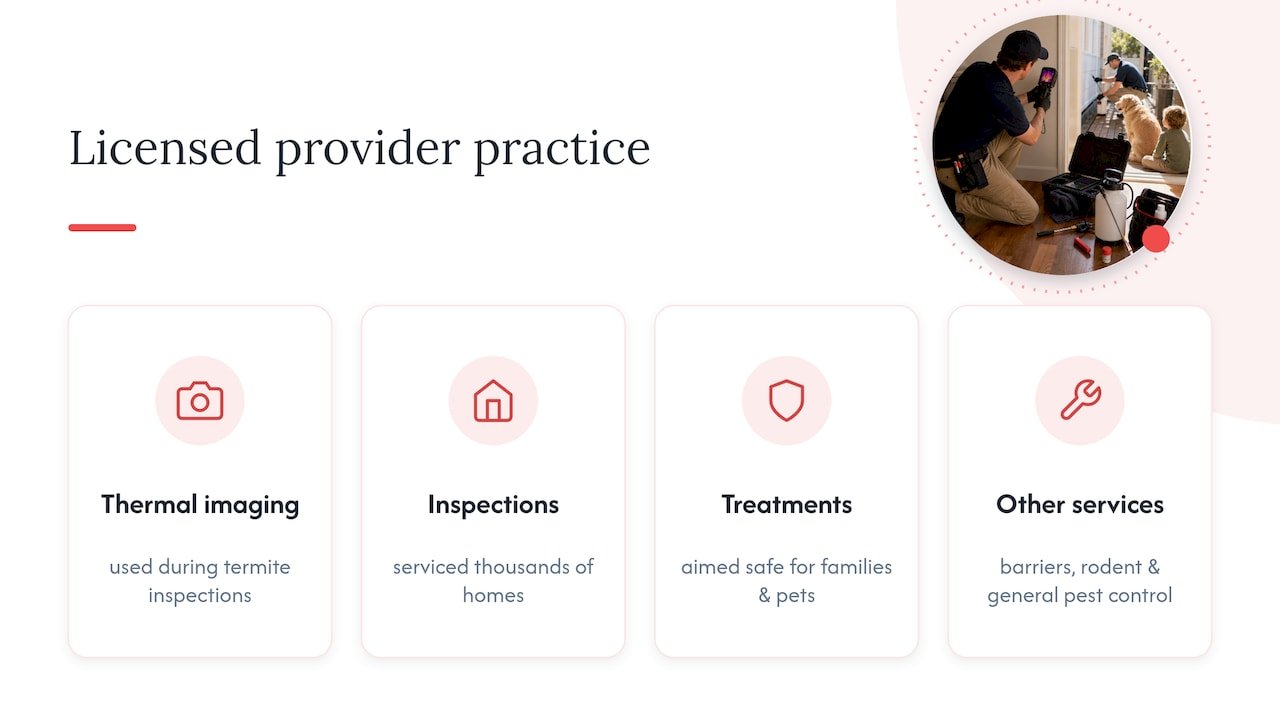
A local pest management company has many years of experience servicing thousands of homes in the area. Technicians use modern detection methods, including thermal imaging, as part of termite inspections, aiming for treatments that are safe for families, children, and pets.
This approach is part of a comprehensive service list including termite inspections and treatments, termite barriers, rodent control, and general pest management. Readers who want a closer look at what termite damage actually looks like on timber can check the termite damage identification guide for reference photos and practical examples before their own inspection.
When it makes sense to ask for a thermal scan
Request thermal imaging when a property has been visually quiet but you want a faster, wider screen, especially before purchase or after treatment. Confirm the inspection follows AS 4349.3, ask for evidence of thermography training, and find out what invasive follow-up (borescope, moisture readings) is included. For high-risk properties or homes recently treated, an annual check makes sense; otherwise, routine inspections are enough, ideally scheduled through a maintenance plan rather than one-off visits. Buyers walking through a property for the first time may also find a home tour checklist useful for spotting issues worth flagging to an inspector.
— navin
Booking a thermal-assisted inspection through BugsPatrol
If you want a termite inspection that goes beyond a visual walkthrough, BugsPatrol’s licensed technicians include thermal imaging as part of the process, backed by more than 10 years of experience and over 5,000 homes serviced. Every inspection comes with a written report showing the annotated thermal images, a clear note on what the scan could and couldn’t confirm, and recommended next steps if a follow-up invasive check or treatment is warranted.

That means fewer guesswork treatments and a clearer picture of what’s actually happening inside your walls before any work begins. For homes with a history of activity or properties changing hands, pairing a thermal scan with ongoing coverage through a maintenance plan keeps inspections on a regular schedule rather than reactive ones.
- Licensed technicians trained in modern detection methods, including thermal imaging.
- Annotated thermal images included in every inspection report.
- Recommended follow-up treatments or invasive checks clearly costed out.
- Termite barriers and ongoing protection plans available after the inspection.
Book a termite control inspection to get a thermal-assisted assessment scheduled for your property.
Sources
- Defeating Pests at Hide-&-Seek with Flir Thermal Imaging Cameras
- Termite management systems — QBCC guidance
FAQ
How much does a thermal imaging inspection cost?
Pricing depends on the inspector’s rate, travel, camera capability, and the time spent correlating findings with moisture readings or a borescope check. BugsPatrol does not publish a fixed thermal imaging fee online, so the cost is confirmed when you book a termite inspection.
How much does a termite inspection typically cost?
Cost varies by property size, accessibility, and whether thermal imaging or invasive checks are included, so there’s no single standard figure to quote. Contact a licensed provider directly for a quote based on your property’s specifics.
Can someone see inside my house with thermal or night vision?
No. Thermal cameras used in termite inspections read surface heat from outside a wall or floor cavity, they don’t produce an image of what’s happening inside a room or through solid material the way a camera or night vision device would. The technology used for pest detection has no capability to view interior spaces or activity.
What are the downsides of thermal imaging?
Thermal cameras only detect surface temperature differences, so they can miss small or deeply hidden colonies and can flag false positives from sun exposure, plumbing, or wiring. AS 4349.3 treats it as a supplementary tool precisely because it needs corroboration from moisture meters, sounding, or a borescope before any finding is confirmed.