When a pest appears in a Canberra townhouse or unit, it can seem like an issue contained within your own walls. In attached housing, the practical picture can be more complicated. This tutorial covers how pests may move between dwellings, why the treatment boundary may not match the legal boundary, and what owners and occupiers can realistically do when the source is next door or on common property. It is written for beginners who want a clear, professional starting point for residential pest control.
Along the way you will learn to control your lot, to escalate common property issues in writing, and to seal the gaps you can actually reach.
Why Pests Travel Further Than Your Unit’s Walls
In attached housing, the structure itself is the highway. A party wall or floor structure often serves two dwellings, and the framing gaps, insulation runs and ceiling voids inside it give pests a sheltered route that never appears on a title plan.
Shared service penetrations matter just as much. Water, gas, electrical, drainage and ventilation lines pass through multiple lots, and unsealed sleeves, collars and gaps around pipes are commonly identified as routes between units in Canberra townhouses and apartments. Roof cavities in some townhouse rows can run continuously or be only partly separated, so rats, mice and possums can move laterally along the block without ever crossing an external wall. Cockroaches and rodents also travel pipe runs, surfacing at floor wastes, laundry traps and the penetrations behind kitchen cabinetry, so an inspection should trace hidden harbourage points, not just visible activity.
Construction era and detailing change the pattern: older walk-up blocks and newer medium density builds each have their own typical weak points, and housing disrepair is associated with cockroach and rodent infestation. ACT planning material on medium density reform is background on housing mix only, never evidence about pest rates.
The Treatment Boundary Is Not the Legal Boundary
Those shared routes explain why pest work has to be planned around two different lines. A treatment boundary is simply where a technician applies bait, spray, dust or monitoring. A legal boundary is where your lot ends and common property begins, as set out in your unit title and scheme rules.
Pests respond to food, moisture and harbourage, not title plans. A cockroach population inside a shared wall cavity, or a rodent run above a common ceiling, serves several units at once, so activity often continues after a partial knockdown. Treating one unit may reduce what you see while leaving the source untouched next door, in a service riser or a shared roof void, and results tend to be temporary.
The reverse is also true. Treating common areas without unit-level follow-up can push activity back into dwellings, so both scopes are usually planned together.
This is general information, not legal advice. Confirm duties and cost sharing against your own scheme rules and current ACT unit titles legislation, and see the guide to strata pest responsibilities.
What You Actually Control as an Owner or Occupier
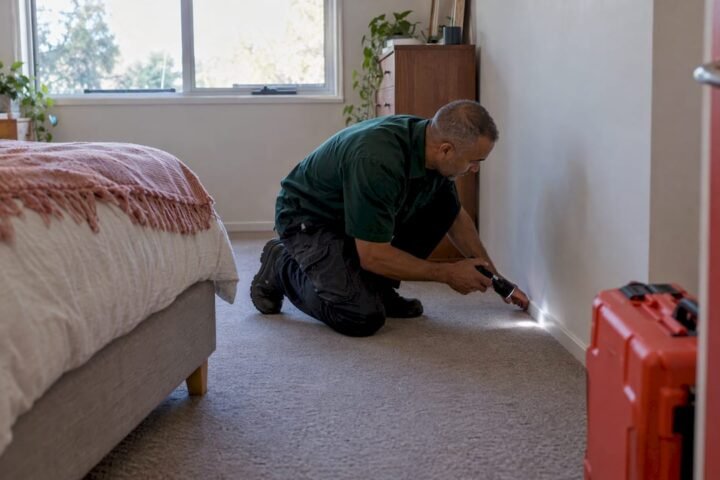
In attached Canberra housing, since the legal boundary rarely matches where pests travel, focus on what sits inside your lot. Kitchens, bathrooms, laundry, cupboards, balconies, garage and courtyard surfaces, cabinetry and fixtures sit within your title and are yours to manage. On your side, check gaps where pipes, cables and ducts enter your lot, voids behind kickboards, floor wastes, external door thresholds, and window and door seals. Keep dated photos, a simple sighting log noting where and when you saw activity, and copies of every request you send to the body corporate, strata manager or owner. Conditions you set matter: manage rubbish storage, stored cardboard, pet food, compost, leaking taps and clutter, as these affect whether pests settle and how easily they are found. You choose the residential pest control provider for your own unit and can request a written scope naming source and harbourage areas, not just activity visible on the day. For an example of a written schedule, see what an office pest schedule covers.
What Sits With the Body Corporate and Common Property
Beyond your own lot, responsibility shifts. Common property generally covers shared structures such as roofs, external walls, service infrastructure and common areas, and your scheme rules set out who is responsible for maintaining what. Definitions vary between schemes.
Use the ACT Government unit titles page as a starting point, then confirm details against your scheme rules and the current ACT unit titles legislation.
Practical escalation route: raise the issue in writing, request an inspection of common areas, service risers and roof voids, and ask for it to be minuted at the next committee or general meeting. Who pays is a scheme question, not a fixed answer, because cost sharing can depend on where the source is, the maintenance obligation, the rules and the legislation. Confirm it in writing. Keep every written request and reply: that paper trail matters if the matter later moves to a committee decision or dispute. If you rent, check end of lease pest control obligations in Canberra for related context.
Sealing Penetrations So the Problem Does Not Simply Return
Ask a provider what a given gap needs. Typical materials include flexible sealant, purpose-made escutcheon plates, brush strips and door seals, and fine mesh over vents, with expanding foam used sparingly around non-heat sources. Ask a provider before sealing anything that may be a flue or appliance vent, a weep hole, a subfloor vent or an opening needed for airflow, as blocking these creates a different problem. Pest-control practitioners commonly recommend sealing after treatment rather than before, so pests are not trapped inside a wall cavity or behind cabinetry where they are harder to reach. Sealing is a barrier, not a treatment. It slows re-entry but does not remove an established population, so pair it with control at the source and a recheck. Before sealing any hole, read mice in walls before sealing. Then coordinate adjacent units so the source is addressed, not just your side.
The Practical Sequence: Identify, Document, Seal, Coordinate
Make sealing one step in a wider sequence rather than the whole plan. First, identify the pest and likely pathway using photos, droppings, gnaw marks, shed skins or damage, and note activity on both sides of a shared wall where safe; use these signs to tell rats from mice. Then treat with a named scope. Judge residential pest control services on the report and return visit terms, not just the visit price. After treatment, seal penetrations inside your lot and ask the body corporate to close common property penetrations. Finally, coordinate adjacent units and common areas in the same window, then agree a recheck date so returning activity is caught early.
What to Agree Before Anyone Treats
Once you have identified, documented, sealed and coordinated, put the arrangements in writing before the technician arrives. Agree who will provide access to each unit, how much notice neighbours receive, and whether someone will be present. Unattended access is often why a source unit gets skipped. The written scope for residential pest control services should name the units and common areas covered, the proposed methods, and the fallback if the source unit or roof void cannot be accessed on the day. Confirm what happens if activity continues: who covers a follow-up, when it is due, and how that term is recorded so a neighbour cannot later claim they were never told. Before products are applied, communicate safety details for pets, children, asthma, fish tanks, birds and shared ventilation. Where occupants are vulnerable, ask how a low-toxicity program is planned and disclosed, as care sites handle chemical disclosure. Finally, send the written report, product details and warranty terms to every unit involved, not only the person who booked.
When a Residential Pest Control Service Is the Right Next Step
Once access and return terms are settled, the next question is whether the source is reachable at all.
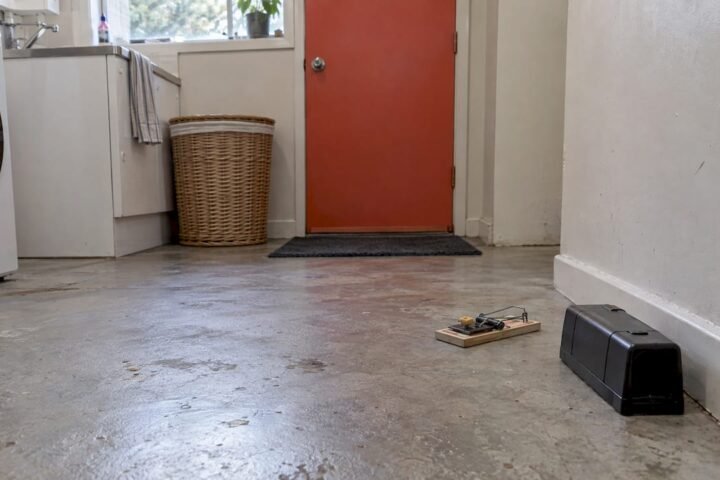
Wall cavities, service risers, roof voids and subfloor areas are not owner accessible, and guessing at a cause usually costs more than an inspection. Termite work in an attached structure may need to consider neighbouring lots, and liquid barriers and baiting systems are not a do-it-yourself task. Bed bugs and cockroaches can spread readily between units, so ask a provider how adjacent lots and a follow-up cycle would be handled rather than assuming a single visit will settle it. Rodent baiting and trapping must sit where activity actually is, often outside your lot and requiring body corporate cooperation.
BugsPatrol is a Canberra-based, licensed provider of residential pest control, and with any provider you should check licensing and insurance, ask for a written scope and report, and confirm warranty or return visit terms before booking. In warm spells, a guide to handling a house fly infestation is useful for entry points.
Common Questions About Pests in Units
Can pests come through shared walls? Yes, usually via unsealed penetrations, wall cavities and shared service lines rather than the plaster itself. The gaps matter more than the wall.
Who pays for pest control? It depends on where the source is, your scheme rules and current ACT unit titles legislation. This article cannot decide it for your building. Ask your body corporate in writing.
Does treating my unit fix the problem? Only if the source is inside your lot.
Must I let a pest controller into my unit? Access and notice requirements vary by scheme and tenancy. Check the scheme rules, your lease and any notice before refusing, and ask for the request in writing.
What should I put in writing? Dates, photos, where you have seen activity, what has already been treated, and a specific request such as an inspection of common areas and service risers.
These answers point to the next step: acting on your side of the boundary and escalating common property issues in writing.
What to Do Next in Your Building
With those questions answered, the practical work starts with your own lot and moves outward.
Seal penetrations on your side of the wall only after treatment is complete, not instead of it. Note what was sealed, where, and when, so a returning problem can be traced.
Every request for common area action should be written, and you can ask for it to be minuted at the next committee or general meeting. A minuted item is harder to let quietly disappear.
Where possible, coordinate with neighbours so adjacent units are treated in the same window, then diarise a recheck for a few weeks later.
That combination, treatment at the source, sealed routes and a written record, is what stops the problem simply returning next door.
Conclusion
Pests in Canberra townhouses and units rarely stop at your walls, so the solution has to travel just as far. Remember four things: treatment must target source areas and common property, your lot is only part of the picture, sealing penetrations prevents the problem from returning, and written records plus neighbour coordination make action stick. Your next step is to ask any residential pest control provider for a written scope naming source areas and return visit terms, then share that scope with your body corporate or neighbours. Seal your side after treatment, log every request, and keep the paper trail alive. That combination of treatment, sealing and documentation is how you stop pests simply moving next door. Act on your side of the boundary today, and escalate common property issues in writing so the whole building benefits.