
A cockroach ootheca is a hardened egg case, and finding one means active breeding is happening somewhere close by. Isolate it, remove it carefully, and check nearby cracks and gaps for more before you do anything else. Most contact sprays cannot penetrate the casing, so a single treatment rarely finishes the job. Expect a follow-up visit to be part of any real fix.
TL;DR:
- Most cockroach egg cases are resistant to contact pesticides due to their hardened shells, requiring targeted IGRs or heat treatments for effective control.
- Identification of egg cases involves checking for a ridged seam, rigidity, and segmented indentations, with size and appearance varying by species.
- Finding an ootheca indoors indicates active breeding in areas such as kitchens, behind appliances, or in cluttered, hidden spots near food and water sources.
- Follow-up treatments and integrated pest management, including sanitation, baits, and inspections, are essential for long-term prevention and complete eradication.
Table of Contents
- What Do Cockroach Eggs Look Like?
- Which Cockroach Species Made This Egg Case?
- Where Do Cockroaches Lay Their Eggs Around the House?
- How Long Does It Take for Cockroach Eggs to Hatch?
- How to Get Rid of Cockroach Eggs
- How to Prevent Cockroaches From Laying Eggs Indoors
- Why Pest Professionals Treat the Whole Life Cycle, Not Just the Roaches You See
- Get Professional Help With Cockroach Eggs and Ongoing Control
- Sources
What Do Cockroach Eggs Look Like?
An ootheca looks like a small, pill or bean shaped capsule with a ridged seam, called a keel, running down one side. Color ranges from tan or amber in fresh cases to dark brown or almost black in older ones. Size runs roughly 5 to 13 millimeters depending on the species, so a German cockroach case is noticeably smaller than an American cockroach’s.
People mistake these for mouse droppings, dried glue drops, seed husks, or general debris more often than you’d think. A few checks settle the confusion fast:
- Look for the seam. Droppings and debris don’t have a stitched ridge running along one edge.
- Check under angled light. The casing has a slight sheen; droppings are usually matte.
- Feel for rigidity. An ootheca is hard and stays rigid; organic debris crushes or crumbles easily.
- Count the rows. Faint segmented indentations along the side correspond to individual eggs packed inside.
One case can hold dozens of eggs, depending on the species. That single detail is why spotting even one ootheca matters more than spotting a single roach. Structurally, the case is built from specialized proteins that harden through a process called sclerotization, which is exactly why it resists drying out and shrugs off a lot of what homeowners throw at it, according to research on ootheca formation.
Which Cockroach Species Made This Egg Case?
Species identification changes where you should search and how aggressively you need to treat. The four you’ll deal with in most homes behave differently enough that the egg case itself is a clue.
- German cockroach: The female carries her ootheca protruding from her body until just before hatching, so spotting a roach with a case still attached is common. Each case holds around 30 to 40 eggs, and this species breeds faster than any other you’ll find indoors.
- American cockroach: Produces larger, darker oothecae, often glued to surfaces near drains, sewer access points, or damp basement corners rather than carried.
- Oriental cockroach: Deposits egg cases in moist, hidden spots like crawl spaces or under mulch near foundations, with somewhat lower egg counts per case than the German species.
- Brown-banded cockroach: Glues cases in drier, elevated locations, often behind picture frames, inside furniture, or near ceiling lines rather than under sinks.
Species differences aren’t just trivia. A comparison of German and American cockroach behavior shows why targeting the egg-carrying females of fast-breeding species should take priority over chasing individual nymphs. Get the species wrong and you’ll search the wrong rooms entirely.
Where Do Cockroaches Lay Their Eggs Around the House?
Egg cases show up wherever a female felt safe enough to stop moving for a while, which usually means dark, warm, and close to food or water. Kitchens, bathrooms, laundry rooms, and garages carry the highest risk.
Work through these micro-sites in order:
- Cabinet hinges and the inside corners of kitchen cupboards.
- Gaps behind and underneath the refrigerator, dishwasher, and oven.
- Drain covers, pipe voids, and the underside of sink cabinets.
- Wall and floor skirting, especially where it’s pulled away slightly.
- Inside or behind large electronics and appliance motors, which stay warm.
- Cardboard boxes, paper bags, and cluttered garage shelving.
Carrying species like the German cockroach drop their cases later and closer to the final hiding spot, while gluers like the American and brown-banded species leave cases fixed in one place for weeks, which actually makes them easier to find once you know where to look.
How Long Does It Take for Cockroach Eggs to Hatch?
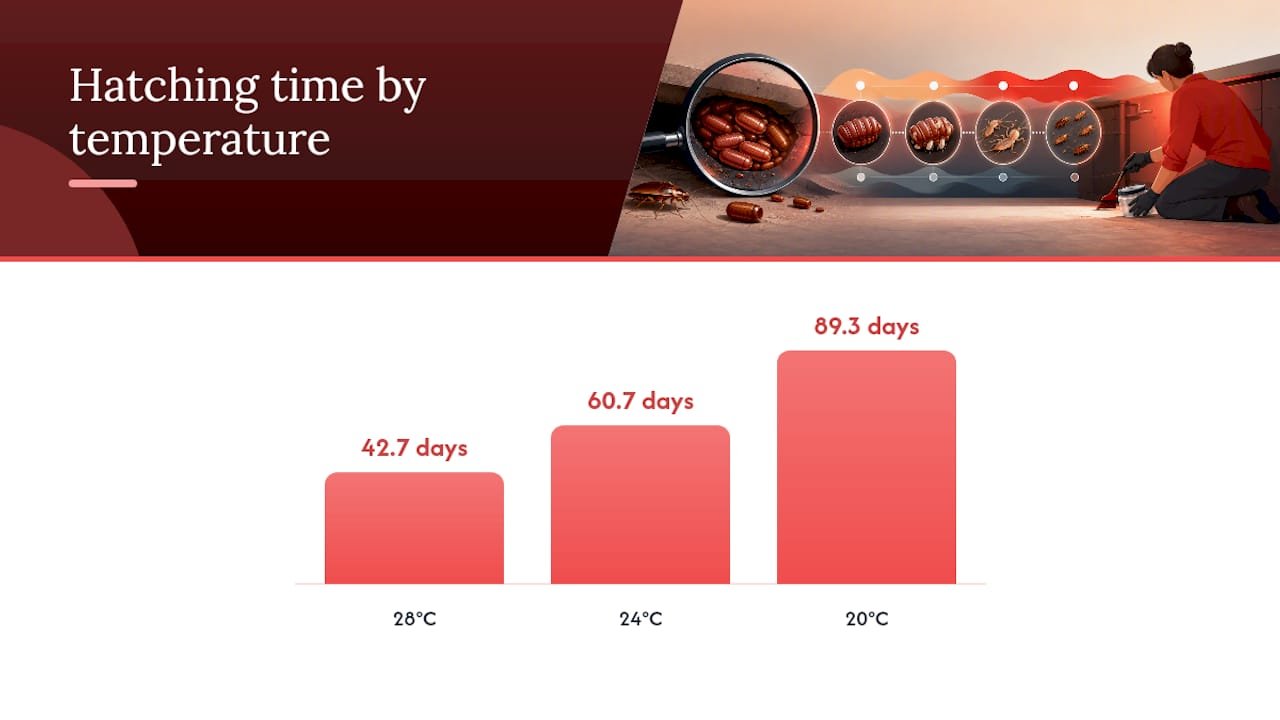
Hatching time depends almost entirely on temperature, and the swing is bigger than most homeowners expect. Development runs roughly twice as fast at 35°C (95°F) than at 21°C (70°F), which is a major reason cockroach problems flare up in hot, humid months and seem to calm down in cooler ones.
Concrete numbers back this up. Oriental cockroach eggs took a mean of about 42.7 days to hatch at 28°C, 60.7 days at 24°C, and 89.3 days at 20°C, with development stalling out almost entirely between 15°C and 20°C.
- Warm, humid rooms (kitchens, laundries) speed up hatching and shorten the window you have to intercept eggs.
- Cool basements or unheated garages can delay hatching for months, which is why an infestation can seem to disappear over winter and return in spring.
- Killing eggs reliably through heat requires exposure above 60°C (140°F), well beyond normal room temperatures.
Carrying behavior adds another wrinkle: because German cockroach females hold the case until nearly hatching, an ootheca you find loose on a shelf is often close to releasing nymphs, not months away from it.
How to Get Rid of Cockroach Eggs
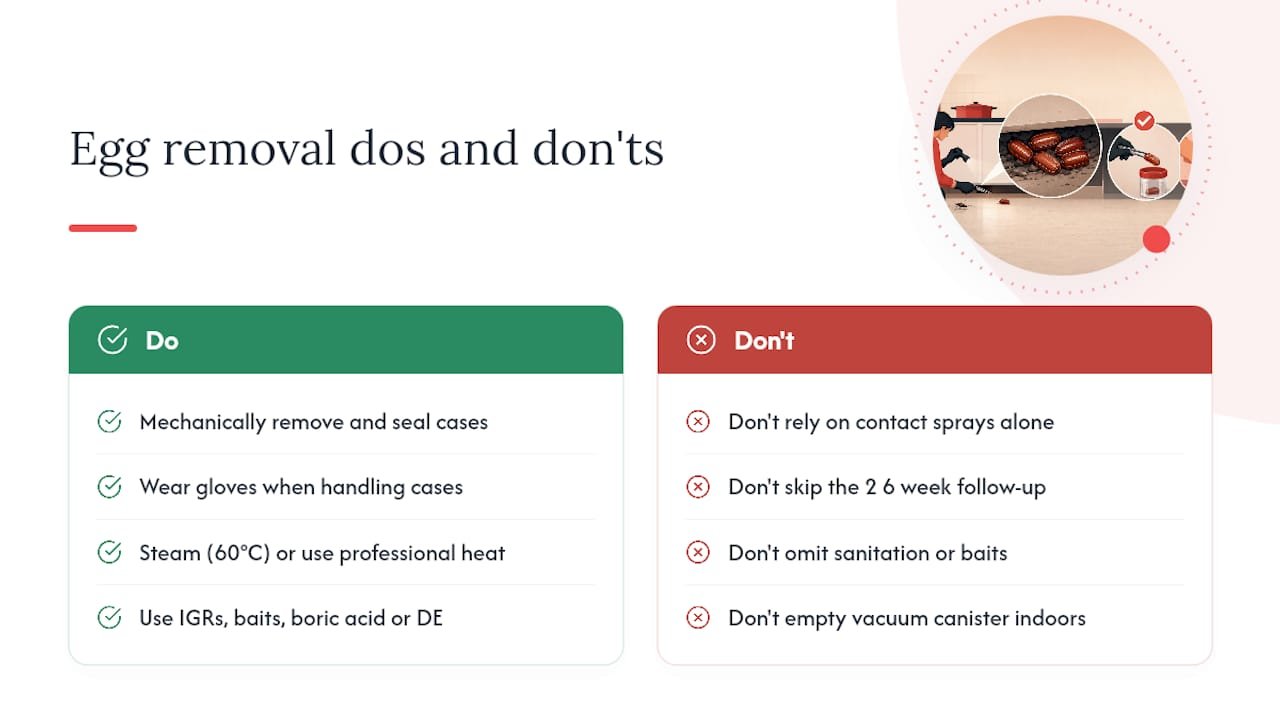
Start with mechanical removal, since it’s the one method that works regardless of species or temperature. Put on gloves, crush the case with a hard surface or tissue, then seal it in a bag before disposal. If you’d rather not touch it directly, a vacuum with a HEPA filter works, but empty the canister outside immediately since a crushed case can still release nymphs if conditions are right.
Heat and cold both kill eggs, but only at the right dose. Steam cleaners can hit the 60°C (140°F) threshold needed to kill eggs on contact for small, treatable surfaces like cabinet interiors. Whole-room professional heat treatments scale that up for serious infestations. Freezing works too, but only for small removable items: sealed bags in a freezer at negative 18°C for several days will kill eggs inside, though this isn’t practical for a whole kitchen.
Sprays disappoint a lot of homeowners here. Oothecae are largely resistant to contact pesticides because the hardened shell blocks penetration, so a spray that kills adult roaches on the spot often does nothing to the eggs sitting six inches away. This is where insect growth regulators, or IGRs, earn their place. They don’t kill on contact. Instead, they disrupt molting and development in nymphs after hatching, which breaks the cycle a spray alone can’t touch. Boric acid and diatomaceous earth work the same angle, targeting nymphs once they emerge rather than the eggs themselves. Baits round out the strategy by removing egg-carrying females before they deposit more cases.
For infestations that have spread through wall voids or multiple rooms, professional treatment using fumigation or targeted heat is usually the only realistic option, and a follow-up visit two to four weeks later is standard practice because hatchlings from cases missed the first time need their own intervention.
Pro Tip: Sanitation without baits just makes roaches search harder for what’s left. Baits without sanitation give them options. Run both together with an IGR in the mix, and you’re attacking mothers, nymphs, and food sources at the same time instead of picking one fight and ignoring the other two.
How to Prevent Cockroaches From Laying Eggs Indoors
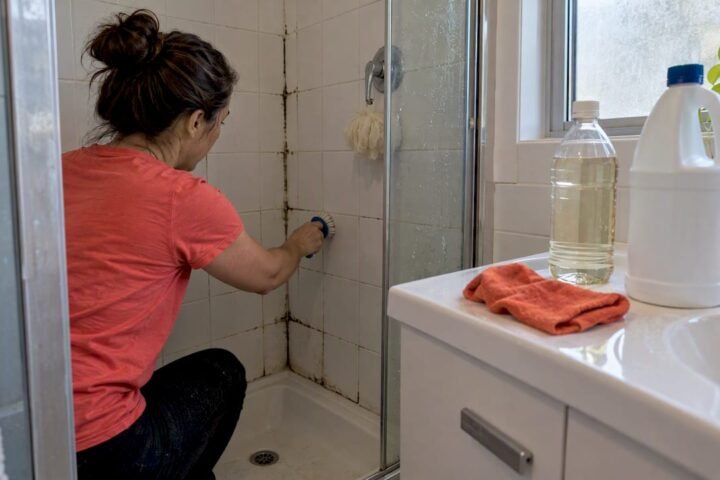
Cutting off food, water, and hiding spots is the only prevention strategy that holds up over time, and most of it costs nothing but consistency.
- Store dry food, cereal, and pet food in sealed containers rather than the bags they came in.
- Wipe down grease around stovetops and empty kitchen bins nightly instead of every few days.
- Fix leaking taps and pipes, since a slow drip under a sink is enough moisture to sustain a colony for months.
- Run a dehumidifier in basements or laundry rooms that stay consistently humid.
- Seal cracks around baseboards, cabinet backs, and the gaps where pipes and cables enter walls.
- Set out a few monitoring traps in kitchens and bathrooms to catch new activity early.
Reapply residual bait or IGR products every few months, or sooner if a monitoring trap turns up fresh activity. For a deeper breakdown of sanitation timing and structural fixes, BugsPatrol’s prevention guide walks through the specifics room by room.
Why Pest Professionals Treat the Whole Life Cycle, Not Just the Roaches You See
Professionals inspect first, then apply targeted baits and IGRs before proofing entry points, because a spray alone leaves hidden oothecae untouched. A documented pattern in professional pest management is that follow-up visits exist specifically to intercept nymphs that hatch after the first treatment, not because the first visit failed.
Before booking a service, ask about follow-up frequency, what’s safe around kids and pets, and how preparing your home beforehand affects results.
Get Professional Help With Cockroach Eggs and Ongoing Control
A spray you grab off a shelf might kill what’s crawling in plain sight, but it won’t touch a case tucked behind your dishwasher, and that’s the gap Bugspatrol Pest Management is built to close. Technicians inspect for oothecae in the spots homeowners rarely check, apply targeted baits and IGRs that break the breeding cycle rather than just knocking down adults, and schedule follow-up visits to catch nymphs that hatch after the first treatment.

When you book a visit, expect a full inspection of kitchens, bathrooms, laundries, and any damp or cluttered areas where cases tend to collect, followed by a treatment plan chosen with safety in mind. If you’ve already spotted a ridged, bean-shaped casing somewhere in your home, that’s a signal to move fast rather than wait for it to hatch. Get a general pest control quote started, and let a technician handle the search you’d otherwise be doing room by room on your hands and knees.
Sources
- Study noting temperature effects on cockroach egg development and mortality
- The Amazing Case of the Cockroach Egg (PCT Online)
- Environmental aspects of the survival and reproduction of oriental cockroaches (ICUP)

[…] more on what these cases look like, our guide on how to spot cockroach eggs and remove them safely walks through it step by […]